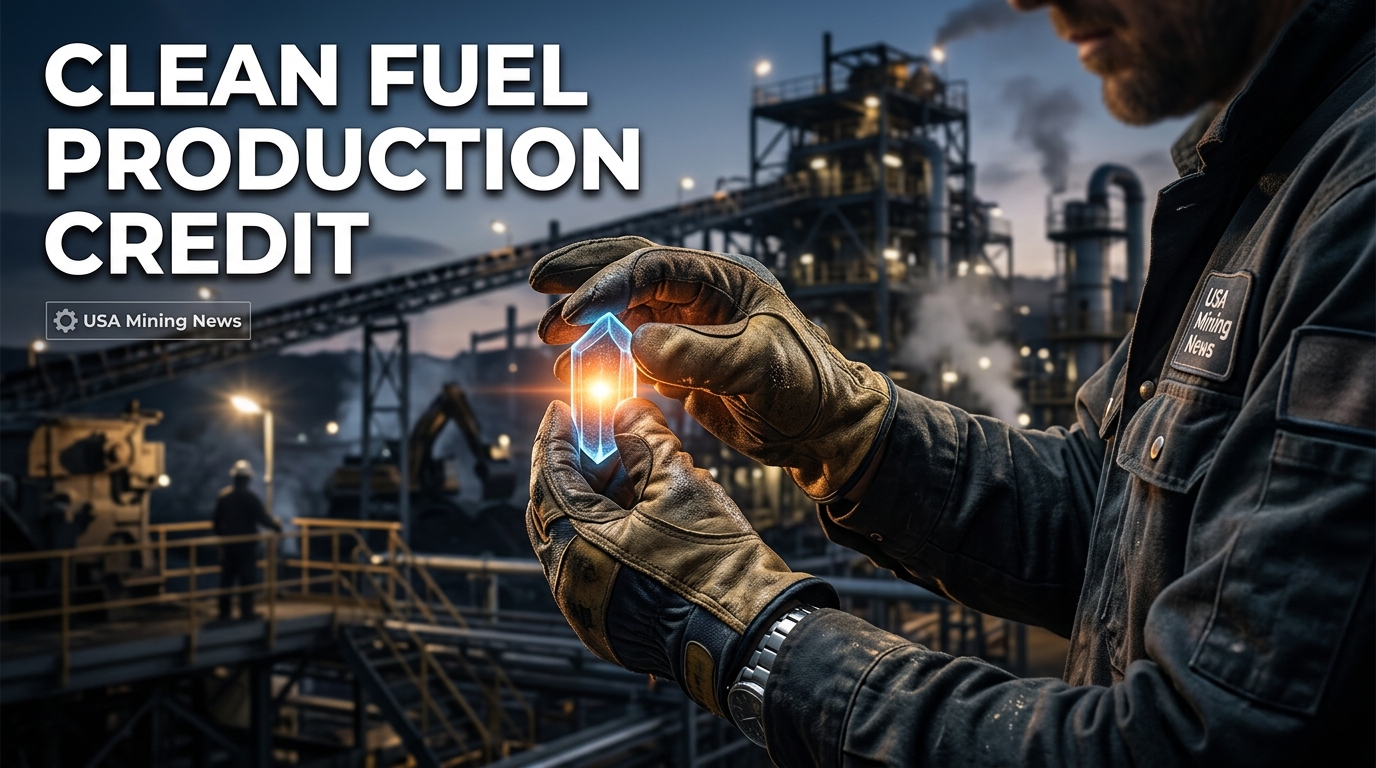
WASHINGTON – The U.S. Department of Energy (DOE) has taken a significant step towards fostering domestic clean fuel production, announcing on October 14, 2026, the pre-publication draft of a federal register notice detailing the Emissions Value Request (EVR) process. This new procedural framework, spearheaded by the DOE’s Alternative Fuels and Feedstocks Office (AFFO), is designed to facilitate access to the crucial Section 45Z Clean Fuel Production Tax Credit, a key incentive for producers of advanced transportation fuels.
The Section 45Z Clean Fuel Production Tax Credit, substantially modified and extended under what is referred to as the Working Families Tax Cut, offers a production incentive for specific feedstocks sourced from the United States, Mexico, or Canada. Its introduction marks a strategic pivot towards strengthening domestic energy production, reducing consumer costs, and bolstering American energy independence, as articulated by senior government officials.
Unpacking the Section 45Z Clean Fuel Production Tax Credit
The Clean Fuel Production Tax Credit (Internal Revenue Code Section 45Z) represents a cornerstone of current U.S. energy policy, designed to accelerate the development and deployment of lower-carbon transportation fuels. This credit directly rewards fuel producers for each gallon of qualifying clean fuel produced, with the incentive value directly tied to the lifecycle greenhouse gas (GHG) emissions rate of the fuel. The underlying philosophy is to create a market-based mechanism that drives innovation in fuel technologies and reduces the carbon footprint of the transportation sector.
According to Assistant Secretary of Energy Audrey Robertson, the impetus behind these initiatives stems from the Working Families Tax Cut, championed by President Trump. Robertson stated, "Thanks to President Trump’s Working Families Tax Cut, we are creating new opportunities for American farmers and fuel producers to strengthen domestic energy production, reduce costs, and unleash American energy dominance." This statement underscores the dual objectives of the credit: to foster economic growth within rural communities and to fortify the nation's energy supply chain through domestic production.
For fuel producers, the primary hurdle in claiming this tax credit is accurately determining the lifecycle GHG emissions rate of their transportation fuel. While an applicable rate table for Section 45Z exists, the rapidly evolving landscape of clean fuel technologies means many novel fuel types, primary feedstocks, or production pathways may not yet be explicitly listed. In such scenarios, producers are required to petition the Secretary of Treasury for a provisional emission rate (PER).
Navigating the Emissions Value Request (EVR) Process
This is precisely where the DOE’s new 45Z Emissions Value Request (EVR) process becomes indispensable. The EVR process is the designated conduit through which transportation fuel producers can obtain an emissions rate value from the DOE, a prerequisite for subsequently petitioning the U.S. Treasury for a PER. Without a provisional rate, producers of innovative fuels would be unable to access the substantial financial incentives offered by the 45Z tax credit, potentially stifling investment and innovation.
To embark on the EVR journey and request an emissions value from the DOE, stakeholders must adhere to specific EVR Application Instructions and submit a comprehensive set of materials:
- Engineering Information/Analyses: This requires documentation consistent with a specified section of a front-end engineering and design (FEED) study, or a similar indication of project maturity, as determined by the DOE. A FEED study is a critical stage in project development, providing a detailed technical roadmap, cost estimates, and risk assessments necessary for project financing and execution. For novel fuel production pathways, demonstrating this level of engineering rigor is essential for the DOE to accurately assess the proposed technology and its emissions profile.
- Completed EVR Form: A standardized form capturing key details about the fuel production pathway, feedstocks, and proposed emissions calculations.
Applicants also have the option to include additional information that they believe would be beneficial in completing a thorough lifecycle analysis (LCA) of their transportation fuel production pathway. This could include detailed process diagrams, operational data, or specific environmental impact assessments that further substantiate the claimed emissions reductions. The DOE's role here is to perform an objective, science-based evaluation of the proposed fuel's lifecycle emissions, from feedstock acquisition through processing, transport, and end-use, to ensure the integrity of the tax credit program.
Producers seeking more detailed information on applying for a PER or the intricacies of the EVR process are directed to the DOE’s dedicated 45Z EVR webpage or can contact 45ZEmissionsRequest@doe.gov. For broader questions concerning the 45Z tax credit itself and eligibility criteria, the Internal Revenue Service (IRS) remains the authoritative source.
Strategic Implications for the Mining Industry
While the immediate focus of the 45Z tax credit and the EVR process is on transportation fuel producers, its broader implications resonate significantly with the mining industry. Mining operations are inherently energy-intensive, relying heavily on vast quantities of transportation fuels, primarily diesel, for haul trucks, excavators, processing equipment, and rail logistics. Any policy that encourages the production and adoption of cleaner, potentially more cost-effective fuels directly impacts the operational expenditures and environmental performance of mining companies.
Here’s how the 45Z tax credit and the EVR process are relevant to the mining sector:
- Operational Cost Reductions and Fuel Diversification: A robust domestic clean fuel industry, incentivized by 45Z, could lead to increased availability and competitive pricing for alternative fuels. Mining companies, constantly seeking efficiencies, could benefit from a wider array of fuel choices, potentially including biofuels, renewable diesel, or synthetic fuels, which could lower their long-term fuel costs and reduce exposure to volatile fossil fuel markets.
- Decarbonization and ESG Mandates: The mining industry is under increasing pressure from investors, regulators, and stakeholders to reduce its carbon footprint and enhance its Environmental, Social, and Governance (ESG) performance. Access to tax-credited clean fuels can directly support these decarbonization efforts, helping mining companies meet ambitious emissions reduction targets. This aligns with global trends towards sustainable mining practices and responsible resource extraction.
- New Markets for Mined Feedstocks: The source material refers to a "production incentive for certain feedstocks." While specific feedstocks are not detailed, the production of advanced fuels often relies on various raw materials. This could present opportunities for mining companies that extract minerals crucial for these processes. For example, certain critical minerals are vital for catalysts in fuel synthesis, components in electrolyzers for green hydrogen production, or materials used in carbon capture, utilization, and storage (CCUS) technologies that might be integrated into clean fuel pathways. Furthermore, waste products from mining or metallurgical processes could, in some cases, be explored as potential feedstocks for certain alternative fuel production pathways, though this would require significant research and regulatory alignment.
- Strengthening Domestic Supply Chains and Energy Security: Assistant Secretary Robertson's emphasis on "American energy dominance" implies a concerted effort to reduce reliance on foreign energy sources. This policy direction inherently supports domestic resource extraction and processing. As the nation pivots towards clean energy solutions, the demand for domestically sourced critical minerals – essential for everything from renewable energy infrastructure to advanced fuel production – is expected to surge. This provides a strong strategic rationale for robust domestic mining operations.
- Rural Economic Development: Mining operations are often located in rural areas, mirroring the stated goal of the 45Z credit to support rural economies. Policies that stimulate economic activity and create jobs in fuel production within these regions can indirectly benefit the communities where mines operate, fostering a more resilient local economic ecosystem.
Industry Outlook and Next Steps
The establishment of the EVR process is a critical enabler for the 45Z Clean Fuel Production Tax Credit, transforming policy intent into actionable financial incentives. It signals a clear commitment from the U.S. government to fostering a domestic clean fuel industry capable of meeting future energy demands while addressing climate objectives.
For the mining industry, this development warrants close attention. Companies should:
- Monitor Fuel Market Developments: Stay abreast of new clean fuel technologies and market offerings that could emerge as a direct result of these incentives, evaluating their potential for integration into mining operations.
- Assess Feedstock Opportunities: Investigate whether any existing or potential mined products, or even waste streams, could qualify as "certain feedstocks" for clean fuel production, thereby opening new revenue streams or partnerships.
- Engage in Decarbonization Planning: Integrate the availability of clean fuel incentives into long-term decarbonization strategies, exploring how the 45Z credit could support investments in fleet electrification, alternative fuel adoption, or on-site renewable energy projects.
The collaborative efforts between the DOE, the U.S. Treasury, and the IRS are crucial for the successful implementation of this complex regulatory framework. As the nation moves towards a more sustainable energy future, the mining industry stands to be both a beneficiary and a key enabler, providing the foundational raw materials and adapting its operations to meet evolving energy paradigms.