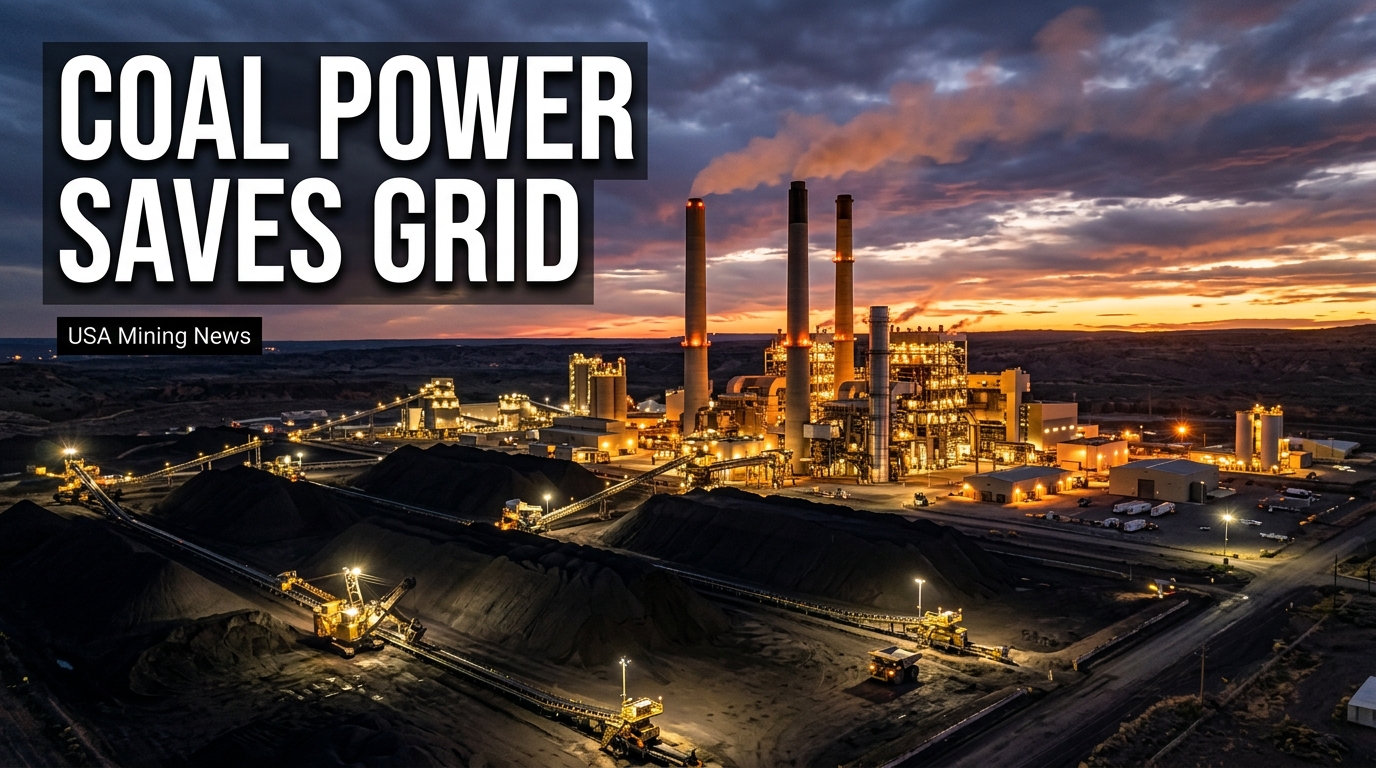
The U.S. Department of Energy (DOE) has once again intervened to secure the nation's energy supply, issuing emergency orders on September 19, 2026, that mandate the continued operation of two critical coal-fired power plants in Indiana. This decisive action, spearheaded by U.S. Secretary of Energy Chris Wright, underscores a persistent federal commitment to grid reliability and affordable electricity, directly impacting the strategic outlook for the domestic thermal coal mining sector. The orders ensure that specified generation units at both the R.M. Schahfer and F.B. Culley generating stations, located within Indiana, remain available to operate, thereby postponing their previously scheduled shutdown at the end of 2025.
Federal Intervention Secures Midwest Grid Stability
The emergency orders, effective from September 20, 2026, through December 18, 2026, were directed at key entities responsible for the Midwest's energy infrastructure: Northern Indiana Public Service Company (NIPSCO), CenterPoint Energy, and the Midcontinent Independent System Operator, Inc. (MISO). These companies are now required to take all necessary measures to ensure the operational readiness of the designated coal-fired units. This is not the first instance of such federal intervention; the DOE had previously issued similar orders on December 23, 2025, highlighting the ongoing concerns regarding resource adequacy in the MISO region.
The primary rationale behind these orders is to "minimize the risk of unnecessary blackouts for the American people" and to provide "continued access to affordable, reliable, and secure electricity" for families and businesses across the Midwest. This region, encompassing 15 U.S. states and one Canadian province, relies heavily on MISO to manage its grid, balancing supply and demand across a vast and diverse service territory. The continued availability of these coal plants is seen as an essential asset to maintain reliability, particularly during extreme weather events and periods of elevated demand.
The Critical Role of Coal in Reliability
The DOE's assessment indicates that the Schahfer and Culley coal plants have proven indispensably critical to MISO’s operations, demonstrating their value during challenging conditions. Notably, these stations were operational during Winter Storm Fern, a period characterized by high energy demand coupled with low levels of intermittent energy production from renewable sources. This performance directly substantiates Secretary Wright's assertion that "forcing reliable, dispatchable coal generation off the grid would compromise energy reliability and needlessly raises energy costs for Americans."
Secretary Wright further emphasized the administration's stance, stating, "Midwestern families should not be forced to pay the price for the misguided energy subtraction policies of the past. They deserve affordable, reliable, and secure energy, regardless of the wind blowing or the sun shining." This declaration clearly signals a policy direction that prioritizes grid stability and affordability, even if it means extending the operational lifespans of conventional, dispatchable generation sources like coal.
Broader Implications and Presidential Mandate
The decision to keep the Indiana coal plants online is not an isolated incident but rather fits into a broader national strategy. The DOE explicitly stated that "thanks to President Trump’s leadership, coal generating plants across the country are being saved from premature retirement." This initiative saw significant results in 2025, when "more than 17 gigawatts of coal power electricity generation were saved from going offline." Such figures underscore a substantial federal effort to bolster the nation's energy security by preserving existing baseload capacity, a move that carries profound implications for the domestic coal mining industry.
The availability of the R.M. Schahfer and F.B. Culley generating stations is deemed necessary to address "elevated reliability risks in that region during extreme weather and reduce the risk of power outages that could threaten public health and safety." This perspective aligns with findings outlined in the DOE’s
Resource Adequacy Report
, which concludes that premature retirements of reliable generation resources inevitably increase the risk of widespread power outages. For an industry that has faced significant headwinds from environmental regulations and economic pressures favoring natural gas and renewables, these orders provide a vital, if temporary, reprieve.Understanding Resource Adequacy and Market Dynamics
MISO, as one of the nation's largest independent system operators, is tasked with ensuring a reliable supply of electricity to approximately 42 million people across its footprint. Its challenges are indicative of a broader trend across North America where the rapid retirement of traditional baseload power, primarily coal and nuclear, is outpacing the reliable integration of new generation, particularly intermittent renewables. While renewables are growing, their output can fluctuate significantly based on weather conditions, necessitating robust backup or "dispatchable" capacity that can be brought online at a moment's notice.
The current situation highlights the inherent tension between decarbonization goals and the practical realities of grid management. Coal plants, with their fuel stored on-site and continuous operational capabilities, offer a critical hedge against these fluctuations. The cost of maintaining this dispatchable capacity, even if not fully utilized at all times, is increasingly being recognized as essential for preventing more costly and dangerous blackouts, particularly during peak demand periods or extreme weather events like Winter Storm Fern.
Economic and Strategic Imperatives for Coal Mining
For the USA mining industry, particularly the thermal coal sector, these emergency orders, while temporary, represent a significant federal endorsement. While the duration of the current order is limited to just under three months, the repeated nature of these interventions signals a sustained federal interest in maintaining coal-fired generation for reliability purposes. This creates a degree of demand stability for coal producers that has been largely absent in recent years.
- Demand Stabilization: The continued operation of plants like Schahfer and Culley, which likely source their coal from mines in the Illinois Basin or Powder River Basin, directly translates to sustained demand for thermal coal. This helps buffer against the otherwise steady decline in domestic coal consumption.
- Investment Signals: While new mine development remains challenging, the federal government's stance could influence investment decisions in existing coal mining operations. Companies might find renewed justification for capital expenditures related to maintaining production capacity, enhancing efficiency, or extending mine life, rather than accelerating closures.
- Supply Chain Confidence: The orders reinforce the importance of the entire coal supply chain, from mining and transportation (rail and barge) to power plant operations. This provides a measure of confidence for the logistics and service providers dependent on the coal industry.
- Technological Adaptation: The extended life of these plants may also prompt further investment in technologies aimed at improving efficiency and reducing emissions, such as carbon capture, utilization, and storage (CCUS) solutions, though such initiatives face their own economic and technical hurdles.
The decision essentially buys time for the energy grid to adapt to the ongoing energy transition, acknowledging that the pace of renewable deployment and grid modernization has not yet caught up with the rate of conventional plant retirements. This reprieve provides a window for the coal industry to continue supplying a critical energy resource while the broader energy landscape evolves.
Future Outlook and Policy Direction
The September 19, 2026, orders are part of a broader narrative emerging from the Trump administration regarding energy policy. The simultaneous press releases from the DOE on the same day, including "Energy Secretary Secures Carolinas’ Grid Amidst Hot Weather Conditions," and the previous day's "DOE Seeks Industry Input on Surplus Critical Minerals and Materials at Cleanup Sites," illustrate a comprehensive focus on energy security, resource management, and grid resilience across multiple fronts. These actions collectively paint a picture of a proactive federal government working to safeguard the nation's energy supply, using all available tools, including the temporary preservation of coal assets.
Looking ahead, the question remains whether these temporary orders will evolve into more permanent policy shifts or if they merely represent stop-gap measures. The ongoing debate between rapid decarbonization and grid reliability is likely to intensify, with dispatchable power sources like coal continuing to play a contentious but critical role in the interim. For mining industry professionals and investors, these emergency orders from the DOE signal a continued, albeit perhaps fluctuating, federal support for thermal coal as an essential component of the nation's energy mix, at least for the foreseeable future, particularly when faced with immediate threats to grid stability.