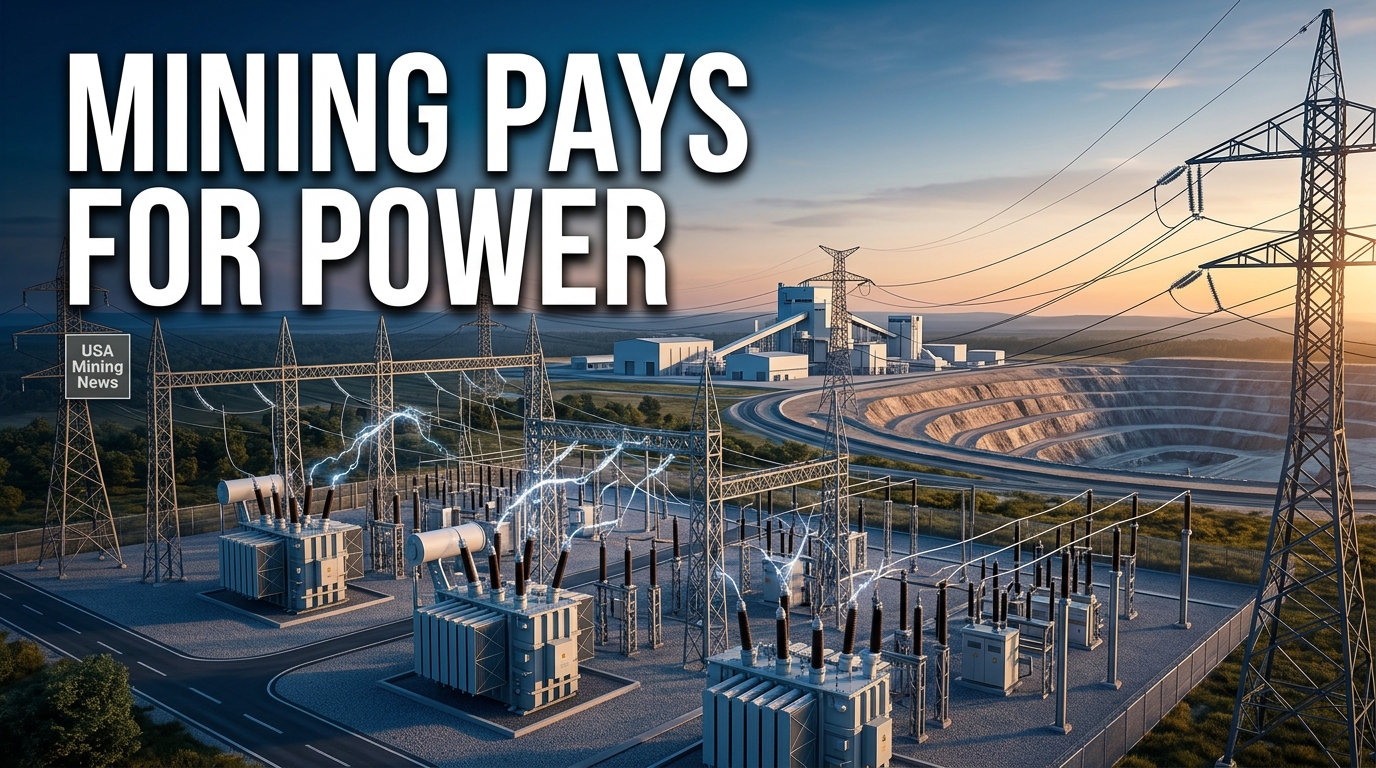
The landscape of electricity procurement and cost allocation for industrial consumers in the United States is poised for a significant transformation, particularly within the vast operational footprint of PJM Interconnection LLC. On October 9, 2026, the U.S. Department of Energy (DOE) publicly declared its support for guidance issued by the Federal Energy Regulatory Commission (FERC), advocating for a pivotal change: requiring large new electricity users to directly fund the generation and infrastructure necessary to meet their substantial power demands. This development holds profound implications for energy-intensive sectors, including the mining industry, which is a major consumer of electricity and often a critical "large load user" in regional grids.
DOE and FERC Push for Ratepayer Protection in PJM
The DOE's announcement, made from Washington, signaled a concerted effort to safeguard American families and businesses from bearing the costs associated with new, significant electricity consumption. The department formalized its position by filing a Notice of Intervention and Statement of Position with FERC, specifically endorsing FERC's recommendation for PJM's proposed Reliability Backstop Procurement. At its core, this initiative aims to ensure "lower electricity costs for American families and businesses" by preventing existing ratepayers from subsidizing the grid expansion and generation capacity required by new, large-scale operations. FERC has recommended that PJM submit revised tariff provisions to implement appropriate cost allocation and other reforms, directly addressing what the DOE perceives as potential inequities in current system charges.
This action aligns squarely with President Trump’s broader Ratepayer Protection Pledge, a policy designed to make sure that entities consuming substantial amounts of electricity are held accountable for the associated infrastructure investments. For industries like mining, where power consumption can represent a dominant portion of operating expenditures, such policy shifts are not merely regulatory adjustments but fundamental changes to project economics and strategic planning.
The Trump Administration's Stance on Grid Reliability and Costs
The DOE’s intervention is not an isolated event but rather a continuation of strategic efforts initiated earlier in the year by the Trump Administration. In January 2026, the administration had already called upon PJM to adopt new market rules specifically aimed at strengthening grid reliability and reducing overall electricity costs. This earlier directive included a request for PJM to conduct an emergency power auction and to expedite the development of reliable power generation sources. Notably, the Trump Administration's appeal in January was echoed by the governors of all 13 states that fall within PJM’s extensive grid, underscoring a broad consensus on the need for grid resilience and equitable cost distribution.
U.S. Secretary of Energy Chris Wright emphasized the administration's commitment, stating, "The Trump Administration remains committed to doing everything it can to lower electricity costs, grow the supply of American energy and strengthen grid reliability." He further articulated the direct link between the President’s pledge and the current action: "That’s why President Trump created the Ratepayer Protection Pledge, and the Energy Department supports having large electricity users pay for reliable new power generation."
Echoing this sentiment, U.S. Deputy Secretary of Energy James P. Danly highlighted the proactive nature of the administration's policy. "In January, the Trump Administration recognized early warning signs of capacity shortfalls in PJM and joined the Governors of all 13 PJM states in issuing a Statement of Principles to PJM, calling for PJM to adopt market rules to strengthen grid reliability and reduce electricity costs for American families and businesses," Danly remarked. He added that the proposed reforms would increase transparency and prevent "unjust cost shifts onto existing customers," thereby advancing the Ratepayer Protection Pledge and ensuring "affordable, reliable, and secure electricity" for all Americans.
Understanding PJM Interconnection and Its Scope
PJM Interconnection LLC is a regional transmission organization (RTO) that coordinates the movement of wholesale electricity in all or parts of 13 states across the mid-Atlantic region and the District of Columbia. These states include Delaware, Illinois, Indiana, Kentucky, Maryland, Michigan, New Jersey, North Carolina, Ohio, Pennsylvania, Tennessee, Virginia, and West Virginia. PJM ensures the reliability of the high-voltage electric transmission system, operates competitive wholesale electricity markets, and plans for the future power needs of the region. Its decisions on cost allocation and grid management directly influence energy prices and infrastructure development for millions of consumers and thousands of businesses, including numerous mining operations.
Key Provisions of the Proposed Reforms
The DOE’s support for an urgent procurement process outlines several critical objectives, each designed to reshape how new, large electricity loads interact with the grid and contribute to its stability and cost structure:
- Lower Electricity Costs for Americans: By directly assigning the costs of new generation and infrastructure to large load users, the initiative aims to reduce the burden on existing households and businesses.
- Protection Against Subsidization: A core principle is to shield current ratepayers from inadvertently subsidizing the substantial energy requirements of new industrial developments.
- Accurate and Transparent Demand Information: The reforms seek to mandate the use of precise and clear data regarding future electricity demand, allowing for better planning and resource allocation.
- Capacity Options for Large Loads: Significantly, the proposal allows large loads the flexibility to "build, bring, or buy" the necessary capacity to serve their own consumption. This provision empowers large users to either invest in their own generation, secure long-term power purchase agreements, or procure the needed capacity through market mechanisms, rather than simply relying on existing grid capacity at shared costs.
The DOE has urged PJM to comply promptly with FERC’s order and to implement "durable market reforms" that will ensure both reliable generation and continued protection for American families and businesses.
Implications for the Mining Industry
For the mining industry, these proposed reforms represent a critical turning point in energy strategy. Mining operations, from extraction to processing, are inherently energy-intensive. Modern mining techniques, particularly for critical minerals vital to electric vehicles and renewable energy, often involve substantial electrical loads for crushing, grinding, ventilation, pumping, and specialized processing.
- Energy Intensity as a Core Challenge: Electricity costs are consistently among the largest operational expenditures (OPEX) for mining companies. Any policy that directly increases these costs for new projects can significantly impact their financial viability and investment attractiveness.
- "Large New Electricity Users" Defined: New, large-scale mining projects, especially those for battery metals or rare earth elements that involve complex beneficiation and refining, unequivocally fall under the category of "large new electricity users." These operations often require dedicated, robust power infrastructure and substantial energy inputs from day one.
- Capital Expenditure and Operational Planning: Under the new framework, mining companies planning new projects within the PJM footprint will need to factor in potentially significant upfront capital expenditures (CAPEX) for grid connection, transmission upgrades, or even self-generation facilities. This will necessitate more comprehensive energy procurement strategies from the earliest stages of project development. Project economics, site selection, and even the choice of processing technologies could be influenced by these new cost allocation rules.
- Regional Impact: The PJM region, encompassing traditional coal mining states like West Virginia, Pennsylvania, and Ohio, is experiencing a shift in its energy economy. While coal remains significant, there's growing interest in other mineral resources. For example, potential critical mineral exploration or processing facilities in these states would now face these new energy cost responsibilities, potentially altering competitive dynamics compared to regions with different regulatory frameworks.
- Self-Generation and Energy Independence: The "build, bring, or buy" provision offers both a challenge and an opportunity. Mining companies could explore greater energy independence by investing in on-site generation, such as natural gas-fired plants, solar farms, or even micro-reactors, depending on the scale and location of the operation. This might offer long-term cost stability and supply security, mitigating exposure to volatile wholesale power markets and ensuring operational resilience against grid disruptions. Conversely, it adds to the upfront capital burden and operational complexity.
Navigating a Shifting Energy Landscape
The DOE's endorsement of FERC's guidance for PJM reflects a broader trend toward enhancing grid resilience, ensuring fair market practices, and modernizing energy infrastructure across the United States. For an industry as foundational and energy-intensive as mining, these shifts necessitate proactive engagement and strategic adaptation. Companies must meticulously evaluate the new cost allocation mechanisms, understand their regional implications, and integrate robust energy planning into their project development lifecycles.
The emphasis on "accurate and transparent demand information" also underscores the need for mining companies to provide precise forecasts of their power requirements. This transparency will be crucial for both regulatory compliance and for PJM's ability to plan for the necessary capacity additions without unduly burdening existing ratepayers.
The Path Forward: Compliance and Durable Reforms
The ball is now firmly in PJM's court to comply with FERC’s recommendations and revise its tariff provisions. The DOE's call for "durable market reforms" suggests that these changes are not intended as temporary measures but as long-term structural adjustments to how new large loads are integrated and managed within the grid.
Mining sector stakeholders, including investors, developers, and operators, must closely monitor PJM’s response and the subsequent implementation details. The specific contours of the revised tariffs, the mechanisms for assessing "large new electricity users," and the practical options for "building, bringing, or buying" capacity will critically define the operating environment for future mining projects in the PJM region. Proactive engagement with PJM and energy consultants will be essential to understanding and navigating this evolving regulatory and economic landscape.
Ultimately, this move by the DOE and FERC, supported by the Trump Administration, signals a clear policy direction: large electricity consumers, including new mining operations, will increasingly be expected to bear the direct costs of their energy demands. This shift, while potentially adding to initial project costs, also presents an opportunity for innovative energy solutions and greater self-sufficiency for the mining industry.