OLA’s Ultimatum Reshapes Mining Landscape in Ethiopia’s Oromia Region Following Tulu Kapi Incident
The intricate dynamics of resource development in politically sensitive regions have once again been brought into sharp focus by a recent incident in Ethiopia. The Oromo Liberation Army (OLA) has delivered a stringent warning to both domestic and international mining operators in the Oromia region, emphasizing the non-negotiable imperative of direct local community involvement and verifiable environmental compliance. This significant development comes on the heels of a fatal security incident at KEFI Gold and Copper’s flagship Tulu Kapi gold project, an event that has compelled KEFI to suspend its development activities and initiated a comprehensive review of operational safeguards. The OLA's public declaration, reported by the Addis Standard on September 15, 2026, serves as a stark reminder to the global mining industry of the profound importance of social license to operate, particularly in areas grappling with complex socio-political challenges.
A Stark Warning from the OLA
In an urgent notice disseminated to businesses engaged in Oromia’s extractive industries, the OLA unequivocally stated that all mining operations must only proceed after "thorough and transparent deliberations" with local communities. These deliberations, according to the group, are crucial for developing robust mechanisms that ensure genuine participation and tangible benefits for the local populace. The OLA’s demands extend beyond community engagement, also mandating the implementation of stringent and verifiable environmental standards across all mining activities, declaring compliance with these measures to be "non-negotiable."
The severity of this warning was underscored by the OLA’s explicit reference to the recent fatalities at the Tulu Kapi gold project. The group indicated that this incident serves as a clear example of the "full consequences" that companies failing to meet these stated requirements could face. By citing "the fate of Tulu Kapi in western Oromia" as a case in point, the OLA has effectively transformed a localized security incident into a broader industry precedent, signaling a new, more assertive stance regarding extractive operations within its sphere of influence. For mining executives and investors, this marks a critical inflection point, demanding a re-evaluation of risk profiles and community engagement strategies in the region.
The Tulu Kapi Incident: A Turning Point
The catalyst for the OLA's sweeping warning was a security incident that occurred on September 4, 2026, at the Tulu Kapi gold project. This tragic event resulted in multiple fatalities, including security personnel, several community members, and a dedicated employee of KEFI Gold and Copper. The precise circumstances surrounding the incident remain sensitive and have not been fully disclosed by KEFI.
In response to the escalating security concerns and the tragic loss of life, KEFI Gold and Copper promptly suspended all development activities at its Tulu Kapi project. An update issued by the company on September 7 confirmed that it is actively engaging with a diverse group of stakeholders, including community representatives, Ethiopian Government authorities, and security forces. These discussions are aimed at a comprehensive assessment of the conditions necessary for a safe and sustainable resumption of project development. During this period of suspension, KEFI has committed to adopting prudent expenditure measures and has placed further disbursements of project financing on hold. This financial prudence will remain in effect pending a full review of the situation and the successful development and implementation of necessary safeguards to prevent future incidents. The suspension, while a necessary measure, introduces uncertainty into the project’s timeline and financial trajectory, an outcome closely watched by the industry.
Tulu Kapi Gold Project: A Major Development on Hold
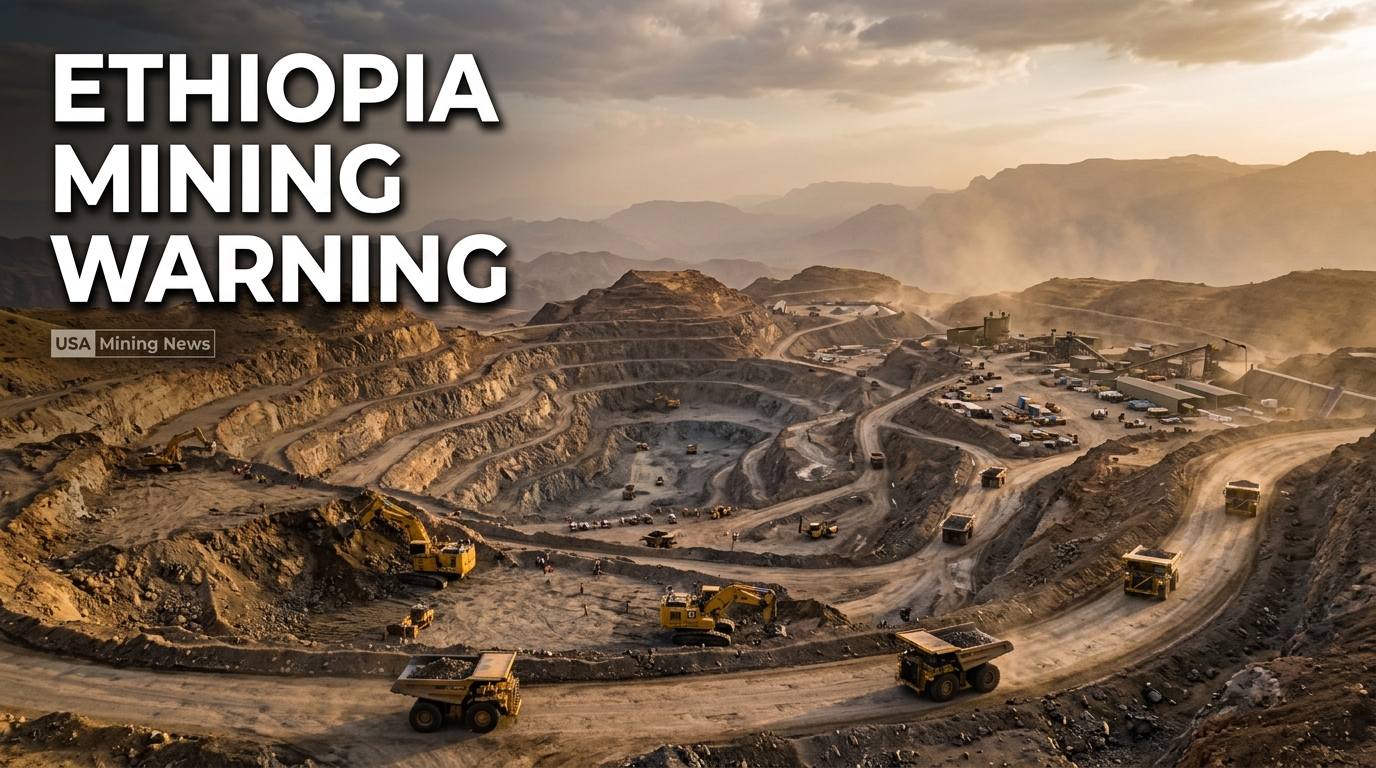
The Tulu Kapi gold project represents a significant undertaking in Ethiopia's mining sector, aimed at unlocking substantial gold reserves. Located in the Ganji district of the West Wollega Zone in Oromia, the project site spans approximately 8 square kilometers and lies about 28 kilometers east of Ayra town. This strategic location places it within a region with known geological potential but also complex social and political dynamics.
KEFI Gold and Copper has been a long-term player in this venture, having acquired the Tulu Kapi license back in 2014. After years of preparatory work and negotiations, the company secured substantial project financing totaling $320 million (equivalent to €277.45 million) in January 2024. This financing package was a crucial step, enabling the acceleration of development plans.
Following board approval and in close cooperation with both Ethiopian federal and Oromia regional authorities, exploration activities at the site commenced in May 2024. The subsequent months saw rapid progress in infrastructure development. By August 2024, essential facilities such as worker accommodation, robust water systems, and an airstrip had reportedly reached an impressive 95% completion. This swift progress was foundational to the project's ambitious timeline.
Development of the gold project officially commenced in March 2026, with KEFI setting an aggressive target of initiating gold production by mid-2028. Work completed prior to the September 4 incident included critical steps such as the construction of an access road, the establishment of vital electricity connections, the procurement of essential equipment and machinery, and the phased resettlement of local communities – a process that often requires delicate negotiation and significant social investment. The sudden halt of a project at such an advanced stage underscores the profound impact of security and social issues on even well-financed and technically sound operations.
Navigating the Complexities of Mining in Oromia
The OLA's warning and the suspension of the Tulu Kapi project highlight a pervasive challenge for the global mining industry: operating in regions marked by political instability, ethnic tensions, and the presence of non-state armed groups. Ethiopia, a nation undergoing significant internal reforms and facing various regional conflicts, presents a complex operating environment for foreign investors. The Oromia region, being the largest and most populous administrative region in Ethiopia, has a history of grievances and demands for greater autonomy and control over resources, making it a focal point for such warnings.
The OLA’s specific demands – direct local community involvement, transparent deliberations, and mechanisms for participation and benefit – resonate deeply with modern industry best practices for achieving a "social license to operate." This concept, increasingly vital for project viability, goes beyond mere regulatory compliance, requiring companies to earn and maintain the ongoing approval of local communities and stakeholders. Failure to secure this license often leads to disruptions, reputational damage, and ultimately, significant financial losses, as exemplified by the Tulu Kapi situation.
Furthermore, the emphasis on "verifiable environmental standards" reflects a growing global expectation for responsible resource extraction. Companies must not only commit to environmental protection but also demonstrate tangible, measurable compliance. This dual focus on social equity and environmental stewardship is rapidly becoming the benchmark for sustainable mining, particularly in vulnerable ecosystems and communities.
Industry Implications and Future Outlook
The Tulu Kapi incident and the OLA's subsequent warning carry significant implications not just for KEFI Gold and Copper, but for the entire extractive industry contemplating or currently operating in Ethiopia and similar jurisdictions. For KEFI, the immediate future involves intensive engagement and negotiation with various parties to establish a secure and acceptable framework for project resumption. The longer the suspension persists, the greater the financial burden and the risk of derailing the mid-2028 production target. The re-evaluation of financing disbursements indicates that investors are now seeking greater assurances regarding the project's stability and risk mitigation strategies.
For other mining companies, this incident serves as a critical case study emphasizing the need for:
- Robust Stakeholder Engagement: Moving beyond token consultations to genuine, transparent, and continuous dialogue with all community segments, including those traditionally marginalized or represented by non-state actors.
- Comprehensive Risk Assessment: A holistic approach that integrates geopolitical, social, and environmental risks alongside traditional technical and financial assessments.
- Strong ESG Frameworks: Implementing and publicly demonstrating adherence to Environmental, Social, and Governance (ESG) principles, which are increasingly demanded by investors and essential for long-term operational resilience.
- Adaptive Security Strategies: Developing security protocols that prioritize community relations and de-escalation, rather than solely relying on armed protection, which can inadvertently exacerbate tensions.
The OLA’s warning makes it clear that overlooking community demands and environmental responsibilities in regions with active non-state groups can have immediate and severe operational consequences. The Ethiopian government, keen to attract foreign investment to its burgeoning mining sector, will also need to demonstrate its capacity to create a stable and predictable operating environment while addressing the legitimate concerns of its diverse population. The path forward for Tulu Kapi, and indeed for mining in Oromia, will hinge on the ability of all parties to navigate these complex demands with prudence, transparency, and a genuine commitment to shared prosperity and environmental integrity.