WASHINGTON D.C. – The landscape of American energy policy saw a pivotal development on June 4, 2026, as the U.S. Department of Energy (DOE) unveiled a substantial investment package designed to invigorate the nation’s coal sector. Leveraging the powers of the Defense Production Act (DPA) Title III, the DOE has committed up to $500 million to support thirteen American coal-fired power plants and establish critical new coal export infrastructure. This strategic allocation highlights a pronounced governmental emphasis on domestic energy resilience and the enhancement of U.S. energy export capabilities.
A Strategic Infusion: DPA Funding for Coal Sector Resilience
The total allocation of $500 million is segmented, targeting two distinct yet interconnected areas of the coal value chain. A significant portion, up to $425 million, has been earmarked for twelve selected projects specifically aimed at expanding and reinvigorating America’s existing coal fleet. These projects are intended to modernize essential baseload power generation facilities, ensuring reliability and stability within the national energy grid. For an industry that has faced considerable headwinds from environmental regulations and competition, this DPA funding represents a critical lifeline and a strategic recognition of coal’s ongoing role in the U.S. energy mix.
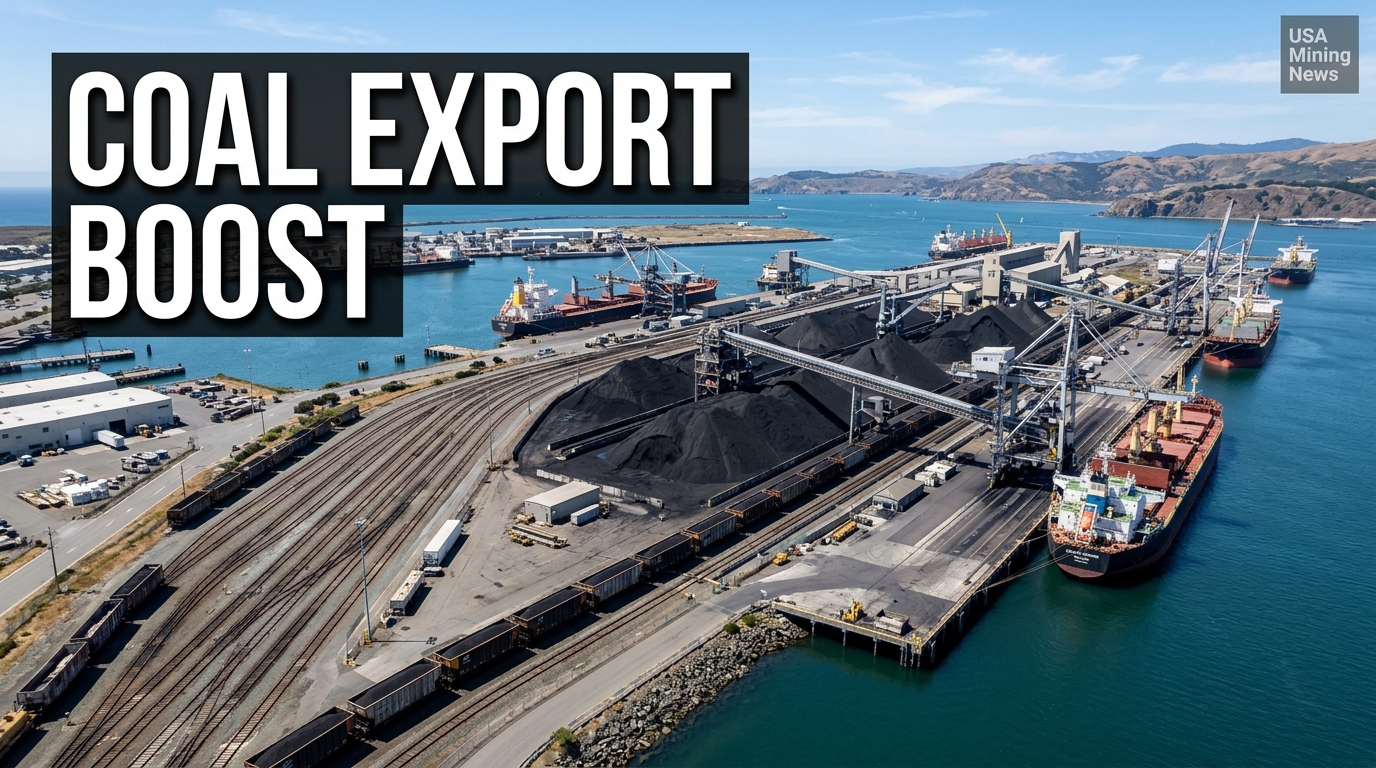
The remaining $75 million from the DPA funds is directed towards a flagship infrastructure initiative: the West Gateway Terminal Project. Located in Oakland, California, this rail-served marine export terminal is poised to become a vital conduit for American bulk commodities, with an impressive capacity of handling more than 10 million tons annually. Its primary objective, as outlined by the DOE, is to significantly expand West Coast export capacity, specifically facilitating the movement of energy resources, including coal, to allied nations.
The West Gateway Terminal: A Crucial Export Corridor
The West Gateway Terminal Project stands out as a strategic investment with far-reaching implications for U.S. trade and geopolitical influence. Situated on the crucial West Coast, the terminal is designed not only to alleviate existing bottlenecks in export logistics but also to open new pathways for American coal producers to access global markets. The specified capacity of over 10 million tons of bulk commodities annually underscores its potential to become a cornerstone of U.S. energy exports, providing a reliable outlet for the nation's vast coal reserves.
The DOE explicitly identified key allied nations as target recipients for these enhanced energy exports, including Japan, South Korea, Taiwan, Vietnam, and Malaysia. These Indo-Pacific economies represent significant energy demand centers, often reliant on diverse sources to fuel their industrial growth and maintain national energy security. By bolstering export capacity to these partners, the U.S. aims to strengthen economic ties, reinforce supply chain resilience, and deepen strategic energy partnerships across a critical geopolitical region.
Reinforcing Domestic Coal Operations and Energy Security
The overarching intent behind this DPA funding is multifaceted, focusing on bolstering the foundational elements of U.S. energy independence and national security. The DOE's announcement detailed several key objectives:
- Strengthening Domestic Coal Mining Value Chains: By supporting coal-fired power plants and expanding export infrastructure, the initiative provides a renewed incentive and stability for America's coal mining industry. This can translate into sustained operations, job security, and investment in critical mining technologies and personnel.
- Supporting Reliable Baseload Power Generation: Despite the broader global shift towards renewable energy, baseload power, primarily from sources like coal and nuclear, remains essential for grid stability. The DPA funding acknowledges this necessity, ensuring that the U.S. maintains robust and reliable power generation capabilities to meet domestic demand.
- Enhancing the Resilience of Critical Energy Infrastructure: The investments are a direct measure to fortify energy infrastructure against various threats, ranging from natural disasters to cyberattacks. A diverse and robust energy portfolio, including coal, contributes significantly to national resilience.
The deployment of DPA authorities in this context signals a recognition that coal continues to be perceived as a vital component of national security. According to the DOE, this move is crucial for ensuring the United States maintains the necessary industrial capacity and energy resources required for a strong national defense posture.
Executive Perspectives on Energy Dominance and Alliances
U.S. Secretary of Energy Chris Wright articulated the administration's rationale with clarity, emphasizing the inextricable link between national security and sustained support for the coal fleet and domestic supply chains. Secretary Wright stated, "To ensure our national security, the United States will continue to support our coal fleet and domestic supply chains." He further highlighted the historical constraint posed by limited West Coast export capacity on America's ability to move coal and other energy resources to global markets. "By investing in both coal generation and critical export infrastructure, including the West Gateway Terminal Project," Wright concluded, "the Energy Department is strengthening U.S. energy security, reinforcing strategic supply chains, and advancing American energy dominance."
Echoing this sentiment, DOE Under Secretary of Energy Kyle Haustveit underscored the strategic significance of the West Gateway Terminal Project. Haustveit noted, "The West Gateway Terminal Project fills a critical infrastructure gap in the U.S. energy export system by providing additional West Coast export capacity for American coal producers." He emphasized that, by expanding access to global markets, the project will not only "support continued growth in U.S. coal exports" but also "improve supply chain resilience and strengthen energy partnerships with allies throughout the Indo-Pacific region." These statements collectively paint a picture of an administration proactively utilizing all available tools to secure national interests and project global influence through energy policy.
Broader Implications for the U.S. Mining Industry
For the U.S. mining industry, particularly the coal mining sector, this announcement represents a substantial, albeit perhaps unexpected, injection of support. Over the past decade, domestic coal consumption has declined significantly due to competition from cheaper natural gas, the proliferation of renewable energy sources, and stringent environmental regulations. This has led to numerous mine closures, job losses, and a contraction of the industry. The DPA funding, however, signals a strategic pivot, recognizing coal's role within a broader energy security framework.
The $425 million directed to coal-fired power plants could stabilize demand for thermal coal from U.S. mines, potentially extending the operational life of some facilities and, by extension, the mines that supply them. This provides an opportunity for existing coal producers to maintain or even slightly increase output, ensuring a level of stability that has been largely absent. Investments in plant upgrades often translate to more efficient coal combustion, indirectly supporting the ongoing viability of the coal supply chain.
Perhaps even more impactful for the long-term health of the U.S. mining export sector is the $75 million allocated to the West Gateway Terminal. For years, U.S. bulk commodity exporters, including coal producers, have faced challenges in accessing cost-effective and high-capacity West Coast port infrastructure. Environmental opposition and logistical hurdles have frequently stalled or blocked new terminal developments. A new terminal capable of handling 10 million tons annually significantly improves the competitive position of U.S. coal in Asian markets, where demand – particularly for high-quality thermal and metallurgical coal – remains robust. Coal from western U.S. basins, such as the Powder River Basin, could see renewed export opportunities, providing a critical market outlet that complements domestic demand.
Furthermore, the terminal's capacity for "bulk commodities" beyond just coal suggests potential benefits for other facets of the mining industry. While coal is the immediate focus, such an expansive bulk export facility could theoretically serve other mined materials in the future, subject to market demand and logistical feasibility. This infrastructure development is a positive signal for the broader U.S. mineral resource sector, indicating a governmental willingness to invest in the conduits necessary for global trade.
The geopolitical dimension is also critical. By positioning the U.S. as a reliable supplier of energy resources to key allies like Japan, South Korea, Taiwan, Vietnam, and Malaysia, the DPA investment reinforces diplomatic ties and provides these nations with diversified energy options. In an increasingly volatile global energy market, this reliability can be a significant strategic advantage, intertwining economic and security interests.
Challenges and Forward Trajectories
While the DPA funding offers a strategic boost, the U.S. coal industry still operates within a complex energy transition landscape. The investments announced on June 4, 2026, do not fundamentally alter the broader global trajectory towards decarbonization and renewable energy expansion. Instead, they position coal as a critical bridge and a strategic asset for national security and allied energy provision during this transition.
The immediate next steps will involve the selection and implementation of the twelve coal plant projects, and the expedited development of the West Gateway Terminal. The operational success of these initiatives will be crucial in demonstrating the efficacy of DPA funding in achieving its stated goals of strengthening energy security and export capacity. For mining companies, this presents a period of cautious optimism, prompting evaluations of potential supply contracts, logistical strategies, and investment in mine efficiency and capacity.
Ultimately, the DOE’s decision marks a significant reaffirmation of coal’s role as a strategic resource in the U.S. national security apparatus, particularly in an era demanding robust energy supply chains and strong international alliances. It underscores a pragmatic approach to energy policy that balances long-term transition goals with immediate national security imperatives, providing a vital, if temporary, re-energizing force for the American coal mining industry.