Energy Fuels Embarks on Strategic White Mesa Mill Expansion, Targeting Heavy Rare Earth Dominance
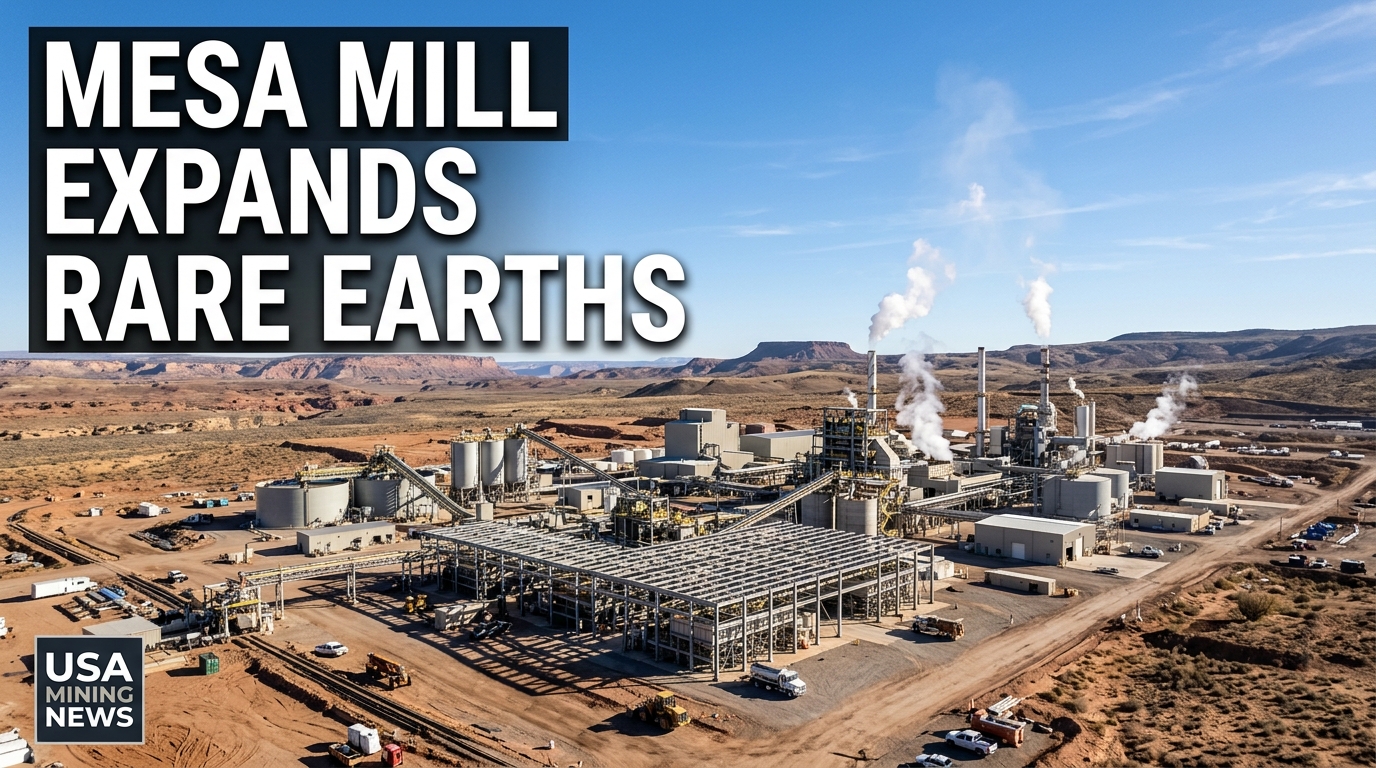
LAKEWOOD, CO – July 30, 2026 – Energy Fuels Inc. (NYSE American: UUUU, TSX: EFR) has officially initiated construction on a pivotal expansion at its White Mesa Mill in Blanding, Utah, marking a significant advancement in its ambition to become a leading Western producer of critical rare earth elements. This strategic project, with an estimated capital expenditure of $104 million, is engineered to introduce commercial-scale production of heavy rare earth oxides (HREOs), specifically targeting terbium and dysprosium, with further plans for samarium, europium, and gadolinium. The move is designed to address pressing supply chain vulnerabilities for crucial materials used across high-growth sectors including automotive, robotics, clean energy, defense, and data centers.
The White Mesa Mill, already a cornerstone of North American uranium production and a burgeoning hub for light rare earth element (LREE) separation, is positioned to play an even more expansive role in the global critical minerals landscape. This expansion builds upon its existing capabilities, which currently allow for the production of up to 1,000 tonnes per annum (tpa) of separated neodymium-praseodymium (NdPr) oxide. The initiation of construction underscores Energy Fuels’ commitment to developing an integrated mine-to-magnet supply chain, a vision increasingly critical for the economic and national security interests of the United States and its allies.
Addressing the Heavy Rare Earth Supply Chain Pinch Point
The global rare earth market is characterized by complex supply dynamics, with the processing and separation of these elements heavily concentrated in a single geopolitical region. Heavy rare earths, in particular, are vital for high-performance permanent magnets, which are indispensable components in a wide array of advanced technologies. These HREOs, such as terbium and dysprosium, are crucial for enhancing the thermal stability and coercivity of NdFeB magnets, allowing them to perform effectively in demanding high-temperature environments typical of electric vehicle motors, wind turbine generators, and precision defense systems.
Ross Bhappu, President and CEO of Energy Fuels, articulated the strategic imperative behind this expansion, stating, “Heavy rare earth production is a severe pinch point in North American and European permanent magnet supply chains.” He further added, “Given our ongoing success in piloting heavy rare earth oxides, we are now ready to advance to commercial-scale production.” This statement highlights a significant industry challenge: while rare earth minerals are found globally, the highly specialized and capital-intensive chemical separation processes required to produce high-purity individual rare earth oxides are not widely available outside of established processing hubs. Energy Fuels’ investment directly targets this bottleneck, aiming to localize and diversify this critical step in the value chain. The company’s prior piloting efforts demonstrate a methodical approach to de-risking the technological aspects of HREO separation before committing to commercial scale, a prudent strategy in such a technically complex field.
Operational Details and Ambitious Production Targets
The expansion project at White Mesa Mill is designed to significantly boost Energy Fuels' rare earth output. Upon the completion of the initial phases, the mill is projected to annually produce approximately 20 tpa of terbium oxide and 120 tpa of dysprosium oxide. These initial HREO circuits are expected to be fully operational and commissioned by the end of 2027. Following this, circuits for samarium, europium, and gadolinium oxides are slated for completion by the end of 2028, further broadening the mill’s product portfolio and its contribution to the critical minerals sector.
Looking beyond these initial targets, Energy Fuels has even more ambitious plans for the mill’s future capacity. The company intends to implement further capacity increases in 2029, targeting an annual production of 6,294 tpa of neodymium-praseodymium oxide, 80 tpa of terbium oxide, and 288 tpa of dysprosium oxide. This projected ramp-up represents a substantial increase across all rare earth oxide categories and would firmly establish the White Mesa Mill as a cornerstone of diversified Western rare earth supply. The ability to scale production of these individual rare earth elements demonstrates not only the technical prowess of Energy Fuels but also the potential for the White Mesa Mill to become a globally significant processing facility for both light and heavy rare earths.
Integrated Supply Chain: From Mine to Magnet
A critical element of Energy Fuels’ strategy is securing a reliable and sustainable feedstock for its expanded processing capabilities. This will be primarily supplied by the company’s Donald Project joint venture in Australia. The Donald Project is anticipated to provide between 8,500 and 9,500 tpa of monazite concentrate, a key mineral containing both light and heavy rare earths, with deliveries expected to commence in 2028. This feedstock supply is contingent upon a final investment decision for the Donald Project, which Energy Fuels expects to be made in the third quarter of 2026. The successful advancement of the Donald Project is thus intrinsically linked to the long-term operational success and scale of the White Mesa Mill's rare earth processing.
The rare earth oxides produced at the White Mesa Mill are intended to feed into a robust, multi-stage supply chain. Energy Fuels reports that the White Mesa output is expected to supply approximately 70% of the feedstock required for Australian Strategic Materials’ (ASM) metal and alloy production capacity in South Korea. This strategic partnership underscores the global nature of building diversified rare earth supply chains, leveraging international collaboration to achieve resilience.
Crucially, these metals and alloys will then support magnet manufacturing at the Vacuumschmelze (VAC) facility in Sumter, South Carolina, US. This facility is a strategic asset in the Western magnet supply chain, and its secure access to critical rare earth inputs is paramount. Further solidifying its integrated vision, Energy Fuels last month signed a definitive agreement to acquire 100% of the VAC facility from Ara Partners. This transaction, valued at nearly $1.9 billion in a cash-and-stock deal, is a transformative step that brings the critical magnet manufacturing stage directly under Energy Fuels’ control, truly realizing the "mine-to-magnet" vertical integration strategy. This acquisition ensures that rare earth oxides processed at White Mesa can ultimately be transformed into high-performance permanent magnets within a consolidated, Western-controlled value chain.
Funding and Financial Fortitude for Critical Minerals
The substantial capital expenditure of $104 million for the White Mesa Mill expansion is expected to be funded through a combination of sources. This includes various government grants and loans, notably a previously announced loan commitment from the United States Government. Such government support underscores the strategic national importance placed on securing domestic critical mineral supply chains and de-risking projects that might otherwise face significant financial hurdles due to their long development cycles and initial capital intensity. The US government’s involvement signifies a broader policy push to reduce reliance on foreign critical mineral sources.
The remainder of the necessary capital will be drawn from Energy Fuels’ robust working capital, which stood at approximately $960 million as of March 31, 2026. This substantial financial liquidity demonstrates the company's strong balance sheet and its capacity to self-fund significant portions of its strategic growth initiatives, providing a clear indication of its financial health and commitment to its expansion plans.
Market Implications and Future Outlook
This expansion at the White Mesa Mill carries profound implications for the global rare earth market and the broader critical minerals industry. For the United States, it represents a tangible step towards reshoring and diversifying the supply chain for materials vital to defense, clean energy transition, and advanced manufacturing. By establishing commercial-scale HREO separation capabilities, Energy Fuels is directly contributing to mitigating geopolitical risks associated with over-reliance on a single source for these essential materials.
For Energy Fuels, this project solidifies its position as a diversified critical minerals company, moving beyond its historical focus on uranium to become a significant player in the rare earth sector. The integrated mine-to-magnet strategy, now bolstered by the acquisition of the VAC facility, provides a powerful competitive advantage by controlling multiple stages of the value chain. This offers greater stability and potential for margin capture compared to companies focused solely on extraction or primary processing.
Investors and industry professionals will keenly watch the progress of this expansion and the final investment decision for the Donald Project. The successful commissioning of these rare earth circuits will signal the maturity of Western efforts to build independent rare earth capabilities. The ongoing development of domestic rare earth processing capacity is not just an economic endeavor but a strategic imperative, ensuring that the foundational materials for the technologies of the future are secured and readily available within reliable supply chains. As the global demand for advanced permanent magnets continues to escalate, driven by the electrification of transport and the expansion of renewable energy, Energy Fuels’ proactive steps at the White Mesa Mill position it as a critical enabler of this industrial transformation.