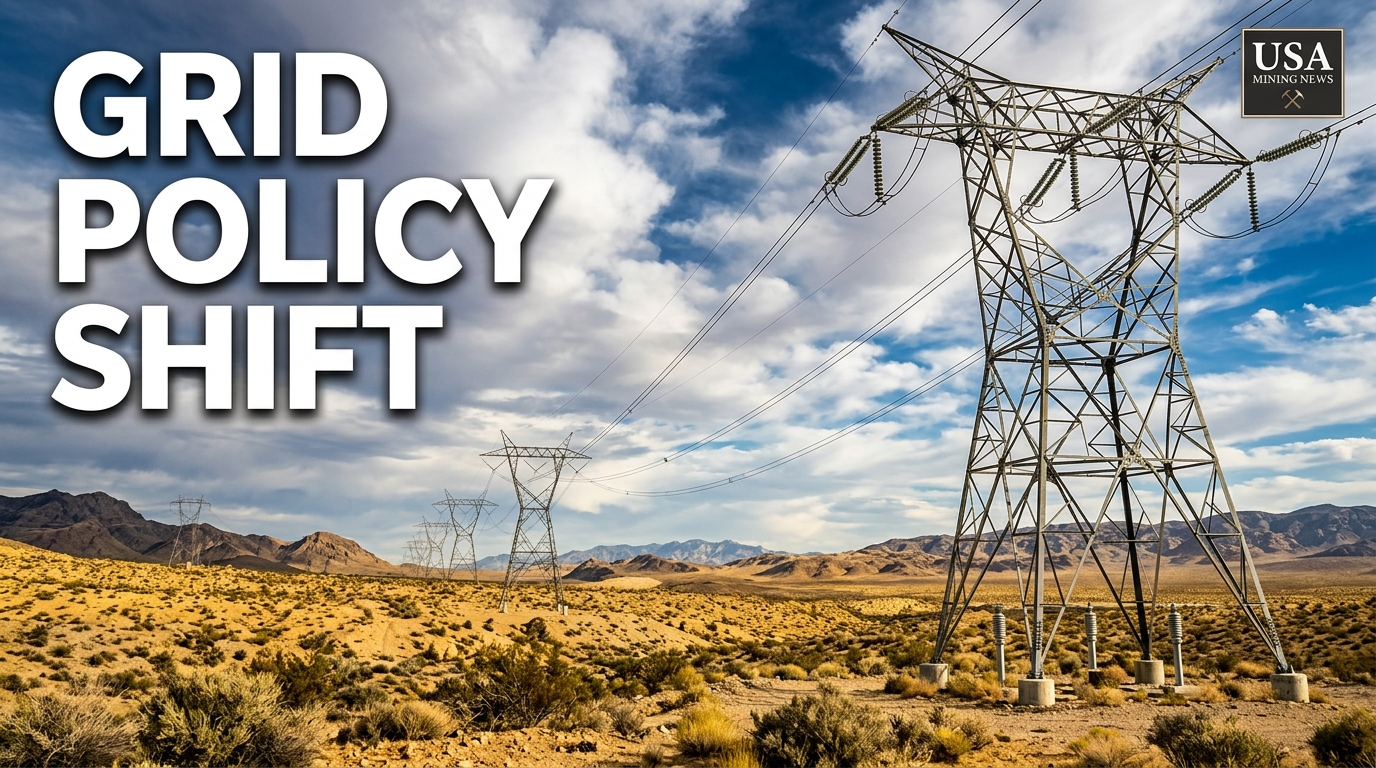
WASHINGTON, D.C. – In a decisive move impacting the future of American energy infrastructure, U.S. Secretary of Energy Chris Wright announced on August 12, 2026, that the Department of Energy (DOE) would not proceed with the designation of three previously proposed National Interest Electric Transmission Corridors (NIETCs). These corridors, initially selected in December 2024 to advance in the review process, were touted by the prior administration as critical to accelerating decarbonization efforts. The Trump Administration’s reversal underscores a fundamental reorientation of national energy policy, prioritizing grid reliability, cost efficiency, and local community concerns over a "climate-alarmist agenda."
Shifting Gears: The Cancellation of Proposed NIETCs
The three corridors now effectively shelved are the Lake Erie–Canada Corridor, the Southwestern Grid Connector Corridor, and the Tribal Energy Access Corridor. Their initial selection in December 2024 represented a component of a broader strategy, which Secretary Wright characterized as the "Green New Scam agenda," aimed at aggressive decarbonization. However, the current administration's extensive review, which included significant public feedback and stakeholder input, led to the conclusion that the existing designation framework for these corridors was proving ineffective.
Secretary Wright articulated the administration's stance clearly, stating, “Extensive review, including public feedback and stakeholder input, made clear that the current designation process for these three proposed transmission corridors should not continue.” He emphasized a core tenet of the new policy: “Transmission policy must serve the American people—not special interests or a climate-alarmist agenda that drives up costs, worsens reliability, and disregards the concerns of local communities.” This statement provides a stark contrast to the previous administration's approach and signals a more pragmatic, demand-driven strategy for grid development.
Rationales for Reversal: Reliability, Cost, and Community Concerns
The DOE's decision is predicated on the assertion that the prior framework for NIETC designation failed to achieve its stated goals of strengthening grid reliability and reducing electricity costs. In practice, the framework also generated considerable confusion and concern within affected communities regarding the scope and intent of the NIETC authority. Such local opposition and lack of clarity are perennial challenges in large-scale infrastructure projects, including those pertinent to mining, often leading to protracted delays and increased costs. The Secretary's remarks indicate a commitment to strengthening America’s electric grid through "common-sense policies that prioritize delivering affordable, reliable, and secure electricity to American families and businesses."
For the mining industry, which is inherently energy-intensive, the principles of affordability, reliability, and security of electricity supply are paramount. Instability in power grids can lead to operational disruptions, safety hazards, and significant financial losses. Therefore, a policy pivot that explicitly targets these concerns could be viewed favorably, provided the alternative strategies effectively deliver on their promises of grid enhancement.
A New Path Forward: DOE's Alternative Transmission Strategy
While the designation of new, long-distance corridors has been halted, the Trump Administration and the DOE have concurrently pursued a series of substantial investments aimed at bolstering existing transmission infrastructure and modernizing the grid. These initiatives highlight a strategy focused on upgrading the backbone of the nation's electrical system rather than creating new, potentially controversial, greenfield corridors. Key actions include:
- October 2025: The DOE’s Office of Energy Dominance Financing (EDF) closed a $1.6 billion loan guarantee to AEP Transmission. This significant investment is earmarked for reconductoring and rebuilding nearly 5,000 miles of transmission lines across five states, enhancing the capacity and resilience of an existing vital network.
- February 2026: The EDF further committed $26.5 billion in loans to Southern Company subsidiaries, Georgia Power and Alabama Power. These funds are designed to support a broad range of generation and grid investments, including the development of more than 1,300 miles of new transmission infrastructure and a host of grid enhancement projects, suggesting a focus on regional, utility-driven expansion.
- March 2026: The DOE’s Office of Electricity (OE) announced the $1.9 billion SPARK funding opportunity. This initiative is explicitly designed to increase grid capacity, reliability, and affordability through targeted investments, signaling a federal commitment to competitive funding for grid improvements.
- July 2026: Another major financing move saw the EDF close an approximately $3.3 billion loan to AEP Texas. This loan will facilitate the building, rebuilding, or reconductoring of over 2,800 miles of transmission lines within the state, significantly enhancing the grid infrastructure in a rapidly growing region.
- July 2026: In parallel, the DOE’s Office of Electricity (OE) released the draft 2026 National Transmission Needs Study. This critical document identifies transmission requirements driven by growing electricity demand across the nation, providing a data-driven basis for future infrastructure planning and investment.
These initiatives, totaling over $33 billion in loan guarantees and funding opportunities within a year, underscore a robust, albeit different, commitment to grid modernization. Unlike the previous NIETC proposals, these projects largely focus on upgrades to existing lines and localized grid enhancements, potentially reducing the scale of environmental and community impact disputes often associated with new, long-distance corridors.
Policy Underpinnings: The "Energy Dominance" Mandate
The DOE’s recent actions are firmly aligned with the broader policy directives of the Trump Administration, particularly those emphasizing "Unleashing American Energy" and "Strengthening the Reliability and Security of the United States Electric Grid." This framework is further solidified by Secretary Wright’s own February 2025 Secretarial Order, "Unleashing the Golden Era of American Energy Dominance." These policy documents collectively articulate a vision for energy independence, reduced regulatory burdens, and a strategic focus on conventional energy sources alongside resilient infrastructure.
The "Energy Dominance" agenda posits that a strong, secure, and affordable energy supply is foundational to national security and economic prosperity. For the mining sector, this policy environment signals a potential stabilization of energy policy, favoring predictable and reliable energy sources over potentially volatile or intermittently supplied alternatives, and a clear rejection of policies perceived to increase costs or threaten grid stability.
Implications for the Mining Industry
The DOE’s decision to cancel the proposed NIETCs and pivot towards a strategy of modernizing existing grid infrastructure holds several significant implications for the U.S. mining industry:
- Energy Cost Stability and Reduction: Secretary Wright's explicit commitment to reducing electricity costs is a direct benefit for mining operations. Energy constitutes a substantial portion of operating expenses for mines, and any downward pressure on electricity prices can significantly improve margins and competitiveness. The focus on "affordable, reliable, and secure electricity" directly addresses a key industry pain point.
- Grid Reliability for Operations: Mining operations, from underground ventilation and hauling to processing plants, require continuous and stable power. The substantial investments in reconductoring, rebuilding, and enhancing thousands of miles of existing transmission lines directly contribute to improved grid reliability. While new corridors might have offered novel access points, a robust and dependable existing grid is crucial for the ongoing productivity and safety of active mines and the viability of new projects in established regions.
- Demand for Critical Materials: The multi-billion-dollar investments in transmission infrastructure by AEP Transmission, Southern Company, and AEP Texas, alongside the SPARK funding, translate into significant demand for copper, aluminum, steel, and other materials essential for building and upgrading power lines, transformers, and substations. This sustained domestic infrastructure spending provides a foundational demand for base metals and industrial minerals, even if the impetus shifts from "green" energy projects to general grid strengthening. The 2026 National Transmission Needs Study, identifying areas of growing demand, will further guide where these material demands will materialize.
- Resource Access and Permitting: The previous administration's NIETC framework, while aiming to streamline permitting, also generated "confusion and concern" and local opposition. A shift away from such large-scale, potentially disruptive greenfield projects might lead to a more predictable and less contentious regulatory environment for transmission development. For mining companies seeking to develop new deposits, the availability of reliable power and a clearer, more efficient permitting process for associated infrastructure connections remain critical considerations. The focus on existing corridors may accelerate upgrades where new mines are already near current infrastructure.
- Policy Direction for Commodity Markets: The rejection of a "climate-alarmist agenda" and the emphasis on "Energy Dominance" signals a less aggressive federal push for certain "green" commodities that might have seen increased demand under previous decarbonization mandates. However, the overall drive for national grid resilience and industrial growth still underpins demand for a broad range of mined products.
The Future Landscape of U.S. Energy Infrastructure
The cancellation of the three proposed National Interest Electric Transmission Corridors represents a significant recalibration of U.S. energy policy under the Trump Administration. The emphasis has demonstrably shifted from a top-down, decarbonization-driven approach to a bottom-up strategy centered on strengthening the existing grid, reducing costs, and respecting local community input. The DOE's actions, led by Secretary Chris Wright, demonstrate a clear commitment to large-scale investment in this revised direction, as evidenced by the billions of dollars allocated to modernize and enhance transmission lines across multiple states.
For mining industry professionals and investors, monitoring the execution of these new investment strategies, particularly the projects identified by the 2026 National Transmission Needs Study, will be crucial. The continued demand for the materials underpinning these grid upgrades, combined with a potential stabilization of energy costs and enhanced grid reliability, could create a more favorable operating environment for the sector in the years to come.