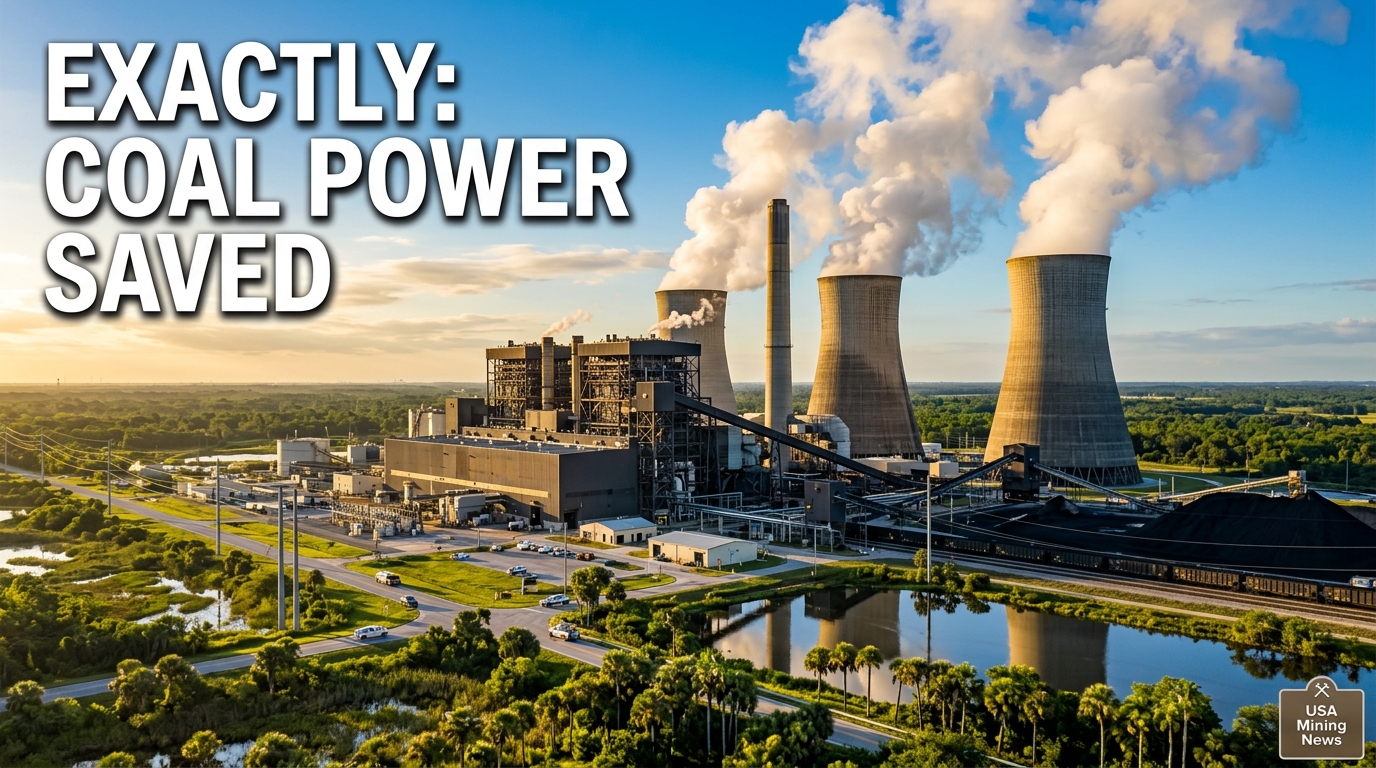
Washington D.C. — In a significant development for national energy policy and the U.S. mining sector, the U.S. Department of Energy (DOE) has taken decisive action to secure grid reliability in Florida. U.S. Secretary of Energy Chris Wright, on June 4, 2026, issued an emergency order directing the Orlando Utilities Commission (OUC) to ensure the continued operational availability of Unit 1 at the Stanton Energy Center (Stanton) in Orlando, Florida. This coal-fired generation unit was initially slated for a premature extended cold shutdown beginning in June 2026, a decision now temporarily overridden by federal mandate to safeguard grid stability during the peak summer demand season.
U.S. DOE Intervenes to Secure Florida's Grid Stability
The emergency order serves as a direct response to escalating concerns over the resilience and adequacy of the nation's electricity infrastructure, particularly in regions experiencing rapid demand growth and significant shifts in their generation portfolios. Florida, with its hot, humid summers, relies heavily on consistent and robust power generation to meet the immense demand for air conditioning and other loads. Secretary Wright emphasized the urgency of the situation, stating, “Taking reliable generation off the grid compromises energy reliability and needlessly raises energy costs for Americans. During peak summer demand, Floridians deserve continued access to affordable, reliable, and secure energy to power and cool their homes.”
The directive specifically targets Unit 1 of OUC's Stanton Energy Center, a critical asset within Florida's generation landscape. The order mandates that this unit remain available for dispatch from June 4, 2026, through September 1, 2026. This period directly correlates with the most strenuous months for electricity grids in the Southern United States, where high temperatures drive substantial increases in consumption. The immediate intervention highlights a federal commitment to leveraging all available generating resources, including coal, to avert potential energy shortfalls and price spikes.
The Imperative for Reliable Baseload Power
The decision to halt the shutdown of the Stanton Unit 1 is not an isolated incident but rather a reflection of a broader national effort to reassess and strengthen the foundational elements of the U.S. power grid. The administration, under President Trump, has explicitly championed the preservation of coal-fired power generation, viewing it as an indispensable component of an "affordable, reliable, and secure" energy mix. This policy stance has already yielded significant results, with the DOE reporting that in 2025 alone, more than 17 gigawatts of coal-powered electricity generation were saved from going offline across the country, reversing earlier plans for retirement.
Such interventions underscore the critical role of baseload, dispatchable power in maintaining grid stability. Coal-fired plants, while facing environmental pressures, offer predictable, continuous power supply, which is essential to balance the growing, yet intermittent, contributions from renewable energy sources like solar and wind. The cost implications of blackouts, as noted by the DOE, are substantial for "hardworking American families and businesses," making the prevention of such events a primary economic and social objective.
Assessing the Reliability Gap: NERC and DOE Warnings
The emergency order is underpinned by stark warnings from authoritative industry bodies, painting a concerning picture of the nation's future energy landscape should current trends persist. The DOE’s Resource Adequacy Report issued a dire forecast, projecting that power outages could increase by 100 times in 2030 if the U.S. continues to prematurely retire reliable power generation.
Complementing this assessment, the North American Electric Reliability Corporation’s (NERC) 2025 Long-Term Reliability Assessment provided specific insights into the vulnerabilities facing the Florida Peninsula subregion. NERC's report highlighted that:
- Projections for resource and transmission growth in the Florida Peninsula subregion are lagging significantly behind what is needed to support burgeoning demand forecasts.
- New, large electricity loads, such as the proliferation of data centers, are major drivers of this escalating demand, further straining existing infrastructure.
- The increasing penetration of renewable energy, particularly solar generation within the SERC-Florida Peninsula entities, necessitates a continuous monitoring of resource adequacy.
- Crucially, NERC emphasized the growing need for the availability of "quick start generating units" to meet rapid ramps in demand, especially as solar generation ramps down in the evenings and other intermittent sources fluctuate. Coal, with its operational flexibility and ability to provide inertia and voltage support, offers a valuable solution to this specific challenge.
These independent, expert assessments provide the technical justification for the DOE's emergency action, validating the administration's concerns regarding grid stability and the potential for widespread disruption.
Strategic Implications for the U.S. Coal Sector
For the U.S. mining industry, this emergency order and the broader policy signals from Washington represent a significant shift from the previous trajectory of declining coal demand and accelerated plant retirements. The explicit federal directive to keep a coal plant online, even temporarily, underscores a recognition of coal’s ongoing necessity for grid reliability. This sentiment is further bolstered by a related announcement on the same day, June 4, 2026, indicating that the Energy Department plans to utilize Defense Production Act (DPA) funding to expand coal capacity at 13 plants and build vital export infrastructure.
Such policy moves provide a lifeline—and potentially a long-term strategic pivot—for coal miners and related service industries. The DPA funding, traditionally reserved for national security priorities, signals an elevated perception of coal's role in national energy security. This could translate into:
- Stabilized Demand: A halt or reversal of coal plant retirements directly impacts the domestic demand for thermal coal, offering greater stability for mining operations.
- Investment Confidence: The federal backing for expanding coal capacity and export infrastructure could encourage new investments in mining technology, workforce development, and logistical improvements, counteracting years of disinvestment.
- Job Preservation: The continuation of operations at coal-fired power plants, and potentially new capacity, helps preserve jobs in both the power generation and coal mining sectors.
- Market Visibility: The DPA funding for export infrastructure suggests an ambition to position U.S. coal as a reliable supply source in global markets, further benefiting the domestic mining industry.
While the Stanton order is temporary, its context within these broader policy announcements suggests a more enduring commitment to maintaining a robust role for coal in the national energy strategy, moving beyond simply delaying closures to actively supporting increased capacity and market access.
Operational Context: The Stanton Energy Center's Role
The Stanton Energy Center, operated by OUC, is a significant power generation facility for the Orlando metropolitan area. Unit 1, specifically, is a coal-fired unit whose scheduled "extended cold shutdown" would have rendered it unavailable for operational dispatch. A cold shutdown typically means the plant is completely offline, cooled down, and potentially undergoing decommissioning or preservation, making it expensive and time-consuming to reactivate. The emergency order effectively prevents OUC from proceeding with these shutdown procedures, requiring them to maintain Unit 1 in a state of operational readiness. This ensures that the unit can be brought online swiftly when needed to prevent grid stresses, particularly during moments of high demand or unanticipated outages elsewhere in the system. The mandate to keep Unit 1 available through September 1, 2026, specifically targets the entirety of Florida’s summer cooling season, a period historically associated with peak electricity consumption and heightened grid vulnerability.
Navigating the Energy Transition: Challenges and Realities
The DOE’s intervention underscores a critical reality in the ongoing global energy transition: while renewable energy sources are rapidly expanding, their intermittency presents significant challenges to overall grid reliability without sufficient dispatchable backup. Florida, with its abundant sunshine, has heavily invested in solar power. However, as NERC's assessment highlights, the transition requires careful management of the resource mix. The "ramp in demand" that occurs as solar generation declines in the late afternoon and evening requires agile, quick-start units that can rapidly fill the void. This is where conventional, baseload power plants, including coal, play an indispensable bridging role.
The emergency order for Stanton Unit 1 serves as a stark reminder that policy decisions regarding energy generation must carefully balance environmental goals with the fundamental imperative of maintaining a resilient and affordable electricity supply for consumers and industry. The immediate security of the grid, especially against the backdrop of increasing extreme weather events and growing demand, appears to be taking precedence in specific, critical instances.
Future Outlook for Coal and Grid Resilience
Looking ahead, while the order for Stanton Unit 1 is set to expire on September 1, 2026, the broader context suggests that this may not be an isolated incident, but rather part of a more sustained strategy. The administration’s robust support for coal, as evidenced by the 17 GW saved in 2025 and the DPA funding for new capacity and export infrastructure, indicates an intention to integrate coal more firmly into the nation’s energy security framework.
For the mining industry, this signals a potential reversal of fortunes, moving from a period of consistent decline to one of strategic preservation and even expansion. Investors in coal mining, transportation, and related technologies will be closely monitoring whether these temporary measures evolve into long-term commitments. The continued focus on grid resilience, coupled with the technical realities of integrating renewables, suggests that dispatchable power, which coal can provide, will remain a highly valued commodity for the foreseeable future. The challenge will be for the industry to leverage this renewed federal interest into sustainable operational and environmental improvements that can support its long-term viability within a dynamic energy market.