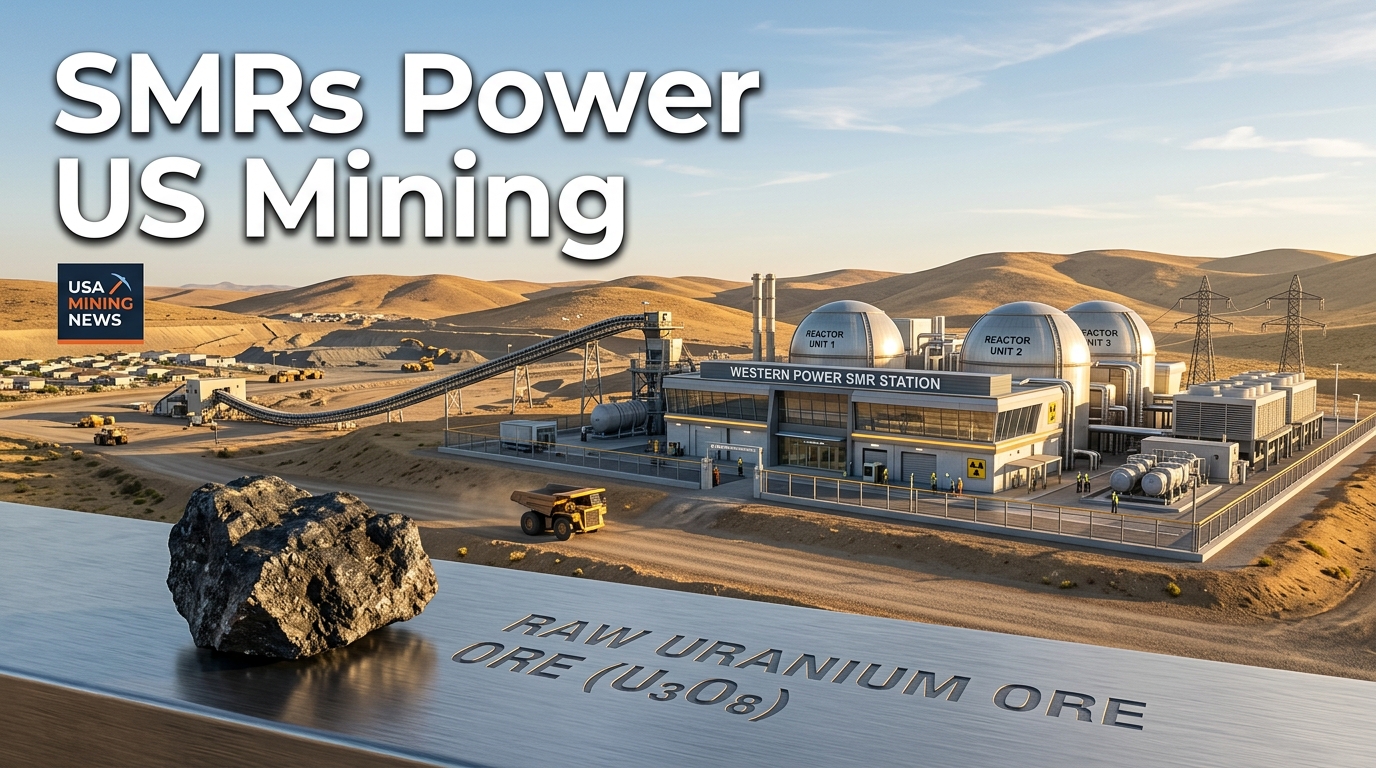
The landscape of American energy production is on the cusp of a significant transformation, driven by strategic federal investments aimed at re-establishing the nation's nuclear leadership. On May 14, 2026, the U.S. Department of Energy (DOE) unveiled a pivotal initiative, announcing the allocation of more than $94 million in federal cost-shared funding to eight American companies. This substantial financial injection is specifically targeted at expediting the near-term deployment of advanced light-water Small Modular Reactors (SMRs) across the United States.
This move is a direct response to identified bottlenecks hindering the domestic nuclear industry, specifically in the areas of regulatory licensing, supply chain robustness, and site preparation. By addressing these key gaps, the DOE seeks to spur additional Generation III+ SMR deployments, with a strategic vision to bolster the supply chain required to deliver new nuclear generation within the 2030s. This effort aligns with President Trump’s broader
Executive Orders
designed to usher in a "nuclear renaissance" and expand America’s comprehensive "Energy Dominance agenda." For the mining sector, this commitment signals a potentially transformative increase in demand for uranium and other critical materials essential to the advanced nuclear fuel cycle.The Strategic Imperative: Fueling America's Energy Future
The rationale behind the DOE’s significant investment is multi-faceted and rooted in the imperative to secure a reliable, abundant, and clean energy future for the United States. U.S. Secretary of Energy Chris Wright underscored the administration's commitment, stating, “President Trump has made clear that America is going to build more energy, not less, and nuclear is central to that mission.” Secretary Wright highlighted the multifaceted benefits of advanced light-water SMRs, emphasizing their capacity to provide "reliable, round-the-clock power" necessary to support projected economic growth, particularly President Trump’s manufacturing boom, the burgeoning demands of data centers and artificial intelligence (AI) growth, and the critical need to reinforce a stronger, more secure electric grid. These awards, totaling over $94 million, are designed to ensure that these next-generation reactors can be deployed as rapidly as possible, solidifying the nation's energy independence.
The DOE notes that light-water SMRs offer several compelling advantages: their flexible deployment options, reliance on proven technology, and ability to leverage existing supply chains. These characteristics position SMRs as the "fastest and most scalable path to new nuclear capacity," a crucial factor given the anticipated continued growth in national electricity demand. This drive for new nuclear capacity inherently translates into a heightened demand for the raw materials from the mining industry that form the bedrock of nuclear technology.
De-risking Deployment: Focusing on Site Selection and Preparation
A significant portion of the DOE's recent funding is allocated to de-risking the foundational stages of nuclear project development: site selection and preparation. Securing an Early Site Permit (ESP) from the U.S. Nuclear Regulatory Commission (NRC) is a critical, often time-consuming, and capital-intensive step. By supporting these preliminary stages, the DOE aims to streamline the regulatory process for future SMR deployments. Two companies were selected under the SMR Site Selection and Preparation category:
- Constellation SMR Development, LLC: Awarded $17,264,292, this company will pursue an NRC-approved Early Site Permit for a location in New York. This initiative aims to pave the way for future Gen III+ SMR deployments in the state, potentially establishing a new hub for nuclear energy.
- Nebraska Public Power District: Receiving $27,864,860, this entity will work towards obtaining an NRC-approved Early Site Permit for a location in Nebraska. As a public power district, their involvement underscores the commitment of utility providers to integrating advanced nuclear technology into their portfolios, securing long-term, stable power generation for their customers.
These investments are crucial for the broader mining industry because the successful permitting and development of nuclear sites naturally lead to future demand signals for nuclear fuel – primarily enriched uranium. The de-risking of site selection in these early stages provides greater certainty for uranium miners and processors to scale their operations.
Fortifying the Domestic SMR Supply Chain: A Catalyst for Manufacturing and Mining
Perhaps the most direct impact of the DOE awards on the industrial and mining sectors comes from the extensive focus on strengthening the domestic SMR supply chain. A robust, localized supply chain reduces reliance on foreign entities, enhances national security, and creates high-value manufacturing jobs. Six companies received awards under the SMR Supply Chain Development category, each addressing critical components of the nuclear ecosystem:
- BWXT Nuclear Energy, Inc.: Awarded $21,423,305, BWXT will procure essential equipment for its existing facility in Mount Vernon, Indiana. This funding supports the final assembly of reactor pressure vessels and the manufacture of other large, highly specialized nuclear reactor components. The production of such large-scale, precision-engineered components requires significant inputs of high-quality metals and specialized alloys, indirectly supporting the extraction and processing of these materials.
- Container Technologies Industries, LLC: Receiving $547,900, this company will expand its nuclear quality assurance certifications for its facility in Helenwood, Tennessee. This certification is pivotal, enabling them to produce nuclear-grade steel for Gen III+ SMR deployments. The stringent quality requirements for nuclear components drive demand for specific grades of steel, requiring precise mining and metallurgical processes.
- Framatome U.S. Government Solutions, LLC: With an award of $8,800,000, Framatome will significantly expand its fuel fabrication facility in Richland, Washington. This expansion includes increasing the number of ceramic pellet production lines, which will add approximately 200 metric tons of uranium (MTU) of annual capacity. This is a direct signal to the uranium mining sector that demand for U3O8 concentrate is expected to grow.
- Global Nuclear Fuel Americas, LLC: Awarded $3,000,000, this company will establish a second production line for fuel rod fabrication for boiling water reactors. The investment will also support the acquisition of capital equipment to automate the pellet inspection process and implement automated storage and handling for pellets at its facility in Wilmington, North Carolina. This enhancement of fuel rod production capacity further solidifies the need for a consistent and growing supply of uranium from mining operations.
- American Forgemasters Company: Receiving $2,900,000, this Pennsylvania-based company will procure a new furnace for its New Castle facility. This investment is crucial for facilitating the domestic production of large component forgings for Gen III+ SMRs. The forging process for nuclear-grade components requires high-purity metals and robust metallurgical capabilities, tying directly back to the demand for raw materials.
- Scot Forge Company: Awarded $12,267,000, Scot Forge will procure and install a large vertical turning lathe and gantry style milling machine for its facility in Spring Grove, Illinois. These specialized machines are essential for the domestic production and manufacturing of large components for Gen III+ SMRs, highlighting the intricate engineering and specialized equipment central to nuclear manufacturing.
These focused investments across the supply chain—from high-quality steel and specialized forgings to reactor components and increased fuel fabrication capacity—demonstrate a comprehensive approach to building domestic nuclear industrial capability. For the mining industry, this translates into sustained demand for uranium, but also specialty steels, nickel, chromium, and other elements critical for high-performance alloys.
A Broader Nuclear Renaissance and its Mining Implications
The recent $94 million in awards is not an isolated initiative but fits into a larger, coherent strategy by the U.S. Department of Energy under President Trump's administration. In March 2025, the DOE issued a significant $900 million solicitation specifically designed to de-risk the deployment of Generation III+ SMRs. This was followed by a substantial announcement in December 2025, where $800 million in Tier 1 awards were granted to the Tennessee Valley Authority and Holtec Government Services. These earlier awards are advancing initial SMR projects in Tennessee and Michigan, which are crucial for expanding the country’s nuclear capacity and stimulating associated supply chains. The possibility of additional Tier 2 awards further underscores the long-term commitment to SMR development.
For the mining industry, these developments are profoundly significant. The expansion of nuclear power, particularly through SMRs, represents a long-term, stable, and growing demand for uranium. As the United States moves to increase its nuclear fleet, the need for reliable sources of uranium, whether domestically mined or from trusted international partners, will intensify. Furthermore, the push for a robust domestic supply chain extends beyond just nuclear fuel. The advanced materials required for SMR construction—high-strength steels, specialized alloys, and other critical minerals—will also see a surge in demand, impacting mining operations that extract and process these foundational raw materials. This creates not only direct opportunities for uranium miners but also indirect benefits for producers of iron ore, nickel, chromium, and rare earth elements used in advanced manufacturing processes.
Future Outlook and Industry Opportunities
The DOE's latest awards mark another decisive step toward realizing the vision of a modernized, expanded U.S. nuclear energy sector. The selected companies will now proceed with technical detailed studies, regulatory engagement for Early Site Permits, procurement of specialized manufacturing equipment, and facility expansions. These actions are foundational to delivering new nuclear generation capacity in the 2030s, aligning with the industry's projected timelines for SMR commercialization.
The broader implications for the mining industry are substantial and lasting. A renewed commitment to nuclear power translates directly into increased demand for uranium, pushing exploration efforts and potentially reactivating or expanding existing uranium mining operations domestically and amongst allied nations. The robust domestic manufacturing supply chain, strengthened by these awards, will also drive consistent demand for various industrial minerals and metals. Investors in the mining sector should closely monitor these developments, as they signal a profound shift in energy policy that will underpin commodity markets for decades to come, creating new opportunities for growth and innovation within the supply chain for nuclear energy. The vision is clear: SMRs are poised to be a cornerstone of America’s energy future, and the mining industry will be at the very foundation of this strategic build-out.