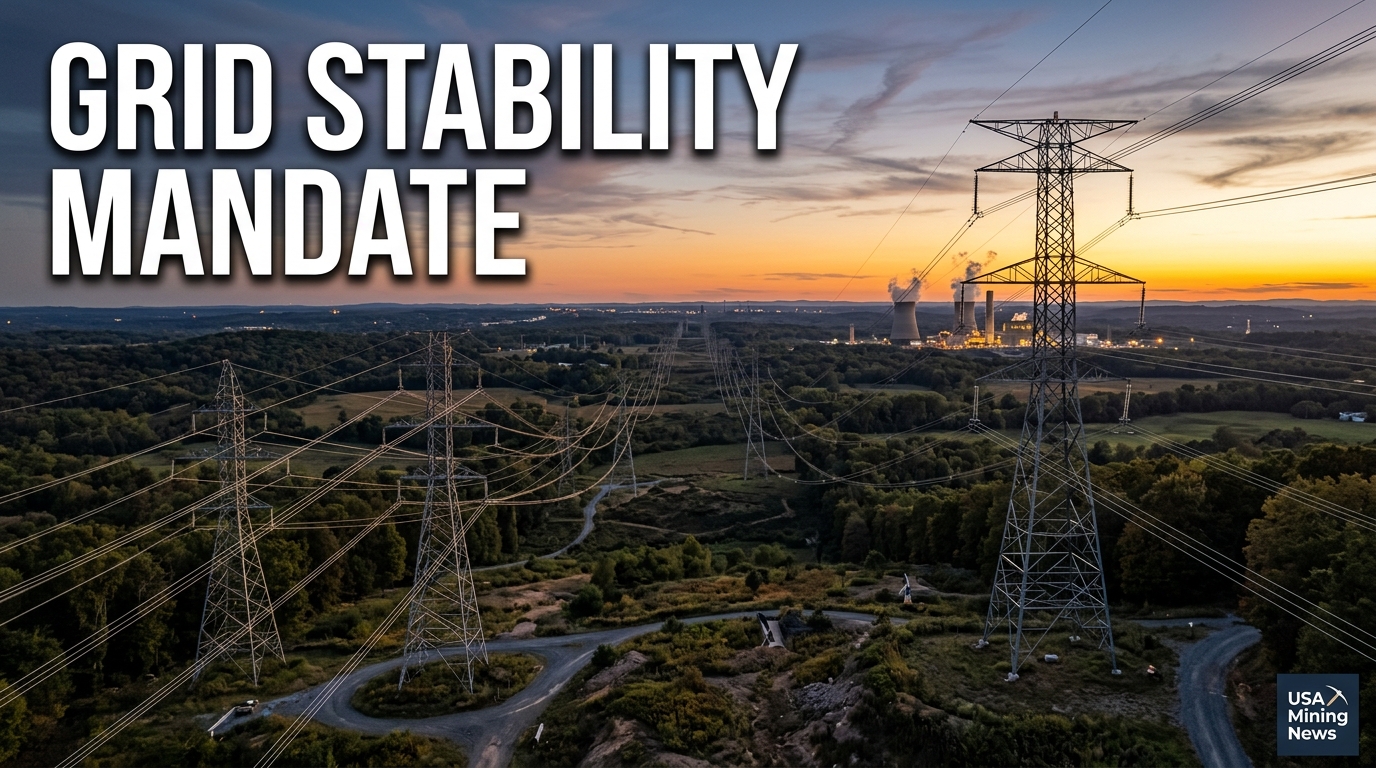
WASHINGTON – On September 1, 2026, the U.S. Department of Energy (DOE) took decisive action to bolster the Mid-Atlantic region’s electrical grid, issuing an emergency order designed to mitigate the risk of blackouts. This intervention comes as the region braced for forecasted hot weather conditions, which typically lead to a significant increase in system load and strain on power infrastructure. The order, effective from its issuance through September 8, 2026, highlights the ongoing challenges of maintaining grid stability in an evolving energy landscape.
DOE Intervenes to Safeguard Mid-Atlantic Grid Amid Heatwave Threat
The emergency order, signed by U.S. Secretary of Energy Chris Wright, directs PJM Interconnection, L.L.C. (PJM), the independent system operator for the Mid-Atlantic and parts of 13 states, to take specific measures to ensure reliability. PJM is now authorized to dispatch designated generation units and order their operation as necessary. Furthermore, the order grants PJM the authority to direct backup generation resources to operate as a last resort, specifically before declaring or during an Energy Emergency Alert (EEA) 3, the highest level of grid emergency. To facilitate this, PJM is also empowered to enlist its Transmission Owners and Electric Distribution Companies to implement the directives as needed. This proactive approach by the DOE followed an application submitted by PJM on the same day, September 1, 2026.
Secretary Wright articulated the administration's firm stance on energy reliability: "Maintaining affordable, reliable, and secure power for hardworking American families and businesses during periods of hot weather is non-negotiable." He attributed current grid vulnerabilities to "the previous administration’s energy subtraction policies," asserting that these policies "weakened the grid, leaving Americans more vulnerable during events like this." Secretary Wright credited "President Trump’s leadership" for "reversing those failures and using every available tool ensuring Americans in the Mid-Atlantic have continued access to affordable, reliable, and secure energy to power and cool their homes." This statement offers a clear indication of the administration's energy policy direction, prioritizing dispatchable and baseload power sources.
PJM Interconnection at the Forefront of Grid Stability
PJM Interconnection plays a pivotal role in the Eastern Interconnection, operating the wholesale electricity market and managing the high-voltage transmission grid across its expansive service territory. This includes all or parts of Delaware, Illinois, Indiana, Kentucky, Maryland, Michigan, New Jersey, North Carolina, Ohio, Pennsylvania, Tennessee, Virginia, West Virginia, and the District of Columbia. As an independent system operator (ISO) and regional transmission organization (RTO), PJM is responsible for ensuring electricity is available to more than 65 million people and that the grid remains stable through a complex balance of generation and demand.
The DOE's emergency order provides PJM with enhanced operational flexibility to respond to the impending strain on the system. Directing "specified units" implies the activation of power plants, potentially including thermal (coal, natural gas), nuclear, or hydroelectric facilities, that might otherwise be offline or operating at reduced capacity. The authorization to utilize "backup generation resources" as a "last resort" before or during an EEA 3 is particularly significant. An EEA 3 signifies that operating reserves are exhausted, and PJM is unable to meet demand, typically leading to controlled service interruptions or blackouts. By preemptively authorizing these measures, the DOE aims to avert such a critical situation. This also speaks to the importance of having diverse generation portfolios, including facilities that can be brought online quickly to meet surge demand.
The Broader Context: A National Call for Grid Resilience
The emergency order for the Mid-Atlantic grid is not an isolated event but rather indicative of broader national concerns regarding grid resilience and reliability. Extreme weather events, including prolonged heatwaves, have become increasingly common and severe, pushing electrical grids to their operational limits. These events underscore the critical importance of a robust and adaptable energy infrastructure to maintain continuous power supply for households, businesses, and essential services.
The economic implications of power outages are substantial, affecting everything from manufacturing and data centers to essential public services. For the mining industry, a reliable power supply is non-negotiable. Mining operations, whether surface or underground, require continuous, high-capacity electricity to power heavy machinery, ventilation systems, processing plants, and safety equipment. Unexpected power disruptions can lead to costly downtime, production losses, equipment damage, and significant safety hazards. Therefore, government interventions to stabilize regional grids are keenly watched by mining sector stakeholders as direct indicators of operational stability in key industrial regions.
Adding another layer of context, the DOE estimates that "more than 35 GW of unused backup generation remains available nationwide." This considerable capacity, often comprising older, less frequently dispatched thermal power plants (e.g., natural gas combustion turbines, some coal-fired units) or large industrial generators, serves as a crucial strategic reserve. The ability to call upon these resources, even temporarily, is vital for managing peak demand and ensuring grid stability during emergencies, highlighting the continued indispensable role of conventional energy sources in the national energy mix.
Policy Shifts and the Re-Emergence of Dispatchable Power
Secretary Wright’s comments regarding "energy subtraction policies" and the subsequent efforts to "reverse those failures" resonate strongly within the mining industry. This language suggests a policy pivot towards strengthening baseload and dispatchable generation capacity, often derived from fossil fuels like coal and natural gas, as well as nuclear energy. For years, the retirement of coal-fired power plants and the push towards intermittent renewable sources have raised concerns among some industry observers about grid stability and the availability of firm capacity.
This administration's stance, as articulated by Secretary Wright, signals a renewed appreciation for energy diversity and the reliability offered by traditional power generation. Such policy orientation could translate into a more supportive regulatory environment for existing coal and natural gas facilities, potentially slowing down their retirement, and even encouraging investment in maintenance or upgrades. This is a significant development for the coal mining sector, which has faced headwinds from environmental regulations and market dynamics for over a decade. A focus on grid reliability could stabilize demand for thermal coal, counteracting some of the long-term decline trends.
Further reinforcing this pattern, a previous press release issued on the very same day, September 1, 2026, indicated that the "Energy Secretary Saves Coal-Fired Generation from Going Offline in Florida." This simultaneous action underscores a consistent policy effort to preserve and leverage dispatchable thermal generation capacity across different regions of the country. For natural gas producers, the increased reliance on backup generation and the emphasis on immediate grid stability also imply sustained or potentially increased demand, particularly during peak periods, supporting continued investment in exploration and production.
Implications for Mining and Energy Investment
The DOE's emergency order and the accompanying policy rhetoric have several direct implications for the mining industry. Firstly, for producers of thermal coal and natural gas, this signifies a period where government policy is actively supporting the continued operation of their end-use markets. While the long-term energy transition towards lower-carbon sources remains a global trend, these emergency measures and policy statements suggest that traditional fossil fuels will continue to play a critical role in ensuring grid reliability for the foreseeable future, especially in regions facing immediate supply challenges.
Investors in mining companies, particularly those focused on coal and natural gas, will be closely watching these developments. A more favorable regulatory and operational environment could provide greater stability for commodity prices and production volumes. This could also influence capital allocation decisions, potentially encouraging investment in efficiency improvements, mine expansions, or even new projects where the lifespan of thermal power generation is perceived to be extended. Furthermore, the emphasis on baseload power could subtly benefit uranium mining, as nuclear energy facilities provide a significant portion of reliable, emissions-free dispatchable power.
Beyond commodity demand, the broader implications touch on energy infrastructure investment. The need for grid hardening, modern transmission infrastructure, and diverse generation portfolios is becoming increasingly evident. Mining operations themselves are large consumers of electricity, and the stability of the grid directly impacts their operational costs and planning. These developments reinforce the idea that energy policy will continue to balance environmental goals with the fundamental requirement of providing affordable, reliable, and secure power.
Conclusion: Navigating a Complex Energy Landscape
The U.S. Department of Energy's emergency order to stabilize the Mid-Atlantic grid is a timely and critical intervention reflecting the complex challenges facing the nation's energy infrastructure. It underscores the paramount importance of grid reliability, particularly in the face of escalating weather-related pressures and growing electricity demand. Secretary Wright’s statements articulate a clear policy direction that prioritizes the availability of dispatchable power sources, reinforcing the indispensable role that conventional fuels continue to play in maintaining energy security.
For the mining industry, these developments offer significant insights. The continued reliance on thermal generation for grid stability translates into sustained demand for coal and natural gas. As the energy sector navigates the dual imperatives of decarbonization and reliability, emergency measures like these highlight the intricate balance required and suggest that traditional energy sources will remain integral to the national energy matrix for years to come. Mining professionals and investors will continue to monitor these policy signals closely, as they profoundly shape the strategic outlook for commodity markets and energy infrastructure.