U.S. energy policy, particularly concerning the future of conventional power generation, often reverberates deeply through the mining industry. A recent federal intervention in Florida exemplifies this intricate relationship, underscoring the vital role of baseload energy and its impact on thermal coal demand. On September 1, 2026, U.S. Secretary of Energy Chris Wright issued an emergency order, a significant move designed to safeguard grid reliability and stabilize energy costs in Florida by preventing the premature shutdown of a key coal-fired power plant.
Federal Intervention Secures Florida's Coal-Fired Power Amidst Grid Concerns
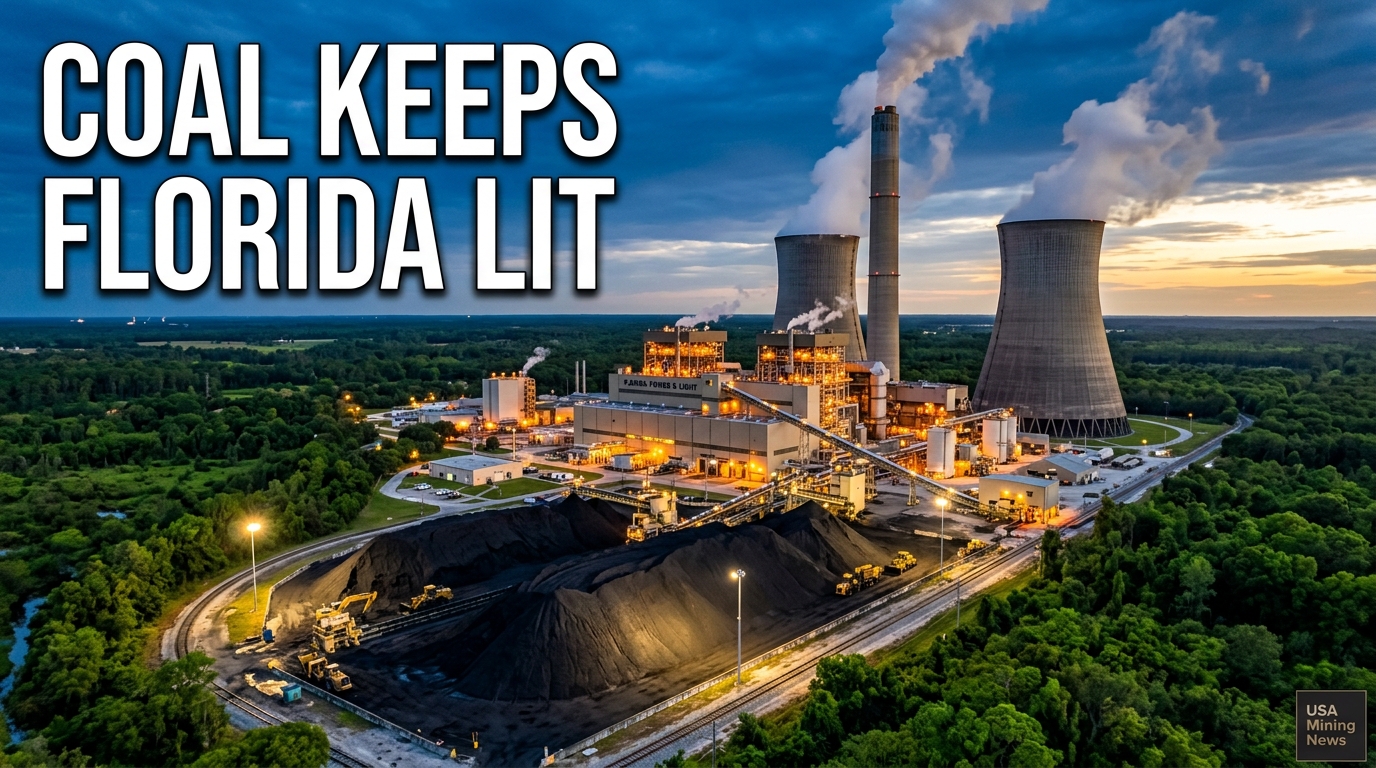
The directive, issued by Secretary Wright, specifically targets Unit 1 at the Stanton Energy Center (Stanton) in Orlando, Florida, a critical coal-fired generation asset owned and operated by the Orlando Utilities Commission (OUC). This unit was slated to enter an extended cold shutdown in June 2026, a decision that has now been overridden by federal mandate. The emergency order compels OUC to maintain Unit 1’s operational readiness, ensuring its availability to the grid from September 2, 2026, through November 30, 2026.
Secretary Wright articulated the rationale behind this decisive action, stating, “Taking reliable generation offline compromises energy reliability and needlessly raises energy costs for Americans.” He further emphasized, “The Trump Administration will continue to ensure that Floridians have access to affordable, reliable, and secure energy to power their homes.” This statement highlights the administration’s broader commitment to preventing what it perceives as premature retirements of baseload power sources, which are essential for grid stability and economic energy supply.
Addressing Grid Reliability and Economic Imperatives
The Department of Energy's (DOE) intervention is not an isolated event but rather a response to growing concerns over grid resilience. The DOE’s own Resource Adequacy Report has starkly warned of the potential for severe consequences should the trend of taking reliable power generation offline persist. The report projects that power outages could increase by a staggering 100 times by 2030, a prospect that carries significant economic and societal risks. Such forecasts provide a robust justification for the federal government's proactive measures to maintain existing baseload capacity.
For the mining industry, particularly thermal coal producers, these policy decisions have direct and profound implications. Coal-fired plants, despite ongoing pressures from environmental regulations and natural gas competition, continue to provide a substantial portion of the nation’s baseload electricity. The decision to keep Stanton Unit 1 online, even for a temporary period, translates into continued demand for thermal coal, supporting mining operations and associated supply chains. This temporary reprieve can influence short-term coal purchasing strategies for utilities and impact spot market prices for coal producers in regions supplying Florida, such as the Appalachian or Illinois Basins.
The Broader Context: A Resurgence for Coal Generation?
The emergency order for Stanton Unit 1 fits into a larger pattern of federal policy under the Trump Administration aimed at extending the lifespan of coal-fired power plants. The administration has consistently championed the role of coal in ensuring energy independence and grid stability. As stated by the DOE, "Thanks to President Trump’s leadership, coal plants across the country are being saved from premature retirement and reversing plans to shut down." This policy stance has yielded tangible results, with more than 17 gigawatts (GW) of coal-powered electricity generation saved from going offline in 2025 alone. To put this into perspective, 17 GW of coal capacity represents a substantial portion of the nation's total thermal generation, potentially requiring tens of millions of tons of coal annually (typically, one gigawatt of coal-fired power consumes approximately 2 to 3 million tons of coal per year). The avoidance of these retirements directly translates into sustained demand for the U.S. coal mining sector.
For coal miners and investors, this trend offers a degree of stability in a market otherwise characterized by volatility and long-term decline projections. Policy-driven extensions of operational life for coal plants provide a crucial lifeline, impacting investment in mining equipment, workforce planning, and the viability of long-term contracts. Companies involved in thermal coal extraction, processing, and transportation benefit directly from policies that prioritize grid reliability through existing baseload assets. While such interventions may be temporary, as seen with the September-November 2026 order for Stanton, they collectively signal a strategic pause in the rapid phase-out of coal, providing breathing room for the industry.
Operational Details and Market Impact for Coal Miners
The Orlando Utilities Commission's Stanton Energy Center operates a significant coal-fired capacity that historically contributes substantially to Florida's energy mix. Unit 1’s continued operation means OUC will maintain its existing coal supply agreements or procure additional volumes for the specified period. This directly affects coal mining companies with existing contracts or those positioned to bid for short-term supply needs. Given Florida's geographic location, its coal supply typically originates from eastern U.S. coalfields, particularly the Central Appalachian Basin, or via rail and port from the Illinois Basin, or even Powder River Basin coal via extensive rail networks.
The extension of Unit 1's operational life, while temporary, sends a crucial signal to the broader commodity markets. It indicates that despite ongoing energy transition narratives, policy considerations around energy security can temporarily override economic or environmental pressures driving plant retirements. This introduces an element of unpredictability into long-term market forecasts but also highlights the intrinsic value of readily available, dispatchable power sources provided by coal. Mining companies must remain agile, monitoring regulatory and policy shifts that can significantly alter demand landscapes in relatively short order. Furthermore, maintaining and restarting such units often requires specific grades of thermal coal, which could favor certain mining operations capable of supplying those specifications.
The Regulatory Landscape and Future Outlook
The DOE's emergency order, issued under federal authority to ensure grid reliability, demonstrates the significant power the executive branch can wield over utility operations, even those governed by state regulations or utility-specific retirement plans. This underscores the complex interplay between federal energy policy, state regulatory frameworks, and independent utility decision-making. Such interventions, while rare, highlight the federal government's ultimate responsibility for national energy security.
Looking ahead, the duration of the order for Stanton Unit 1—a specific three-month window—suggests a response to immediate, near-term reliability concerns rather than a permanent reversal of OUC’s long-term energy strategy. However, the overarching federal emphasis on preserving baseload capacity suggests that similar emergency orders could be deployed in other regions facing critical grid challenges, extending the demand horizon for thermal coal. The DOE's Office of Electricity also announced on September 1, 2026, an $11.5 million Genesis Mission Project aimed at meeting growing electricity demand faster and at lower costs. While this initiative focuses on broader solutions for electricity demand, it aligns with the administration's overall strategy to ensure robust energy supply, which, in the immediate term, includes leveraging existing, reliable assets like coal plants.
For the mining industry, the future outlook for thermal coal remains nuanced. While the long-term trend points towards diversification away from coal in many developed economies, these policy interventions demonstrate that coal will continue to play a critical, albeit perhaps transitional, role in maintaining grid stability and affordability. Mining companies must strategically assess the balance between these policy-driven demand extensions and the broader market and environmental forces pushing for decarbonization. This involves focusing on operational efficiency, exploring carbon capture technologies, and diversifying portfolios where feasible, while also capitalizing on periods of policy support for traditional energy sources.
Conclusion: Navigating Energy Transitions with Strategic Reserves
The emergency order to keep Orlando Utilities Commission’s Stanton Unit 1 online in Florida serves as a potent reminder of the complex challenges inherent in energy transition. The U.S. government’s intervention prioritizes grid reliability and consumer costs, thereby offering a crucial, if temporary, boost to thermal coal demand. For the mining industry, this decision, alongside the 17 GW of coal capacity saved in 2025, underscores the continued strategic importance of coal as a foundational energy resource, particularly in the face of escalating grid vulnerability concerns.
As the nation navigates its energy future, the tension between decarbonization goals and the immediate need for affordable, reliable power will likely continue to shape policy and market dynamics. The coal mining sector, therefore, remains intricately linked to these high-stakes decisions, requiring vigilance and adaptability to thrive amidst an evolving energy landscape where federal directives can swiftly redefine operational horizons for critical assets.