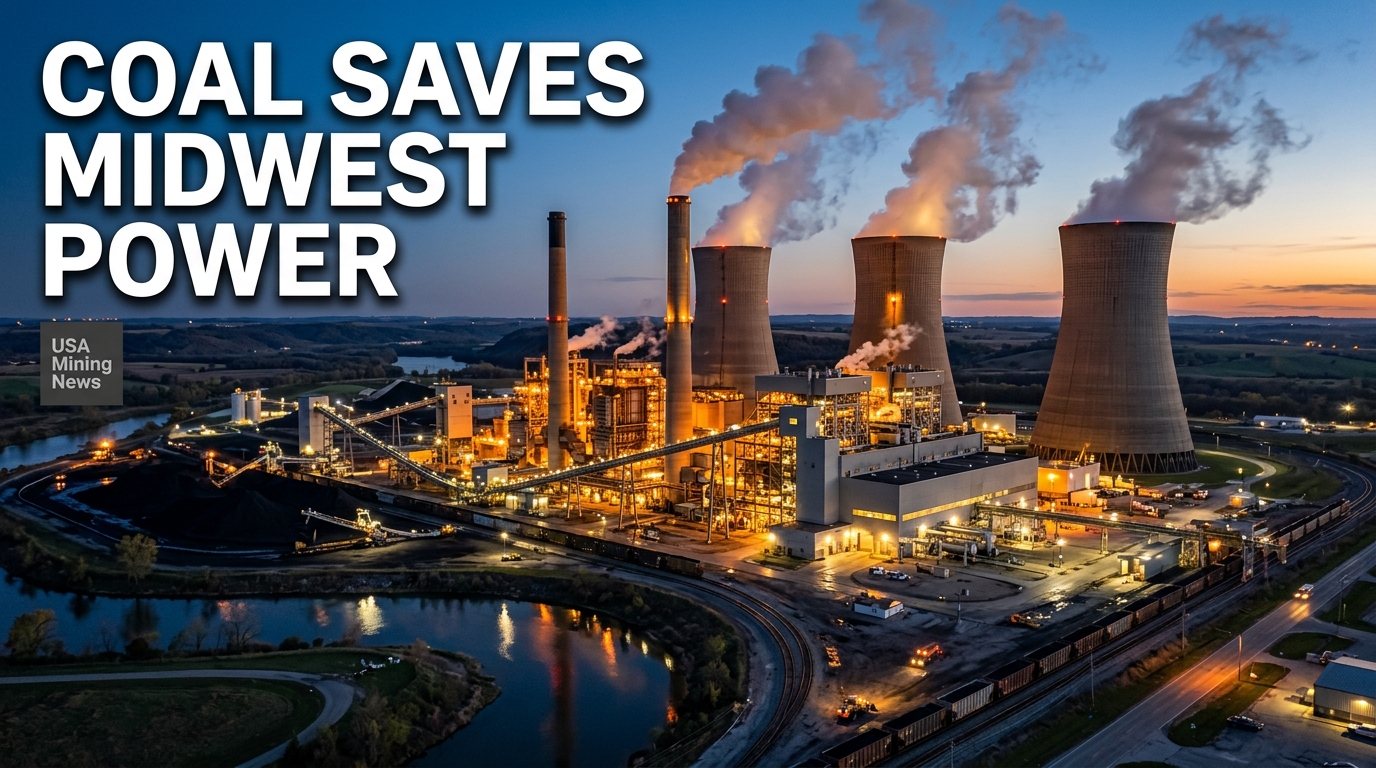
WASHINGTON D.C. – In a move underscoring the persistent challenges facing grid reliability across the United States, the U.S. Department of Energy (DOE) has issued a critical emergency order to prevent the premature shutdown of a vital coal-fired power plant in the Midwest. On May 18, 2026, U.S. Secretary of Energy Chris Wright directed the Midcontinent Independent System Operator (MISO), in conjunction with Consumers Energy, to ensure the continued operation of the J.H. Campbell coal-fired power plant (Campbell Plant) located in West Olive, Michigan. This order, effective from May 19, 2026, through August 16, 2026, is a direct response to escalating concerns about energy shortfalls and grid fragility within the MISO region, particularly heading into the high-demand summer months.
The Emergency Order: A Temporary Reprieve for Grid Stability
The Campbell Plant, originally slated for decommissioning on May 31, 2025, has received an unexpected lifeline, allowing it to continue contributing to the regional power supply. This directive means the plant, a facility with an anticipated design life extending another 15 years beyond its original shutdown schedule, will remain available to operate. The Secretary's order specifically mandates that Consumers Energy take all necessary steps to maintain its operational status and minimize costs for American consumers. This intervention is not unprecedented; it follows a series of previous DOE orders initiated on May 23, 2025, and continued throughout 2025 and early 2026, all aimed at preserving the plant's operational capacity due to ongoing grid concerns.
Secretary Wright articulated the rationale behind the emergency measure, stating, “The energy sources that perform when you need them most are inherently the most valuable—that's why beautiful, clean coal was the MVP during peak capacity events this past year.” He further emphasized the criticality of dispatchable energy, noting that the plant's continued operation is expected to "mitigate the risk of blackouts and maintain affordable, reliable, and secure electricity access across the region this summer.” This statement highlights a growing divergence in energy policy, where the imperative of immediate grid stability is prioritized amidst a broader national conversation regarding energy transition.
A Critical Asset: The J.H. Campbell Plant's Proven Reliability
The J.H. Campbell Plant has consistently demonstrated its invaluable role in providing grid stability, especially during periods of extreme demand and low output from intermittent energy sources. Its performance during the recent Winter Storm Fern was particularly noteworthy, with Secretary Wright crediting its daily operation for potentially saving "hundreds of American lives." This robust performance during severe weather events serves as a tangible example of the baseload reliability that traditional coal-fired generation provides. The plant's consistent operation during high energy demand and concurrent low intermittent energy production periods since the initial DOE order on May 23, 2025, has underscored its strategic importance to MISO’s operational requirements.
Midwest Grid Strains: A Growing Reliability Crisis
The emergency order for the J.H. Campbell Plant is a symptom of deeper, systemic issues regarding grid reliability and resource adequacy, particularly within the MISO footprint. The North American Electric Reliability Corporation (NERC), in its 2025 Long-Term Reliability Assessment released in January 2026, flagged the MISO region as being at "high risk" of energy shortfalls over the next five years. NERC specifically pointed out that "projected resource additions do not keep pace with escalating demand forecasts and announced generator retirements," creating a concerning deficit in firm, dispatchable capacity.
This assessment aligns with findings from the DOE’s own Resource Adequacy Report, which projected a dire outlook: power outages could escalate by a factor of 100 by 2030 if the U.S. continues to decommission reliable power sources without adequate replacement. The persistency of these emergency conditions has necessitated repeated interventions, reflecting a chronic challenge in balancing energy transition goals with the fundamental need for a resilient power supply.
The Broader Context: National Policy and Coal's Resurgence
The Secretary's messaging explicitly frames this decision within the broader context of national energy strategy, attributing the saving of American coal plants, including the Michigan facility, to "President Trump’s leadership." This political framing indicates a policy stance that prioritizes energy security and reliability, even if it means extending the operational lives of traditionally carbon-intensive assets. The impact of this approach is substantial, with the DOE reporting that in 2025 alone, more than 17 gigawatts of coal-powered electricity generation were saved from going offline across the country. This figure represents a significant portion of the nation's total installed coal capacity and directly impacts the demand for thermal coal, offering a temporary but meaningful reprieve for the coal mining industry.
MISO's Evolving Resource Adequacy Framework
The challenges faced by MISO are not confined to the summer months but have evolved into a year-round concern. This shift was officially recognized in April 2025, when MISO’s Planning Resource Auction (PRA) Results for the 2025-2026 Planning Year revealed that for its northern and central zones, which encompass Michigan, "new capacity additions were insufficient to offset the negative impacts of decreased accreditation, suspensions/retirements and external resources." This shortfall in available capacity highlights a fundamental mismatch between supply and demand, exacerbated by accelerated plant retirements and slower-than-anticipated deployment of new dispatchable resources. The issue prompted MISO to file a request with the Federal Energy Regulatory Commission (FERC) in 2022 (FERC Docket No. ER22-495-000, filed November 30, 2021) to revise its resource adequacy construct. This revision sought to establish capacity requirements for each of the four seasons, rather than just an annual basis determined by peak summer demand. FERC approved this progressive change on August 31, 2022, as documented in
Implications for the Mining Sector
For the U.S. mining industry, particularly the thermal coal sector, this emergency order—and the broader trend it represents—carries significant implications. While individual plant extensions may be temporary, the cumulative effect of saving over 17 gigawatts of coal generation in 2025 alone provides a crucial, albeit cautious, signal for demand. It underscores that despite aggressive decarbonization targets, dispatchable coal-fired generation remains indispensable for grid stability, especially in regions facing reliability challenges. This extended demand can influence contracting decisions, operational planning for coal mines, and investment in maintaining production capacity. Miners operating in coal basins supplying MISO facilities might experience a slight uplift in demand visibility, even if short-term. The consistent need for these plants to run during "peak capacity events" translates directly into a sustained, if regionally concentrated, demand for thermal coal.
Furthermore, the policy shift exemplified by Secretary Wright's order suggests that energy security and economic reliability are powerful drivers, potentially slowing the pace of coal plant retirements in the near to medium term. This provides a window for the mining industry to continue to supply a critical fuel, even as it navigates the longer-term transition away from coal. It also highlights the strategic importance of existing infrastructure and supply chains that support coal-fired power.
Looking Ahead: Sustaining Grid Stability Beyond Summer
The immediate challenge is to ensure grid stability through the summer of 2026. However, the order's expiration on August 16, 2026, leaves the longer-term future of the Campbell Plant—and indeed the broader energy mix—uncertain. Will MISO and Consumers Energy be able to secure sufficient replacement capacity within the coming months? Or will the persistent issues necessitate further emergency orders or policy adjustments that could permanently alter the retirement schedule of such assets? The ongoing debate pits environmental objectives against the immediate need for reliable, affordable electricity. The continued reliance on plants like J.H. Campbell emphasizes that the energy transition is a complex, multifaceted undertaking that requires careful planning and robust backup solutions to prevent adverse impacts on consumers and industrial operations. As the nation grapples with this delicate balance, the role of reliable, dispatchable power, often supplied by the mining industry, will remain a central point of contention and policy debate.