Emergency DOE Order Aims for Grid Stability in the Carolinas, Overriding Environmental Limits
WASHINGTON, D.C. – In a decisive federal intervention, the U.S. Department of Energy (DOE) on June 11, 2026, issued an emergency order designed to stabilize the power grid across North and South Carolina and preemptively mitigate the risks of widespread blackouts. The order, effective from 4:00 PM ET on June 11, 2026, until 10:00 PM ET on June 12, 2026, grants Duke Energy Carolinas, LLC (DEC) and Duke Energy Progress, LLC (DEP), collectively referred to as Duke Energy, the authority to operate specified generation units within their service territory at maximum output levels. Crucially, this authorization explicitly overrides standard air quality and other environmental permit limitations that would typically govern such operations under federal, state, or local statutes.
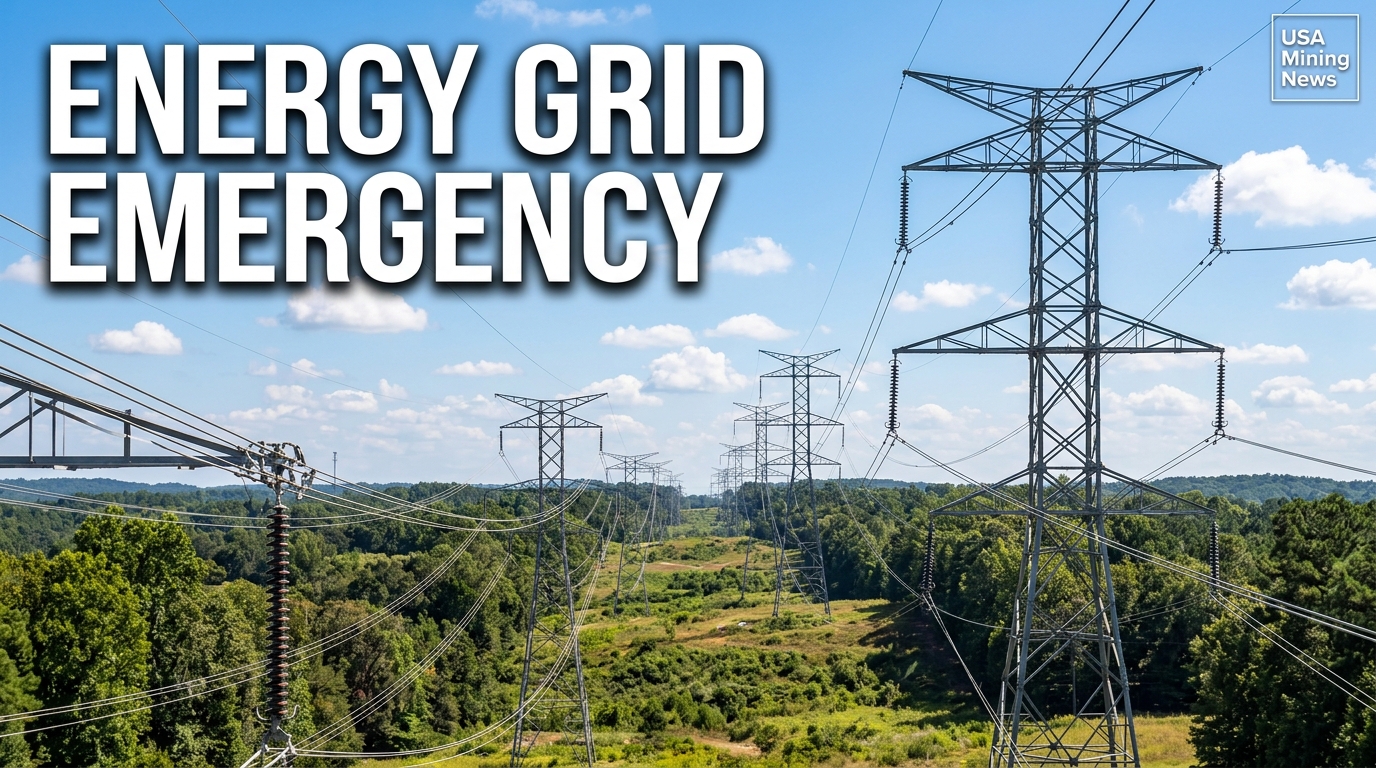
The urgent action was prompted by forecasts predicting unusually high load demand coupled with a period of exceptionally hot weather across the Carolinas. Such conditions place immense strain on a region's electrical infrastructure, potentially leading to system instability and forced curtailments, which can have cascading economic and social impacts. For an industry as fundamentally reliant on consistent, affordable power as mining, these developments are a stark reminder of the intrinsic link between energy policy and operational viability.
Key Players and Regulatory Framework
The U.S. Department of Energy, under the leadership of Secretary Chris Wright, serves as the primary federal agency responsible for advancing the energy, environmental, and nuclear security of the United States. Its authority to issue such emergency declarations stems from Section 202(c) of the Federal Power Act, a statutory provision designed to address critical power shortages or emergencies. This section empowers the Secretary of Energy to order temporary connections of facilities and prescribe such measures as necessary to ensure the continuous supply of power during periods of war or other system emergencies.
Secretary Wright, in announcing the order, emphasized the Trump administration's commitment to grid resilience. “Maintaining affordable, reliable, and secure power in the Duke Energy service territory is non-negotiable,” Secretary Wright stated. He further critiqued past energy policies, asserting, “The previous administration’s energy subtraction policies weakened the grid, leaving Americans more vulnerable during events like this. Thanks to President Trump’s leadership, we are reversing those failures and using every available tool ensuring Americans in the Carolinas’ have continued access to affordable, reliable, and secure energy to power and cool their homes.” This statement positions the emergency order within a broader political context, framing it as a reversal of prior energy policies that the current administration views as detrimental to grid reliability.
Duke Energy Carolinas and Duke Energy Progress, subsidiaries of Duke Energy, jointly serve millions of customers across North Carolina and South Carolina. As the primary power providers in the region, their application to the DOE for emergency relief underscores the severe capacity limitations they anticipated. Their rationale cited that certain generating units were unable to provide the necessary generation due to existing environmental permit conditions and limitations. This situation, they argued, could lead to insufficient generation to meet the unusually high demand, potentially forcing the company to curtail load – or initiate rolling blackouts – to maintain the overall security and reliability of the grid.
Operational Details and Environmental Exemptions
The DOE's order provides Duke Energy with a narrow but critical window, approximately 30 hours, to operate its specified units without the constraints of typical environmental regulations. Such an exemption, invoked under Section 202(c), is not a routine measure. It highlights the gravity of the potential grid instability. Environmental permits, meticulously crafted through federal and state regulatory processes, typically dictate limits on emissions (such as sulfur dioxide, nitrogen oxides, and particulate matter) and water usage, among other operational parameters, to protect public health and the environment.
By empowering Duke Energy to operate "up to their maximum generation output levels, notwithstanding air quality or other permit limitations," the DOE is effectively making a trade-off: temporarily prioritizing immediate energy supply and grid stability over standard environmental compliance. This decision points to a grid infrastructure under significant stress, where the margin for error has dwindled, especially during peak demand periods exacerbated by extreme weather events. The focus is singularly on preventing a large-scale power failure, which could inflict far greater economic and societal damage than the temporary breach of environmental limits.
The fact that Duke Energy itself requested the Section 202(c) order further underscores the utility provider's assessment of its limited options. Utilities typically prefer to operate within their permits due to potential penalties and public scrutiny. This request for federal intervention signals that Duke Energy had exhausted conventional avenues for securing sufficient generation and perceived an imminent threat to grid reliability.
Broader Energy Policy and Political Context
Secretary Wright's pointed comments regarding "energy subtraction policies" and a "weakened grid" reflect a consistent narrative from the current administration. On his first day in office, President Trump reportedly declared a national energy emergency, attributing grid vulnerability to the energy policies of the prior Biden administration. This perspective champions the reliability of baseload generation, often derived from fossil fuels like coal and natural gas, contrasting it with intermittent renewable energy sources that require significant grid upgrades and energy storage solutions to ensure stability.
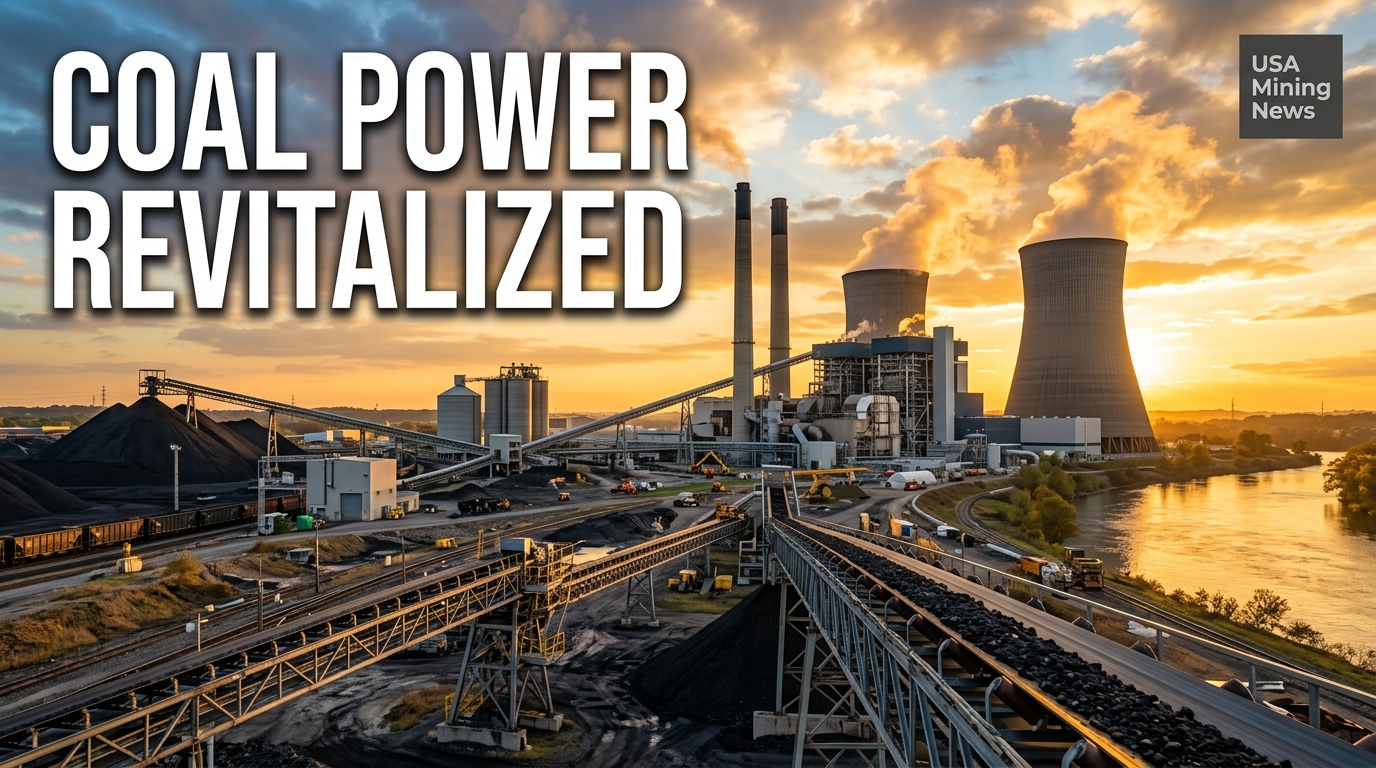
The emergency order in the Carolinas is not an isolated incident in this policy framework. Another DOE press release, issued just one day later on June 12, 2026, titled "Energy Secretary Keeps Coal-Fired Power Generation Alive in the Northwest," further illustrates the administration's broader strategy. This context suggests a federal policy direction that is prepared to intervene in power markets to preserve existing baseload generation capacity, particularly that provided by conventional thermal plants, to bolster grid resilience. Such a stance indicates a potential cooling of regulatory pressure on coal-fired generators, which have faced increasing environmental and economic headwinds in recent decades.
This dynamic creates a significant tension between aggressive decarbonization goals and the immediate imperative of maintaining grid reliability. While the long-term trend in many regions has been towards phasing out older, less efficient, and higher-emitting power plants, the current administration's actions suggest a re-evaluation of this trajectory, especially when grid stability is perceived to be at risk.
Implications for the Mining Industry
For the mining industry, a sector defined by its intensive energy consumption, such events serve as a critical barometer for national energy policy and grid stability. Mining operations, from the initial extraction of raw materials to the sophisticated processing of concentrates, require immense and uninterrupted power. Large excavators, complex crushing and grinding circuits, ventilation systems, and extensive hauling fleets are all heavily dependent on a stable and affordable electricity supply.
- Operational Vulnerability: Any disruption in power supply – whether from blackouts or even significant voltage fluctuations – can lead to immediate halts in production, damage to sensitive machinery, and substantial safety risks for personnel working underground or with heavy equipment. For example, a temporary shutdown of grinding mills can require hours of costly and delicate restart procedures, incurring significant financial losses beyond just lost production.
- Cost Implications: The underlying strain on the grid, even if blackouts are averted, can lead to increased wholesale electricity prices. Mining companies, particularly those operating in regions prone to grid stress, must factor these potential cost increases into their operational budgets and long-term financial planning. The trade-off of overriding environmental permits signals a willingness to pay a higher societal and potentially economic cost to ensure power delivery, which usually translates to higher prices for consumers, including industrial ones.
- Investment Decisions: The federal government's explicit prioritization of grid reliability, even at the temporary expense of environmental regulations, could influence investment decisions within the mining sector. Companies contemplating new projects or expansions in energy-intensive regions will closely monitor these policy trends. A consistent federal stance favoring energy security might be seen as reducing regulatory risk for operations that rely on traditional baseload power sources, while uncertainty could prompt companies to invest in on-site generation or microgrids.
- Critical Minerals for Energy Transition: Furthermore, as the world pushes towards an energy transition, the demand for critical minerals—such as copper for transmission lines, lithium for batteries, and rare earth elements for renewable energy technologies—is set to soar. Secure and reliable electricity is paramount for the mining operations extracting these very minerals. If the grid itself is unstable, it poses a paradoxical challenge to the supply chain of materials needed to transition away from fossil fuels. The Carolinas, for instance, are becoming increasingly relevant in the lithium supply chain, making stable energy a local and global concern for these projects.
Future Outlook and Industry Takeaways
The emergency order in the Carolinas underscores an increasing dilemma facing national energy authorities: how to balance ambitious decarbonization objectives with the immediate, non-negotiable need for reliable and affordable electricity. As extreme weather events become more frequent and severe, and as electricity demand grows with population and economic expansion, the U.S. grid will likely face continued stress.
This situation suggests several key takeaways for mining industry professionals and investors:
- Vigilance on Energy Policy: Mining companies must remain acutely aware of evolving federal and state energy policies. Shifts in regulatory priorities, particularly regarding baseload generation, can directly impact operational costs and power supply stability.
- Energy Resilience Strategies: Investment in energy resilience should be a top priority. This includes exploring diversified power sources, such as co-generation, on-site renewables with battery storage, or participation in demand-response programs to mitigate the impact of potential grid instabilities.
- Advocacy for Stable Infrastructure: Active engagement in policy discussions related to grid modernization and reliability will be crucial. The mining industry has a vested interest in advocating for robust, resilient energy infrastructure that can support its long-term operational needs.
- Long-Term Planning: Geopolitical tensions, commodity market volatility, and climate-related events are all driving a re-evaluation of energy supply chains. This emergency order serves as a potent reminder that energy security is not a given and must be factored into all long-term strategic planning for mining projects.
The Carolinas emergency order, brief as it may be in duration, is a powerful signal of the ongoing challenges in maintaining grid stability in an era of energy transition and extreme weather. For the mining industry, which forms the foundational backbone of industrial activity, securing a resilient and predictable energy supply will continue to be a paramount concern and a critical determinant of success.