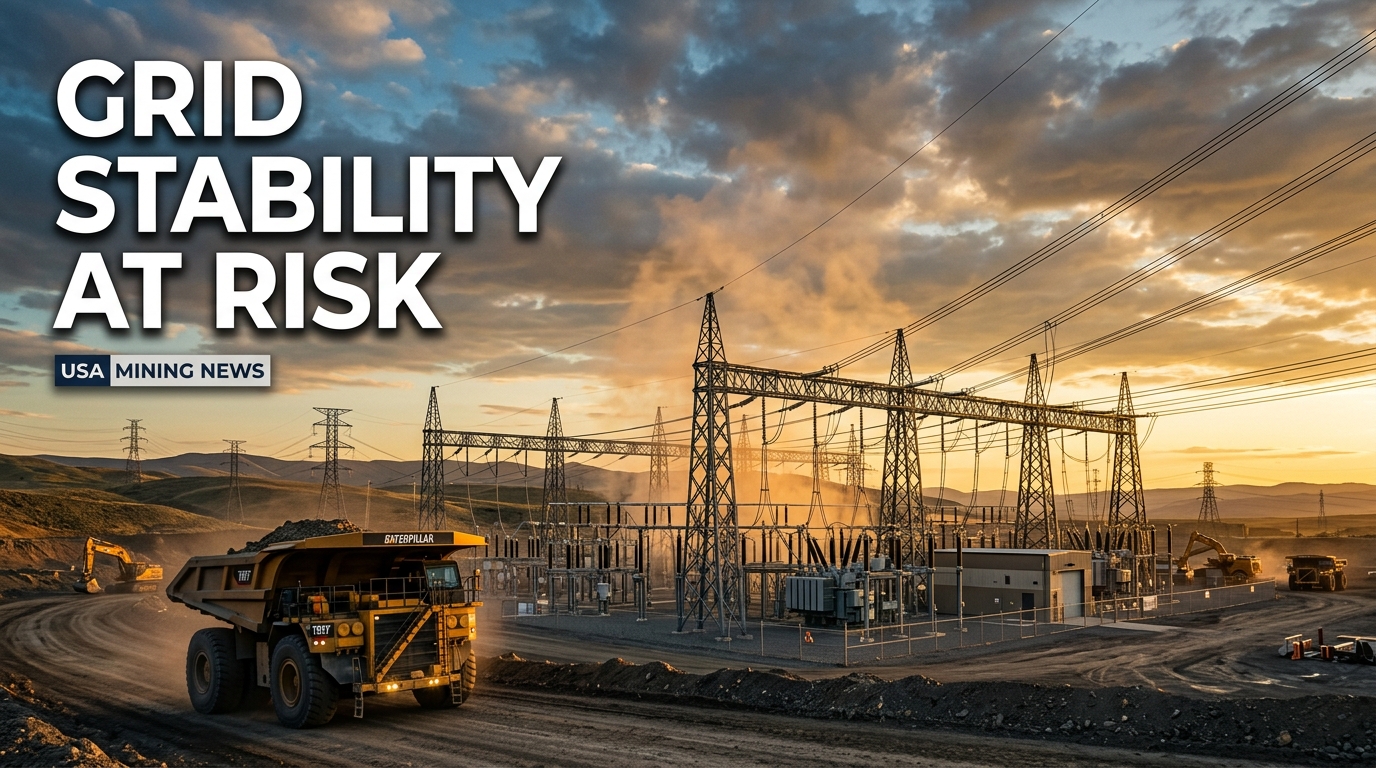
WASHINGTON D.C. – In a critical move to safeguard electricity supply amidst challenging weather conditions, the U.S. Department of Energy (DOE) issued an emergency order on September 18, 2026, aimed at stabilizing the power grid across North and South Carolina. This directive, delivered by U.S. Secretary of Energy Chris Wright, authorizes Duke Energy Carolinas, LLC (Duke) to take extraordinary measures to mitigate the risk of widespread blackouts, a scenario that carries significant implications for energy-intensive sectors such as the mining industry.
Department of Energy Intervenes to Avert Blackouts in the Carolinas
The emergency order, issued pursuant to Section 202(c) of the Federal Power Act, grants Duke Energy Carolinas, LLC broad authority to manage its resources to maintain grid reliability. Specifically, Duke is authorized to dispatch specified generation resources and to mandate their operation as needed. Furthermore, the order empowers Duke, in collaboration with its Transmission Owners, to direct backup generation resources to operate as a last resort, either before declaring or during an Energy Emergency Alert (EEA) 3 – the highest level of emergency indicating a severe power deficit. This swift action followed an application submitted by Duke on September 18, 2026, signaling the urgency of the situation. The order is temporary, in effect from its issuance on September 18, 2026, through September 21, 2026.
Secretary Wright articulated the immediate benefits of the order, stating, “Today’s order will help secure reliable electricity access for millions of American families and businesses across North and South Carolina by making additional power generation, including backup power, available to use as needed.” This intervention underscores the increasing pressures on regional grids, particularly during periods of extreme weather, and highlights the crucial role of proactive government and utility collaboration in preventing catastrophic power failures.
Secretary Wright’s Statement: Critiquing Energy Policy and Emphasizing Reliability
Secretary Wright’s announcement went beyond the immediate emergency, delving into a broader critique of prevailing energy policies. He pointed out, “It should come as no surprise that during the end of summer and early fall, there are fewer hours of daylight—and therefore, less power generation from solar power.” This observation directly links the seasonality of renewable energy output to potential grid vulnerabilities, a crucial consideration for grid operators and industrial consumers alike.
He further referenced warnings from organizations like the North American Electric Reliability Corporation (NERC), which have consistently highlighted the potential dangers that late summer temperature spikes pose to the grid. These warnings become particularly acute, according to Secretary Wright, “when leaders prematurely retire reliable power sources.” This statement implicitly criticizes what he termed “past leaders’ energy subtraction policies,” suggesting that a focus on decommissioning traditional baseload power, such as coal or nuclear plants, without adequate replacement or storage has made the grid "more vulnerable to blackouts when the sun doesn’t shine or the wind doesn’t blow."
In contrast, Secretary Wright affirmed that the current administration “remains committed to using every available tool to prevent blackouts.” He also noted a significant national reserve of power generation, estimating that "more than 35 GW of unused backup generation remains available nationwide," a critical asset that can be leveraged during times of peak demand or operational stress.
The Broader Context: Grid Reliability Challenges and the Energy Transition
The emergency order in the Carolinas is not an isolated incident but rather a microcosm of broader grid reliability challenges facing the United States. The ongoing energy transition, while critical for decarbonization efforts, presents significant hurdles for maintaining a stable and resilient power supply. The integration of increasing amounts of intermittent renewable energy sources – primarily solar and wind – requires robust grid infrastructure, advanced energy storage solutions, and flexible baseload generation to ensure continuous power delivery.
NERC, the entity responsible for ensuring the reliability of the North American bulk power system, has repeatedly issued alerts concerning resource adequacy, particularly for peak demand periods during summer and winter. These assessments frequently highlight the risks posed by the retirement of dispatchable thermal generation without sufficient compensatory additions of firm capacity. The “energy subtraction policies” mentioned by Secretary Wright likely refer to the accelerated retirement of coal-fired power plants, as alluded to by a previous press release from the same date, "Trump Administration Moves to Keep Indiana Coal Plants Operating to Support Grid Reliability." While the referenced article pertains to a different administration, it underscores the ongoing, bipartisan debate about balancing environmental goals with the practical realities of grid stability and energy security.
The incident in the Carolinas serves as a stark reminder that extreme weather events, coupled with an evolving generation mix, can quickly push regional grids to their limits, necessitating emergency measures to prevent widespread outages. For industrial consumers, especially those with continuous operations, these developments are a cause for significant concern and require strategic planning.
Implications for the Mining Industry: Powering Critical Operations
For the mining industry, reliable and affordable electricity is not merely a convenience; it is a fundamental pillar of operations, safety, and economic viability. Mining is an inherently energy-intensive sector, with every stage of the process, from extraction to processing, demanding substantial power inputs:
- Crushing and Grinding: These comminution processes are among the most energy-intensive, requiring massive electric motors to pulverize ore.
- Haulage: Large-scale surface mining operations utilize electric shovels and conveyors, while underground mines rely on electric locomotives and hoisting systems.
- Ventilation and Dewatering: Essential for safety and access in underground operations, these systems run continuously and consume significant power.
- Processing and Refining: Flotation cells, electrowinning circuits, and smelters all demand steady and substantial electricity.
- Control Systems and Digitalization: Modern mines increasingly rely on automated systems, sensors, and data analytics, all of which require uninterrupted power.
Power interruptions, even brief ones, can have severe consequences for mining companies. Production ceases immediately, leading to direct revenue losses. Equipment, particularly large motors and sophisticated control systems, can suffer damage from sudden shutdowns or power surges, incurring costly repairs and extended downtime. In underground operations, safety risks escalate dramatically during power outages, impacting ventilation, lighting, and emergency egress systems. Furthermore, if backup generators must be deployed, the reliance on more expensive fuels can significantly increase operational costs, eroding profit margins.
The instability observed in regions like the Carolinas, while not a primary mining hub, serves as a critical warning for mining-heavy regions across the U.S. and globally. Mining operations, often located in remote areas, may already contend with less robust grid connections, making them even more susceptible to broader grid vulnerabilities. Ensuring a stable and predictable power supply is paramount for the competitiveness of American mining, particularly as the demand for critical minerals vital for clean energy technologies and national security continues to grow.
The Role of Backup Generation and Distributed Energy Resources
Secretary Wright’s mention of "more than 35 GW of unused backup generation" nationwide highlights a crucial resource for mitigating grid instability. For the mining industry, backup generation is already a common feature, often in the form of large diesel or natural gas generators, especially for remote sites or as contingency plans. However, the current grid challenges are prompting a re-evaluation of how these resources are integrated and utilized.
Many mining companies are now actively exploring or implementing distributed energy resources (DERs) and microgrids to enhance their energy independence and resilience. By combining on-site renewable generation (e.g., solar farms at mine sites), battery storage, and dispatchable backup generators, mines can create resilient power systems that can operate independently of the main grid during outages. This not only protects operations from grid disturbances but can also offer opportunities for participation in demand response programs, potentially contributing to overall grid stability when their excess capacity can be dispatched during peak demand periods.
Future Outlook and Policy Considerations
The emergency order in the Carolinas is a symptom of an ongoing energy policy debate that will shape the future of electricity supply in the U.S. The challenge lies in balancing the rapid integration of renewable energy with the need for reliable, dispatchable baseload power. Future policy decisions will need to carefully consider:
- Resource Adequacy: Ensuring sufficient generating capacity is available to meet peak demand, considering the intermittency of renewables.
- Transmission Infrastructure: Investing in modernizing and expanding the transmission grid to efficiently move power from diverse generation sources to load centers.
- Energy Storage: Accelerating the deployment of utility-scale battery storage and other long-duration storage technologies to firm up renewable generation.
- Policy Stability: Providing a clear and consistent regulatory framework that incentivizes investment in all forms of reliable power generation, including maintaining existing assets that contribute to grid stability.
For the mining industry, engaging with policymakers and utility providers is becoming increasingly critical. Advocating for robust grid infrastructure, diversifying energy sources, and investing in on-site resilience measures will be key strategies for maintaining operational continuity and competitiveness in an evolving energy landscape. The incident in the Carolinas serves as a clear indication that a "business as usual" approach to energy procurement may no longer suffice for industries with high reliability demands.
Conclusion: A Wake-Up Call for Industrial Consumers
The emergency intervention by the U.S. Department of Energy in the Carolinas, driven by hot weather and grid vulnerabilities, offers a stark reminder of the fragile balance within the nation's electricity infrastructure. While the immediate crisis was averted, the underlying issues pertaining to resource adequacy, energy policy, and the integration of diverse power sources remain pressing. For the mining industry, a sector utterly dependent on stable, affordable, and reliable power, this event serves as a critical wake-up call. Strategic planning around energy resilience, diversification of supply, and active engagement in the broader energy discourse will be indispensable for ensuring sustained operations and competitiveness in the years to come.