In a significant development for the global critical minerals landscape, Canada-based Enervoxa announced on July 24, 2026, its ambitious plans to construct a commercial-scale rare earth processing plant in India. This proposed facility, estimated to cost between $250 million and $350 million, represents a strategic endeavor to unlock a domestic supply of rare earth elements (REEs) from an unconventional yet abundant source: red mud, the bauxite residue generated during aluminum production.
Strategic Move into India's Rare Earth Sector
Enervoxa’s initiative signals a crucial step towards diversifying the global rare earth supply chain, which has long been dominated by China. The company's CEO, Vandit Verma, confirmed via Reuters that the facility would focus on processing red mud gathered from India's vast aluminum manufacturing sector. This plan comes at a time when industrial nations are actively seeking secure and sustainable sources for critical minerals essential to modern technologies and national security.
To realize this significant project, Enervoxa is actively pursuing partnerships with key players in the Indian aluminum industry. Discussions are slated with industrial giants such as Vedanta, primarily known for its diversified natural resources operations including aluminum, and Hindalco Industries, a flagship company of the Aditya Birla Group and one of Asia's largest aluminum producers. Additionally, Enervoxa plans to engage with the state-run National Aluminium Company Limited (NALCO), a major player in India’s public sector undertakings with substantial bauxite mining and alumina refining capabilities. These collaborations would be pivotal, as access to large volumes of red mud feedstocks from these producers will be essential for the proposed facility's commercial viability.
Leveraging Red Mud: A Circular Economy Approach
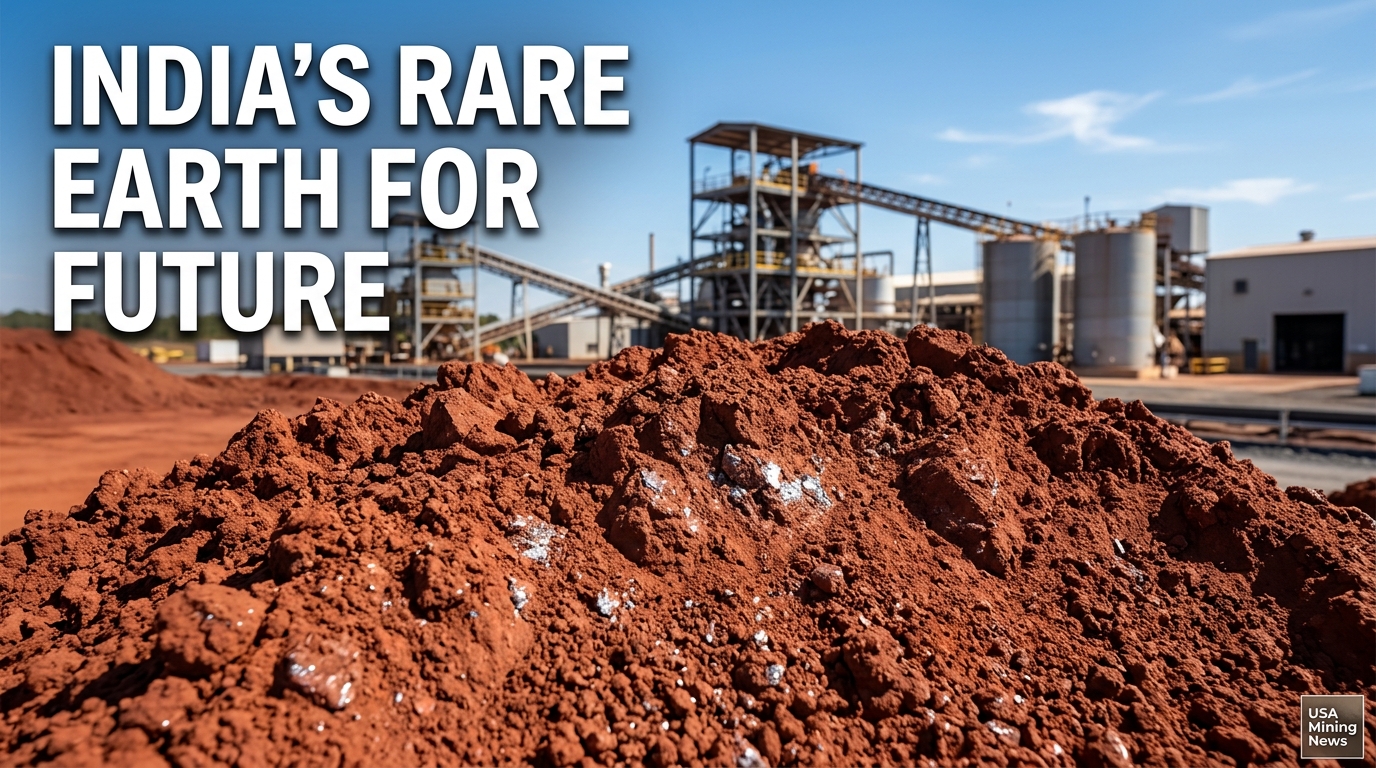
The core innovation behind Enervoxa's project lies in its ability to extract valuable rare earth elements from red mud, also known as bauxite residue. Red mud is a highly alkaline waste product, globally produced in billions of tons annually during the refining of bauxite ore into alumina. India, with its substantial aluminum production, generates considerable quantities of this residue, posing significant environmental and storage challenges. By repurposing this waste stream, Enervoxa's project champions a circular economy model, simultaneously mitigating environmental impact and creating value from what was previously considered industrial waste.
While the primary focus is on rare earth elements—critical for high-tech applications—red mud has a complex composition that can yield other valuable materials. Beyond REEs, the reprocessing of red mud can also generate:
- Coagulants for water treatment
- Iron oxide, a valuable pigment and input for steel production
- Various pigments for industrial applications
- Titanium-bearing materials, which have diverse industrial uses
This multi-product recovery approach not only enhances the economic attractiveness of the project but also contributes to a broader resource efficiency strategy, aligning with global trends in sustainable industrial practices. Extracting rare earth elements from bauxite residue is a relatively recent commercial application, garnering significant attention due to the twin pressures of waste management and critical mineral supply security.
Financial Commitments and Geographic Focus
The development of a commercial-scale rare earth processing facility, as outlined by Enervoxa, carries a substantial price tag. The estimated cost for establishing such an operation in India ranges from $250 million (approximately C$352.59 million at the lower end, based on an exchange rate at the time of reporting) to $350 million. Enervoxa anticipates securing this funding through a combination of equity investments and project financing, a common approach for large-scale industrial ventures.
For the proposed facility's location, Enervoxa is primarily considering sites in eastern India. This region is a logical choice given the concentration of major aluminum producers and associated bauxite mines, minimizing transportation costs for the red mud feedstock. Furthermore, the company's strategic outlook extends beyond India, as it is also evaluating opportunities in other alumina-producing regions globally. This layered approach indicates Enervoxa's ambition to become a significant player in the broader rare earth recovery and processing sector.
Addressing China's Dominance and India's Strategic Imperative
The global rare earth market faces a profound imbalance, with China maintaining a near-monopoly over the processing and refining stages of these crucial elements. This dominance has raised significant concerns among industrial powers regarding supply chain vulnerabilities, particularly in the context of geopolitical tensions and the rapid growth of industries reliant on REEs.
Rare earth elements are indispensable components in a wide array of advanced technologies, including:
- Electric vehicle motors, crucial for the ongoing global energy transition
- Mobile phones and other consumer electronics
- Advanced defence technologies, underpinning national security applications
- Wind turbines, medical imaging, and various catalysts
India, despite possessing considerable rare earth reserves, currently lacks industrial-scale facilities capable of producing these elements at high purity, meaning it predominantly exports raw materials or lower-value concentrates. Enervoxa's project directly addresses this gap, offering a pathway for India to develop a robust domestic processing capability. This would enhance India's strategic autonomy in critical minerals and contribute to the global effort to diversify rare earth supply, reducing dependence on a single geopolitical source.
Enervoxa's Proprietary Technology and Vision
Enervoxa’s foray into the Indian market is built upon approximately eight years of dedicated research and development into its proprietary rare earth recovery process. This extensive period of innovation underscores the technical complexities involved in efficiently and economically extracting REEs from a challenging matrix like red mud. The company aims to introduce this advanced method to India, marking a significant technology transfer and industrial capability upgrade for the subcontinent.
Enervoxa’s operational strategy for India is flexible, potentially involving either the full processing of red mud within the country to produce refined rare earth products or the creation of rare earth concentrates for further downstream refining elsewhere. The decision between these two approaches would likely depend on factors such as local infrastructure, capital expenditure requirements, and the evolving market demand for different levels of rare earth purity and compounds.
Government Support and Future Collaboration
The Indian government has demonstrated a clear understanding of the strategic importance of critical minerals and the potential of red mud valorization. Last year, the government explicitly stated its support for initiatives examining methods of metal and rare earth extraction from red mud. Key stakeholders, including the Jawaharlal Nehru Aluminium Research Development and Design Centre (JNARDDC)—a premier research institution for aluminum and bauxite—and other organizations under the NITI Aayog think tank, have been actively exploring these possibilities. NITI Aayog plays a crucial role in India's policy formulation, guiding the government's strategic direction across various sectors, including industrial development and resource management.
Enervoxa intends to engage not only with aluminum producers but also with a broader spectrum of Indian industries. This includes engineering companies that can contribute to plant design and construction, steel-makers who could utilize some of the red mud by-products like iron oxide, and other critical minerals processors. Such comprehensive engagement is aimed at establishing a truly integrated value chain for rare earths within India, enhancing local industrial ecosystems and fostering domestic expertise.
Furthermore, Enervoxa plans to seek direct assistance from the Indian Government. Such government support could manifest in various forms, including regulatory facilitation, financial incentives, or policy backing, all of which would be crucial for de-risking a project of this scale and strategic importance.
Outlook: Diversifying Global Rare Earth Supply
Enervoxa's proposed rare earth processing facility in India represents more than just a single industrial project; it embodies a broader trend towards diversifying and securing critical mineral supply chains globally. As nations increasingly prioritize energy transition technologies and advanced manufacturing, the demand for rare earth elements is projected to surge. Projects like Enervoxa’s, which leverage waste streams and introduce advanced processing capabilities to new geographies, are vital for creating a more resilient and sustainable global mineral economy.
Should this project proceed as planned, it could significantly elevate India's position in the global rare earth value chain, transforming it from a mere holder of reserves to a key producer of refined rare earth products. This would not only serve India's domestic industrial ambitions but also contribute substantially to global efforts aimed at reducing critical mineral supply vulnerabilities and fostering a more balanced international market for these indispensable elements.