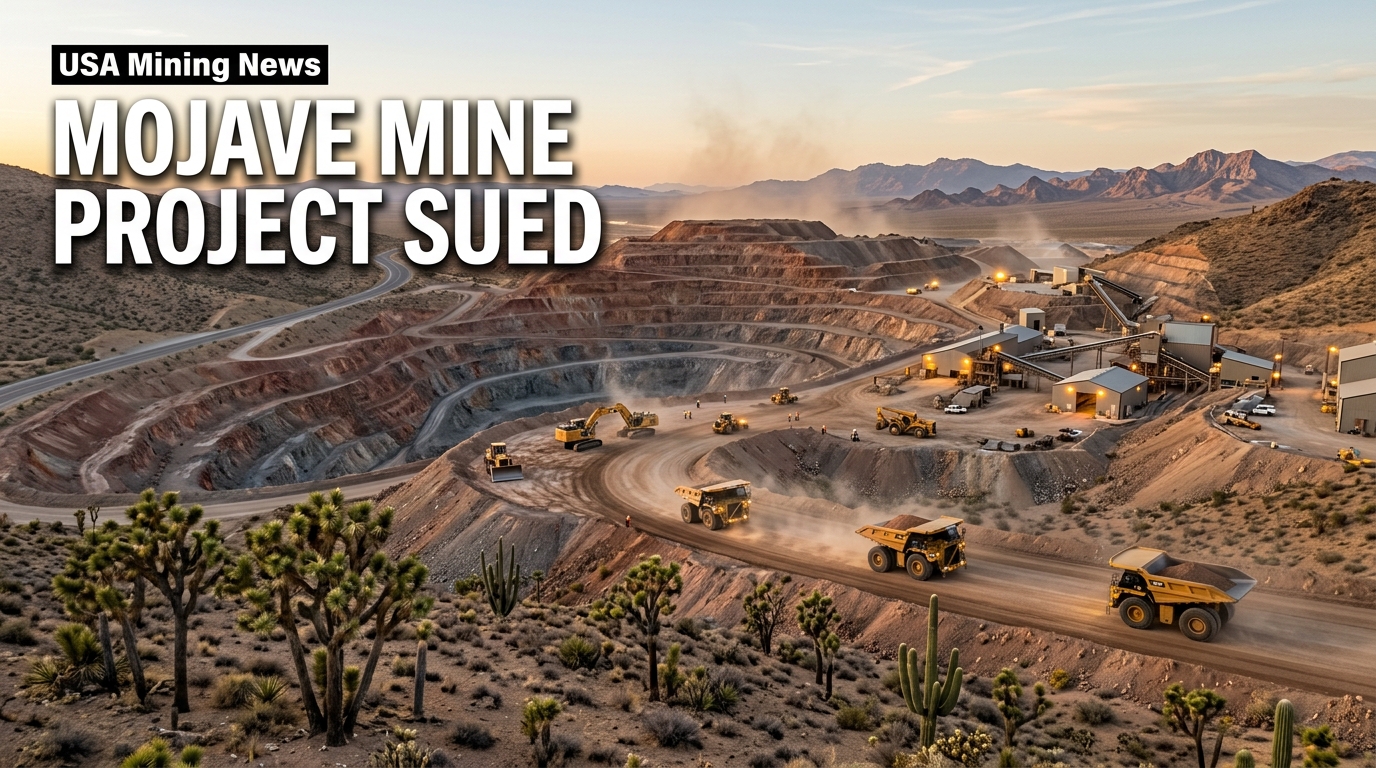
The quest for a robust domestic supply chain of critical minerals, particularly rare earth elements essential for modern technology and national security, has encountered a significant legal obstacle in California's Mojave Desert. The U.S. Department of the Interior (DOI) is facing a lawsuit from a prominent environmental advocacy group over its decision to approve a rare earth mining project within the Mojave National Preserve. This legal challenge, filed last week by the environmental law firm Earthjustice on behalf of the National Parks Conservation Association (NPCA), targets the DOI's April 2025 approval of the Colosseum mine project, being developed by Australia’s Dateline Resources (ASX: DTR).
The Core Dispute: Environmental Protections vs. Critical Mineral Imperatives
At the heart of the legal action is the contention that the National Park Service (NPS), a bureau under the DOI responsible for managing national reserves like the Mojave, greenlighted the Colosseum project without proper regulatory adherence. Earthjustice's filing asserts that the NPS signed off on the project last year without a "valid plan of operations or the necessary permits and approvals." Furthermore, the lawsuit claims that in approving mining activities, the NPS had violated "numerous federal laws," a striking assertion given that the agency had reportedly denied Dateline's efforts to advance the project for years prior to the 2025 approval.
This lawsuit, registered in the week leading up to April 18, 2026, marks a critical juncture for both the nascent U.S. rare earth industry and the future of resource development within environmentally sensitive areas. Chance Wilcox, NPCA’s California Desert Program Manager, articulated the environmental community's concern, viewing the DOI’s approval as "a blatant threat to the Mojave Preserve, setting a dangerous precedent that industrial mining interests can override decades of established park protections." Wilcox emphasized, "Laws and policies were put in place to protect national parks from destructive, speculative mining for a reason, and no administration is above the law when it ignores them." This statement underscores the NPCA's commitment to upholding the integrity of environmental regulations, even when faced with what the government deems a national strategic priority.
The Colosseum Project: A Resurgent Rare Earth Prospect
The Geneseo Colosseum project, located within the Mojave’s Clark Mountain region, is not new to mineral extraction. It previously operated as a gold and silver mine during the 1990s. However, its current prominence stems from its potential as a rare earth deposit, a discovery made by Dateline Resources after acquiring the project in 2021. Dateline’s review of historic government data revealed geological similarities to MP Materials’ (NYSE: MP) Mountain Pass mine, the sole operational rare earth mine in the United States, situated a mere 10 kilometers away. This close proximity and shared geological characteristics make Colosseum a compelling prospect for expanding domestic rare earth production.
Despite the promise, Dateline has yet to report a current rare earth resource estimate for the Colosseum project. The company has, however, publicly claimed the potential for rare-earth-bearing ore within its project claim boundary. This speculative, albeit strategically significant, potential underscores the early stage of the project’s rare earth development. Earlier this year, Dateline further signaled its commitment to the California rare earths landscape by adding a second project in the state, specifically highlighting its prospectivity for heavy rare earths, which are typically scarcer and more valuable than light rare earths.
Strategic Context: Critical Minerals and Executive Mandates
The DOI's decision to approve Dateline’s mining rights in April 2025 did not occur in a vacuum. It was a direct response to a broader national initiative aimed at strengthening America’s critical minerals supply chain, spearheaded by a significant executive order from former U.S. President Donald Trump. This executive order reflected a growing bipartisan concern over the nation’s overwhelming reliance on foreign sources, particularly China, for essential minerals vital to defense, technology, and renewable energy sectors.
The Colosseum project subsequently received public backing from Interior Secretary Doug Burgum, a strong proponent of domestic resource development. Secretary Burgum publicly lauded the revival of the Colosseum project, describing it as a "pivotal step" in the Trump administration's overarching efforts to build a secure supply of minerals such as rare earths. This high-level endorsement highlights the perceived national security and economic importance of the project, placing it squarely within the framework of bolstering U.S. mineral independence. However, this strategic imperative is now confronting entrenched environmental protections, setting the stage for a judicial review that could influence future critical mineral projects on federal lands.
Mojave National Preserve: A Sanctuary Under Scrutiny
The Mojave National Preserve, established by Congress in 1994, is a ecological treasure and one of the largest national park sites in the lower 48 states. Spanning approximately 1.6 million acres, this vast desert landscape is celebrated for its diverse ecosystems and unique biodiversity. It provides crucial habitat for iconic species such as the majestic bighorn sheep and is renowned for hosting the second-highest density of rare plants of any mountain range in California. The Preserve’s designation as a national park site reflects a congressional commitment to its long-term preservation and careful stewardship, making any industrial activity within its boundaries a contentious issue for environmental groups and the public alike.
Historically, the area saw mining activities, with the Bureau of Land Management (BLM), also under the DOI, responsible for oversight before the NPS’s jurisdiction. The BLM had approved mining operations in the 1980s, indicating a precedent for resource extraction in certain parts of the broader Mojave region before its elevation to a national preserve. This historical context illustrates the evolving regulatory landscape and the intensified protection afforded to the area since its establishment as a preserve, setting a higher bar for new industrial developments.
Dateline Resources' Vision and Investor Response
Dateline Resources, an Australian miner active in the U.S. market, has maintained a resolute stance amidst the legal challenge. The company publicly stated that despite the lawsuit, activities at Colosseum will continue as planned. This position is predicated on the understanding that the legal proceedings are directed at the aforementioned federal agencies—the Department of the Interior and the National Park Service—rather than Dateline itself. This distinction is crucial for Dateline's operational continuity, as it suggests the company believes its direct operational permits are not immediately revoked or under direct challenge by the lawsuit.
However, the legal uncertainty surrounding the project had an immediate and tangible impact on Dateline’s market performance. Following the announcement of the lawsuit, shares of Dateline Resources plunged over 9.5% at market close Friday, sending its market capitalization down to A$1.23 billion. This sharp decline underscores the sensitivity of mining investors to regulatory risks and legal challenges, especially when projects are situated in environmentally contentious areas. Even with the company's confidence in continuing operations, the specter of protracted legal battles and potential future regulatory hurdles can significantly de-risk investments and impact valuations.
Implications for the US Critical Minerals Strategy and Investment Landscape
This lawsuit carries significant implications far beyond the Colosseum project itself. For the broader U.S. critical minerals strategy, it highlights the inherent tension between the urgent need to secure a domestic supply of strategic materials and the equally important mandate to protect invaluable natural landscapes. The outcome of this legal challenge could either reinforce the authority of environmental regulations in protected areas or set a precedent for accelerating critical mineral extraction, potentially at the expense of established conservation principles. The legal battle also sheds light on the complexities of permitting new mines in the U.S., a process often criticized for being lengthy and unpredictable. Such challenges can deter both domestic and international investors from committing capital to U.S.-based projects, even those deemed nationally strategic.
Furthermore, the case underscores the critical importance of a robust and legally sound permitting process. Allegations of agencies approving projects without a "valid plan of operations or the necessary permits and approvals" strike at the core of regulatory integrity. Should these claims be substantiated, it could lead to increased scrutiny of future federal approvals for mining and other industrial projects, particularly in sensitive ecological zones. This could necessitate a re-evaluation of how environmental laws are interpreted and applied in the context of national security and economic imperatives.
The Path Ahead: Navigating Legal and Operational Complexities
The legal proceedings initiated by Earthjustice on behalf of the NPCA will now move through the U.S. judicial system, likely involving extensive discovery, arguments, and potentially appeals. The resolution of this case could take months, if not years, creating a period of sustained uncertainty for the Colosseum project and Dateline Resources. During this time, Dateline will likely continue to advance its geological exploration and development plans, while simultaneously monitoring and possibly engaging with the legal developments impacting the federal agencies. For the mining industry as a whole, the lawsuit serves as a potent reminder of the complex interplay between resource development, environmental stewardship, and regulatory compliance in the United States. Investors, developers, and policymakers will be closely watching the outcome, as it will undoubtedly influence the landscape for critical mineral projects in protected or environmentally sensitive regions across the nation for years to come.