Epiroc Secures Landmark Mechanisation Order from Sibanye-Stillwater for South African Platinum Operations
Rustenburg, South Africa – In a pivotal development poised to reshape underground mining operations in South Africa's platinum belt, global productivity partner Epiroc has announced a substantial order from Sibanye-Stillwater for state-of-the-art mining equipment. The agreement, disclosed on September 30, 2026, focuses on supplying machinery for the Siphumelele shaft, a key platinum operation located in Rustenburg, South Africa. This initiative represents a strategic push by Sibanye-Stillwater to mechanise mining processes, signaling a broader industry trend towards modernised, safer, and more efficient extraction methods for challenging ore bodies.
Strategic Mechanisation at Siphumelele: An Overview
The core of this significant investment is Sibanye-Stillwater's commitment to transforming its Siphumelele shaft through mechanisation. The Siphumelele operation, situated in one of the world's most prolific platinum group metals (PGMs) regions, faces the inherent challenges of deep-level, narrow-vein mining typical of the Bushveld Igneous Complex. Traditional conventional mining methods in such environments are often labor-intensive, carry elevated safety risks, and can present limitations to productivity and cost efficiency. By embracing mechanisation, Sibanye-Stillwater aims to mitigate these challenges, optimize its resource recovery, and secure the long-term viability of the asset.
Richard Cox, Chief Operating Officer for Sibanye-Stillwater's Southern Africa operations, articulated the strategic imperative behind this decision. "The investment in Siphumelele is an important example of our strategic focus on extending mine life and unlocking additional value from our existing ore reserves," Cox stated. This perspective highlights a crucial industry driver: as easily accessible ore bodies diminish, mining companies are increasingly turning to technology and innovation to extract value from existing, often mature, assets or more geologically complex deposits. Extending mine life through enhanced efficiency and safety is paramount for sustained production and returns on significant capital investments.
The Equipment Portfolio: Tailored for Narrow Veins
The order placed with Epiroc encompasses a specialized suite of underground mining equipment meticulously selected to suit the demanding conditions of the Siphumelele platinum mine. Key components of this delivery include:
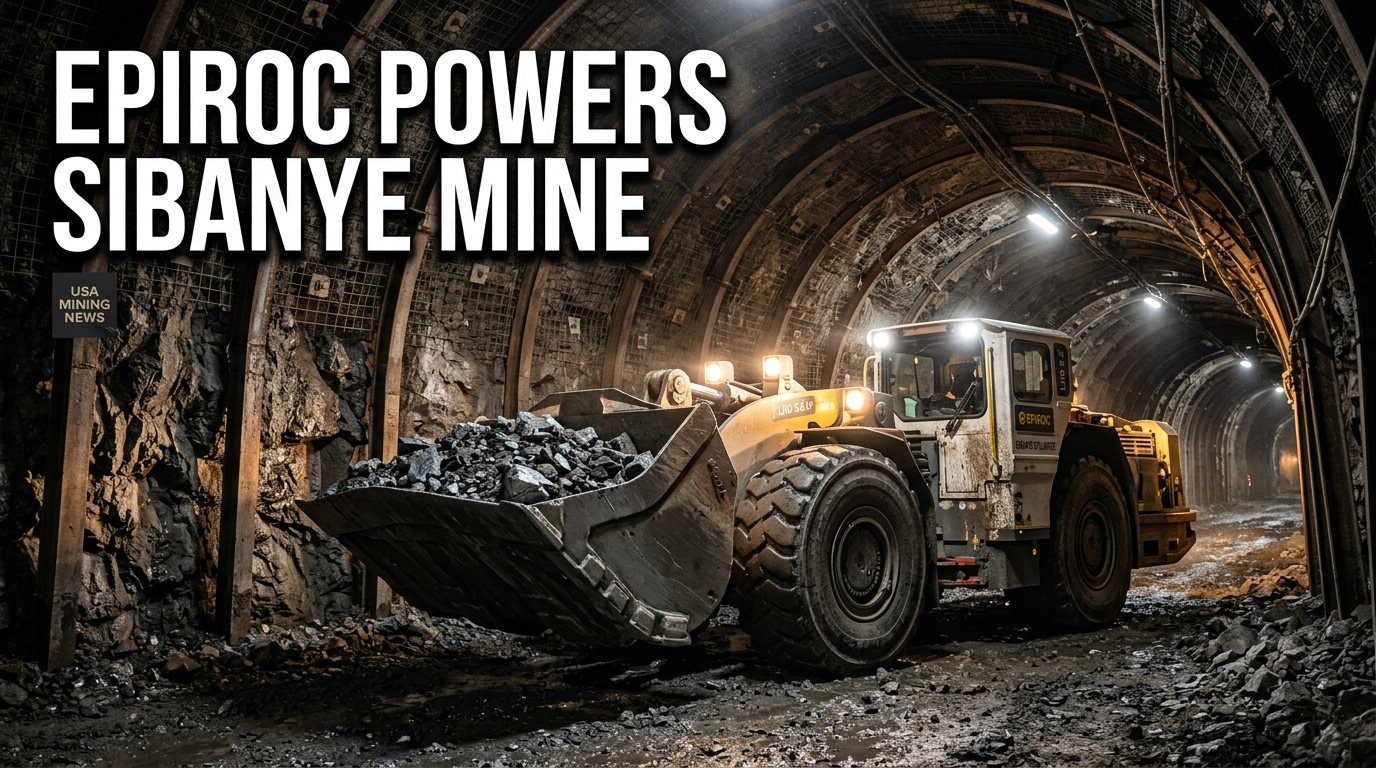
- LHD 5.5 LP Low-Profile Loaders: These loaders are engineered specifically for mining environments characterized by narrow veins and limited overhead clearance. Their low-profile design enables efficient loading and hauling in confined spaces, a critical feature for platinum and other precious metal deposits found in thin reef structures. The design prioritizes operational safety while significantly enhancing productivity in these challenging scenarios.
- UV42 Utility Vehicles: These versatile vehicles are designed to support a multitude of underground operations, playing a vital role in maintenance, logistics, and general utility tasks. Their robust construction and adaptability make them indispensable for ensuring the smooth flow of materials, personnel, and services across vast underground networks.
- UV42 Cassettes: Complementing the UV42 utility vehicles, these interchangeable cassettes provide flexible solutions for transporting various essential items within the mine. Their modular design allows for rapid conversion of utility vehicles to carry personnel safely, transport critical tools and spare parts for maintenance, or securely move explosives required for blasting operations. This modularity enhances operational flexibility and reduces downtime associated with equipment changeovers.
The deployment of this advanced fleet is slated to begin with deliveries commencing in the fourth quarter of 2026. This timeline underscores the significant lead times involved in large-scale equipment procurement and the meticulous planning required for integrating new technology into existing mining operations.
Sibanye-Stillwater's Vision: Extending Mine Life and Value
Sibanye-Stillwater's decision to invest in Epiroc's specialized low-profile fleet at Siphumelele is a clear reflection of its long-term strategic objectives. In an industry facing fluctuating commodity prices, increasing operational costs, and the imperative for improved safety records, companies are under immense pressure to optimize their asset base. For Sibanye-Stillwater, a prominent player in the global PGM and gold sectors, enhancing the performance of existing operations like Siphumelele is fundamental to its continued success.
The mechanisation drive at Siphumelele is not merely about replacing older equipment; it represents a fundamental shift in mining philosophy. By leveraging modern machinery tailored for narrow-vein conditions, Sibanye-Stillwater aims to achieve several critical outcomes:
- Improved Safety: Reducing human exposure to high-risk areas, minimizing manual handling, and employing tele-remote or automated equipment significantly enhances worker safety, a paramount concern in deep underground mining.
- Increased Productivity: Mechanised loading and hauling systems typically operate at higher speeds and capacities than conventional manual methods, leading to greater ore extraction rates and overall operational efficiency.
- Lower Operating Costs: While initial capital expenditure is substantial, the long-term benefits of mechanisation often include reduced labor costs per tonne, optimized energy consumption, and more consistent production, leading to lower unit operating costs.
- Resource Optimization: Precision mining techniques enabled by modern equipment can lead to higher recovery rates and more selective mining, reducing dilution and maximizing the value extracted from the ore body.
As Richard Cox noted, Epiroc’s low-profile fleet is "well suited to the mining conditions at Siphumelele" and will "support the safe and efficient execution of this strategically important project." This alignment between equipment capabilities and geological conditions is crucial for the successful implementation of any mechanisation program.
Epiroc's Expanding Footprint and Strategic Acquisitions
For Epiroc, this order further solidifies its position as a leading global supplier of mining and infrastructure equipment. Helena Hedblom, Epiroc's President and CEO, expressed pride in supporting the Siphumelele operation's transition to mechanised equipment. "It will strengthen Sibanye-Stillwater’s continuous efforts to be as safe and productive as possible," she stated, emphasizing Epiroc's commitment to partnership in achieving operational excellence.
A notable aspect of this order is the origin of the LHD 5.5 LP loader and associated equipment. These products are a direct result of Epiroc’s strategic 2023 acquisition of AARD Mining Equipment. This acquisition was a calculated move by Epiroc to broaden its portfolio of underground solutions, particularly in product lines tailored for challenging, narrow-vein applications prevalent in regions like Southern Africa. Integrating AARD's specialized expertise and proven product designs into Epiroc’s global offering has allowed the company to deliver highly relevant and effective solutions to clients like Sibanye-Stillwater, further advancing its involvement in critical mine support activities.
This strategic growth through acquisition illustrates how major equipment manufacturers adapt to evolving market needs, ensuring they can provide comprehensive solutions across diverse mining environments and operational requirements. The ability to offer equipment specifically designed for narrow-vein mining is a competitive advantage in regions where such deposits are common, but challenging to mine economically and safely.
Broader Industry Context: Mechanisation in South African Platinum Mining
The South African mining industry, particularly the platinum sector, has been progressively moving towards greater mechanisation over the past two decades. This shift is driven by a confluence of factors, including increasing labor costs, a legacy of safety concerns associated with conventional methods, and the imperative to remain competitive in a global market.
The Bushveld Igneous Complex, which hosts the majority of the world's known platinum reserves, is characterized by relatively thin, dipping reefs that extend to significant depths. Extracting these valuable PGMs traditionally involves extensive manual labor, drilling, blasting, and hand-lashing. While these methods have been foundational to the industry, they present inherent limitations in terms of productivity, speed of development, and the overall working environment.
Mechanisation offers a pathway to overcome these limitations. By introducing equipment like Epiroc’s low-profile loaders and utility vehicles, mines can:
- Reduce the number of personnel exposed to the rock face.
- Increase the rate of face advance and overall development.
- Improve the consistency and quality of blasting and rock breaking.
- Optimize the entire material handling circuit from the stope to the processing plant.
This transition is not without its complexities, requiring significant capital investment, extensive training for the workforce, and robust maintenance infrastructure. However, the long-term benefits in terms of improved safety, operational efficiency, and extended economic life of mines often outweigh these challenges, making mechanisation a strategic imperative for modern deep-level operations.
Epiroc's Global Presence and Recent Engagements
The Sibanye-Stillwater order is part of a broader pattern of significant engagements for Epiroc across the African continent and globally. This underscores the company's strong market position and its crucial role in supporting the mining industry's transition towards more sustainable and productive operations. For instance, Epiroc recently secured another substantial order, valued at approximately $64 million (equivalent to Skr610 million), from MMG for underground mining equipment destined for the Khoemacau Copper Mine in north-west Botswana. Such high-value contracts demonstrate Epiroc's capacity to deliver comprehensive mining solutions to major operators across various commodities and geographical regions.
Future Implications and Outlook
The collaboration between Epiroc and Sibanye-Stillwater at the Siphumelele shaft has far-reaching implications. For Sibanye-Stillwater, the successful implementation of this mechanisation program is expected to yield tangible improvements in safety statistics, operational throughput, and ultimately, the financial performance of the asset. By extending the mine's life and enhancing its economic viability, the investment contributes to sustained employment and economic activity in the Rustenburg region.
For Epiroc, this order reinforces its market leadership and validates its strategy of acquiring specialized technologies, such as those from AARD Mining Equipment, to meet niche industry demands. It further positions Epiroc as a preferred partner for mining companies embarking on complex mechanisation journeys.
More broadly, this development serves as a compelling case study for the wider mining industry. It exemplifies how strategic investments in modern, fit-for-purpose equipment can unlock significant value from challenging ore bodies, drive safety improvements, and contribute to the long-term sustainability of mining operations. As the global demand for critical minerals continues to rise, the ability to mine safely, efficiently, and responsibly will be paramount, and mechanisation, as demonstrated at Siphumelele, will play a central role in achieving these objectives.