Europe's Tungsten Revival Faces a Race Against China
By Heidi Vella
October 13, 2026
The global mining landscape is undergoing profound shifts, nowhere more evident than in the strategic metals sector, where geopolitical dynamics are reshaping supply chains and elevating the value of non-traditional sources. Europe, a continent historically rich in mineral resources but increasingly reliant on imports, is now embarking on a determined revival of its tungsten mining capabilities. This resurgence is not merely a response to market forces but a strategic imperative, driven by the volatile interplay of export controls, heightened demand for supply chain security, and the overriding need to reduce dependence on dominant producers like China.
The impetus behind Europe's renewed focus on tungsten is multifaceted. As nations around the world recalibrate their industrial strategies, the vulnerability of extended, concentrated supply chains has become acutely clear. Tungsten, a critical material with unparalleled hardness and high melting point, is indispensable across a spectrum of advanced industries, from aerospace and defense to electronics and medical technology. Its strategic importance, coupled with an increasingly unpredictable global trade environment, has spurred European nations and mining companies to explore and advance both new and revived tungsten projects within the continent's borders. This movement represents a significant pivot, aiming to carve out a resilient, independent supply of a commodity vital for future industrial growth and national security.
The Strategic Imperative for Tungsten
Tungsten, often referred to as a "critical raw material," holds a unique position due to its exceptional physical and chemical properties. It possesses the highest melting point of all metals (3,422°C), outstanding hardness, and excellent corrosion resistance. These characteristics make it indispensable in the production of:
- Hard materials: Primarily cemented carbides, used in cutting tools, drills, and wear-resistant parts for mining, construction, and manufacturing.
- High-temperature applications: Filaments for lighting, electrodes, heating elements, and components in aerospace and defense industries.
- Alloys: To improve strength and heat resistance in steels and superalloys.
- Electronics: In semiconductor manufacturing and various electronic components.
- Chemicals: As catalysts and pigments.
The reliance of these foundational industries on a steady and secure supply of tungsten underscores why its sourcing has become a matter of national and regional strategic importance. Disruptions in tungsten supply can have cascading effects across entire industrial value chains, impacting innovation, manufacturing capacity, and economic stability.
China's Dominance and Export Controls as a Catalyst
For decades, China has been the undisputed global leader in tungsten production, accounting for an overwhelming majority of the world's supply. This concentration of production, while economically efficient for many years, has increasingly become a point of vulnerability for consumer nations. China's significant reserves and robust mining and processing infrastructure have historically provided a relatively stable, albeit dominant, source for global markets.
However, recent shifts in global trade policies and geopolitical tensions have led China to implement various export controls and production quotas on critical raw materials, including tungsten. These measures, often aimed at domestic industrial beneficiation, environmental protection, or strategic resource management, have invariably tightened global supply and introduced significant market volatility. For European industries, heavily reliant on consistent access to these materials, such controls have underscored the critical need for diversification. The consequence of these actions is a palpable reshaping of global supply chains, where the value of non-Chinese tungsten supply has demonstrably increased. This premium reflects not just the basic economics of supply and demand, but also the added value of supply chain security, geopolitical independence, and reduced risk for manufacturers.
Europe's Revival Efforts: The Mittersill Example
Against this backdrop, Europe is witnessing a tangible push to bring new and reactivated tungsten projects online. While the source material broadly mentions "European tungsten projects are advancing new and revived mines," a prime example of this concerted effort is the Mittersill tungsten mine in Austria. Owned and operated by Wolfram Bergbau und Hütten AG, a subsidiary of the Sandvik Group, Mittersill stands as Europe's largest active tungsten mine and a cornerstone of the continent's ambition for self-sufficiency.
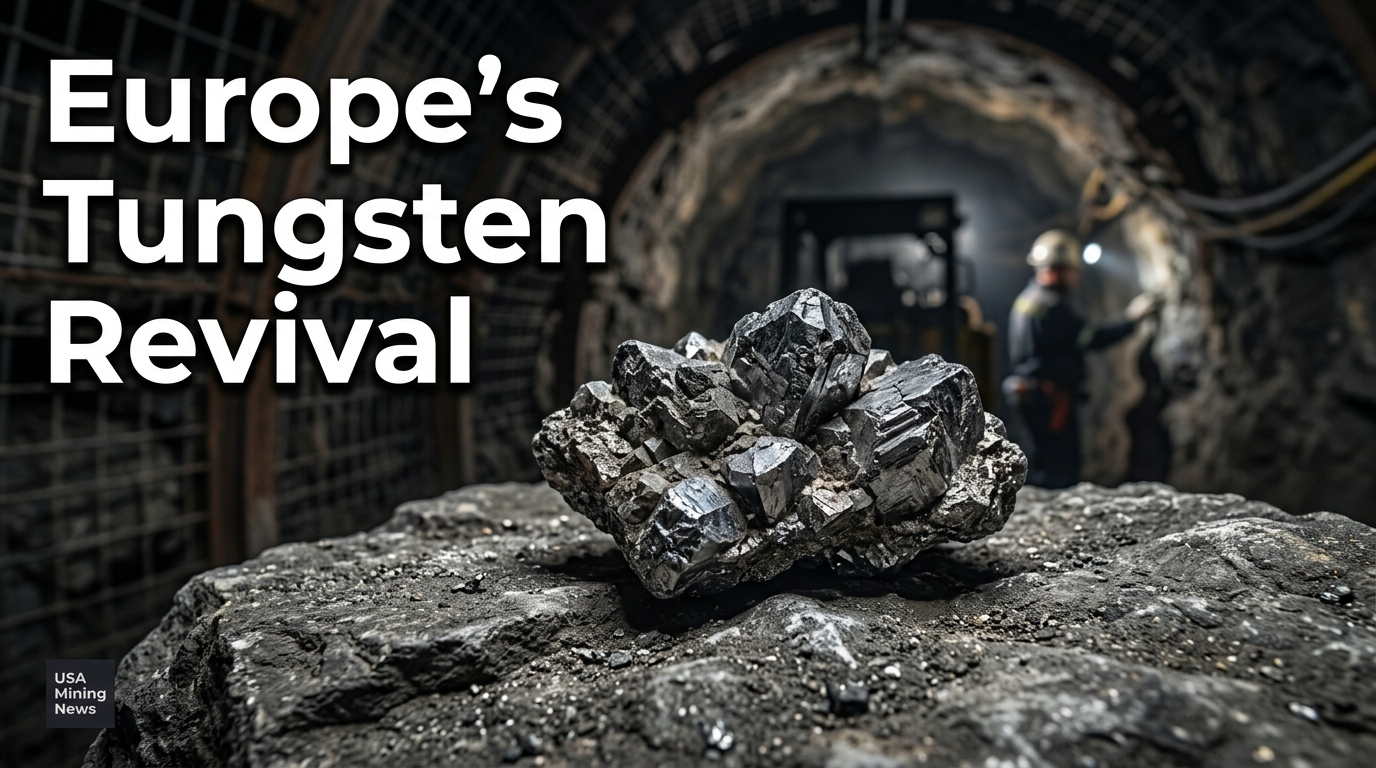
The Mittersill mine is a testament to sophisticated engineering and operational resilience, with underground operations extending deep beneath the majestic Alps. Such a location presents unique geological and logistical challenges, requiring advanced mining techniques and robust infrastructure to ensure safe and efficient extraction. The mine's continued operation and efforts to optimize production are crucial for supplying high-purity tungsten concentrate, which is then processed into various intermediate products essential for European industries.
The significance of projects like Mittersill extends beyond their individual output. They represent tangible steps towards building a more robust and geographically diversified supply network within the European Union. This network aims to mitigate the risks associated with over-reliance on a single supplier, fostering greater economic stability and strategic autonomy for the continent.
Operational Realities in European Tungsten Mining
Mining tungsten in Europe, particularly in established regions like the Alps, involves navigating complex geological conditions and stringent environmental regulations. The Mittersill mine, being an underground operation, exemplifies many of these realities:
- Geological complexity: Ore bodies in mountainous regions often present varied and challenging ground conditions, requiring precise geological modeling and adaptive mining methods.
- Technological sophistication: Modern underground mining relies heavily on automation, remote sensing, and precision drilling to ensure safety, efficiency, and minimal environmental footprint. Equipment providers like Sandvik, who provided the image of Mittersill, are key partners in this technological advancement.
- Environmental stewardship: European mining projects operate under some of the world's strictest environmental and social governance (ESG) standards. This necessitates comprehensive environmental impact assessments, sustainable water management, waste rock management, and rigorous rehabilitation plans.
- Community engagement: Operating mines in populated or environmentally sensitive areas requires robust community relations, transparent communication, and ensuring benefits for local stakeholders.
These operational considerations, while adding to the capital and operational expenditure of European projects, also ensure a higher standard of production that aligns with regional values and regulatory frameworks. This can, in turn, contribute to a "green premium" or "ethical premium" for European-sourced materials in the global market.
Market Dynamics and Investment Outlook
The current market dynamics are unequivocally favorable for non-Chinese tungsten suppliers. China's export controls have not only constrained supply but have also instilled a sense of urgency among global manufacturers to diversify their sourcing strategies. This has directly translated into a raised value for tungsten from alternative origins.
For mining investors, this scenario presents both opportunities and challenges. The opportunity lies in the potential for higher, more stable prices for responsibly sourced tungsten and the strategic importance of projects that can deliver secure supply. However, the challenges include:
- High upfront capital: Developing new mines or reactivating old ones in Europe often requires substantial capital investment due to infrastructure needs, regulatory compliance, and advanced technological requirements.
- Permitting hurdles: The permitting process for mining projects in Europe can be lengthy and complex, demanding extensive environmental and social impact studies.
- Cost structures: Labor costs and energy prices in Europe can be higher compared to some other mining jurisdictions, impacting overall operational profitability.
Despite these challenges, the strategic importance of tungsten and the global push for supply chain resilience are attracting increasing interest from governments, industrial end-users, and specialized investment funds. This signifies a long-term commitment to de-risking critical raw material supply chains.
The Race for Resilience: Broader Implications
Europe's tungsten revival is more than an isolated mining trend; it is a critical component of a broader global movement towards supply chain resilience and strategic autonomy. The "race against China" is not simply about out-producing the dominant player, but about building diversified, secure, and sustainable supply pathways for critical minerals.
This race has several far-reaching implications for the mining industry:
- Increased exploration and development: Expect accelerated exploration efforts across Europe for tungsten and other critical minerals, driven by governmental support and private investment.
- Technological innovation: Greater investment in innovative mining and processing technologies, particularly those that minimize environmental impact and improve resource efficiency, will be essential.
- Policy and regulatory support: European policy frameworks, such as the Critical Raw Materials Act, are likely to strengthen, providing incentives and streamlining processes for domestic mining projects.
- Strategic partnerships: Collaborations between mining companies, processing facilities, and industrial consumers will become more common, forming integrated value chains within the region.
- Global commodity market rebalancing: While China will remain a major player, the emergence of credible alternative supplies will gradually rebalance the global tungsten market, potentially reducing price volatility and increasing supply security for buyers.
Conclusion
The trajectory of Europe's tungsten mining sector is undeniably upward, propelled by the stark realities of global supply chain vulnerabilities and the strategic implications of concentrated production. Projects like Austria's Mittersill mine serve as cornerstones of this revitalized effort, demonstrating that sophisticated, responsible mining can thrive within Europe. As China continues to manage its vast mineral resources with strategic intent, the imperative for Europe to secure its own reliable tungsten supply becomes ever more pressing. This revival is not merely about extracting a metal; it is about fortifying industrial independence, bolstering economic security, and ensuring that Europe's advanced industries have the foundational materials they need to innovate and compete on the global stage. The race is on, and Europe is clearly committed to not only participate but to establish a durable and resilient presence in the global tungsten market.