Forging American Steel: Mesabi Metallics Unveils $18 Billion Integrated Mine-to-Mill Project
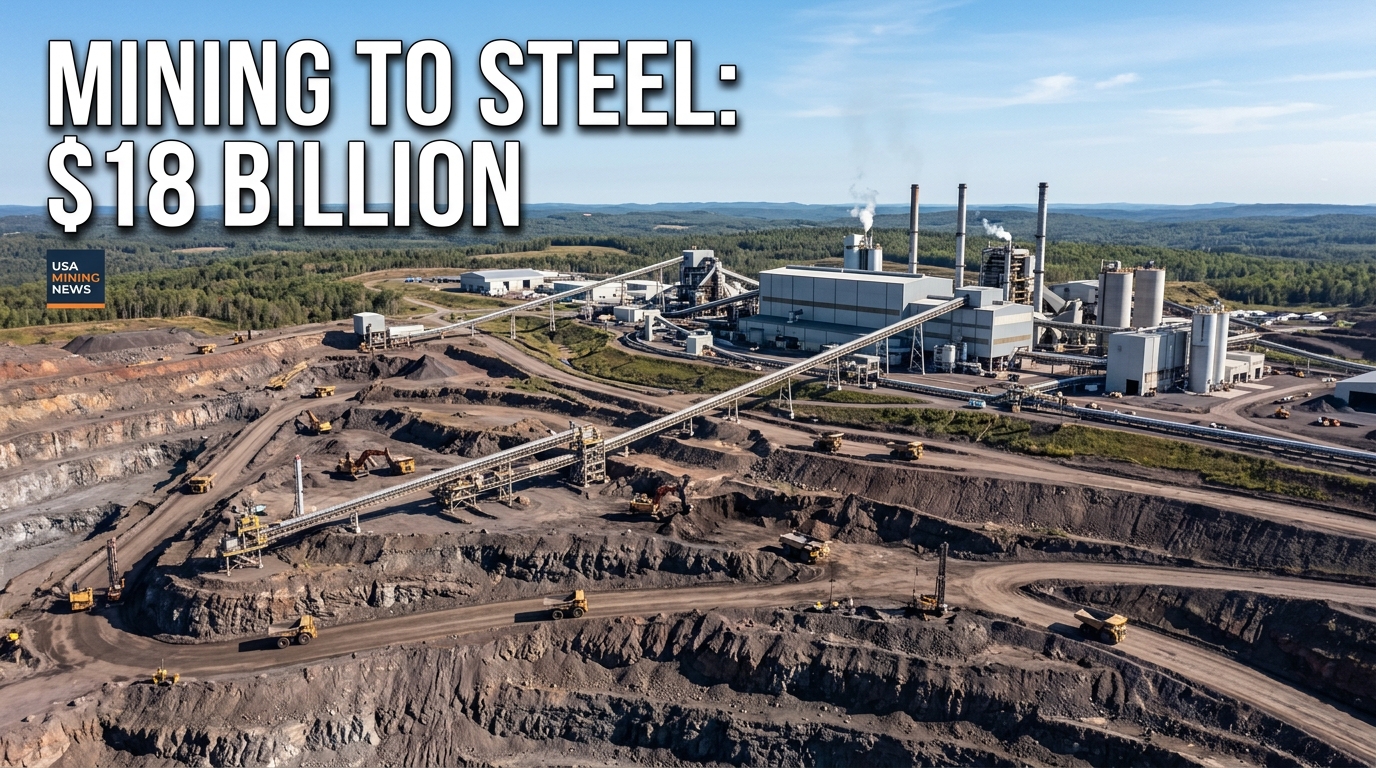
September 29, 2026 – In a significant move poised to reshape the landscape of the United States’ mining and steel industries, Essar Group-backed Mesabi Metallics has announced an $18 billion (Rs1.73 trillion) investment to develop a fully integrated steel operation. The ambitious project will seamlessly combine its existing iron ore mine on Minnesota’s historic Mesabi Iron Range with a proposed, state-of-the-art steel-making complex in Iowa. Revealed during a high-profile event at the White House, this initiative signals a profound commitment to domestic production, technological innovation, and job creation within the American industrial sector.
A Landmark Integrated Project
The core of Mesabi Metallics’ announcement centers on the strategic pairing of raw material extraction with advanced manufacturing. By integrating an iron ore mine in Nashwauk, Minnesota, with a substantial steel complex planned for Iowa, the company aims to establish an end-to-end domestic supply chain for high-quality steel. This integration is designed not only to enhance operational efficiencies but also to insulate the production process from global supply chain volatilities, a critical consideration in today's geopolitical and economic climate.
Joe Broking, CEO of Mesabi Metallics, articulated the strategic vision behind this endeavor, stating, “This is a major moment for US-made steel, combining the highest quality direct-reduction grade iron ore pellet from Minnesota’s Iron Range with the most advanced DRI [direct reduced iron] to EAF [electric arc furnace] steel-making technology in Iowa to supply the high-quality, all-American steel that our national defence, cars and trucks, shipbuilding, household appliances, energy and infrastructure depend on.” His remarks underscore the project’s multifaceted importance, touching upon national security, critical infrastructure, and widespread consumer applications.
Strategic Allocation of Capital
The colossal $18 billion investment is strategically distributed across the two primary components of the integrated project:
- $3 billion is earmarked for the completion and full operationalization of the iron ore mine in Nashwauk, Minnesota. This funding will finalize the infrastructure necessary for high-volume, high-quality iron ore pellet production.
- $15 billion is allocated to the development and construction of the new steel complex in Iowa. This significant capital outlay will fund the advanced manufacturing facilities, including direct reduction plants and electric arc furnaces, designed for modern steel production.
This balanced investment approach highlights Mesabi Metallics' commitment to strengthening both the upstream mining sector and the downstream manufacturing capabilities, ensuring a robust and self-reliant domestic steel ecosystem.
Boosting US Employment and Economic Output
Beyond its industrial implications, the project is projected to deliver substantial economic benefits, particularly in job creation across the region. Mesabi Metallics estimates that the combined venture will create more than 8,000 jobs, a figure that includes both temporary construction roles and long-term permanent positions:
- Over 6,000 construction roles are anticipated for the development phase of the Iowa steel complex, providing significant short-to-medium-term employment opportunities.
- 1,750 permanent positions are planned once both the mine and the steel complex reach full operational capacity, offering stable, high-value employment.
The Nashwauk mine is already a hive of activity, currently employing more than 1,500 construction workers and 200 full-time employees. Plans are in place to expand the permanent workforce at the mine to 350 roles once it becomes fully operational. Furthermore, Mesabi Metallics estimates that over the construction period and the first ten years of full operations, this investment will generate an impressive $95 billion in total economic output across the region, demonstrating its profound ripple effect on local and state economies.
The Nashwauk Iron Ore Mine: A Half-Century First
The Nashwauk operation stands as a testament to renewal and innovation in American mining. Situated on the legendary Mesabi Iron Range, this facility holds the distinction of being the first new iron ore mine constructed in the United States in 50 years. This alone marks a significant milestone, signaling a resurgence in domestic raw material extraction following decades of decline or stagnation in some areas.
The iron ore sourced from the Minnesota site will undergo processing to manufacture direct-reduction-grade iron ore pellets, aptly named ‘Patriot Pellets’. These specialized pellets are crucial inputs for the advanced steelmaking process planned for the Iowa facility. Their high quality and specific composition make them ideal for direct reduction, a key component of lower-emission steel production.
Iowa Steel Complex: Advanced Green Steel Production
The proposed Iowa steel complex represents the cutting edge of modern steel manufacturing. At its heart will be Electric Arc Furnaces (EAFs), which will be fed by a carefully curated combination of inputs:
- Hot, freshly reduced iron: This material will be generated on-site through the plant’s own direct-reduction process. Direct Reduced Iron (DRI) is produced by removing oxygen from iron ore at temperatures below its melting point, resulting in a metallic iron product.
- Scrap steel: The integration of scrap steel into the EAF feed underscores a commitment to circular economy principles and efficient resource utilization.
The process designed by Mesabi Metallics leverages a critical advantage: feeding the metallic iron into the furnaces while it is still hot from the direct-reduction process. This thermal efficiency is projected to significantly cut energy consumption and lower greenhouse gas emissions compared to traditional blast furnace methods, which rely on coke and molten iron. This approach positions the Iowa complex at the forefront of the global movement towards more sustainable and environmentally responsible steel production.
Forging a Domestic Steel Supply Chain
A central tenet of Mesabi Metallics’ strategy is the establishment of a fully domestic steel supply chain. From the excavation of iron ore in Minnesota to the final production of high-quality steel in Iowa, all major production steps will be contained within the United States. This integrated approach offers several strategic advantages for the US economy and industries:
- Supply Chain Resilience: Reduces reliance on international markets for critical raw materials and intermediate products, safeguarding against geopolitical risks and logistical disruptions.
- Quality Control: Allows for stringent quality control across the entire production process, ensuring consistent high standards for the final steel products.
- Economic Multiplier: Maximizes the economic benefit within the US by keeping jobs, investments, and value creation domestically.
- National Security: Provides a secure and reliable source of steel for vital sectors such as defense, infrastructure, and energy, areas where domestic sourcing is often paramount.
In an era marked by increasing calls for reshoring and strengthening domestic manufacturing capabilities, Mesabi Metallics' project directly addresses these national priorities, promising to bolster American industrial independence.
Key Players and Financial Backing
The project is spearheaded by Mesabi Metallics, a company backed by the Essar Group, a multinational conglomerate with diversified interests in steel, infrastructure, energy, and technology. This backing provides significant financial and operational heft to the ambitious undertaking. Further strengthening its financial foundation, Mesabi Metallics secured $150 million in funding from the Macquarie Group in April 2026 for its iron ore mine and pellet plant in the US. This capital injection underscores investor confidence in the project's viability and long-term potential.
Broader Industry Implications
Mesabi Metallics’ integrated venture carries profound implications for the wider mining and steel industries, both domestically and globally:
- Leadership in Decarbonization: The emphasis on DRI-EAF technology for lower-emission steel production positions the US as a leader in the global steel industry's decarbonization efforts. As regulatory pressures and market demands for "green steel" intensify, this project provides a tangible example of how established industrial nations can adapt and innovate.
- Revitalization of US Iron Ore Mining: The development of a new iron ore mine after half a century signals a potential revitalization of the domestic mining sector, particularly in regions like the Mesabi Iron Range, which have a long and rich history in supplying critical minerals.
- Benchmark for Integrated Operations: The sheer scale and scope of this integrated mine-to-mill project could serve as a benchmark for future investments in critical mineral supply chains, demonstrating the advantages of co-located or closely linked extraction and processing facilities.
- Impact on Commodity Markets: While not immediately altering global iron ore or steel prices, a fully operational domestic supply chain of this magnitude could offer greater price stability and predictability for US manufacturers, reducing exposure to volatile international markets.
The Road Ahead
With the announcement made, the focus shifts to the meticulous planning, regulatory approvals, and execution required to bring such a massive project to fruition. The construction of the Iowa steel complex, coupled with the finalization of the Nashwauk mine's infrastructure, will be a multi-year undertaking. The company’s vision extends beyond mere production; it aims to cultivate a skilled workforce, foster regional economic growth, and establish a legacy of sustainable industrial practice.
Mesabi Metallics' $18 billion investment represents more than just a financial commitment; it is a strategic declaration of intent. It signifies a belief in the enduring strength of American industry, the value of domestic resources, and the imperative of innovative, sustainable manufacturing. As the project unfolds, it will undoubtedly be closely watched by industry professionals, investors, and policymakers alike, eager to see the full realization of its transformative potential for the US mining and steel sectors.