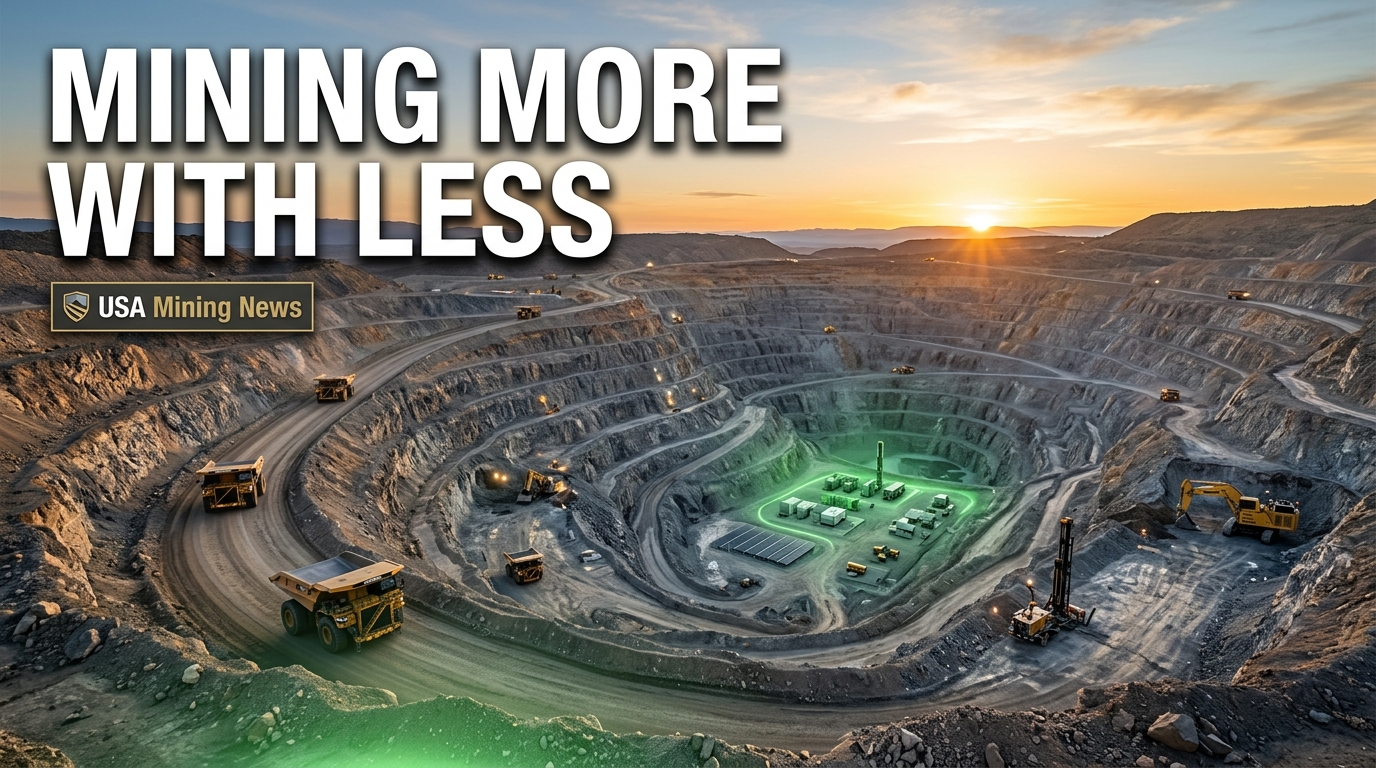
The global mining sector stands at a pivotal juncture, grappling with a dual imperative: satisfying an accelerating global demand for essential minerals and metals, while aggressively pursuing ambitious decarbonization targets. This critical balancing act, often summarized as "mining more with less," is at the forefront of industry discussions, driving innovation in operational strategies, technological adoption, and collaborative efforts across the value chain. An upcoming industry webinar, scheduled for August 19, 2026, promises to offer timely insights into these challenges and the practical solutions emerging from the ground.
The Dual Imperative: Meeting Demand While Decarbonizing
The world’s appetite for raw materials continues its upward trajectory, fueled by global urbanization, industrial growth, and the energy transition. Critical minerals, in particular, are experiencing unprecedented demand, essential for electric vehicles, renewable energy infrastructure, and advanced electronics. This market expansion presents significant opportunities for the mining industry but also intensifies scrutiny over its environmental footprint, particularly concerning greenhouse gas (GHG) emissions. Operators are under increasing pressure from investors, regulators, and civil society to demonstrate tangible progress in reducing their environmental impact while maintaining, and even increasing, productivity and reliability.
The webinar, titled Mining More with Less: Navigating the Demand vs Emissions Challenge, is poised to address these multifaceted pressures head-on. Hosted by GlobalData’s Head of Construction, Research and Analysis, David Kurtz, and featuring exclusive expert insights from Mobil (an ExxonMobil brand), the event will explore the real-world strategies and technologies being deployed to achieve significant emission reductions without compromising operational efficiency. This initiative underscores the industry’s commitment to not only acknowledging these challenges but actively developing actionable pathways towards a more sustainable future.
Global Mining's Trajectory: Growth and Responsibility
According to the comprehensive Mining Market Report 2026, which provides an extensive outlook on the sector, the global mining industry is entering a new and robust phase of expansion. The report projects a significant increase in market value, from an estimated US$2.1 trillion in 2025 to a substantial US$2.8 trillion by 2030. This represents a robust compound annual growth rate (CAGR) of 6.3% over the forecast period. Such growth is not merely organic but is strategically driven by several key factors:
- Rising Demand for Critical Minerals: The global shift towards sustainable energy and digital technologies has created an insatiable demand for metals such as lithium, cobalt, nickel, copper, and rare earth elements. Mining companies are actively exploring new deposits and expanding existing operations to meet this critical supply need.
- Growth in Emerging Markets: Rapid industrialization and infrastructure development in emerging economies are driving significant demand for traditional commodities like iron ore, coal (for steelmaking), and base metals, further propelling market expansion.
- Greater Investment in Productivity: To manage increased demand and rising operational costs, mining companies are investing heavily in advanced technologies aimed at boosting efficiency. This includes the deployment of autonomous vehicles, advanced data analytics, artificial intelligence, and sophisticated automation systems that optimize extraction processes.
- Emphasis on Sustainable Extraction: Beyond merely meeting demand, there is a growing, industry-wide focus on adopting more sustainable extraction methods. This encompasses not only emissions reduction but also water management, biodiversity protection, and responsible waste disposal.
- Advanced Safety Systems: With the integration of new technologies, miners are also prioritizing and investing in state-of-the-art safety systems to protect their workforce, reflecting a commitment to operational excellence and social responsibility.
The confluence of these drivers highlights a mining sector that is not only expanding its output but is fundamentally transforming its operational paradigms to align with global sustainability expectations.
Ambitious Targets: The Industry's Commitment to Decarbonization
Central to the industry's transformation is a pronounced commitment to reducing greenhouse gas emissions. The pressure to decarbonize spans the entire lifecycle of mining operations, from exploration and extraction to processing and transportation. This pressure stems from multiple stakeholders, including institutional investors demanding robust Environmental, Social, and Governance (ESG) performance, regulatory bodies imposing stricter emissions standards, and consumers increasingly preferring sustainably sourced materials.
Recent research commissioned by ExxonMobil, conducted by Frost & Sullivan in the first quarter of 2025 and detailed in the Mining Forward white paper (Version 1.1, February 2026), illuminates the industry’s strong commitment. The study surveyed 91 mining operators and revealed a striking statistic: approximately 90% of these operators have set a minimum target of a 30% reduction in their Scope 1 and Scope 2 emissions by the year 2030. This represents a significant, collective pledge and underscores the seriousness with which the industry is approaching climate action.
- Scope 1 emissions refer to direct emissions from sources owned or controlled by the mining company, such as fuel combustion in mobile equipment (haul trucks, excavators) and stationary equipment (generators, compressors), and methane leaks from coal mines.
- Scope 2 emissions are indirect emissions from the generation of purchased electricity, heat, or steam consumed by the company.
Achieving a 30% reduction in these categories by 2030 will require substantial strategic planning, capital investment, and technological innovation. It signifies a fundamental shift away from business-as-usual practices and towards more energy-efficient and low-carbon operational models.
Navigating the "Mining More with Less" Challenge
The upcoming webinar, Mining More with Less: Navigating the Demand vs Emissions Challenge, is specifically designed to unpack the practical implications of these ambitious targets. It aims to bridge the gap between aspirational goals and the operational realities of implementing decarbonization strategies. David Kurtz and the Mobil experts will delve into the effective measures and practical steps that mining operators are taking today, offering exclusive analysis and expert insights.
The discussions will focus on key areas critical to successful decarbonization, exploring both challenges and solutions:
- Interim Emissions Targets Miners are Setting Today: Beyond the overarching 2030 goals, the webinar will explore the nearer-term, incremental targets and milestones that companies are establishing to guide their progress. This includes specific targets for fleet electrification, renewable energy adoption rates, or improvements in energy intensity. Understanding these interim steps is crucial for tracking actual progress and adjusting strategies as needed.
- Actual Progress So Far and What’s Driving (or Blocking) Decarbonization in the Sector: A candid assessment of the current state of decarbonization efforts is essential. The discussion will likely highlight successful case studies, demonstrating what works on the ground, as well as common roadblocks. These barriers could include high capital costs for new technologies, the availability of reliable renewable energy sources in remote mining locations, infrastructure limitations, or the complexity of integrating new systems into existing operations.
- The Emerging Use of Renewable Power and Fuels for Both Stationary and Mobile Equipment: This is a cornerstone of mining decarbonization. The webinar will likely explore various avenues:
- Renewable Power for Stationary Equipment: Many mines are increasingly integrating solar photovoltaic (PV) and wind power installations, often combined with battery energy storage systems (BESS), to power processing plants, administrative buildings, and other fixed infrastructure. This reduces reliance on fossil fuel-fired generators or grid electricity with high carbon intensity.
- Renewable Fuels and Electrification for Mobile Equipment: Haul trucks, excavators, and loaders are significant contributors to Scope 1 emissions. Strategies include the transition to battery-electric vehicles (BEVs), hydrogen fuel cells, or the use of advanced biofuels (such as hydrotreated vegetable oil or sustainable aviation fuel) where electrification is not yet feasible. The session will likely cover the logistical and technological hurdles in deploying these solutions at scale.
- Lubrication as an Effective Lever in Mining Operations’ Emissions Reduction Strategy, Without Compromising Productivity and Efficiency: Often overlooked, advanced lubrication plays a surprisingly significant role in emissions reduction. The webinar will delve into how high-performance lubricants can contribute to sustainability goals:
- Reduced Fuel Consumption: Lower friction within engines and drivetrains means less energy is wasted as heat, leading to improved fuel economy for diesel-powered equipment. This directly translates to reduced fuel consumption and, consequently, lower Scope 1 emissions.
- Extended Equipment Life and Reduced Maintenance: Superior lubrication protects critical components from wear, extending the lifespan of machinery and reducing the frequency of maintenance and replacement. This indirectly reduces the energy and emissions associated with manufacturing new parts or equipment.
- Enhanced Operational Efficiency: By maintaining optimal equipment performance, advanced lubricants contribute to higher uptime and productivity, ensuring that the "mining more" aspect is achieved efficiently, complementing the "mining with less" emissions approach.
Key Players Driving the Discussion
The collaboration between GlobalData and Mobil (ExxonMobil) for this webinar brings together significant industry expertise. GlobalData, a leading data and analytics company, provides invaluable market intelligence and research across various sectors, including construction and mining. David Kurtz, as Head of Construction, Research and Analysis, brings a macro-level understanding of industry trends and strategic developments. Mobil, with its deep technical expertise in advanced lubricants and fuels, offers practical, on-the-ground insights into how operational efficiencies can be leveraged for emissions reductions. ExxonMobil's broader research, such as the commissioned Frost & Sullivan study, underscores its commitment to understanding and addressing the industry's energy transition challenges.
The Path Forward: Sustained Innovation and Collaboration
The webinar, scheduled for August 19, 2026, represents a timely and vital forum for mining professionals and investors to gain actionable intelligence on navigating the complex landscape of demand versus emissions. It is clear that the industry's future success hinges on its ability to innovate continuously, adopt advanced technologies, and foster strong collaborations across the value chain. Achieving a 30% reduction in Scope 1 and 2 emissions by 2030 for 90% of operators is an ambitious goal, but one that is increasingly being met with practical, technology-driven solutions. As the global mining market expands towards US$2.8 trillion, these strategies will not only ensure compliance with evolving environmental standards but also enhance long-term operational resilience and competitive advantage.
For those seeking further information and to register for this exclusive webinar, relevant details can be found on the host's official communication channels.