In the high-stakes environment of global mining, where operational efficiency and equipment reliability directly translate to profitability, the integrity of heavy-duty machinery is paramount. Excavators and haul trucks, the veritable heartbeat of any major mining operation, are subjected to relentless stress, operating around the clock under extreme loads and rising thermal demands. It is within this challenging context that advances in lubricant chemistry are proving to be a critical factor in maintaining peak performance and extending asset lifespans.
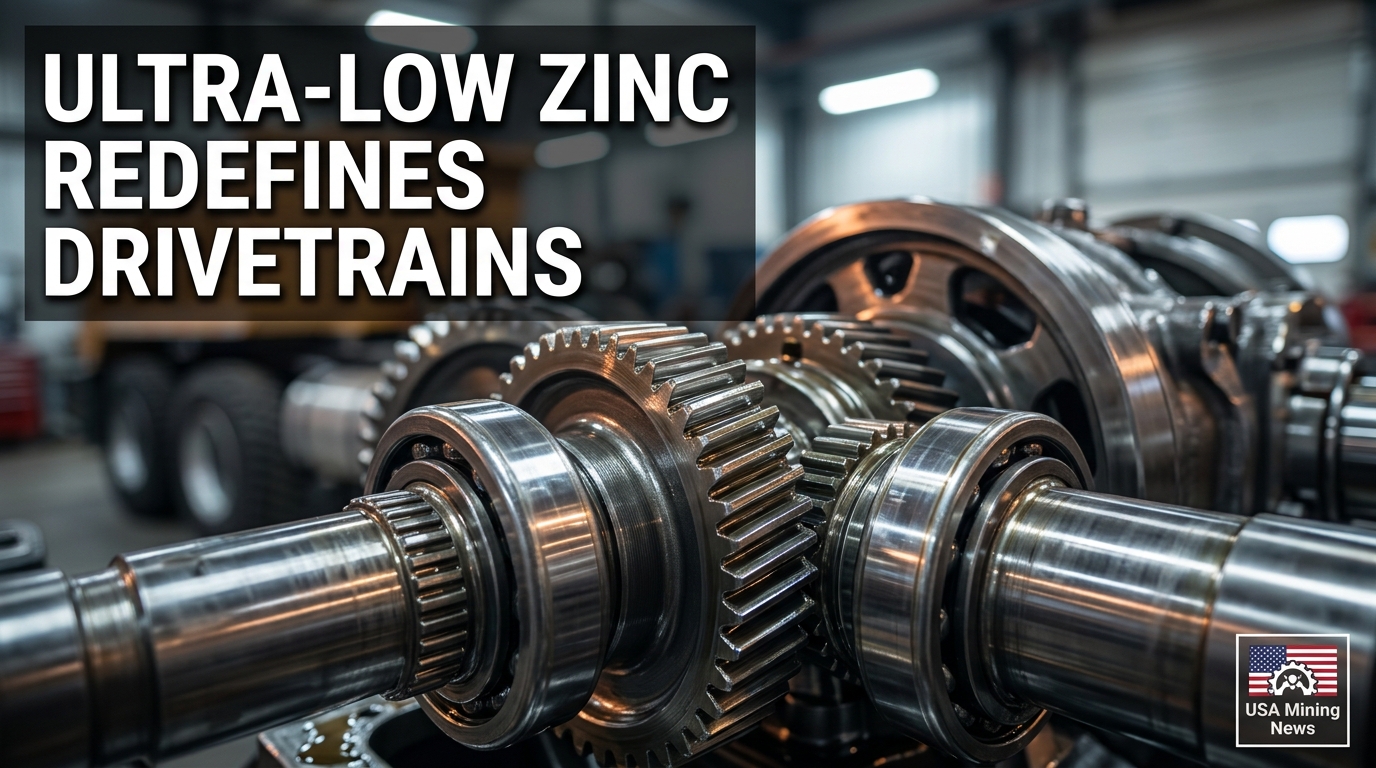
A recent development highlighted by Mrudvi Bakshi on April 30, 2026, points to a fundamental shift underway in lubricant formulations, specifically with the advent of ultra-low zinc (ULZ) additives. This evolution is detailed in a new whitepaper from Petro-Canada Lubricants titled "Driveline durability: Navigating the shift to ultra-low zinc technology," which posits that ULZ technology is redefining drivetrain performance across the mining and construction sectors. For an industry increasingly pressured to optimize equipment longevity while simultaneously adhering to tightening regulatory standards, this chemical innovation represents a pivotal step forward.
The Imperative for Change: Regulatory Pressure Meets Operational Demands
The urgency for advanced lubricant solutions stems from a convergence of factors. Modern heavy-duty mining and construction equipment is designed for greater power output and efficiency, which inherently places increased stress on driveline components. Gears, bearings, and hydraulic systems within these advanced architectures operate at elevated temperatures and under immense pressure, necessitating lubricants that offer superior protection against wear, friction, and thermal degradation.
Concurrently, the global regulatory landscape is evolving, with stricter environmental standards imposing new demands on lubricant formulations. Traditionally, zinc dialkyldithiophosphate (ZDDP) has been a cornerstone anti-wear and antioxidant additive in many lubricants. While highly effective, ZDDP's chemical composition, particularly its ash-forming components, has increasingly posed challenges for exhaust aftertreatment systems striving to meet stringent modern emissions regulations. The presence of phosphorus and sulfur in ZDDP can, over time, degrade the effectiveness of catalysts in exhaust systems, a critical issue for industries like mining that deploy hundreds of heavy vehicles. This dual pressure—the need for enhanced mechanical protection and strict environmental compliance—has driven a rigorous pursuit for next-generation lubricant chemistries.
Decoding Ultra-Low Zinc Technology: A Breakthrough in Lubricant Chemistry
The solution emerging at the forefront of this evolution is ultra-low zinc (ULZ) technology. This innovative approach moves beyond traditional ZDDP chemistry by employing ashless anti-wear additives. The distinction is crucial: "ashless" indicates that these additives do not contribute to the formation of metallic ash, a byproduct of combustion or lubricant degradation that can foul exhaust aftertreatment systems and contribute to hard deposits within the engine. By minimizing ash-forming components, ULZ formulations support the longevity and efficiency of emissions control devices, aligning with contemporary environmental mandates.
At the core of ULZ technology's protective prowess is its ability to form effective tribofilms. A tribofilm is a microscopic, sacrificial layer created on metal surfaces under conditions of high pressure and shear within the driveline. These protective layers act as an intermediary barrier, preventing direct metal-to-metal contact and thereby significantly reducing wear and friction. Traditional ZDDP also forms tribofilms, but ULZ anti-wear additives are engineered to produce more resilient, durable, and thermally stable films, particularly beneficial for the advanced driveline architectures found in today's heavy-duty mining equipment.
The effectiveness of these next-generation tribofilms ensures superior protection for critical components such as gears, bearings, and clutches, even under conditions of extreme load and elevated temperatures. This enhanced protection is fundamental to extending component life and preventing premature failures, which are costly in terms of both replacement parts and operational downtime for continuous mining operations.
Five Pillars of Performance: How ULZ Redefines Drivetrains
While the specific "five ways" detailed in Petro-Canada Lubricants' whitepaper are proprietary, industry analysis of such advanced lubricant technologies typically points to several key areas where ultra-low zinc additives deliver transformative benefits for drivetrain performance. These are intrinsically linked to the challenges and requirements outlined by the industry specialist Mrudvi Bakshi. Based on the operational context and the described capabilities of ULZ, these pillars include:
- Enhanced Component Longevity and Durability: By forming robust, effective tribofilms, ULZ technology directly extends the operational life of critical driveline components such as gears, bearings, and seals. This superior protection under extreme loads and thermal stress significantly reduces wear and tear, deferring the need for costly repairs or replacements and safeguarding the substantial investment in heavy machinery.
- Improved Thermal Stability and Oxidative Resistance: Modern drivetrains generate considerable heat, and maintaining lubricant integrity at high temperatures is crucial. ULZ formulations are engineered to offer enhanced thermal stability, resisting degradation and oxidation even when exposed to rising thermal demands. This helps prevent sludge and varnish formation, ensuring consistent lubrication and cleaner operation over extended periods.
- Optimized Operational Efficiency and Fuel Economy: Reductions in friction through superior lubrication directly translate to greater mechanical efficiency within the drivetrain. Less energy is lost to overcoming internal friction, which can lead to optimized operational efficiency. While not explicitly stated as "fuel economy" in the source, reduced friction often contributes to better energy utilization, a critical factor for large, fuel-intensive mining equipment.
- Seamless Regulatory Compliance and Reduced Environmental Footprint: The ashless nature of ULZ additives is instrumental in meeting stringent regulatory standards pertaining to emissions. By minimizing the formation of ash that can harm exhaust aftertreatment systems, ULZ technology helps mining companies achieve environmental compliance more reliably, reducing potential regulatory penalties and contributing to a more sustainable operational profile.
- Reduced Maintenance Costs and Increased Uptime: The culmination of extended component life, superior thermal management, and improved operational efficiency is a direct reduction in maintenance requirements and an increase in equipment uptime. For operations that run 24 hours a day, every hour of unplanned downtime is a significant loss. ULZ technology supports greater fleet reliability, allowing machinery to remain productive in the field for longer periods, thus enhancing overall operational profitability.
Key Players and the Industry Context: Petro-Canada Lubricants at the Forefront
The dissemination of information through specialist whitepapers, such as the one produced by Petro-Canada Lubricants, underscores the proactive role that leading lubricant manufacturers play in addressing evolving industry needs. Petro-Canada Lubricants, as a recognized entity in the global lubricants market, positions itself at the forefront of this technological shift, offering solutions specifically tailored to the rigorous demands of heavy-duty equipment in mining and construction.
Such partner content—featured in industry publications and authored by experts like Mrudvi Bakshi—serves as a vital conduit for knowledge transfer. It provides mining professionals, fleet managers, and investors with critical insights into how lubricant advancements can influence strategic decisions regarding equipment procurement, maintenance scheduling, and overall operational budgeting. The availability of resources like the "Driveline durability: Navigating the shift to ultra-low zinc technology" whitepaper is indicative of the industry's commitment to continuous improvement and innovation.
Operational Impact: Ensuring Uptime in Continuous Mining Operations
The impact of ULZ technology on day-to-day mining operations cannot be overstated. Heavy-duty equipment like excavators and haul trucks are capital-intensive assets, and their uninterrupted operation is core to achieving production targets. Any mechanical failure in their drivelines can ripple through the entire production chain, leading to significant delays and financial losses.
By optimizing a fleet's reliability through advanced lubrication, ULZ technology contributes directly to operational continuity. Reduced instances of unscheduled downtime mean higher asset utilization rates and more consistent output. For mines operating around the clock, where time is literally money, the ability of driveline fluids to withstand extreme loads and rising thermal demands without compromise is a strategic advantage. It allows mining companies to push their machinery harder and longer, maximizing return on investment from their valuable equipment.
The Road Ahead: Future Outlook for Driveline Fluids in Mining
The shift towards ultra-low zinc additives is not merely a temporary trend but indicative of a broader industry trajectory. As mining equipment becomes more sophisticated, incorporating advanced materials and complex electronic controls, the demand for equally sophisticated lubricants will only intensify. Future research and development in lubricant chemistry are likely to focus on even greater levels of customization, tailoring formulations to specific equipment types, operating conditions, and environmental requirements.
The focus on ashless anti-wear additives underscores a long-term commitment to sustainability and cleaner operations within the mining sector. As regulatory pressures continue to tighten globally, and as companies strive to improve their environmental, social, and governance (ESG) profiles, technologies like ULZ will become standard. The convergence of performance demands—specifically, exceptional durability and eco-compatibility—will drive further innovation, ensuring that the heart of mining operations, its heavy machinery, continues to beat strong and efficiently long into the future.
In conclusion, the emergence of ultra-low zinc additives marks a significant milestone in the evolution of lubricant technology for the mining sector. As highlighted by experts like Mrudvi Bakshi and reinforced by comprehensive resources from companies such as Petro-Canada Lubricants, ULZ technology is not just an incremental improvement; it is a transformative solution addressing the critical needs for enhanced equipment longevity, regulatory compliance, and sustained high-performance in the demanding world of heavy-duty mining.