Glencore's MARA Project Secures Key Approval, Accelerating Argentina's Copper Ambitions
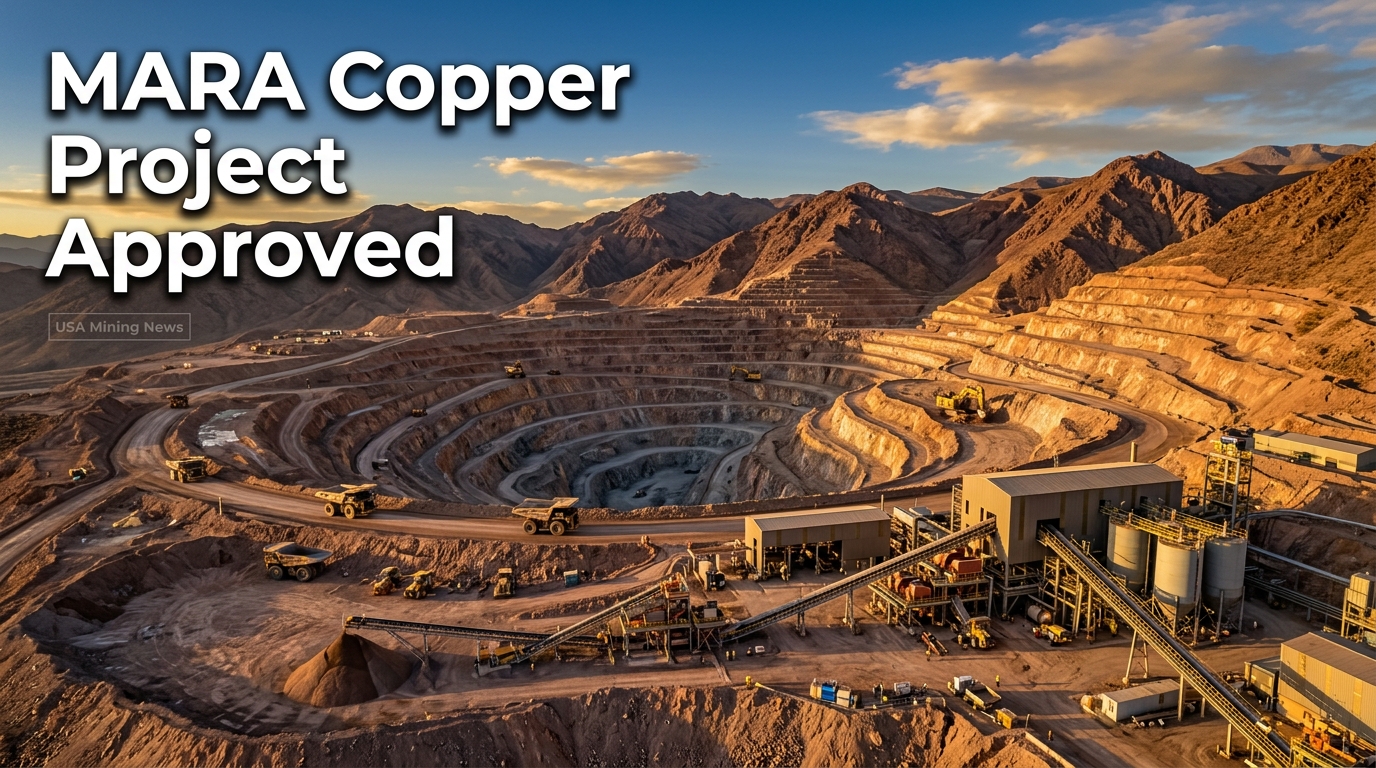
Buenos Aires, Argentina – October 5, 2026 – In a significant development poised to reshape Argentina's position in the global copper market, Glencore has announced the crucial approval of its Minera Agua Rica – Alumbrera (MARA) project under Argentina’s newly established Incentive Regime for Large Investments (RIGI). This regulatory milestone provides the fiscal and regulatory certainty essential for committing substantial capital, propelling the vast copper-gold-silver-molybdenum project towards production and cementing Argentina's strategic role in Glencore's global copper growth strategy.
The RIGI approval marks a pivotal moment for MARA, a project that is expected to contribute significantly to the global supply of copper, a critical metal for the accelerating energy transition. The news was accompanied by an updated production timeline, with the restart of the Alumbrera mine now targeting first production in the second half of 2027 (H2 2027). This represents an acceleration from the company’s initial guidance of H1 2028, underscoring Glencore's commitment and the positive impact of the RIGI framework.
A New Era for Argentine Copper: The MARA Project
The MARA project represents a large-scale copper-gold-silver-molybdenum development located in the Catamarca province of Argentina. Its recent approval under the RIGI is more than just a procedural step; it is a clear indicator of a proactive regulatory environment designed to attract and secure significant foreign direct investment. For a project of MARA's scale, which necessitates multi-billion-dollar capital expenditure and a multi-decade operational horizon, robust fiscal and regulatory stability is paramount.
Martín Pérez de Solay, CEO of Glencore Argentina, articulated the profound implications of this approval: "RIGI approval is a significant milestone for MARA and a clear sign of confidence in Argentina’s long-term investment framework, helping to underpin the country’s ambition to be one of the world’s leading copper producers." His statement highlights the dual benefit of the RIGI: providing certainty for investors like Glencore while simultaneously supporting Argentina's national economic objectives. The regime offers predictable rules for taxation, foreign exchange access, and import/export duties, which are vital for projects with long lead times and high initial capital outlays inherent to large-scale mining.
Pérez de Solay further extended gratitude to the collaborative efforts between Glencore and governmental bodies: "The RIGI provides the fiscal and regulatory certainty needed to commit capital of this scale, and we thank the national authorities and the province of Catamarca for their constructive engagement throughout the process." This emphasizes the importance of a cooperative government-industry relationship in unlocking the full potential of a nation's mineral wealth.
Operational Synergy: Alumbrera Restart and MARA Integration
A distinctive aspect of the MARA project is its strategic integration with the existing Alumbrera mine infrastructure. The Alumbrera mine, a historic copper and gold producer in Argentina, ceased operations in 2018. Glencore's plan involves restarting key facilities at Alumbrera to serve as a processing hub for ore extracted from the nearby Agua Rica deposit, which forms the core of the MARA project. This phased approach offers several critical advantages:
- Reduced Ramp-Up Risks: By rehabilitating and restarting the Alumbrera concentrator and associated logistics infrastructure, Glencore aims to significantly de-risk the ramp-up phase for the MARA project. Utilizing proven facilities minimizes the construction and commissioning challenges typically associated with entirely greenfield operations.
- Maintenance of Skilled Workforce: The restart of Alumbrera is proactively maintaining a skilled workforce in advance of the initial ore from Agua Rica. This strategy ensures continuity of expertise and minimizes the labor challenges often encountered when initiating large-scale projects from scratch. Currently, the Alumbrera restart is providing employment for nearly 2,000 people, with the vast majority being residents of the local Catamarca province, creating immediate economic benefits for the region.
- Operational Infrastructure Preservation: Keeping strategic infrastructure operational not only supports the MARA project but also prevents deterioration and preserves the asset value of the Alumbrera facilities. This infrastructure, including processing plants, tailings facilities, and logistics networks, will eventually be shared between Alumbrera and MARA, offering considerable operational efficiencies and cost savings over the life of the project.
The updated timeline, moving first production to H2 2027 from the previously targeted H1 2028, showcases a diligent and responsive project development schedule, likely influenced by the enhanced investment confidence brought by the RIGI and the operational synergies being realized.
Resource Scale and Production Projections
The Agua Rica deposit, which underpins the MARA project, represents a globally significant copper resource. Situated in Catamarca province, it contains estimated measured and indicated resources of approximately 1.2 billion tonnes of ore. This category of resources indicates a high level of geological confidence, allowing for robust mine planning and financial modeling.
The deposit boasts average grades that are competitive for large-scale porphyry copper systems:
- Copper: 0.47%
- Gold: 0.2 grams per tonne (g/t)
- Silver: 3.4 g/t
- Molybdenum: 0.03%
The operational plan for MARA involves transporting ore from the Agua Rica pit to the Alumbrera facilities, a distance of approximately 35 kilometers. This centralized processing approach capitalizes on existing infrastructure, reducing the need for new, extensive plant construction and minimizing environmental footprints. Glencore anticipates that the project could yield an average of more than 200,000 tonnes per annum (tpa) of copper in concentrate during its first decade of operation. This production volume positions MARA as a major global copper producer, capable of supplying a substantial portion of the world's increasing demand for the red metal.
The Broader Context: Argentina's Mining Revival
Argentina has long been recognized for its vast, underexplored mineral potential, particularly in copper, lithium, and gold. However, a history of economic instability, fluctuating regulatory frameworks, and capital controls has often deterred the large-scale investment required to fully develop these resources. The introduction of the RIGI is a direct effort by the Argentine government to address these historical barriers, signaling a renewed commitment to attracting and protecting foreign capital in strategic sectors like mining.
The MARA project, alongside Glencore's plans for other Argentine assets such as the El Pachón copper project, highlights Argentina's emergence as a key pillar in the company's global copper growth strategy. Pérez de Solay underscored this, stating: "Together with the restart of Alumbrera and our plans for El Pachón, Argentina represents a key pillar of Glencore’s copper growth, supporting our efforts to enable skilled employment, build local supply chains and deliver the copper the world requires." This demonstrates a long-term, multi-project commitment to the country.
For Argentina, the success of MARA could unlock further investment in its rich mineral endowments. Large-scale mining projects bring significant benefits beyond direct employment, including:
- Foreign Currency Generation: Copper exports provide crucial foreign exchange, stabilizing the national economy.
- Infrastructure Development: Mining operations often necessitate improvements in roads, power, and water infrastructure, benefiting surrounding communities.
- Local Supply Chain Development: Projects of this magnitude stimulate the growth of local businesses providing goods and services, from engineering to logistics to catering.
- Technological Transfer: Advanced mining techniques and operational best practices are introduced, enhancing the overall skill base of the national workforce.
Glencore's Global Copper Strategy
As a diversified natural resource company and a major producer and marketer of commodities, Glencore’s strategy is intrinsically linked to global demand trends, particularly in critical minerals. Copper is at the forefront of this strategy. The MARA project's approval and accelerated timeline reinforce Glencore’s commitment to growing its copper portfolio, aligning with its broader goal of supplying the materials necessary for a decarbonized world.
While the focus remains on copper, Glencore also maintains a diverse commodity interest. For example, in August 2026, the Government of Guinea selected Glencore as the offtaker for bauxite produced by Nimba Mining. Such diverse engagements underscore Glencore's global reach and its ability to secure strategic assets across various key raw material sectors.
Future Outlook and Industry Implications
With the RIGI approval secured, Glencore's next steps for MARA will involve continued detailed engineering, securing all necessary financing, and advancing site preparations for full-scale construction. The project's progression will be closely watched by the international mining community, serving as a bellwether for investment attractiveness in Argentina under the new RIGI framework.
The MARA project promises to be a catalyst for economic growth in the Catamarca province and for Argentina as a whole. Its successful development could pave the way for other significant mining investments, solidifying Argentina's role as a major player in the global supply of critical minerals. For mining professionals and investors, MARA represents a compelling case study of how strategic partnerships between industry and government, coupled with robust regulatory frameworks, can unlock vast mineral potential and contribute to the world's evolving demand for essential resources.