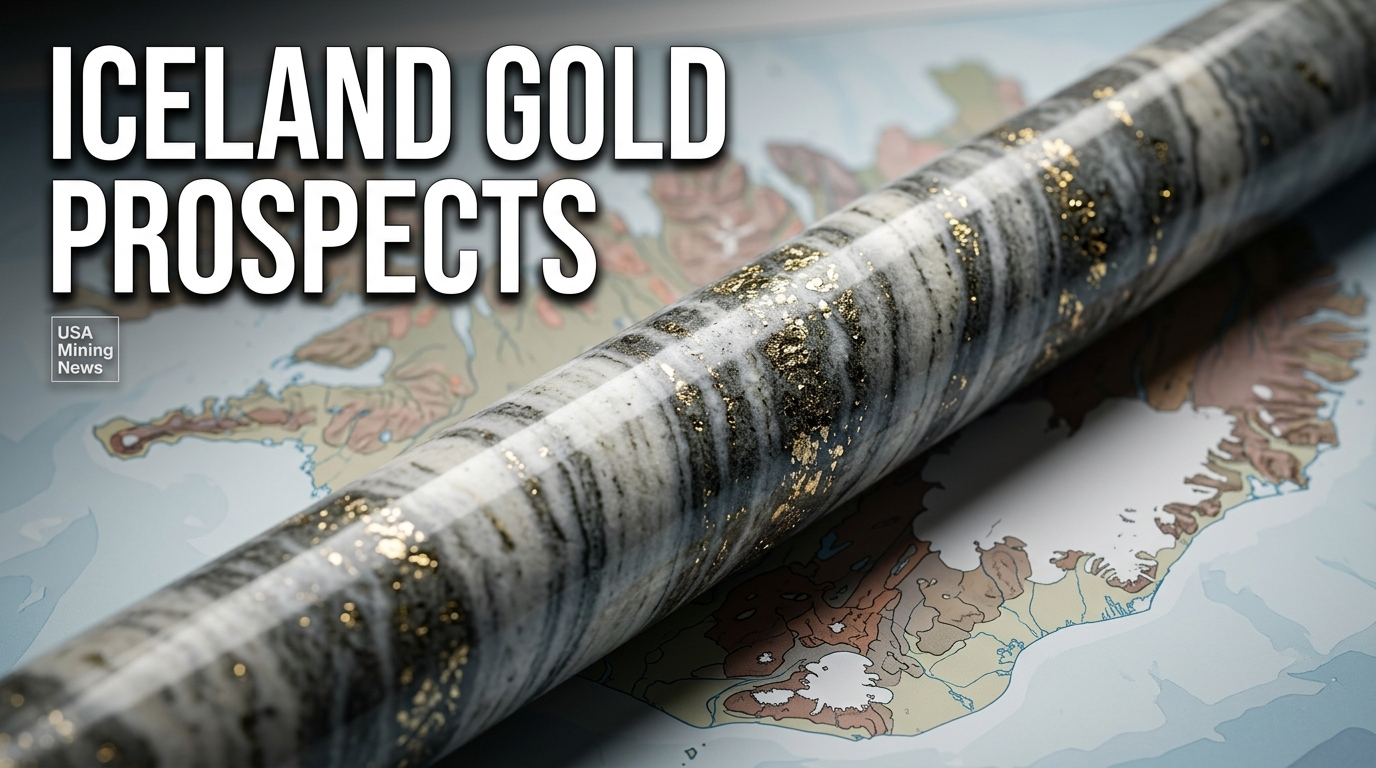
Reykjavík, Iceland – Aurania Resources has announced the successful completion of its 2026 drilling campaign at the Thormódsdalur epithermal gold-silver project, a pivotal step in advancing exploration at the promising Icelandic site. Located approximately 20 kilometers east of the capital Reykjavík, the project holds significant potential in a region not traditionally known for precious metals mining but rich in geothermal activity, presenting unique exploration challenges and opportunities. This latest drilling phase represents a crucial milestone in the collaborative effort between Aurania Resources, St-Georges Eco-Mining, and its fully owned subsidiary, Iceland Resources.
Precision Drilling Addresses Historical Challenges
The 2026 drilling program comprised eight completed diamond drill-holes, accumulating a total of 780.70 meters. A key objective of this campaign was to overcome historical limitations, particularly poor core recovery, which had hampered earlier exploration efforts. Aurania reported a marked improvement in this regard, with core recovery in most cases reaching near or at 100%. This stands in stark contrast to previous programs, where recovery rates often hovered around 50% or even less. The significance of this achievement cannot be overstated in mineral exploration.
In diamond drilling, core recovery refers to the percentage of intact rock core obtained from a drill hole relative to the length drilled. High core recovery is paramount for accurate geological logging, precise identification of mineralized zones, and, most critically, for obtaining representative samples for assaying. When core recovery is low, it introduces significant uncertainty into resource estimates, as it becomes difficult to determine the true grade and continuity of mineralization. For junior explorers like Aurania, securing near-complete core samples provides a much stronger foundation for investor confidence and subsequent resource modeling.
The drill-holes primarily targeted previously explored zones, with a strategic focus on twinning historical drill-holes. This approach is common in exploration, where twinning involves drilling a new hole in close proximity to an existing one. In this instance, it was specifically aimed at re-evaluating areas where earlier work had been compromised by substantial core loss. By twinning these holes with significantly improved recovery, Aurania aims to obtain a more complete and reliable dataset, enabling a more accurate assessment of the gold and silver grades encountered in these zones.
Geological Signatures of a Robust Epithermal System
Aurania's geological team has made compelling observations from the recovered core samples, reinforcing the project's potential. Every drill-hole intersected geological textures unequivocally associated with epithermal gold-silver mineralisation. These textures serve as critical indicators for geologists, pointing towards the presence of a hydrothermal system capable of concentrating precious metals. The observed features included classic epithermal indicators such as quartz veins and hydrothermal breccias.
More specifically, the company reported the presence of crustiform-colloform chalcedonic quartz, often characterized by plumose and moss textures, alongside distinctive cockade-breccia textures. These intricate textures are formed by successive layers of silica and other minerals deposited in open spaces within faults and fractures, often indicating a dynamic, pulsating hydrothermal system. The presence of chalcedonic quartz, a fine-grained variety of silica, is particularly indicative of low-sulfidation epithermal systems, which are globally recognized for hosting significant gold and silver deposits.
Aurania’s interpretation of these mineralized features suggests they may represent the upper boiling zone of a fossilized geyser system. In epithermal deposits, the boiling zone is often the most critical target for high-grade precious metal mineralization. As hot, mineral-rich hydrothermal fluids ascend towards the surface, a drop in pressure can cause them to boil. This boiling leads to a rapid change in fluid chemistry, causing gold, silver, and other dissolved metals to precipitate out of solution and deposit within veins and breccias. The company cited earlier drilling that demonstrated the gold-bearing nature of these veins, and considers fluid boiling and mixing to be the most likely mechanisms for precious-metal deposition in the Thormódsdalur area.
Further characterization of the observed mineralisation includes banded quartz, adularia, various clays, and amorphous silica. Adularia, a potassium feldspar, is another common accessory mineral found in low-sulfidation epithermal systems and is often closely associated with gold deposition. The suite of minerals and textures identified by Aurania paints a consistent picture of a well-developed and potentially fertile epithermal system.
Intriguingly, the company also noted evidence of post-mineralisation fault movement. While this has resulted in the shearing and granulation of some quartz veins into small fragments, the distinctive epithermal textures have largely been preserved within the core. Understanding such structural complexities is vital for future mine planning and resource modeling, as faulting can offset mineralized bodies, requiring careful geological interpretation.
Iceland's Unique Geothermal Context and Drilling Challenges
Iceland, renowned for its abundant geothermal energy resources, presents a unique operating environment for mineral exploration companies. Aurania president and CEO, Keith Barron, highlighted this distinction: “Iceland has a successful history of drilling for geothermal hot water and steam for the generation of electric power, and there are many contractors on the island nation.” He further explained the critical difference in methodology: “However, the objective in geothermal drilling is to drill an open hole into the ground for maybe hundreds of metres, not to secure a complete sample of the rock the drill has passed through.”
This insight underscores the specialized nature of mineral exploration drilling compared to geothermal drilling. Geothermal operations typically prioritize creating large-diameter, open boreholes to maximize fluid flow for power generation. In contrast, mineral exploration drilling, particularly diamond drilling, is meticulous, aiming for pristine, intact core samples that accurately represent the geology and mineralization. This often requires different equipment, drilling techniques, and a higher level of precision from contractors. Aurania’s success in achieving near 100% core recovery in this context speaks volumes about their operational planning and the capabilities of their drilling team in a less conventional mining jurisdiction.
Strategic Partnership for Resource Definition
The Thormódsdalur project is held by Iceland Resources, a fully owned subsidiary of St-Georges Eco-Mining. Aurania’s involvement in the project stems from an option agreement signed in April 2026 with both St-Georges and Iceland Resources. This agreement established a framework for the joint development and execution of a phased exploration plan. The ultimate goal of this collaboration is ambitious: to advance the Thormódsdalur project towards a modern resource definition.
An option agreement in mining typically grants a company the right, but not the obligation, to acquire an interest in a property by meeting certain expenditures, exploration milestones, or making payments over a defined period. Such agreements are common mechanisms for junior explorers to gain access to prospective ground without the immediate full capital outlay, while property owners benefit from focused exploration and potential future royalties or equity stakes. For Aurania, this partnership provides a strategic foothold in a potentially underexplored, yet geologically prospective, region.
The term "modern resource definition" implies adherence to internationally recognized reporting standards, such as the Canadian National Instrument 43-101 (NI 43-101) or the Australasian Joint Ore Reserves Committee (JORC) Code. These standards require rigorous data collection, quality assurance/quality control (QA/QC) protocols, and detailed geological modeling to classify mineral resources into categories like Inferred, Indicated, and Measured. Achieving a modern resource definition is a critical step for any mineral project, as it provides a quantifiable basis for assessing economic viability and attracting further investment for development.
Awaiting Assay Results and Future Outlook
With the drilling campaign now concluded, the next critical step for Aurania and its partners is the laboratory analysis of the collected core samples. These samples have been dispatched to ALS Laboratories, a globally recognized provider of analytical services to the mining industry. Investors and industry observers are keenly awaiting the assay results, which Aurania expects to receive in November 2026, subject to laboratory processing schedules. These results will provide the definitive gold and silver grades encountered in the newly drilled and twinned holes, offering crucial data points for evaluating the project’s economic potential.
Positive assay results, particularly from the zones where core recovery was historically poor, would significantly de-risk the project and provide strong validation for Aurania's exploration strategy. They would inform the next phases of exploration, which could include infill drilling to improve resource confidence, step-out drilling to expand known mineralization, and detailed metallurgical testing to understand processing characteristics.
The Thormódsdalur project represents an intriguing case study in mineral exploration. Its location in Iceland, a country with unique geological settings due to its position on the Mid-Atlantic Ridge and its active volcanic and geothermal systems, positions it as a frontier exploration play. Should Aurania and its partners successfully delineate a significant gold-silver resource, it could open new avenues for mineral exploration in Iceland, potentially diversifying the nation’s resource economy beyond its established geothermal sector.
The progress at Thormódsdalur will be closely watched by the global mining community. Success here could not only establish Aurania Resources as a significant player in precious metals but also highlight Iceland as a new, albeit challenging, jurisdiction for epithermal gold-silver exploration. The November 2026 assay results will be instrumental in shaping the immediate future of this promising Icelandic endeavor.