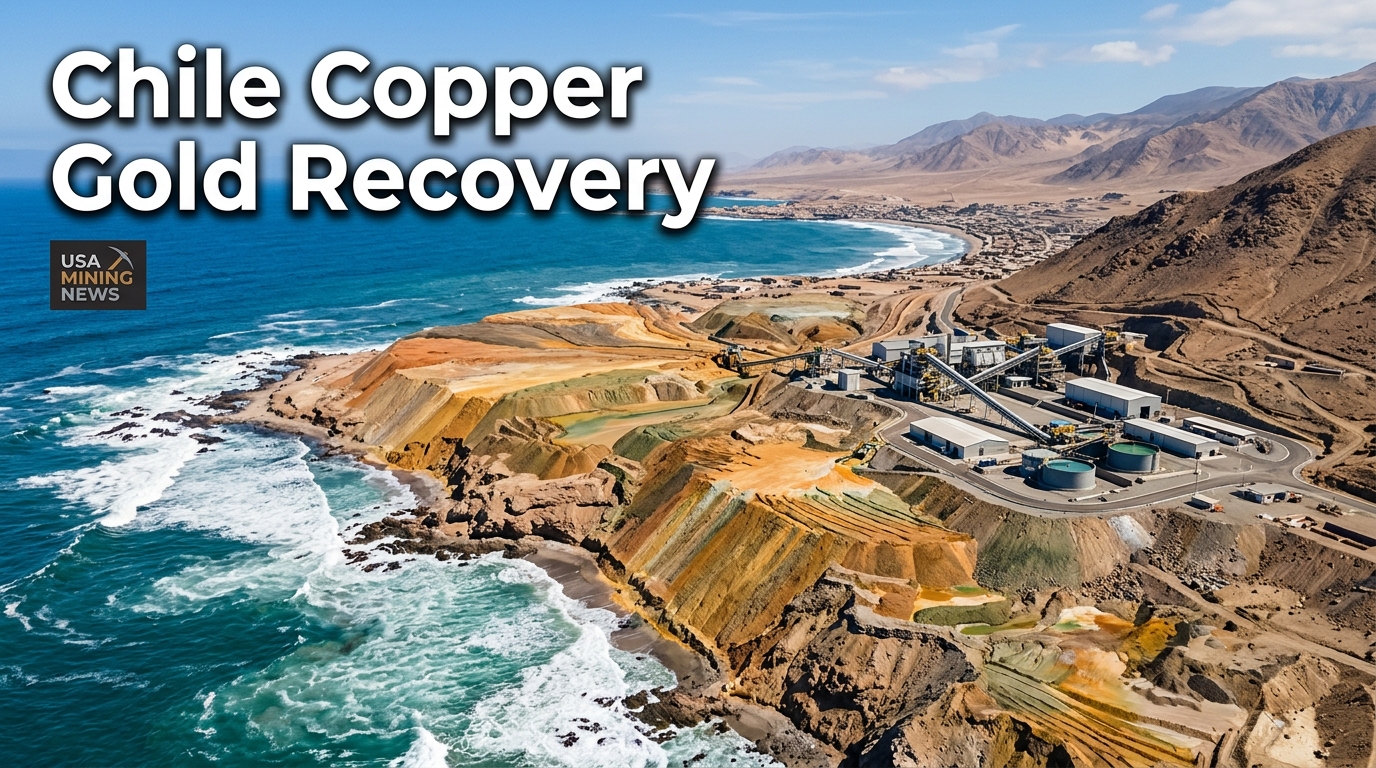
Chañaral, Chile – In a significant development for resource recovery and sustainable mining practices, Halo Minerals has announced the receipt of a key mining permit for its Playa Verde copper and gold tailings project located at Chañaral beach in Chile. This authorization, issued through Exempt Resolution No. 473 by the Provincial Presidential Delegation of Chañaral on October 26, 2026, represents a critical milestone for the advancement of a project poised to reprocess historic mineralized material.
The permit, granted under Article 17 No. 1 of the robust Chilean Mining Code, specifically empowers Halo Minerals’ wholly owned subsidiary, Minera Playa Verde, to undertake mining operations involving the dredging of mineral-bearing materials. Crucially, the scope of this authorization extends to operations within Chañaral’s urban area, a testament to the comprehensive regulatory review and the project’s environmental considerations. This clearance paves the way for the extraction and processing of the substantial volume of historic tailings deposited at the coastal site, which have long been an environmental legacy in the region.
A Strategic Step for Resource Recovery and Environmental Remediation
The Playa Verde project is designed to recover valuable copper, primarily in the form of cathodes and concentrates, alongside gold, from these historic deposits. The operational plan involves treating the extracted material at a dedicated metallurgical facility. Following the recovery process, the treated and conditioned material will be returned to the site, underscoring a closed-loop approach aimed at both resource maximization and environmental remediation. This model aligns with a growing global trend in the mining industry to re-evaluate and reprocess legacy tailings, transforming what were once environmental liabilities into economic assets.
The approval process involved rigorous scrutiny from various Chilean governmental bodies. The Regional Ministerial Secretariat for Housing and Urban Development of Atacama (MINVU), for example, formally confirmed its lack of objection to the permit for the mining activities related to the Playa Verde project. Furthermore, the resolution highlights that the project had previously received a favorable environmental assessment decision from the Committee of Ministers, indicating a thorough environmental review and a commitment to responsible development.
Navigating Chile’s Rigorous Permitting Landscape
Chile, a global leader in copper production, is renowned for its stringent regulatory framework governing mining activities. The successful acquisition of an Article 17 No. 1 permit is a testament to Halo Minerals' diligent efforts in navigating this complex landscape. Such permits are foundational, granting the legal right to extract minerals, but they are often contingent upon satisfying numerous environmental, social, and urban planning criteria.
Andrew Dennan, CEO of Halo Minerals, emphasized the significance of this achievement. “The granting of this permit represents another important milestone in the advancement of Playa Verde and continues the progress we are making across the Project’s permitting and development workstreams,” Mr. Dennan stated. He further elaborated on the permit's specific authorization for “dredging the historic mineralized material at Chañaral, including within the urban area, following confirmation from MINVU that it had no objections to the permit being granted.” His remarks underscore the detailed planning and stakeholder engagement required to secure approval for operations in such a sensitive area.
The Broader Context: Tailings Reprocessing and Urban Mining
The Playa Verde project is emblematic of several critical trends reshaping the global mining industry:
- Resource Scarcity and New Frontiers: As high-grade primary ore deposits become rarer, the industry is increasingly turning to secondary resources like tailings. These often contain significant quantities of metals that were uneconomic or technologically challenging to recover at the time of initial processing.
- Environmental Stewardship: Reprocessing historic tailings offers a dual benefit: recovering valuable minerals and mitigating environmental hazards associated with legacy waste sites. This can include reducing acid mine drainage, stabilizing waste piles, and reclaiming land.
- Technological Advancements: Modern metallurgical techniques, including advanced flotation, leaching, and bioleaching processes, make the economic recovery of metals from lower-grade or complex tailings feasible.
- Urban Mining: Operations like Playa Verde, which involve mining within or adjacent to urban areas, require exceptional community engagement, environmental safeguards, and sophisticated operational planning. This also highlights the potential for recovering resources from sites previously considered inaccessible due to proximity to human habitation.
For a country like Chile, with a long history of mining, projects targeting historic tailings are not just economically attractive but also contribute significantly to addressing historical environmental legacies. The Chañaral area, in particular, has a well-documented history of environmental challenges related to extensive tailings deposition from past mining operations, making this project a crucial step towards remediation.
Path Towards Final Investment Decision and Full Operation
While the Article 17 No. 1 permit is a monumental achievement, Halo Minerals acknowledges that other sector-specific permits are still necessary for full operational capability. The company has already submitted a mining easement application, with a decision anticipated in the coming weeks. Concurrently, a maritime concession application is ongoing. These additional permits are essential for establishing the necessary infrastructure and securing rights over the land and marine areas pertinent to the project's development and long-term operation.
The granting of this primary mining permit brings the Playa Verde project significantly closer to a final investment decision (FID) and subsequent development. An FID typically involves a comprehensive evaluation of all technical, economic, environmental, and social factors, leading to a definitive commitment of capital for project construction and operation. For investors and industry observers, the progression of Playa Verde through Chile's rigorous permitting process signals growing confidence in the project’s viability and Halo Minerals’ execution capabilities.
The successful development of Playa Verde would not only provide a new source of copper and gold for global markets but also serve as a blueprint for similar tailings reprocessing initiatives in other mining-intensive regions worldwide. It underscores the mining industry’s evolving commitment to sustainability, efficiency, and responsible resource management in the 21st century.