The global energy landscape faced a severe test in 2026 with the onset of the Iran war and the subsequent closure of the Strait of Hormuz, a critical chokepoint for international oil flows. This geopolitical upheaval served as a stark reminder of the inherent vulnerabilities associated with foreign reliance for energy supplies. Intriguingly, during the peak of this crisis, China, which stands as the world's largest crude oil importer, demonstrated a notable degree of immunity to the immediate shocks that rattled other major economies.
This apparent resilience has prompted a critical question across the industry: Has China genuinely achieved an unparalleled level of energy security, or were the strains merely delayed, destined to emerge as they did elsewhere? An analysis published by Energy Technology on August 6, 2026, featuring insights from leading experts, sought to unravel China's strategic responses to these oil flow disruptions and its steadfast march towards greater energy independence.
Contributing to this crucial discourse were Rory Green, the esteemed head of emerging markets research at TS Lombard (TSL) and author of TSL’s comprehensive report titled ‘Is China immune to energy shocks?’, and Erica Downs, a senior research scholar at the Center on Global Energy Policy at Columbia University in the US, specializing in Chinese energy markets and geopolitics. Their perspectives offer valuable insights into the intricate layers of China’s energy strategy and its implications for the global commodities sector, including mining.
Beijing's Strategic Buffers: A Decade of Preparation
Rory Green posits that China’s relative stability during the 2026 crisis was no accident but rather the culmination of over a decade of deliberate strategic planning by Beijing. The nation, Green argues, has meticulously constructed a multi-faceted defense system designed to withstand significant disruptions in global oil flows. These buffers, some intentionally developed and others arising as secondary benefits, comprise four principal components:
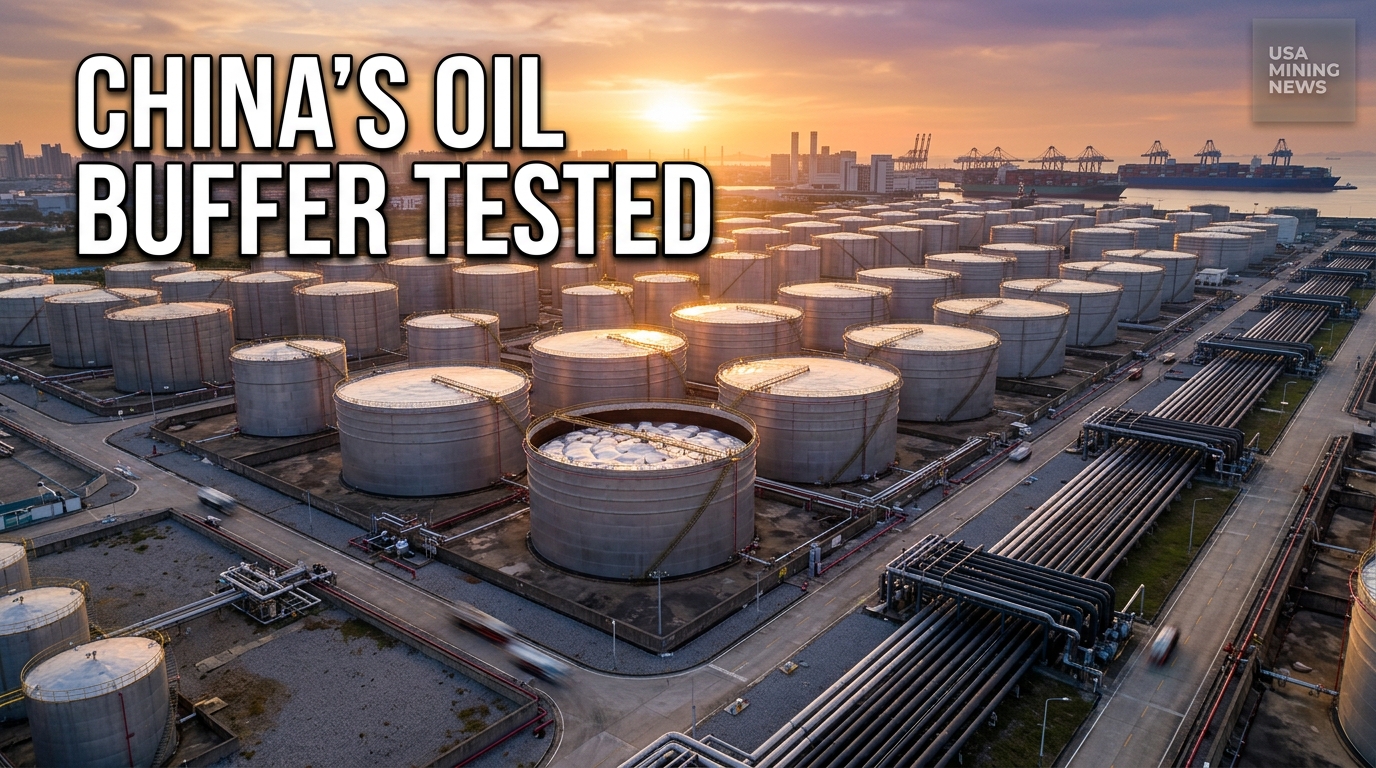
- The stockpile of commodities: This refers primarily to China's Strategic Petroleum Reserve (SPR) and substantial commercial inventories of crude oil and refined products. These reserves are designed to provide a critical buffer against immediate supply shocks, allowing the nation to draw down resources rather than immediately increasing import demand during price spikes.
- Huge capacity in petrochemicals: China’s robust and expanding domestic petrochemical industry enables it to process crude oil into a wide array of refined products domestically. This reduces reliance on imported refined products and provides flexibility in managing its energy supply chain, ensuring that essential industrial feedstocks remain available.
- Low inflation: A stable macroeconomic environment with contained inflation provides China with greater fiscal space to absorb external price shocks. Lower domestic inflation rates mean that increases in global commodity prices, while impactful, are less likely to trigger widespread economic instability or social unrest, allowing for a more measured government response.
- Big electrification and energy build-out: China has invested massively in non-fossil energy sources and the associated infrastructure, including renewable energy projects (solar, wind, hydropower) and electric vehicle adoption. This expansive energy transition directly reduces the nation’s overall dependence on fossil fuel imports, thereby mitigating the impact of oil supply disruptions on its energy mix.
Erica Downs frames these strategic moves within the broader context of a long-standing national ambition for China to become an “energy powerhouse.” This vision extends beyond merely diversifying energy sources; it encompasses the independent manufacturing of a wide range of energy technologies, bolstering China's self-sufficiency across the entire energy value chain. Downs emphasizes, “The conflict in the Gulf has simply underscored that the best way to ensure China’s energy security is to source as much energy as it can from home.” While this strategy heavily leans on renewable energy due to China's limited domestic oil and natural gas resources, coal also remains part of the equation, albeit with plans to peak consumption by 2030.
Despite these extensive preparations, both experts caution that China's energy shield is not yet entirely impregnable. The nation still maintains a significant reliance on imported crude oil and natural gas. Furthermore, oil remains indispensable for specific sectors, notably aviation, the extensive legacy vehicle fleets, and as a critical feedstock for the petrochemical industry, where easy displacement by alternative energy sources remains a considerable challenge.
The Role of Strategic Oil Stockpiles
A key safeguard frequently cited in discussions of China's energy resilience is its strategic petroleum reserve (SPR) and commercial inventories. Rory Green acknowledges that these stockpiles are effective in buying time during a crisis, but their utility is not infinite. He estimates that if the Strait of Hormuz were to remain closed for an extended period, beyond a certain threshold, China’s reserves would begin to dwindle, potentially leading to domestic stress and forcing Beijing back into a highly volatile global market at an unfavorable juncture.
“We reckon there is probably another two months of reserves of raw material and refined products before China is very seriously impacted,” Green states. This critical two-month window highlights the immediate operational buffer China possessed during the initial phase of the 2026 conflict.
However, accurately assessing the full extent of China's resilience derived from its stockpiles presents a significant challenge. The Strategic Petroleum Reserve, in particular, remains largely a “state secret.” External analysts are often left to piece together clues from less direct indicators, such as satellite imagery monitoring storage facilities and analyzing broader macroeconomic outcomes. Despite this opacity, Green concludes, “if we take the overall response of the economy to the recent energy shock, I can say it has been undeniably very impressive.”
China's Market Influence: Stabilizer or Disruptor?
China's response to global geopolitical events carries significant weight, capable of either dampening market volatility or, conversely, amplifying it. During the 2026 Iran war, China's actions initially served as a vital pressure valve for the global oil market. By drawing down its extensive inventories and leveraging its various buffers, China was able to significantly reduce its crude oil imports. This strategic reduction in demand prevented oil prices from spiraling into even more extreme territory.
Green elaborates, “China’s oil imports have dropped roughly 50% since pre-Iran conflict, and that is helping out the world. If oil imports had remained constant through the conflict, we could easily see oil at close to $200 a barrel.” This dramatic reduction in demand underscores Beijing’s capacity to influence global commodity prices and its strategic approach to managing supply shocks.
As of the August 2026 analysis, Green believed China was committed to a strategy of slowing purchases when prices spiked, with the intention of “buying the dip” once the Strait of Hormuz reopened – an event authorities anticipated would occur sooner rather than later. However, this delicate balance carries inherent risks. Should the Strait closure extend beyond the estimated two-month buffer, and China's reserves begin to critically deplete, the nation's import strategy could rapidly flip. If Chinese authorities conclude that the disruption will outlast its buffer capacity, they could return to the market aggressively to refill stockpiles, thereby pushing global oil prices significantly higher and exacerbating market volatility.
Navigating Geopolitical Supply Lines: The Russia Conundrum
The conversation around China’s energy security inevitably turns to Russia’s role, which presents both a potential safety net and a long-term strategic dilemma. Erica Downs highlights that the Middle East conflict unequivocally validated Beijing’s long-standing efforts to develop robust overland energy supply lines, particularly with Russia. These include crude oil pipelines, natural gas pipelines, and liquefied natural gas (LNG) shipments, all of which substantially reduce China’s exposure to vulnerable maritime chokepoints like the Strait of Hormuz.
However, Downs also stresses that China remains acutely aware of the risk of simply replacing one geopolitical vulnerability with another. The goal is true energy security, not a shift in dependency. She points to Russian President Vladimir Putin’s recent visit to Beijing as a telling signal. Despite the Middle East conflict potentially strengthening Russia’s negotiating leverage, Downs found it “quite striking… that we didn’t see any announcement regarding the proposed Power of Siberia 2 natural gas pipeline.” This lack of a deal suggests that China may have interpreted the broader lesson as a reinforcement of the need for internal self-sufficiency and diversification, rather than deepening reliance on a single external supplier, even a friendly one.
Implications for the Global Mining Sector
For mining industry professionals and investors, China's energy resilience strategy has profound implications. The nation's “big electrification and energy build-out” directly translates into robust and sustained demand for a wide array of critical minerals. These include copper for electrical grids and wiring, lithium, nickel, and cobalt for electric vehicle batteries, and rare earth elements essential for wind turbines and other advanced technologies. As China continues its domestic energy transition to reduce reliance on imported fossil fuels, global miners supplying these foundational materials will likely see continued strong demand, albeit with potential shifts in sourcing strategies.
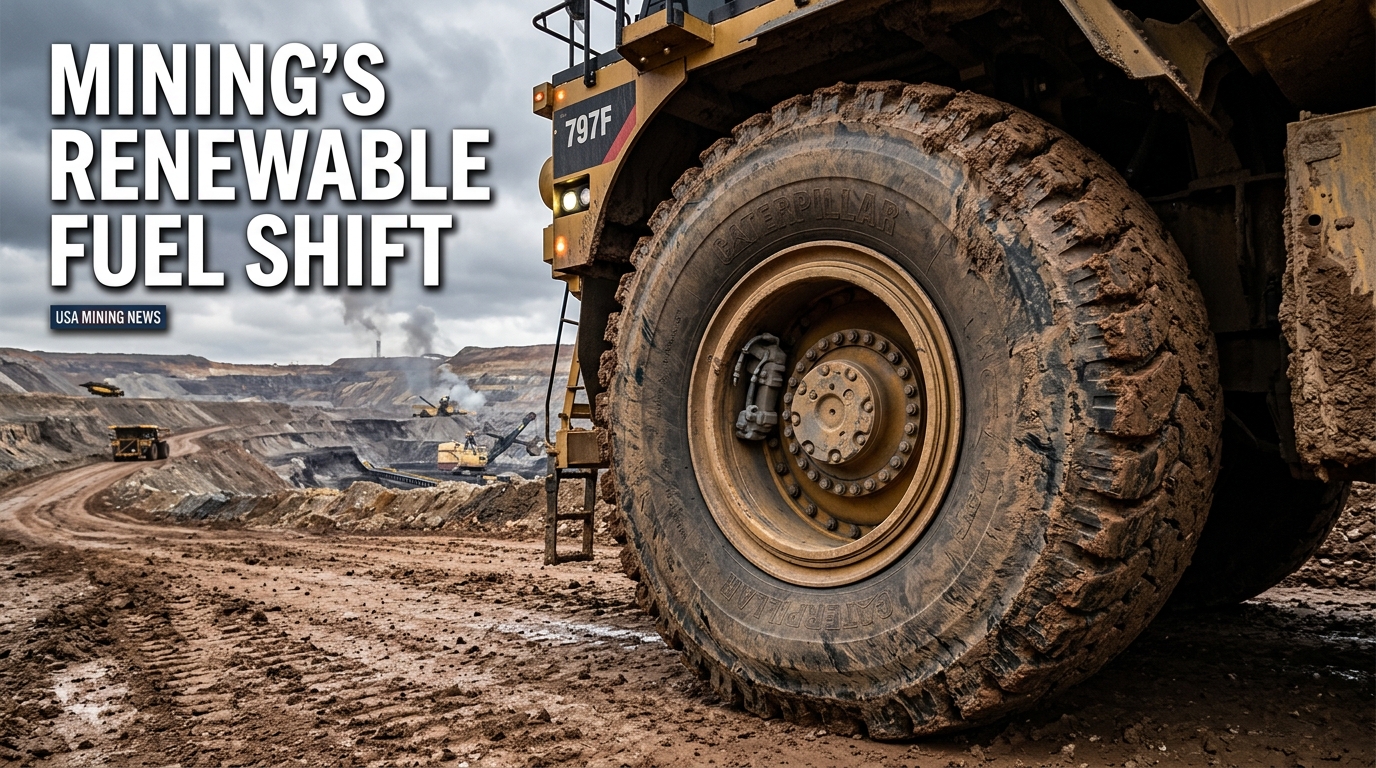
Furthermore, the volatility in oil markets, as exemplified by the 2026 Iran war, directly impacts mining operations globally. Fuel represents a significant operational cost for heavy machinery, transportation, and power generation at many mine sites. Extreme fluctuations in crude oil prices, particularly upward spikes, can severely compress profit margins, delay investment decisions, and even render some marginal projects uneconomical. China’s ability to dampen global oil price volatility, even temporarily, offers a degree of stability that benefits all energy-intensive industries, including mining.
The commitment to peak coal consumption by 2030 in China signals a gradual but undeniable shift away from thermal coal. While China remains the world's largest coal consumer, this policy directive suggests a long-term softening of demand for imported thermal coal, necessitating strategic adjustments for coal producers globally. Conversely, demand for metallurgical coal, critical for steel production, which underpins much of China's infrastructure and manufacturing growth, is likely to remain robust.
Finally, the broader geopolitical tensions and the emphasis on securing supply lines underscore a global trend towards resource nationalism and diversified sourcing. Mining companies must increasingly navigate complex supply chain risks, exploring new jurisdictions and technologies to ensure resilience in an ever-changing geopolitical landscape.
The Path Ahead: Future Outlook for China's Energy Security
The 2026 Iran war served as a critical real-world stress test for China's meticulously constructed energy buffers. While the nation demonstrated impressive immediate resilience, the analysis by Rory Green and Erica Downs makes it clear that China's energy security efforts are ongoing and far from complete. The continued heavy dependence on imported crude and natural gas, coupled with the difficulty of displacing oil in key industrial and transportation sectors, represents persistent vulnerabilities.
Beijing’s long-term strategy will undoubtedly continue to prioritize domestic energy sourcing, accelerated development of renewable energy technologies, and enhancement of its independent manufacturing capabilities across the energy sector. The delicate balance between leveraging short-term strategic reserves and implementing long-term structural changes will define China’s trajectory towards achieving its vision of becoming a true "energy powerhouse." For the global mining industry, understanding these dynamics is paramount for strategic planning, investment decisions, and navigating the evolving demands of the world’s largest commodity consumer.