Devastating Closure: Liberty Bell Bay Smelter Shuts Down as Sale Collapses
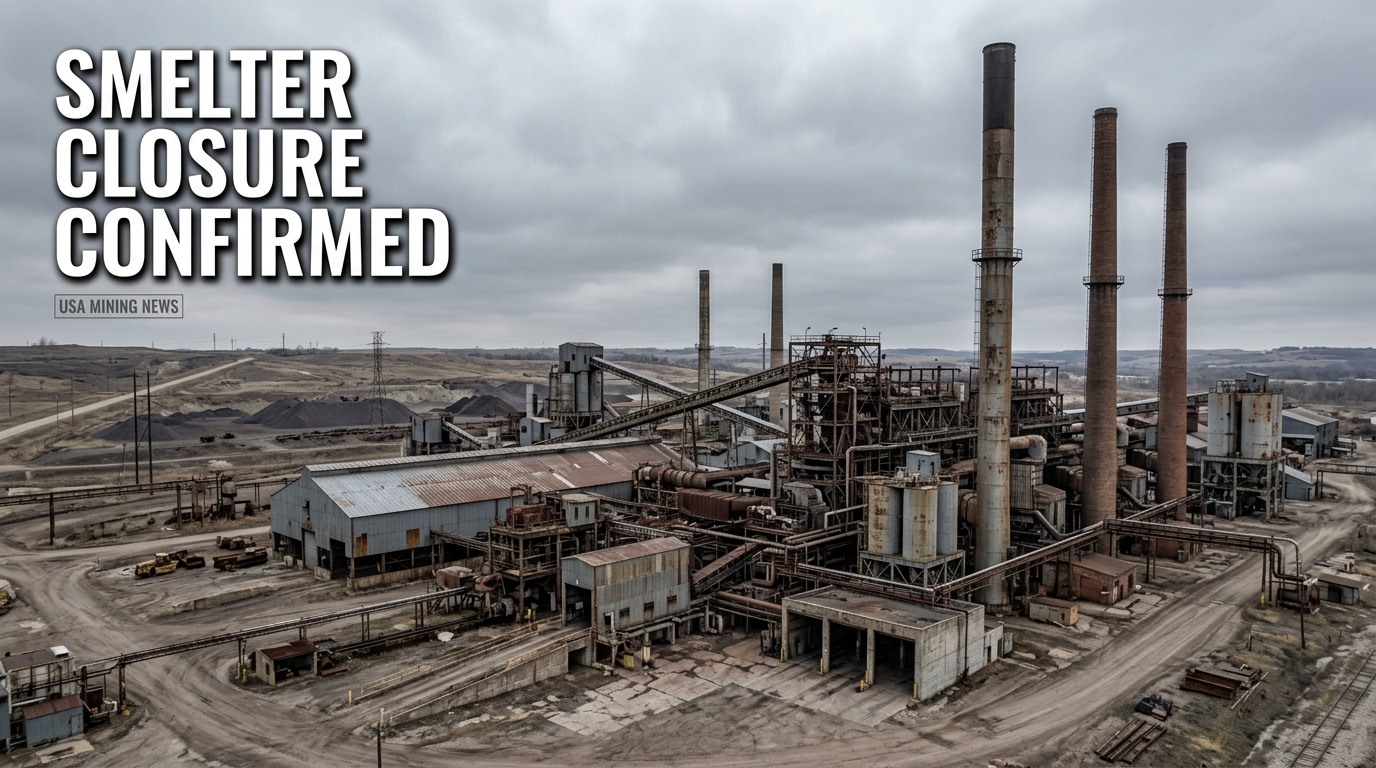
Hobart, Tasmania – July 17, 2026 – The Liberty Bell Bay manganese smelter, a critical industrial asset located in northern Tasmania and owned by GFG Alliance, has officially ceased operations. This definitive closure follows the sudden collapse of a proposed acquisition, leaving approximately 217 workers facing immediate job losses and raising significant questions about the future of heavy industry in Australia. The news, confirmed by administrators EY Parthenon, marks the culmination of months of uncertainty and extensive governmental efforts to salvage the facility.
The Failed Acquisition Attempt and Its Fallout
The smelter, essential for processing manganese ore into ferromanganese alloys crucial for steel production, had been operating under various degrees of distress and uncertainty for over a year. Placed into administration in March, hopes for its survival rested on a successful sale to a consortium that initially included investment firms Adroit Capital and White Oak. However, according to reports, this consortium formally advised the administrators last month that it would no longer pursue the acquisition, citing undisclosed reasons that ultimately led to the unraveling of the deal this week.
The withdrawal of a key financial backer from the consortium proved to be the final blow, despite the concerted efforts of all parties involved to find a viable path forward. For mining industry professionals, the collapse of such a late-stage acquisition underscores the substantial due diligence and risk assessment involved in acquiring and operating complex metallurgical facilities, particularly those with existing operational challenges and a heavy reliance on high electricity costs and consistent raw material supply. The exit of entities like Adroit Capital and White Oak from the bidding process suggests that, even with significant government support on offer, the long-term economic viability or risk profile of the asset did not align with their investment criteria.
Impact on Workforce and Regional Economy
The immediate and profound impact of the closure falls squarely on the 217 individuals employed at the Bell Bay facility. For these workers and their families in northern Tasmania, the news represents a significant economic shock. Robert Flanagan, Australian Workers Union Tasmania branch secretary, was quoted by the ABC as describing the closure as a "significant blow for the workforce." Flanagan indicated that employees would continue to receive their wages until an upcoming meeting where contracts are expected to be formally terminated. Following this, he stated that affected staff might need to seek unpaid entitlements through the federal government’s Fair Entitlement Guarantee Scheme, a process he cautioned could take anywhere from eight to 12 weeks during which families may face financial strain.
The ripple effect of such a substantial job loss extends far beyond the immediate families. Local businesses providing services, supplies, and support to the smelter and its employees will undoubtedly feel the downturn. This represents a substantial hit to the regional economy, where industrial employment, particularly in a skilled trade environment like a smelter, provides stable, higher-wage jobs critical for community prosperity and development. The closure not only removes a significant employer but also impacts the skilled labor pool, potentially leading to migration out of the region in search of new opportunities.
Extensive Government Intervention Proves Insufficient
The closure occurs despite considerable financial and strategic interventions from both the Tasmanian and Australian federal governments, highlighting the immense challenges faced when attempting to sustain energy-intensive industries in competitive global markets. In a joint statement, Tasmanian Premier Jeremy Rockliff and Federal Industry Minister Tim Ayres acknowledged the closure as a "sad day" for the communities that relied on the smelter, pledging immediate assistance to the affected region.
The scale of governmental support provided to date underscores the strategic importance placed on the smelter by policymakers. Last year, the Tasmanian Government extended a substantial A$20 million (approximately US$14 million) loan specifically for ore procurement, a critical measure intended to address the persistent ore supply shortages that had previously forced the smelter to operate at limited capacity. Furthermore, as the sale process unfolded, both the state and federal governments jointly contributed an additional A$9.6 million to ensure continued staff payments, providing a crucial safety net for employees during the period of uncertainty.
Beyond these financial injections, a significant strategic incentive was also put on the table: a proposed ten-year power agreement. For an energy-intensive operation like a manganese smelter, electricity costs represent a major component of operational expenditure. A long-term, stable, and potentially subsidized power agreement is often a make-or-break factor for such assets. The failure of even this substantial offer, designed to attract and secure a buyer, to facilitate a successful transaction speaks volumes about the perceived underlying economic and operational hurdles of the facility.
Market and Industry Context: The Broader Implications
The closure of the Liberty Bell Bay smelter is more than just a local tragedy; it carries significant implications for the broader mining and metallurgical industries, particularly within Australia and the global manganese market. Manganese is a vital commodity, predominantly used as an alloying agent in steel production to enhance strength, hardness, and durability. It also plays a growing role in specialty applications, including batteries and other advanced materials. While Australia is a major global producer of manganese ore, with significant mining operations, the Bell Bay smelter was one of the few domestic facilities that added value by processing this raw material into ferroalloys.
The cessation of operations at Liberty Bell Bay reduces Australia's domestic processing capacity for manganese, meaning a greater proportion of its raw ore will now likely be exported for processing elsewhere. This trend towards exporting raw materials rather than value-added products is a long-standing concern for Australian industrial policy, as it diminishes domestic manufacturing capabilities, skilled employment opportunities, and potential revenue from higher-margin processed goods. For investors, this highlights the ongoing challenge of operating capital-intensive, high-energy-demand processing facilities in developed economies like Australia, where input costs, particularly electricity and labor, can be substantially higher than in some competing jurisdictions.
Furthermore, the struggle and eventual failure of the Bell Bay smelter can be viewed in the broader context of GFG Alliance's financial restructuring efforts. While GFG Alliance owns a diverse portfolio of industrial assets globally, many have faced financial pressures in recent years. The closure of Bell Bay underscores the complex dynamics involved in managing and divesting such assets, often requiring a delicate balance between operational viability, market conditions, and stakeholder expectations.
Looking Ahead: Navigating the Aftermath
The immediate future for the site and its former employees will be challenging. The Australian Workers Union will play a critical role in assisting the affected workers through the Fair Entitlement Guarantee Scheme and in seeking new employment opportunities. Both state and federal governments have pledged immediate assistance, which will likely involve retraining programs, job placement services, and support for the local community grappling with the economic fallout.
For the site itself, its future remains uncertain. Decommissioning, environmental remediation, and potential repurposing will be complex and expensive undertakings. Given its strategic location in the Bell Bay industrial precinct, there may be eventual interest in the site for other industrial uses, but the specific infrastructure for manganese smelting is highly specialized. The experience with Liberty Bell Bay will likely inform future government policy on supporting vulnerable heavy industries, leading to enhanced scrutiny of assistance packages and a deeper analysis of the long-term viability of certain sectors.
The closure of the Liberty Bell Bay smelter stands as a stark reminder of the volatile nature of commodity markets, the intense global competition in heavy industry, and the intricate balance required to sustain high-cost value-added processing operations. It underscores the ongoing necessity for transparent and pragmatic strategies from both industry and government to navigate these complex economic landscapes and proactively address the challenges facing key industrial assets. For the mining sector, it reinforces the enduring importance of secure, cost-effective processing infrastructure and the continuous evaluation of investment risks in a rapidly evolving global economy.