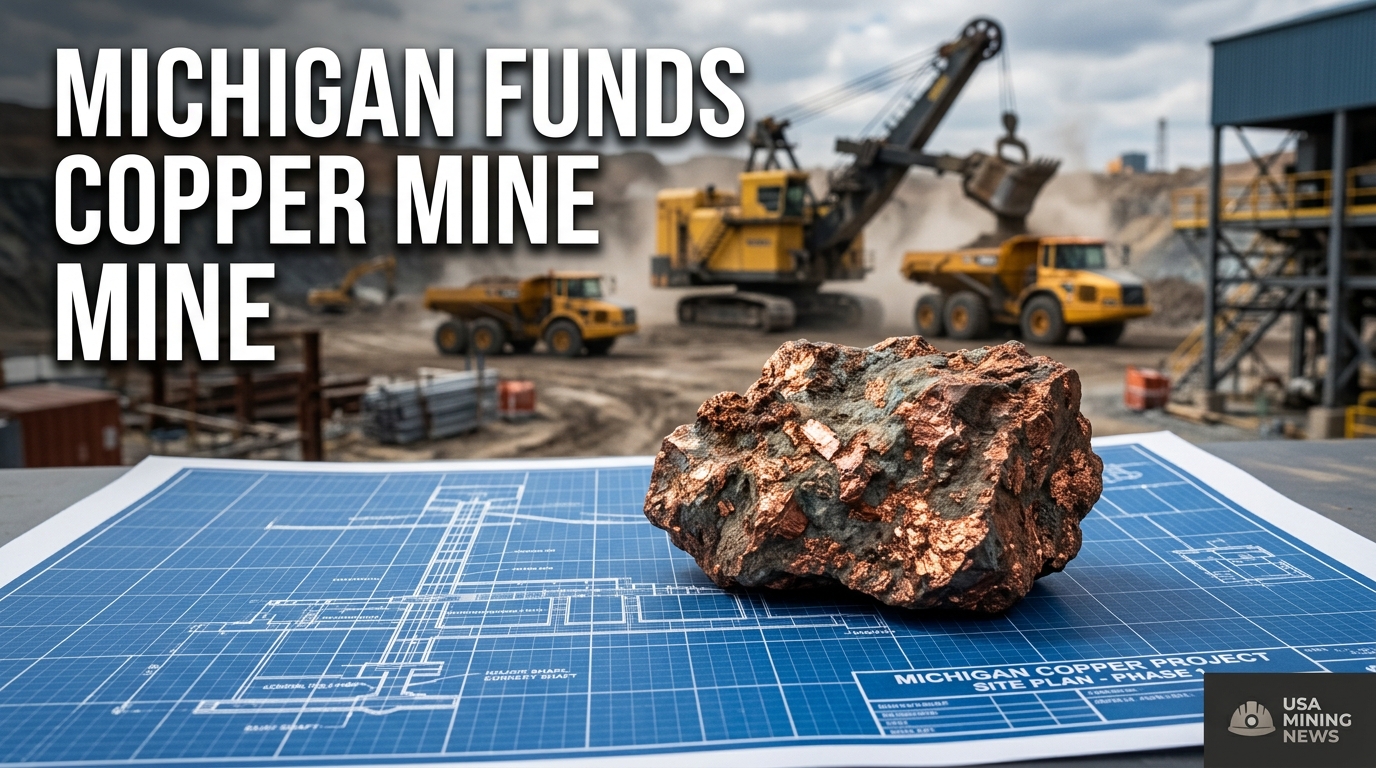
In a significant development for the North American mining landscape, Highland Copper Company Inc. has received final approval for a $50 million grant from the State of Michigan, US, to advance its Copperwood underground project. This substantial investment, provided under the Strategic Site Readiness Program, is poised to catalyze the development of a critical copper resource in Gogebic County, Michigan, simultaneously bolstering regional infrastructure and driving economic expansion in the Upper Peninsula.
Michigan Fuels Copperwood: A Strategic Investment in the Upper Peninsula
The approval of this $50 million (C$69.37 million) grant, announced on August 26, 2026, represents a pivotal moment for Highland Copper and the State of Michigan. The funding, which requires no further State of Michigan approvals, was recommended by the Michigan Economic Development Corporation (MEDC) and ultimately approved by the Michigan Strategic Fund. It is strategically allocated to support various facets of the Copperwood project and its surrounding community.
Specifically, the award includes:
- $45 million earmarked for Copperwood Resources, a wholly-owned subsidiary of Highland Copper. These funds are dedicated to eligible infrastructure spending directly associated with the mine's development. This encompasses a broad range of site readiness and infrastructure requirements, including critical road improvements, power supply, and communications networks essential for establishing a modern mining operation.
- $5 million directed to the Gogebic County Road Commission. This portion of the grant is designated for local infrastructure improvements that will not only benefit the Copperwood project but also provide tangible advantages to the broader region, enhancing overall connectivity and safety for residents and businesses.
This tiered allocation demonstrates a comprehensive approach by the State of Michigan, recognizing the dual impact of large-scale industrial projects: the direct operational needs of the mine and the imperative for improved public infrastructure that serves the wider community.
Enhancing Regional Infrastructure and Connectivity
The commitment to regional infrastructure extends beyond the direct $5 million from the Strategic Site Readiness Program. Highland Copper further highlighted that the Gogebic County Road Commission has successfully secured an additional $7.5 million Transportation Economic Development Fund Category A grant from the Michigan Department of Transportation. When combined with the $5 million from the state grant, these two funding streams will collectively provide approximately $12.6 million for specific improvements to County Road 519.
The planned works on County Road 519 are crucial. They are designed to enhance road safety, improve reliability for daily commuters and industrial traffic, and ensure more efficient access to the Copperwood project site. Beyond the immediate road improvements, the broader grant funding is expected to deliver significant regional benefits, including upgrades to essential utility infrastructure and expanded cellular and broadband connectivity. Such enhancements are vital for attracting and retaining talent, supporting ancillary businesses, and improving the quality of life in rural areas, making the Upper Peninsula more competitive for future economic development.
Performance-Based Funding and Key Milestones
The $50 million grant is structured as performance-based funding, a common mechanism used by governments to ensure accountability and project viability. Its disbursement is contingent upon Highland Copper meeting specific conditions and achieving several critical milestones, underscoring the state's strategic interest in the project's success and its broader economic impact.
Key conditions and requirements include:
- Definitive Grant Agreement: Highland Copper must complete and sign a definitive grant agreement with the Michigan Economic Development Corporation (MEDC). This agreement will legally codify the terms, conditions, and performance metrics associated with the grant.
- Additional Project Financing: A crucial financial condition requires Highland Copper to provide evidence, on or before March 31, 2028, that it has secured commitments satisfactory to the MEDC for an additional $150 million in project financing. This requirement ensures that the state's investment is part of a robust, fully funded project, mitigating risks associated with partial financing.
- Reimbursement Eligibility: Once Highland Copper demonstrates that it has met the $150 million financing milestone, it will become eligible for reimbursement of expenditures incurred on site preparation and improvement necessary to support the project's development. These eligible expenditures can be made on or before March 31, 2033, providing a substantial window for project development and cost recovery.
- Job Creation: The grant is also subject to specific completion milestones related to employment. Highland Copper is required to establish a minimum of 380 qualified jobs at the Copperwood project. This condition directly ties the state's investment to tangible job creation, fulfilling a key objective of economic development programs.
These conditions reflect the Michigan government's prudent approach, ensuring that public funds are utilized effectively to generate significant economic returns and contribute to long-term community prosperity.
Copperwood Project: A Key Player in Domestic Copper Supply
At the heart of this funding is the Copperwood Mine Project, an underground copper development located in the Wakefield and Ironwood townships of Gogebic County. The project is fully permitted, a significant advantage in the often-complex world of mining development, indicating that it has successfully navigated rigorous environmental and regulatory reviews.
Highland Copper anticipates investing approximately $425 million into the project. This substantial capital outlay will cover a wide array of critical areas, including:
- Environmental Controls: Ensuring the mine operates to the highest environmental standards, a critical consideration for both regulatory compliance and community acceptance.
- Equipment and Infrastructure Improvements: Procurement of necessary mining equipment and development of on-site infrastructure.
- Mine Development: The actual excavation and preparation of the underground mine workings.
- Operational Facilities: Construction of processing plants, administrative offices, and other essential surface facilities.
- Site Preparation: All necessary groundwork to prepare the site for construction and operations.
The project timeline projects construction activities to commence in 2028, with commercial production slated to begin in 2030. This schedule aligns with the state's reimbursement window and Highland Copper's financing objectives, positioning Copperwood to become a significant domestic producer of copper within the next decade.
Industry Context: The Growing Demand for Copper
The approval of this grant for Copperwood arrives at a time when copper's strategic importance is surging globally. Often referred to as "Dr. Copper" for its perceived ability to predict economic health, the metal is now increasingly recognized as a cornerstone of the global energy transition. Its exceptional electrical and thermal conductivity make it indispensable for a wide array of modern technologies.
The demand for copper is being driven by:
- Electrification: As countries transition away from fossil fuels, the build-out of new electricity grids, smart grids, and renewable energy infrastructure (solar panels, wind turbines) requires vast quantities of copper.
- Electric Vehicles (EVs): EVs use significantly more copper than traditional internal combustion engine vehicles, from their motors and batteries to charging infrastructure.
- Data Centers and Digital Infrastructure: The expansion of the digital economy, with its reliance on data centers and high-speed networks, further fuels copper demand.
- Supply Chain Resilience: Geopolitical shifts and lessons learned from recent supply chain disruptions have highlighted the strategic imperative for nations, including the United States, to bolster domestic production of critical minerals like copper. Projects like Copperwood directly contribute to enhancing this resilience, reducing reliance on potentially volatile international supply chains.
Michigan's investment in Copperwood, therefore, is not merely an economic development initiative but a strategic move to secure a domestic supply of a mineral vital for its own industrial future and national strategic objectives.
Highland Copper’s Strategic Position and Financing Outlook
Barry O’Shea, CEO of Highland Copper, encapsulated the significance of the grant, stating, "Final approval of this $50 million investment represents an important milestone for Copperwood and a strong endorsement of the project’s potential to deliver meaningful economic benefits to Michigan’s Upper Peninsula while meeting the state’s rigorous environmental standards." His statement underscores the dual victory of securing critical funding and reaffirming the project's environmental credibility.
Furthermore, O’Shea highlighted the grant's impact on the overall financing strategy: "This funding also represents an important milestone in the overall project financing. With this grant secured, in addition to the Letter of Interest from the US Export Import Bank, Highland’s capacity to finance Copperwood is considerably strengthened." Financing large-scale mining projects, particularly new developments, is often a complex and capital-intensive endeavor. Government grants and support from institutions like the US Export Import Bank play a crucial role in de-risking projects, making them more attractive to private investors and lenders. The $50 million grant significantly reduces the equity burden on Highland Copper, making it easier to secure the additional $150 million in financing required by the MEDC.
Future Outlook and Broader Implications
The path forward for the Copperwood project now involves several critical steps for Highland Copper. The immediate priorities will be to finalize the definitive grant agreement with the MEDC and intensely focus on securing the remaining $150 million in additional project financing before the March 31, 2028 deadline. Meeting the job creation target of at least 380 qualified positions will also be paramount as the project advances.
Should Copperwood successfully navigate these milestones, its impact on Michigan's Upper Peninsula could be transformative. It promises not only direct employment but also significant indirect job creation through ancillary services, increased local spending, and an expanded tax base for Gogebic County and the state. Moreover, the enhanced infrastructure—from improved roads to better broadband—will have lasting positive effects on regional development, extending benefits far beyond the mine's operational lifespan.
This initiative also sets an important precedent for public-private partnerships in critical mineral development within the United States. As the nation increasingly prioritizes domestic sourcing of materials essential for its economic and national security, the Michigan grant for Copperwood illustrates a tangible model for how state governments can strategically support the mining sector. It signals a robust commitment from Michigan to participate actively in the global energy transition and secure its position as a key player in the responsible production of vital resources.