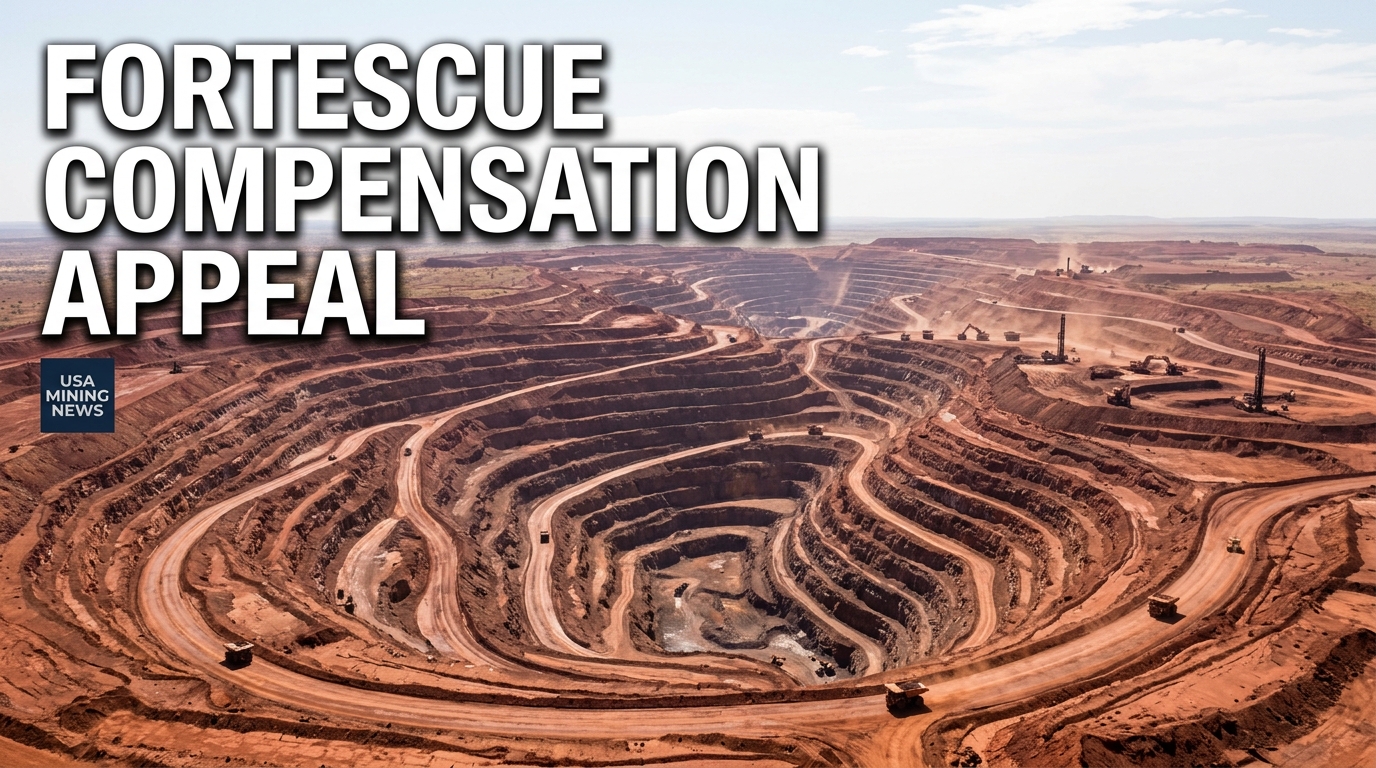
Sydney, Australia – In a development poised to reshape the discourse around native title and resource development in Australia, both the Western Australian (WA) Government and the Yindjibarndi Ngurra Aboriginal Corporation (YNAC) have formally appealed a Federal Court ruling that mandated Fortescue Metals Group (FMG) pay A$150.3 million ($107.9 million USD) in compensation. This landmark decision, delivered in May 2026, concerned Fortescue's extensive iron ore mining activities on Yindjibarndi ancestral lands in the Pilbara region, operations that proceeded for years without a formal native title agreement in place. The appeals, lodged separately on August 27, 2026, highlight persistent disagreements over the valuation of cultural loss and the clarity of legislative frameworks, setting the stage for further legal battles with profound implications for the nation's mining industry.
The Federal Court's Initial Judgement: A Precedent-Setting Decision
The original Federal Court judgement, announced in May, marked a significant milestone in Australia's native title jurisprudence. It found Fortescue Metals Group liable for compensation stemming from the construction and ongoing operation of four major Pilbara iron ore mines since 2012. The court’s order for A$150.3 million (equivalent to approximately $107.9 million USD at the time) was specifically allocated as A$150 million for cultural loss, A$150,000 for economic loss, and additional interest, reflecting the profound and multifaceted impact of the mining operations on Yindjibarndi land.
This ruling was widely regarded as one of the largest compensation awards ever issued under Australia’s native title laws, underscoring the legal system's increasing recognition of Indigenous rights and the tangible value of cultural heritage. A critical finding by the Federal Court was that significant harm had been inflicted upon Yindjibarndi cultural sites. Specifically, 124 out of 240 identified heritage places were destroyed as a direct result of Fortescue's operations. Crucially, these mining activities had been approved by the WA Government but proceeded without the consent or formal native title agreement of the YNAC, the prescribed body corporate representing the Yindjibarndi people.
For Fortescue, one of the world's largest iron ore producers, the financial and reputational stakes are substantial. Led by founder Andrew Forrest, the company has generated an estimated A$80 billion in revenue from the area in question since 2013. This impressive financial output starkly contrasts with the compensation figures debated throughout the legal proceedings, highlighting the immense value extracted from lands where native title rights were not formally settled.
Yindjibarndi Ngurra Aboriginal Corporation's Pursuit for Higher Justice
The Yindjibarndi Ngurra Aboriginal Corporation (YNAC) has been resolute in its pursuit of fair and comprehensive compensation, reflecting the deep and irreplaceable losses suffered by its community. CEO Michael Woodley confirmed the YNAC's appeal, stating that the Indigenous group seeks a substantially higher compensation amount than initially awarded. The core of YNAC's contention lies in the methodologies used by the court for valuation.
Specifically, the YNAC is challenging the court’s reliance on a "pastoral-based freehold value" as a benchmark for compensation. This valuation model typically assesses land value based on its agricultural or pastoral potential, which the YNAC argues fails to adequately capture the unique cultural, spiritual, and intrinsic value of ancestral lands to Indigenous peoples. For First Nations groups, land is not merely an economic asset but the very foundation of identity, cultural practice, and spiritual connection. A pastoral valuation, critics argue, fundamentally misunderstands this relationship.
Furthermore, the YNAC is contesting the court's rejection of a "royalty-based compensation model." This approach, common in resource agreements globally, would have linked compensation directly to a percentage of the revenue or profits generated from mining activities on their land. Such a model, proponents argue, better reflects the ongoing economic benefit derived from the land by mining companies and provides a more equitable share for native title holders, aligning their interests with the long-term success of the resource extraction. In their initial claim, the YNAC had sought a staggering A$1 billion for cultural losses and more than A$800 million for economic loss, alongside compensation for the profound impact of the mine on community cohesion, a figure vastly exceeding the court's award.
Western Australian Government Seeks Legal Clarity
The WA Government's decision to appeal, confirmed by Attorney-General Tony Buti, introduces another layer of complexity to the legal proceedings. While the state government did not detail the specific grounds for its appeal, its stated motivation is to achieve "clarity in the legal framework for future native title compensation and agreements." This suggests a broader concern about the precedents set by the Federal Court's ruling and how they might influence subsequent negotiations and legal actions across Western Australia, a state rich in mineral resources and a critical hub for global mining.
During earlier court proceedings, the WA Government had proposed a compensation figure not exceeding A$10 million, significantly lower than the amount eventually awarded. This position underscores the delicate balance the state must maintain: facilitating resource development, which is a cornerstone of its economy, while also upholding Indigenous rights and ensuring legal stability. The Federal Court, however, unequivocally confirmed that the WA Government bears no financial liability for the compensation payment. Responsibility for the damages was placed solely on Fortescue under the existing legislative framework, specifically the WA Mining Act. The government's appeal, therefore, is likely focused on the interpretation of native title laws and their interaction with state resource legislation, aiming to create a more predictable and robust framework for all future stakeholders.
Fortescue Metals Group and the Commercial Realities
Fortescue Metals Group, under the leadership of Andrew Forrest, has been a key player in the iron ore sector, and its operations in the Pilbara are central to its global standing. The company's long history of operating on Yindjibarndi land without a native title agreement, despite years of negotiations, has been a central point of contention in this case. While Fortescue had earlier suggested a maximum compensation figure of A$8.1 million – a mere fraction of what was eventually awarded – the company claims to have since paid the A$150.3 million ordered by the court. This payment, if confirmed, fulfills their immediate legal obligation but does not negate the ongoing appeals process.
For major mining companies like Fortescue, legal challenges related to native title carry significant financial, operational, and reputational risks. The disparity between the company's annual revenues from the region and the awarded compensation highlights the massive scale of resource extraction and the economic value generated from Indigenous lands. The case also brings into focus corporate social responsibility (CSR) and environmental, social, and governance (ESG) factors, which are increasingly scrutinized by investors and the public. Operating without Indigenous consent, or in the context of protracted legal disputes, can lead to delays, increased costs, and damage to a company's social license to operate, particularly in a global market where ethical sourcing and Indigenous engagement are gaining prominence.
Broader Implications for Australia's Mining Sector and Native Title
The appeals in the Fortescue compensation case reverberate far beyond the specific parties involved, sending critical signals across Australia’s vast mining sector. The ongoing legal saga underscores several key implications:
- Precedent for Valuation: The YNAC's push for a royalty-based model versus the court’s freehold valuation method highlights a fundamental debate in native title compensation. A successful appeal by YNAC could establish new benchmarks for valuing cultural loss and economic benefit, potentially leading to significantly higher compensation claims for future projects across the country.
- Risk Assessment for Miners: This case accentuates the importance of robust native title agreements for operational certainty and risk management. Companies that fail to secure comprehensive agreements with Indigenous groups face not only potential litigation but also the threat of substantial financial penalties, project delays, and reputational damage.
- Government's Regulatory Role: The WA Government's appeal for "legal clarity" reflects a need for consistent and predictable frameworks. An ambiguous legal landscape can deter investment and complicate the permitting process for new mining projects, impacting the state’s economic competitiveness.
- Focus on Indigenous Consent: The core of the original ruling—mining without native title agreement—reinforces the imperative for genuine consultation and consent from Traditional Owners. This aligns with broader national and international movements advocating for Indigenous self-determination and Free, Prior, and Informed Consent (FPIC) in resource development.
- ESG and Investor Confidence: For international investors, the stability of native title agreements is a crucial ESG factor. Protracted legal battles and significant compensation payouts can signal increased operational risk, potentially affecting investor confidence in Australian mining projects.
The Road Ahead: Next Steps and Potential Outcomes
The lodging of these appeals initiates a new and potentially lengthy phase of legal proceedings. The cases will likely move through higher courts, possibly culminating in a hearing before the Full Federal Court or even the High Court of Australia. This process could take months, if not years, to resolve, prolonging uncertainty for all involved parties.
Potential outcomes are varied:
- The appeals could result in a higher compensation award for the Yindjibarndi people, potentially validating the royalty-based compensation model and setting a significant new precedent.
- The courts might affirm the original ruling, but offer further clarification on valuation methodologies, which could still impact future cases.
- The WA Government's appeal could lead to legislative amendments or a reinterpretation of existing laws, providing the clarity it seeks for future native title negotiations and agreements.
- Alternatively, the appeals could be dismissed, reinforcing the original Federal Court decision.
Regardless of the final judicial outcome, this case has irrevocably altered the landscape of native title in Australian mining. It underscores the critical need for proactive engagement, transparent negotiation, and equitable agreements between resource companies, governments, and Indigenous Traditional Owners. The decisions made in the coming months and years will not only determine the fate of Fortescue's compensation but will also lay down a new legal blueprint for how mining can and must coexist with Indigenous rights and cultural heritage in one of the world's most significant resource regions.