Revolutionizing Mine Rehabilitation: Vale's Tech-Forward Approach in Brazil
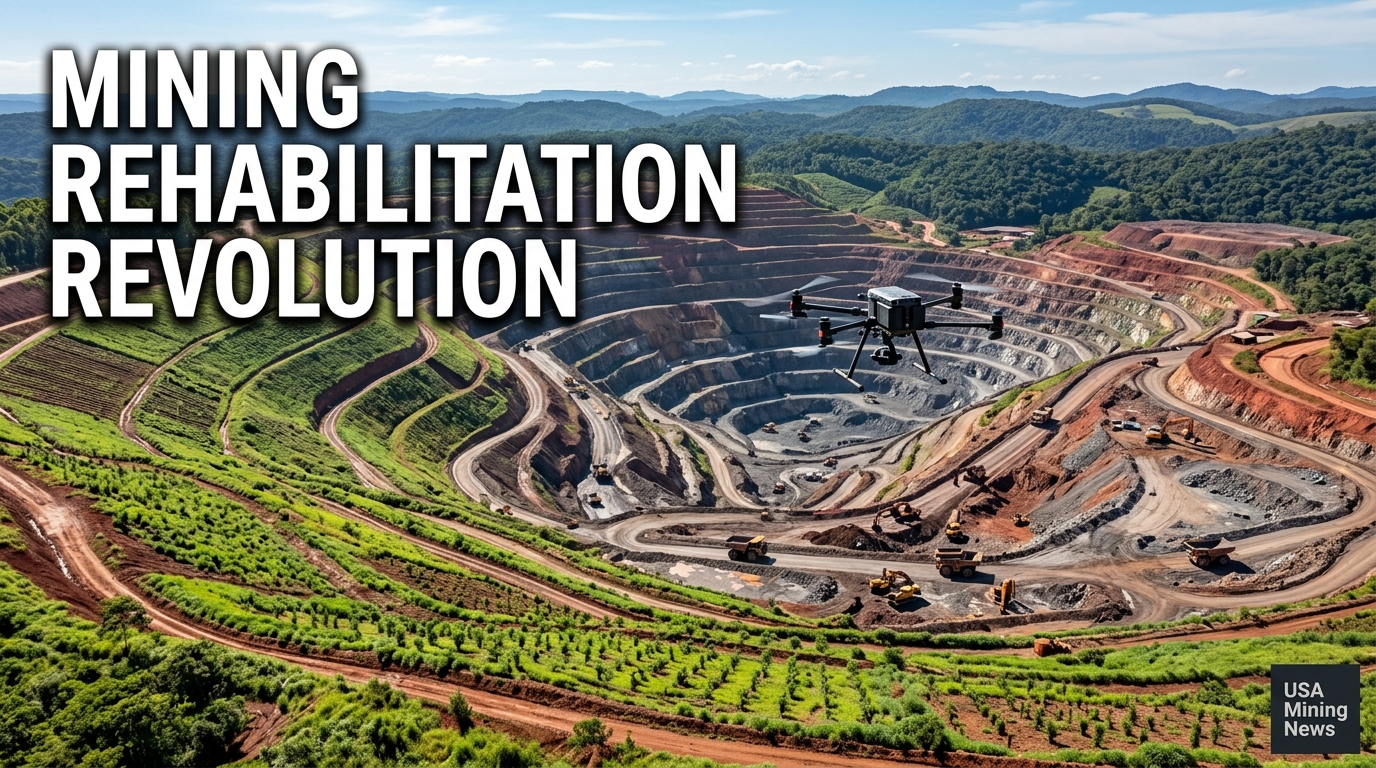
The global mining industry is at a pivotal juncture, balancing the demand for critical resources with an escalating imperative for environmental responsibility. As operations expand and mature, the commitment to responsible mine closure and rehabilitation becomes increasingly scrutinized by regulators, investors, and local communities alike. In a notable development, first reported by Heidi Vella on August 13, 2026, Brazilian mining behemoth Vale is leading the charge in this critical area, implementing an advanced technological framework to redefine rehabilitation practices at its former
Vale's Groundbreaking Initiative at Águas Claras
The At the heart of Vale's innovative strategy is the Green Cubes platform, a sophisticated system designed to integrate and analyze diverse streams of environmental data. This platform's primary function is to overlay LiDAR-derived point-cloud data onto the The Technological Nexus: Drones, LiDAR, AI, and Digital Twins
The success of Vale's rehabilitation monitoring at
- Drones (Unmanned Aerial Vehicles - UAVs): Drones provide the agility and cost-effectiveness necessary for frequent, high-resolution data acquisition across large and often rugged mining landscapes. Equipped with various sensors, they can capture aerial imagery, video, and, critically, carry LiDAR scanners, allowing for rapid surveying of site topography, vegetation cover, and ground disturbance. Their ability to access difficult or hazardous areas safely enhances both efficiency and worker safety in post-mining environments.
- LiDAR (Light Detection and Ranging): LiDAR technology employs pulsed laser light to measure distances to the Earth's surface, generating extremely precise 3D point-cloud data. This data is invaluable for creating highly accurate topographical maps and models of vegetation structure. In rehabilitation contexts, LiDAR can detect subtle changes in landform stability, quantify biomass, assess reforestation progress, and even penetrate dense canopy to map underlying ground conditions, offering a level of detail unattainable through traditional surveying methods.
- Artificial Intelligence (AI): AI algorithms are the analytical engine that transforms raw data into actionable insights. In Vale's application, AI is crucial for processing the vast datasets generated by drones and LiDAR. It can be trained to identify specific vegetation species, detect signs of erosion, quantify biodiversity indicators, and track the progression of rehabilitation efforts over time. By automating data analysis, AI significantly reduces the time and human effort required for monitoring, while also improving the consistency and reliability of assessments.
- Digital Twins: A digital twin is a virtual replica of a physical asset, process, or system. In the context of
Águas Claras , the digital twin of the mine site is a living, evolving model that is continuously updated with real-time data from drones and LiDAR. This allows environmental managers to simulate future scenarios, test different rehabilitation strategies virtually, and visualize the impact of various interventions before they are implemented on the ground. It offers a powerful tool for predictive analysis and optimized decision-making in complex ecological restoration projects.
The integration of these technologies into the Green Cubes platform provides a comprehensive and dynamic overview of rehabilitation progress, far surpassing the capabilities of traditional, periodic ground-based surveys.
The Green Cubes Platform: A Closer Look
The Green Cubes platform, developed in collaboration with partners such as Hexagon R-evolution, represents a pivotal innovation in environmental monitoring. By seamlessly integrating LiDAR-derived point-cloud data with other geospatial information, it constructs the 3D digital twin of the
- Biodiversity Monitoring: Traditional biodiversity assessments are often labor-intensive and localized. The Green Cubes platform, empowered by AI, can analyze changes in vegetation structure, canopy density, and potentially even identify specific plant communities over vast areas, providing indirect but scalable indicators of biodiversity recovery. This allows for a more holistic understanding of ecological succession and habitat development.
- Vegetation Analysis: Detailed monitoring of vegetation health, growth rates, and species diversity is fundamental to successful rehabilitation. The platform can track the establishment of target species, assess the effectiveness of revegetation techniques, and identify areas requiring further intervention, all with a high degree of spatial and temporal resolution.
- Rehabilitation Progress Tracking: By comparing successive scans of the digital twin, the platform can accurately track the physical progress of rehabilitation activities, such as soil stabilization, recontouring, and the development of new landforms. This objective, data-driven assessment allows Vale to demonstrate its compliance with closure plans and regulatory requirements with unparalleled transparency.
The partnership with Hexagon R-evolution, a company renowned for its sensor, software, and autonomous solutions, underscores the collaborative effort required to bring such advanced solutions to fruition. This collaboration highlights a growing trend in the mining industry where specialized technology providers are instrumental in addressing complex operational and environmental challenges.
Driving Transparency and Efficiency in Rehabilitation
The significance of Vale's initiative extends beyond mere technological adoption; it heralds a new era of transparency and efficiency in mine rehabilitation. For an industry often under public and regulatory scrutiny regarding its environmental footprint, objective, verifiable data on restoration efforts is invaluable. This model offers several critical advantages:
- Enhanced Regulatory Compliance: By providing continuous, detailed data on rehabilitation progress, mining companies can demonstrate adherence to closure plans and environmental permits with greater certainty. This proactive approach can foster stronger relationships with regulatory bodies and reduce potential liabilities.
- Improved Stakeholder Engagement: Transparent monitoring data can be shared with local communities, environmental groups, and investors, building trust and demonstrating a genuine commitment to environmental stewardship. Digital twins offer an intuitive and powerful visualization tool for communicating complex ecological changes.
- Optimized Resource Allocation: AI-driven analysis of rehabilitation data allows for the identification of areas that are recovering well versus those that require additional intervention. This data-informed decision-making optimizes the allocation of financial and human resources, ensuring that rehabilitation budgets are spent most effectively.
- Knowledge Transfer and Best Practices: The insights gained from Vale's deployment at
Águas Claras can inform best practices across its global operations and potentially serve as a blueprint for other mining companies facing similar rehabilitation challenges.
In a period where Environmental, Social, and Governance (ESG) factors are increasingly influencing investment decisions and corporate reputations, demonstrating leadership in environmental rehabilitation is a strategic imperative. Vale's approach positions it at the forefront of this movement, offering a powerful example of how technology can drive superior environmental outcomes.
Broader Implications for the Mining Sector
The application of drones, LiDAR, and AI for mine rehabilitation, as exemplified by Vale, signals a broader transformation within the mining industry. This shift is driven by several converging factors:
- ESG Pressures: Investor and public demand for stronger ESG performance continues to intensify. Robust, verifiable rehabilitation strategies are a key component of a strong ESG profile.
- Technological Maturity: The decreasing cost and increasing capabilities of drone technology, LiDAR sensors, and AI platforms make them more accessible and viable for widespread industry adoption.
- Data-Driven Decision Making: The industry is moving towards greater reliance on data analytics for all aspects of operations, and environmental management is no exception.
- Long-Term Liabilities: Effective rehabilitation reduces long-term environmental liabilities and associated financial risks, providing a clear economic incentive for investment in advanced monitoring.
While the
The Future of Mine Closure and Restoration
Looking ahead, the successful deployment and continuous refinement of platforms like Green Cubes at sites such as
- Standardized Digital Platforms: Development of industry-wide standards for digital twin creation and data integration to facilitate benchmarking and knowledge sharing.
- Advanced Ecological Modeling: AI-powered models will become more sophisticated in predicting ecological trajectories and optimizing restoration interventions for complex ecosystems.
- Autonomous Monitoring: Further automation of data collection through autonomous drones and ground robots, reducing human intervention and enhancing safety.
- Integration with Broader Environmental Systems: Linking mine site rehabilitation data with regional biodiversity databases and climate models to assess broader ecological impacts and contributions to conservation goals.
Vale's initiative at