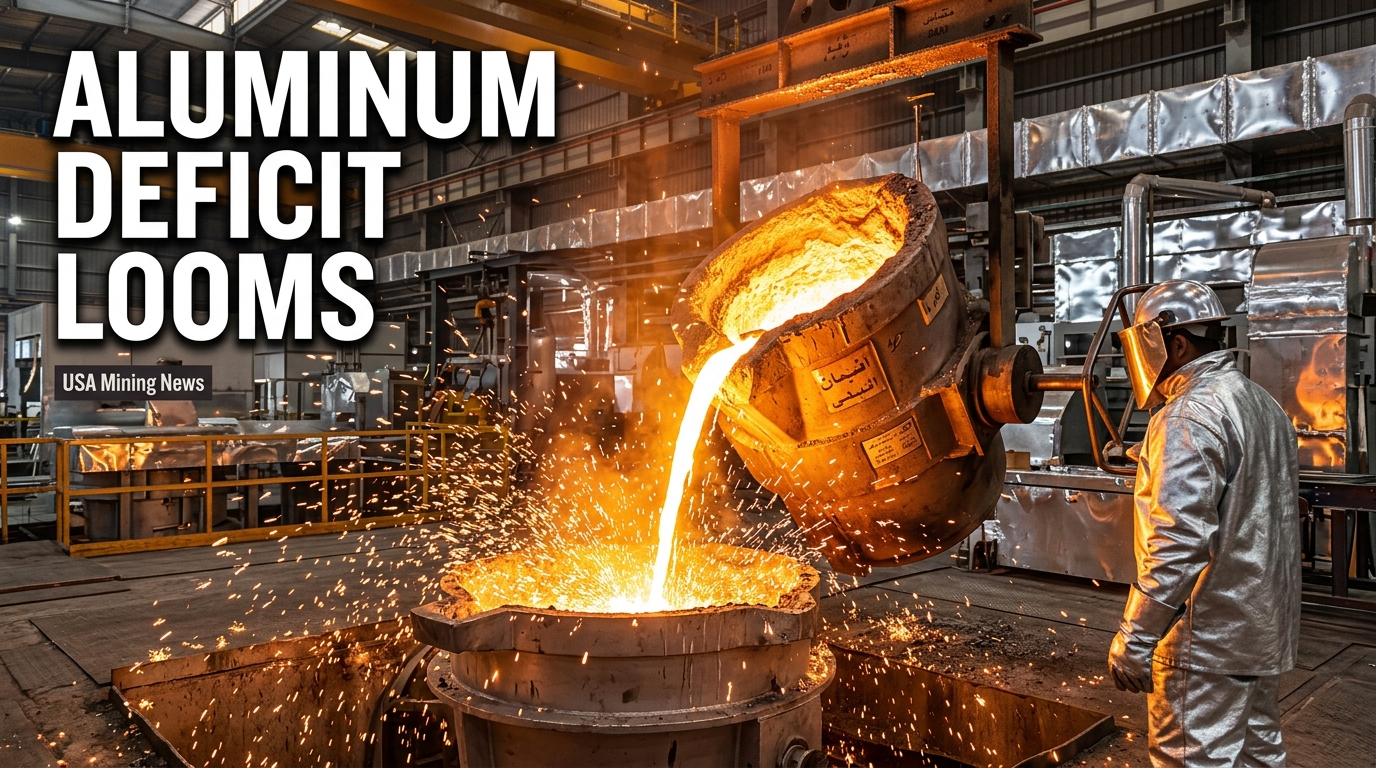
Middle East Disruption Pushes Global Aluminium Towards Historic Deficit, Prices Near $4,000/t
The global aluminium market is bracing for a significant supply crunch driven by operational shutdowns and profound logistics disruptions emanating from key smelters within the Middle East’s Gulf region. This critical situation, highlighted by Paul Williams, head of aluminium value chain at CRU, on May 13, 2026, suggests that the market could be heading towards a historic deficit, potentially holding aluminium prices near the $4,000 per tonne mark for an extended period.
For the professional mining and metals community, this development is not merely a fleeting market fluctuation but a structural shift that underscores the intricate vulnerabilities within global commodity supply chains. The Middle East, particularly the Gulf States, has cemented its position as a powerhouse in primary aluminium production, leveraging abundant and competitively priced energy resources. Any substantial disruption in this region therefore reverberates across the entire value chain, from upstream bauxite mining and alumina refining to downstream manufacturing sectors.
The Epicenter of Disruption: Gulf Smelters Under Pressure
The source material points to “operational shutdowns and logistics disruption across Gulf smelters.” While specific details regarding the nature or duration of these shutdowns are not provided, the implications for an energy-intensive industry like primary aluminium smelting are immense. Aluminium production requires vast amounts of electricity – typically ranging from 13,000 to 15,000 kilowatt-hours per tonne of aluminium produced via the Hall-Héroult process. Operational interruptions can stem from a variety of factors, each with cascading effects:
- Technical Malfunctions: Unscheduled equipment failures or maintenance requirements can lead to partial or complete shutdown of potlines. Restarting an aluminium smelter, especially after a cold shutdown, is a complex, costly, and time-consuming process, often taking weeks or even months to bring capacity back to optimum levels.
- Energy Supply Issues: Given the extreme reliance on steady power, any instability in electricity grids or curtailment of energy supplies – whether due to unforeseen demand spikes, infrastructure issues, or changes in energy policy – can force smelters to reduce output.
- Raw Material Supply Chain Bottlenecks: Aluminium smelters depend on a continuous supply of alumina, which is derived from bauxite, along with other consumables like carbon anodes. Logistics disruptions, such as port congestion, shipping delays, or geopolitical impediments to maritime routes, can interrupt the flow of these critical inputs, inevitably leading to production cuts.
- Geopolitical Factors: The Middle East is a region often prone to geopolitical tensions. While not specified in the source, broader regional instability or localized conflicts could directly impact industrial operations or severely hinder logistics by affecting transport infrastructure and the free movement of goods.
The cumulative effect of these potential disruptions is a reduction in the available primary aluminium supply to global markets. This is particularly impactful given the significant contribution of Gulf producers. Companies such as Emirates Global Aluminium (EGA) in the UAE, Aluminium Bahrain (Alba), and Qatar Aluminium (Qatalum) are among the world's largest and most technologically advanced aluminium producers, collectively representing a substantial portion of global primary aluminium capacity outside of China.
CRU’s Assessment and the Path to a Historic Deficit
The authoritative pronouncement from Paul Williams of CRU, a leading independent mining and metals market intelligence group, carries significant weight. CRU’s role in the industry is to provide detailed analysis, forecasts, and price assessments across various commodities, making their insights crucial for market participants. Williams's assessment that the market is heading towards a “historic deficit” suggests a fundamental imbalance between global demand and available supply that is unprecedented or at least remarkably rare in recent history.
A market deficit occurs when consumption outstrips production, leading to a draw-down of existing inventories. When this deficit is described as “historic,” it implies an exceptionally large or persistent supply shortfall. Such a scenario typically translates into upward pressure on prices, as buyers compete for diminishing available metal. The specific mention of aluminium prices staying “near $4,000/t” indicates the severity of the expected deficit and implies that current market conditions or futures contracts are reflecting this tightness.
For context, aluminium prices have traditionally traded in a wide range, but sustained periods above $3,000/t are usually indicative of strong demand and/or constrained supply. A move towards $4,000/t would represent a significant premium, reflecting acute concerns over supply adequacy. This price trajectory impacts everything from commodity traders positioning their portfolios to end-users evaluating their procurement strategies.
Market and Industry Context: Why This Matters
The Middle East’s aluminium industry is not just a regional player; it is a globally significant supplier of high-quality primary aluminium, often catering to premium markets devido to its low carbon footprint (in some cases, like EGA's CelestiAL™ aluminium powered by solar energy) and strategic geographic location. The implications of sustained disruption are multifaceted:
- Downstream Industries: Sectors heavily reliant on aluminium – including automotive (lightweighting for EVs), aerospace, construction (window frames, cladding), packaging (beverage cans), and electronics – will face higher raw material costs. These costs can either be absorbed, impacting profit margins, or passed on to consumers, potentially contributing to inflationary pressures.
- Global Supply Chain Resilience: This event serves as another stark reminder of the fragility of global supply chains. It highlights the risk concentration inherent in relying on specific regions for critical commodities. Companies may need to re-evaluate their sourcing strategies, consider greater diversification, or invest in regional production capabilities where feasible.
- Investment Landscape: For investors, the surge in aluminium prices could boost the profitability of unaffected or less-affected primary aluminium producers globally. It may also spur interest in projects aimed at expanding existing capacity or developing new greenfield smelters, particularly in regions with stable energy supplies and logistics. Furthermore, higher prices might incentivize recycling efforts, as secondary aluminium production becomes more economically attractive compared to primary production.
- Energy Market Interplay: The link between energy prices and aluminium production is direct. Elevated natural gas or electricity prices in other regions, combined with these disruptions in the Gulf, could exacerbate the global supply tightness, further impacting operational costs and competitiveness for smelters worldwide.
The timing of these disruptions, as noted on May 13, 2026, also allows market participants to fully assess the situation for current and upcoming contract negotiations. Longer-term contracts sensitive to spot market movements would have to adjust, prompting difficult conversations between producers and large industrial consumers.
Future Outlook and Mitigating Strategies
The short-to-medium term outlook, as suggested by CRU, indicates a persistent tight market with elevated prices. The $4,000/t level serves as a strong signal for the market to adjust. How long prices remain at this level will depend on several factors:
- Duration of Disruptions: The speed and efficacy with which Gulf smelters can resolve operational issues and logistics bottlenecks will be paramount. A swift resolution could alleviate some pressure, while protracted problems would intensify the deficit.
- Global Demand Response: While aluminium demand tends to be relatively inelastic in the short term for many critical applications, sustained high prices could eventually lead to demand destruction or substitution with alternative materials in certain less critical applications.
- Inventory Levels: Key global commodity exchanges, such as the London Metal Exchange (LME), closely monitor warehouse stock levels. A draw-down of these inventories will directly reflect the deficit, further supporting high prices. Conversely, any unexpected release of hidden stocks could offer temporary relief.
- Production from Other Regions: Increased output from other major aluminium producing regions, such as China, Russia, or North America, could help offset the Middle Eastern shortfall, though this often faces regulatory hurdles (e.g., environmental policies in China, sanctions on Russian metal) or economic limitations.
In the longer term, the industry will undoubtedly focus on enhancing resilience. This could involve major investments in new smelting capacity to diversify supply geographically, or technological advancements aimed at improving energy efficiency and reducing the vulnerability of existing operations to external shocks. For mining companies engaged in bauxite extraction and alumina refining, a period of sustained high aluminium prices could translate into greater demand for their raw materials, albeit with the caveat of potential disruptions downstream affecting their primary customers.
In conclusion, the operational and logistical challenges facing Middle Eastern aluminium smelters, as reported on May 13, 2026, are not isolated incidents but harbingers of a profound shift in the global aluminium market. The prospect of a “historic deficit” and sustained prices near $4,000/t reflects a significant recalibration of supply-demand dynamics, demanding careful attention and strategic responses from every participant in the global mining and metals value chain.