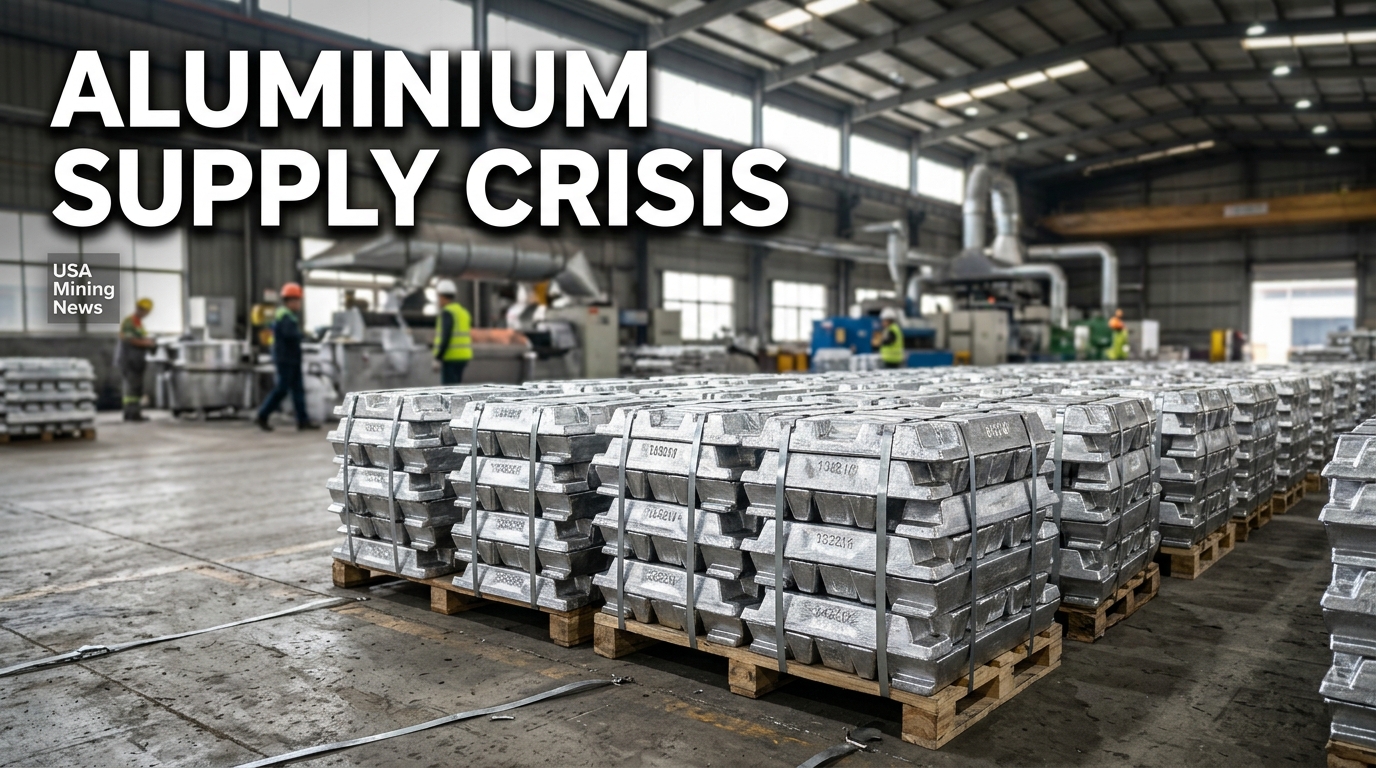
In a significant development for the global commodities market, escalating geopolitical tensions in the Middle East have triggered profound concerns regarding the stability of the world's aluminium supply chain. As of April 23, 2026, industry analysts are warning of potential shortages that could ripple through vital sectors including transport, construction, and packaging, marking what one expert describes as the largest single supply shock to a base metals market in over two decades.
The conflict, specifically the US-Israeli confrontation with Iran, has cast a long shadow over a region that is a critical supplier of aluminium. This situation underscores the intricate vulnerability of global commodity flows to regional instabilities and presents a unique challenge for mining companies, smelters, and downstream manufacturers worldwide.
The Geopolitical Nexus of Aluminium Supply
The Middle East is an undeniable powerhouse in global aluminium production, contributing approximately seven million tonnes (mt) annually, which accounts for about 9% of the total global supply. This substantial output is now jeopardized by the ongoing geopolitical conflict, particularly concerns over the security of alumina supplies moving through strategic maritime chokepoints like the Strait of Hormuz, essential for Gulf-based smelters.
According to Nick Snowdon, head of metals and mining research at Mercuria, a prominent global energy and commodity trading company, the supply disruption is already profound. Speaking on the sidelines of the Financial Times Commodities Global Summit in Lausanne, Switzerland, Snowdon characterized the situation as a "black swan" event – an unpredictable occurrence with severe consequences. He stated to Reuters that "The scale of the supply shock we are seeing in the aluminium market is probably the largest single supply shock a base metals market has suffered in the post-2000 era." This assessment highlights the gravity of the situation, suggesting that the industry is navigating uncharted waters.
Middle East's Crucial Role in Global Aluminium
The reliance of major economies on Middle Eastern aluminium is substantial, making them particularly susceptible to any sustained disruption. Data from Trade Data Monitor reveals the extent of this dependency:
- The United States imported nearly 22% of its 3.4mt of aluminium from the Middle East last year. This significant proportion underscores how a disruption in this region could directly impact US manufacturing and infrastructure projects.
- Europe's reliance is also considerable, sourcing approximately 1.2mt, or 18.5%, of its aluminium from the Middle East. For a continent heavily invested in green energy initiatives and sustainable construction, a secure supply of this lightweight and versatile metal is paramount.
These figures demonstrate that the conflict is not merely a regional issue but a global systemic risk to the aluminium market, threatening the stability of supply chains that support critical industrial output in some of the world's largest economies. The implications extend beyond immediate transactional costs, potentially affecting long-term strategic planning and industrial resilience.
A "Black Swan" Event: Market Impact and Price Spikes
The uncertainty and supply concerns stemming from the US-Israeli conflict with Iran have already translated into significant market volatility. On April 16, the London Metal Exchange (LME) saw aluminium prices surge to a four-year peak of $3,672 per tonne. Such a sharp increase reflects not only immediate demand pressures but also investor anxiety regarding future supply availability and geopolitical risk premiums.
Increased activity on the LME is a direct indicator of heightened speculative and hedging interest, as market participants attempt to manage exposure to rapidly shifting pricing dynamics. For industrial consumers, these elevated prices translate into higher input costs, potentially squeezing margins and influencing production decisions across manufacturing sectors.
Projected Shortfall and Limited Buffers
Mercuria's analysis paints a stark picture for the remainder of the year. The firm anticipates a minimum shortfall of approximately 2mt of aluminium by the year-end. This forecast, however, carries a crucial caveat.
Snowdon noted that this figure could prove conservative, largely depending on whether alumina supplies through the Strait of Hormuz can resume stable flows, allowing certain smelters in the Gulf region to maintain or resume operations soon. If these critical supply routes face prolonged restrictions, the deficit could deepen significantly.
Compounding the problem is the limited buffer against such a substantial shortfall:
- Global visible inventory stands at only about 1.5mt.
- Total global stock, including non-visible units, amounts to just over 3mt.
"That shortfall compares with about 1.5mt of visible inventory and just over 3mt of total global stock, including non-visible units, leaving the market with limited buffers," Snowdon elucidated. This scarcity of physical metal reserves means that the market has very little flexibility to absorb a sustained shock, making it highly vulnerable to further price spikes and potential rationing or allocation scenarios for industrial buyers.
Global Production Constraints and Vulnerabilities
The ability of other major aluminium-producing regions to step in and mitigate the Middle Eastern shortfall is severely constrained. China, the world's largest aluminium producer, operates under an annual production cap of 45mt. This regulatory limit, primarily driven by environmental and energy efficiency concerns, severely restricts its capacity to increase output rapidly to meet global demand surges.
Similarly, the US and Europe, despite their significant consumption, possess only limited dormant production capacity that could be reactivated. Decades of shifting global manufacturing, environmental regulations, and energy costs have led to the curtailment or closure of many smelters in these regions. Reactivating them is a complex and capital-intensive process, not a swift solution to an immediate supply crunch.
According to Snowdon, these regions are particularly vulnerable due to their already low stock levels. Their high reliance on imports, coupled with domestic production limitations and depleted inventories, places them at the forefront of exposure to this supply crisis. For companies operating in the mining and metals space, understanding these regional vulnerabilities is key to navigating the turbulent market ahead.
Broader Industry Implications and Strategic Considerations
The critical role of aluminium across various sectors means that a significant supply disruption will have far-reaching consequences:
- Transport: Aluminium is indispensable in the automotive and aerospace industries for lightweighting vehicles and aircraft, enhancing fuel efficiency and reducing emissions. Shortages could impact production schedules, increase manufacturing costs, and potentially slow down the transition to greener transportation solutions.
- Construction: From building facades and window frames to structural components and roofing, aluminium offers durability, aesthetic appeal, and corrosion resistance. A constrained supply could delay construction projects, increase material costs, and create bottlenecks in urban development and infrastructure initiatives.
- Packaging: Aluminium is widely used in beverage cans, food containers, and pharmaceutical packaging due to its barrier properties and recyclability. A shortage would significantly affect consumer goods companies, potentially leading to higher product prices or even a scramble for alternative, less sustainable packaging materials.
For mining and metals companies, this situation presents a multifaceted challenge. While higher prices might initially seem beneficial for producers, sustained volatility and uncertainty can deter long-term investment, complicate hedging strategies, and disrupt stable customer relationships. Procurement teams across industries will face immense pressure to secure supply, potentially leading to renegotiated contracts and a heightened focus on supply chain resilience.
Navigating the Future: Outlook and Next Steps
The immediate future of the global aluminium market remains intrinsically linked to the trajectory of geopolitical events in the Middle East. Without a rapid de-escalation of tensions and a secure resumption of trade routes, particularly for alumina, the projected deficit is likely to materialize, if not worsen.
For industry stakeholders, several strategic considerations emerge:
- Supply Chain Diversification: Companies may accelerate efforts to diversify their sourcing away from geopolitically sensitive regions, albeit a long-term and costly endeavor for a capital-intensive industry.
- Inventory Management: A renewed focus on maintaining adequate strategic reserves will become critical, moving away from "just-in-time" models that have proven fragile in crises.
- Investment in New Capacity: While limited in the short term, the current crisis could spur long-term investments in new, energy-efficient smelting capacity in geopolitically stable regions, or innovative recycling technologies to augment primary production.
- Demand-Side Adjustments: Sustained high prices could eventually trigger demand destruction in some applications or accelerate the substitution of aluminium with other materials where feasible, though this usually involves performance compromises.
The Middle East conflict serves as a potent reminder of the interconnectedness of global supply chains and the profound impact geopolitical instability can have on fundamental commodity markets. For the aluminium industry, 2026 is shaping up to be a test of resilience, adaptability, and strategic foresight, as market participants grapple with a "black swan" event of unprecedented scale.