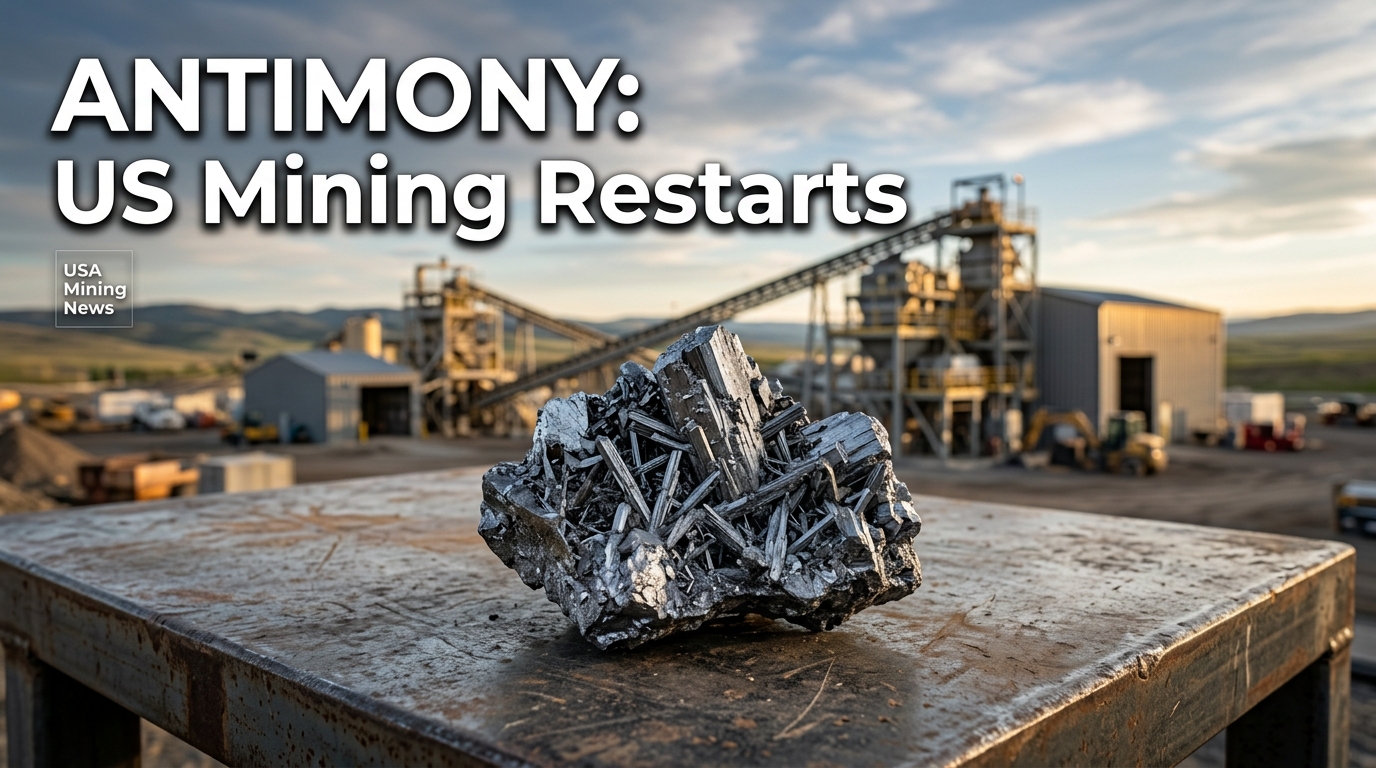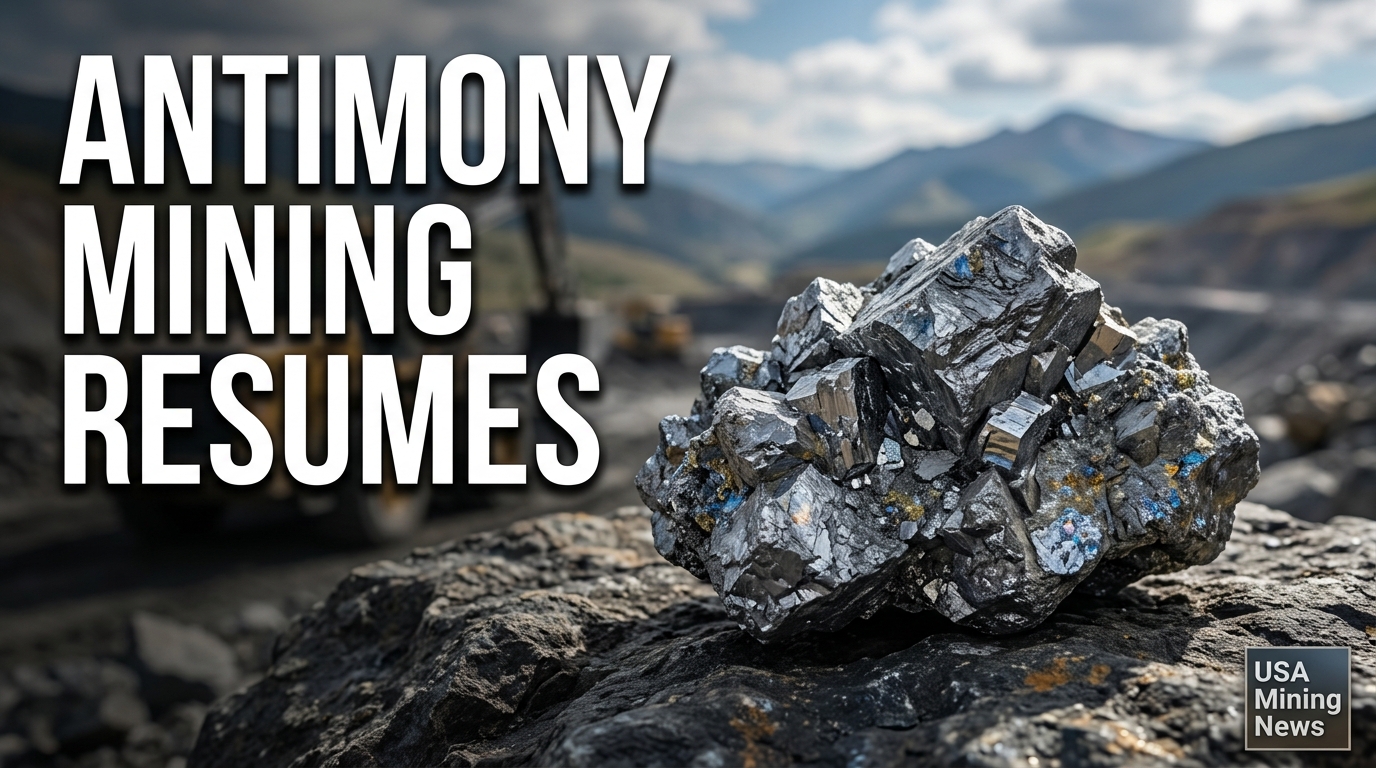
The United States Antimony Corporation (USAC) has announced the resumption of mining operations at its Stibnite Hill property, situated near Thompson Falls, Montana, following a seasonal hiatus. The restart, which occurred earlier than initially projected, marks a pivotal moment for the company and highlights the accelerating national focus on securing domestic supplies of critical minerals. Originally halted last November due to severe winter conditions, operations were able to resume owing to an uncharacteristically mild winter season characterized by low snowfall.
Resumption of Operations at Stibnite Hill
Mining activities at USAC’s Stibnite Hill site are integral to the United States’ antimony supply chain. Historically, operations in this mountainous region face annual shutdowns, typically commencing in November, as a direct consequence of harsh winter weather, heavy snowfall, and challenging access conditions. This seasonal pattern often dictates a later start to the mining season in the spring.
Last year, prior to the seasonal cessation of activities, USAC demonstrated its operational capacity by transporting over 800 metric tons (t) of antimony ore to its Radersburg Flotation Facility for initial processing over a concentrated two-month period. This processed material is subsequently moved to the Thompson Falls smelter, where it is refined into finished antimony products tailored for various customers. The early resumption this year, driven by favorable weather, provides USAC with a significant advantage, potentially extending its operational window and enhancing its production capacity for the current year, a move that aligns with broader national interests in boosting critical mineral output.
Strategic Operational Enhancements for Efficiency and Sustainability
Beyond the simple recommencement of activities, USAC is implementing several strategic adjustments to its mining approach at Stibnite Hill, signaling a commitment to both operational efficiency and environmental stewardship. These enhancements are designed to improve both the economic viability and the ecological footprint of the mining process:
- Advanced Reclamation Practices: A key focus for USAC is the meticulous management of reclamation efforts. Following the removal of larger trees from operational areas, a chipper will be deployed to process smaller brush into mulch. This mulching technique is not merely a waste management solution; it is a proactive measure designed to accelerate the revegetation process. By enriching the soil and promoting faster regrowth of native plant species, these efforts aim to minimize the environmental impact of mining and restore affected land more rapidly, aligning with modern environmental, social, and governance (ESG) standards prevalent in the global mining industry.
- Precision Surveying and Resource Delineation: In a move to significantly enhance geological understanding and operational accuracy, professional surveyors are currently establishing base stations on nearby mountain peaks. These strategically placed stations will leverage advanced GPS technology to improve the precision of mapping and meticulously record antimony vein intercepts. The enhanced data accuracy will be critical for accurately projecting the strike and depth of antimony veins, allowing for more efficient and targeted extraction. Furthermore, this collected data will play a crucial role in delineating disturbed areas with greater precision, setting clear parameters for subsequent reclamation activities and ensuring compliance with regulatory requirements. Such technological integration is vital for optimizing resource recovery and minimizing operational footprint.
Antimony: A Critical Mineral for National Security
The United States Government has increasingly emphasized the strategic importance of domestic critical mineral production, with antimony featuring prominently on the list of materials essential for national defense and economic prosperity. Antimony, a silvery-white metalloid, possesses unique properties that make it indispensable in a wide array of applications, from flame retardants in plastics and textiles to a hardening agent in lead alloys used for batteries, bullets, and cable sheathing. Crucially, it is also a vital component in certain advanced electronics and has specialized military applications, including in munitions and night vision devices. The reliance on foreign sources for such vital materials poses significant supply chain risks, particularly amid geopolitical uncertainties.
Recognizing these vulnerabilities, the US Government has initiated a robust strategy to bolster domestic production and processing capabilities for critical minerals. This overarching effort was formally detailed in Executive Order 14241, issued in March 2025, which underscores the imperative to enhance the extraction, processing, and refining of essential materials within the United States. USAC’s strategic domestic operations and recent governmental support directly align with the objectives outlined in this critical executive order.
Significant Government Support and Contracts
USAC’s operations at Stibnite Hill are gaining substantial momentum through significant financial backing and key contracts from federal agencies, underscoring the company’s increasing role in the national critical minerals strategy:
- Department of War Funding: Last month, USAC secured a substantial $27 million in funding from the Department of War. This allocation, provided through Title III of the Defense Production Act (DPA), is specifically earmarked for enhancing and expanding the extraction, processing, and refining processes for critical domestic materials. The DPA is a legislative tool that grants the President broad authority to ensure the availability of essential goods and services for national defense, and its application to USAC highlights the urgent strategic importance of antimony. This funding is expected to facilitate technological upgrades, capacity expansion, and overall operational resilience at USAC’s facilities, directly addressing identified vulnerabilities in the national supply chain for critical minerals.
- Defense Logistics Agency Contract: Further solidifying its strategic importance, USAC secured a pivotal contract worth up to $245 million from the US Defense Logistics Agency (DLA) in September 2025. This multi-year agreement commits USAC to supply antimony metal ingots for the national defense stockpile over a five-year period. The DLA is the primary combat logistics support agency for the U.S. Department of Defense, and contracts of this magnitude emphasize the critical role USAC is expected to play in ensuring a secure and reliable domestic supply of antimony for military applications. This contract provides a stable, long-term demand for USAC’s output, enabling the company to plan and invest confidently in its future production capabilities.
Combined, these commitments—totaling up to $272 million—demonstrate a forceful government policy to re-shore and build resilience in supply chains for materials deemed national security priorities. Such robust support significantly de-risks domestic projects and incentivizes increased production, which is crucial for reducing reliance on potentially unstable foreign supply sources.
Production Chain and Market Implications
The operational flow from Stibnite Hill underscores a strategically integrated domestic supply chain for antimony. Once extracted, the antimony ore is transported to USAC's Radersburg Flotation Facility. Here, initial processing separates the valuable antimony minerals from waste rock, creating a concentrate. This concentrate is then moved to the Thompson Falls smelter, where it undergoes further refining processes to produce high-grade antimony metal or other finished products. This vertically integrated approach, from mining to final product, provides a high degree of control over quality and supply, which is particularly attractive to government and industrial buyers seeking reliability.
Globally, the antimony market faces persistent supply challenges, with a significant portion of the world’s primary antimony production traditionally concentrated in China, Russia, and Tajikistan. This geographic concentration, coupled with increasing demand from diverse sectors including advanced battery technologies (e.g., liquid metal batteries), creates a volatile market landscape. The increasing push for domestic sourcing, as exemplified by USAC’s contracts and government funding, reflects a broader industry and governmental recognition of the need for supply chain diversification and resilience. USAC’s increased production capacity directly contributes to mitigating these geopolitical risks and enhancing the stability of antimony supply within the United States.
Future Outlook and Broader Industry Impact
The resumption of mining operations at Stibnite Hill, bolstered by strategic operational adjustments and significant government backing, positions the United States Antimony Corporation as a critical player in the domestic supply of strategically important minerals. The early restart due to milder weather, coupled with long-term contracts and DPA funding, creates a strong foundation for sustained production and growth.
For the broader mining industry and investors, USAC’s trajectory offers several key insights. Firstly, it highlights the growing emphasis on domestic sourcing and supply chain resilience for critical minerals, driven by governmental policies and national security imperatives. Secondly, the integration of advanced surveying technologies and robust reclamation practices demonstrates an industry shift towards more sustainable and technologically sophisticated mining operations. Finally, the substantial financial commitment from the Department of War and the DLA signals a strong and sustained demand for strategic minerals, providing a clear investment signal for companies capable of meeting these national requirements.
As USAC continues to ramp up its operations and fulfill its high-value contracts, its progress at Stibnite Hill will serve as a significant case study for the revitalization of critical mineral production within the United States, cementing its role in supporting national defense and technological advancement.