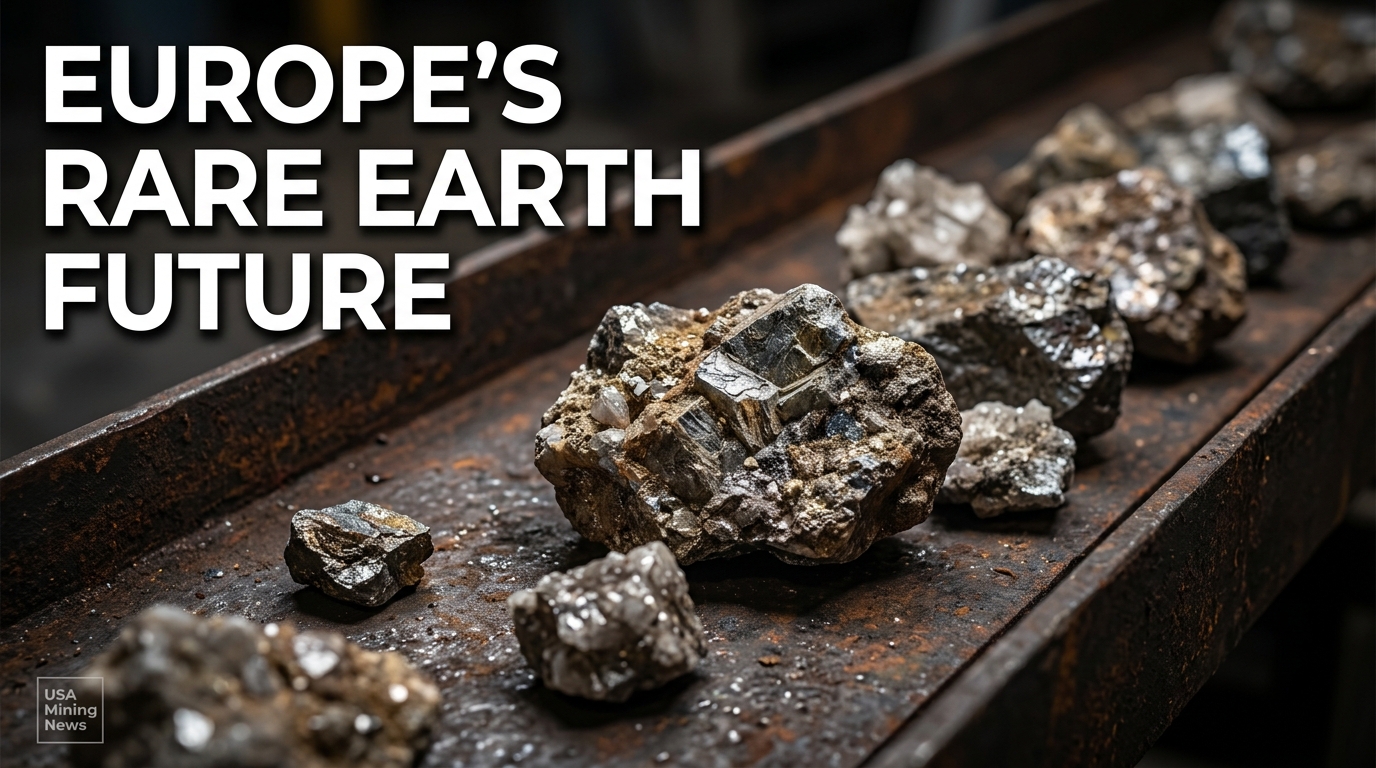
Tallinn, Estonia – Neo Performance Materials (TSX: NEO), a leading global developer and manufacturer of rare earth-based and rare metal-based functional materials, has announced a pivotal achievement for Europe's critical minerals sector: the successful commissioning and initial production of heavy rare earth elements (HREEs) at its Silmet facility in Estonia. This development, confirmed in a press release on Friday, April 10, 2026, represents a significant stride in establishing a secure, Europe-based supply chain for materials vital to high-tech industries.
The Toronto-based company, which reported a market capitalization of C$944.4 million (approximately $683.1 million) at the time of the announcement, has commenced small-scale production of separated terbium and dysprosium oxides. These valuable elements are being processed from mixed rare earth carbonate feedstock within the newly commissioned solvent extraction line at Silmet, an operation now running efficiently at its initial nameplate capacity.
This strategic move by Neo Performance Materials is poised to bolster Europe's self-reliance in critical raw materials, a growing imperative for the continent's industrial future. The production of these high-purity rare earths directly supports the burgeoning demand from advanced manufacturing sectors, positioning Neo as a key enabler of technological independence within the European Union.
A Milestone for European Critical Minerals Supply
The successful launch of heavy rare earth separation at the Silmet facility marks a critical juncture for Neo Performance Materials and the broader European industrial landscape. The solvent extraction process is a sophisticated chemical separation technique used to purify and separate individual rare earth elements from a mixed concentrate. This method is highly effective in achieving the purity levels required for downstream applications, especially for elements like terbium and dysprosium.
The initial batch of separated heavy rare earth elements includes both terbium and dysprosium oxides. These two elements are indispensable components in the manufacture of high-performance sintered rare earth permanent magnets. Such magnets are fundamental to a wide array of modern technologies, including traction motors for electric vehicles (EVs), generators in wind turbines, advanced robotics, and various industrial automation applications. The ability to produce these elements domestically within Europe reduces reliance on external and often geopolitically complex supply chains, aligning with the continent's strategic objectives for critical mineral security.
According to Neo Performance Materials CEO Rahim Suleman, this achievement is a "critical step" in the company’s strategy to build "the most vertically integrated rare earth magnetics value chain in Europe." This statement underscores the strategic importance of this new production capability, not just for Neo's operational growth but for its contribution to broader European industrial policies focused on supply chain resilience and diversification.
Strategic Vertical Integration in Estonia
The new heavy rare earth separation line at Silmet is not an isolated development but rather a strategic complement to Neo Performance Materials' broader integrated value chain in Europe. It directly feeds into the company’s existing rare earth magnet manufacturing plant situated in Narva, also in Estonia. This Narva facility is a landmark in itself, having opened in September and holding the distinction of being the first plant to mass-produce sintered rare earth permanent magnets in Europe.
The Narva plant boasts an initial production capacity of 2,000 tonnes of sintered magnets per year. The establishment of this facility signaled Europe's commitment to reducing its dependency on external sources for these crucial magnetic materials, which are essential for the energy transition and advanced manufacturing. By integrating heavy rare earth separation with magnet manufacturing, Neo has created a cohesive, end-to-end supply solution within the continent.
Mr. Suleman further elaborated on this integration, stating, "Our rare earth value chain now spans both light and heavy rare earth processing, enabling the separation and finishing of select elements into value-added, engineered end-use applications." This comprehensive approach enables Neo to provide "secure, traceable and high-quality heavy rare earth materials" directly to its European permanent magnet facility, thereby supporting the most demanding applications of its customers and strengthening the strategic position of Western producers.
The Critical Role of Dysprosium and Terbium
Dysprosium (Dy) and Terbium (Tb) are classified as heavy rare earth elements and play a vital role in enhancing the performance characteristics of neodymium iron boron (NdFeB) magnets, which are the strongest type of permanent magnet commercially available. Without the addition of these heavy rare earths, NdFeB magnets can lose their magnetic properties at elevated temperatures or when exposed to strong reverse magnetic fields.
- Dysprosium is particularly crucial for improving coercivity – the ability of a magnet to resist demagnetization – at higher operating temperatures. This property is indispensable for electric vehicle motors, which operate under significant heat, and for wind turbine generators, where continuous, reliable magnetic force is required in varying environmental conditions.
- Terbium, while also contributing to coercivity, is notably used in specialized applications requiring high magnetostriction (a material's change in shape when exposed to a magnetic field) and also in some green phosphors for displays and lighting. Its role in high-performance magnets is primarily to enhance thermal stability.
The market for these elements has seen increasing demand driven by global electrification trends and advancements in automation. Securing a reliable, traceable supply of these critical HREEs is therefore not just a commercial advantage for Neo Performance Materials but a strategic enabler for Europe’s energy transition and technological independence ambitions. The production from Silmet will directly contribute to the supply needed for the 2,000 tonnes per year capacity of sintered magnets produced in Narva.
Bolstering Europe's Supply Chain Security
The initiation of HREE production in Estonia takes on broader significance when viewed against the backdrop of global critical mineral supply chain dynamics. Historically, the rare earth supply chain has been highly concentrated, leading to vulnerabilities for consuming nations. Europe, in particular, has been heavily reliant on imports for its rare earth raw materials and processed products.
Neo Performance Materials' investment addresses this strategic vulnerability head-on by creating a European source for advanced rare earth separation. This aligns perfectly with the European Union's Critical Raw Materials Act and other initiatives aimed at building resilient and diversified supply chains for minerals deemed essential for the bloc's economy and strategic autonomy. The ability to process raw rare earth carbonates into refined, separated oxides within Europe provides greater control over quality, traceability, and environmental standards.
This proactive approach by Neo also resonates with broader global efforts among nations and companies to reduce critical mineral dependencies. Recent news, such as India's plans for incentive schemes for lithium and nickel processing plants or Brazil's proposal to form a state-run rare earths firm, underscores a worldwide recognition of the strategic importance of these materials and the necessity for robust, secure supply chains. Neo's move positions Europe as a more self-sufficient player in this global resource competition.
Market Reaction and Future Trajectory
Despite the substantial operational milestone, shares of Neo Performance Materials experienced a slight dip, falling nearly 1% and trading within a tight range of C$22.23 and C$23.20. Such market reactions can be influenced by a myriad of factors beyond a single operational announcement, including broader market trends, investor expectations, and commodity price fluctuations. For a company of Neo’s size and market capitalization, the long-term strategic value of such an achievement often outweighs short-term market movements.
Looking ahead, Neo Performance Materials has outlined its immediate next steps following this successful commissioning. The company will now focus on demonstrating and delivering stable product purity from the new solvent extraction line. Achieving consistent, high-purity rare earth oxides is paramount to meet the stringent specifications required by advanced magnet manufacturers. Once product purity is established and validated, the facility will transition to routine production capacity, moving beyond the current "small-scale" and "nameplate capacity" operations.
This progression from commissioning to stable, routine production signifies the complete integration of the heavy rare earth separation capability into Neo's operational framework, promising a steady flow of essential materials for Europe's high-tech manufacturing base.
Conclusion: Neo's Enduring Vision
The successful production of heavy rare earth elements at Neo Performance Materials' Silmet plant in Estonia marks a significant and tangible step forward for Europe's strategic autonomy in critical minerals. By creating a vertically integrated rare earth magnetics value chain within the continent, encompassing both light and heavy rare earth processing as well as advanced magnet manufacturing, Neo is directly addressing key vulnerabilities in global supply chains.
The outputs – separated terbium and dysprosium oxides – are foundational to the functionality of permanent magnets in electric vehicles, wind turbines, and robotics, industries that are central to Europe’s green transition and digital future. As the company moves to ensure stable product purity and routine production, its Estonian operations are poised to become a vital pillar in the continent's effort to secure its access to the materials that power modern industry and innovation. This development is not merely a corporate achievement but a strategic enabler for European industry, fostering resilience and competitiveness on the global stage.