Neotech Metals Advances Hecla-Kilmer with Key Resource and Economic Assessments by DRA Global
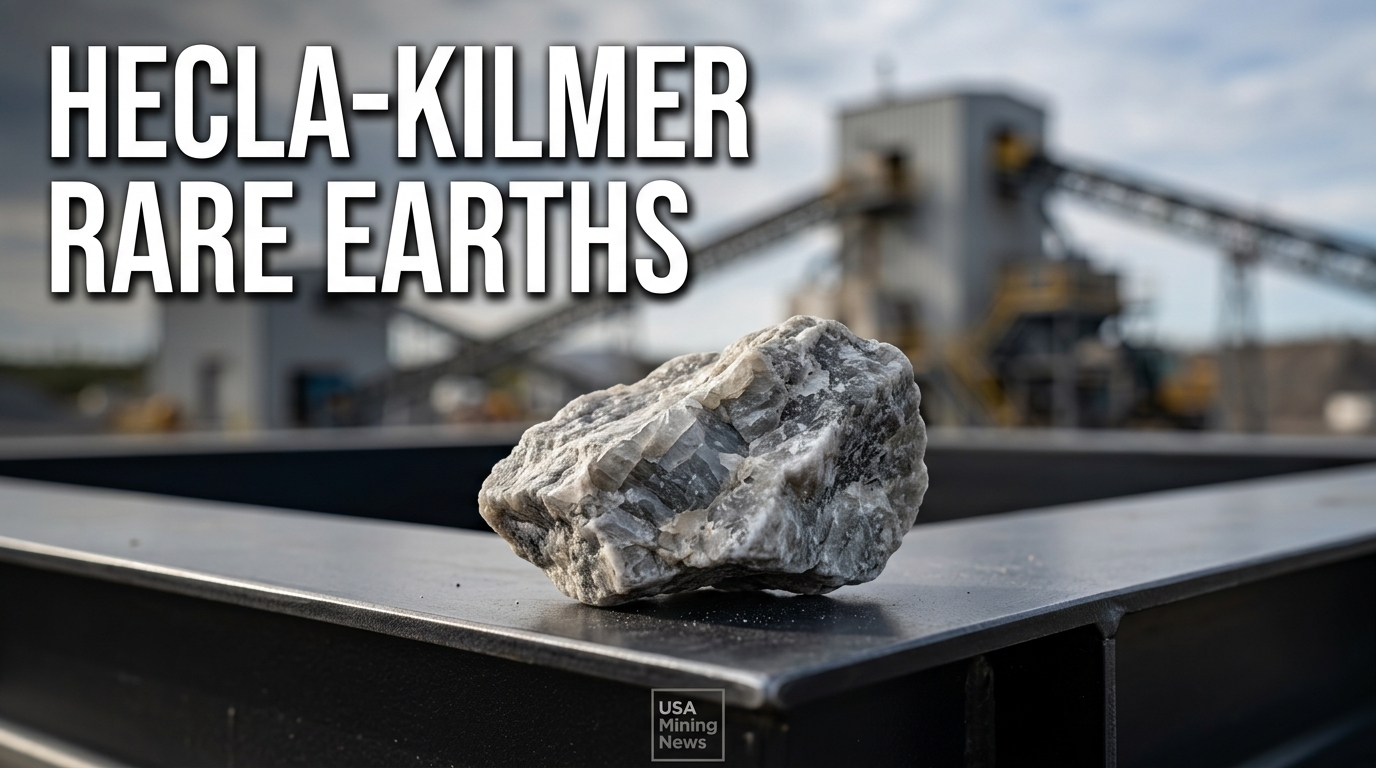
In a significant development for North America’s critical minerals landscape, Neotech Metals has announced the appointment of DRA Global to undertake a National Instrument 43-101 (NI 43-101)-compliant Mineral Resource Estimate (MRE) and a subsequent Preliminary Economic Assessment (PEA) for its Hecla-Kilmer Rare Earth project in Ontario, Canada. This crucial step, announced on October 13, 2026, marks a pivotal transition for Hecla-Kilmer, moving it from an exploration-stage asset toward a fully quantified and economically evaluated project, a trajectory keenly watched by investors and industry professionals focused on securing domestic critical mineral supplies.
The Hecla-Kilmer project holds a unique position within the global rare earth sector as the only apatite-hosted rare earth project currently under development in North America. This distinct geological characteristic presents both specific challenges and significant opportunities, particularly concerning metallurgical processing, a critical bottleneck in the Western world’s rare earth supply chain. The engagement with DRA Global, a renowned multidisciplinary engineering firm with extensive experience in the mining sector, underscores Neotech Metals’ commitment to robust project development and transparency in line with Canadian regulatory standards.
Establishing a Foundation: The NI 43-101 Mineral Resource Estimate
The initial phase of DRA Global’s mandate will focus on delivering a comprehensive NI 43-101-compliant Mineral Resource Estimate. The NI 43-101 standard is the gold standard for public disclosure of scientific and technical information concerning mineral projects in Canada, ensuring that reported resource figures are transparent, reliable, and based on sound geological principles. For mining investors and stakeholders, an NI 43-101 MRE provides a credible and independently verified understanding of a project's mineral endowment, which is fundamental for attracting capital and advancing development.
DRA Global will commence its work with a detailed gap analysis of existing geological, metallurgical, and infrastructure data pertinent to Hecla-Kilmer. This meticulous review is essential to identify any deficiencies or areas requiring further investigation before the MRE can be finalized, thereby ensuring the highest quality of the subsequent PEA. The MRE itself will integrate a rich dataset, combining insights from Neotech’s recent and ongoing exploration efforts. Specifically, it will incorporate data from the company’s 2024 and 2025 drilling campaigns, complemented by a thorough analysis of historical drilling records. This synthesis of current and legacy data will be supported by updated geological and structural models, alongside rigorous quality control checks, all vital for generating a robust and accurate resource model.
The classification of the mineral resources will be performed strictly in accordance with NI 43-101 and the Canadian Institute of Mining, Metallurgy and Petroleum (CIM) Definition Standards. These standards categorize resources into inferred, indicated, and measured categories, reflecting varying levels of geological confidence and data density. A higher classification typically leads to greater project certainty and de-risking for potential investors, making this a critical milestone for Hecla-Kilmer.
Charting the Path Forward: The Preliminary Economic Assessment
Upon the successful completion and acceptance of the NI 43-101 MRE, DRA Global will proceed with the development of a Preliminary Economic Assessment (PEA) for the Hecla-Kilmer project. A PEA represents the first formal economic study of a mineral project and is designed to provide an early-stage assessment of its potential economic viability. While considered preliminary, it offers crucial insights into a project's potential scale, cost structure, and profitability, guiding subsequent engineering and financial decisions.
The scope of the PEA will be comprehensive, encompassing several key components vital for understanding the project’s economic potential. These include:
- A conceptual mine plan, outlining potential mining methods, production rates, and overall operational strategy.
- A detailed processing flowsheet, illustrating the proposed metallurgical processes for extracting rare earths and potential co-products from the apatite ore.
- Estimates for capital expenditures (CAPEX) and operating expenditures (OPEX), providing a preliminary financial framework for the project’s development and ongoing operations.
- A robust economic evaluation of the project, including metrics such as Net Present Value (NPV), Internal Rate of Return (IRR), and payback period, which are essential for investment analysis.
A critical element feeding into the PEA will be the results from the ongoing metallurgical programme. This specialized work is being conducted by Dorfner Anzaplan, an internationally recognized expert in mineral processing and high-tech material solutions. The integration of these metallurgical findings is paramount, especially for a unique apatite-hosted deposit, as efficient and cost-effective processing is often the determinant factor in a rare earth project's success. Furthermore, the assessment will benefit from support provided by the Ontario Critical Minerals Innovation Fund, underscoring provincial commitment to fostering domestic critical mineral development.
Hecla-Kilmer: A Unique Apatite-Hosted Rare Earth System
The Hecla-Kilmer project’s distinction as North America’s sole apatite-hosted rare earth development is a cornerstone of its strategic significance. Unlike more conventional bastnaesite or monazite deposits, apatite-hosted rare earths can offer a different metallurgical pathway. This is a crucial point, particularly given the global challenges in rare earth processing. As Neotech CEO Reagan Glazier aptly stated, “The West’s rare earth challenge is in processing, not discovery, and an apatite host gives us a different metallurgical pathway than conventional deposits.” This statement highlights the potential for the Hecla-Kilmer project to innovate in processing, potentially offering a more environmentally friendly or economically competitive extraction method.
Beyond rare earths, the Hecla-Kilmer project is also actively evaluating the potential for significant co-products. These include magnetite, niobium, gallium, tantalum, and purified phosphoric acid. The presence of multiple potential revenue streams from co-products can dramatically improve the overall economics of a mining project, making it more resilient to commodity price fluctuations and enhancing its attractiveness to investors. For instance, purified phosphoric acid, a key ingredient in fertilizers and various industrial applications, could provide a substantial diversified revenue source, while metals like niobium and tantalum are themselves critical minerals with strategic industrial uses.
Strategic Partnerships and Industry Context
The decision to appoint DRA Global for both the MRE and PEA phases is a deliberate strategic move by Neotech Metals. CEO Reagan Glazier emphasized the benefit of this integrated approach, stating, “Bringing DRA on for both the resource and the PEA means one team carries the project from the drill core to the economics, with no hand-offs in between.” This continuity ensures consistent understanding of the project's geology and metallurgy throughout its initial economic evaluation, minimizing potential inefficiencies and delays that can arise from transferring project knowledge between different consulting groups.
The collaboration with Dorfner Anzaplan on the metallurgical program further strengthens the project’s technical foundation. Their expertise in mineral beneficiation and process development will be critical in unlocking the value of the unique apatite-hosted ore, a key factor in addressing the "processing challenge" identified by Glazier. The broader context for Hecla-Kilmer's development is the urgent need for diversified and secure supply chains for critical minerals in North America and the Western world. Geopolitical tensions and concentration of processing capacity in a few regions have underscored the vulnerability of existing supply lines, making projects like Hecla-Kilmer vital for future industrial and technological independence.
Neotech Metals' Expanding Portfolio and Future Outlook
The advancement of Hecla-Kilmer is part of a broader strategic growth trajectory for Neotech Metals. In April 2026, the company demonstrated its commitment to expanding its North American footprint by signing an agreement to acquire the Torrance Project from Kenorland Minerals, thereby gaining a 100% interest in that site. Such acquisitions indicate a proactive approach to portfolio expansion and critical mineral exploration, positioning Neotech Metals as a growing player in the sector.
The completion of the MRE and PEA will fundamentally transform the Hecla-Kilmer project’s standing. As Glazier articulated, this engagement moves Hecla-Kilmer “from an exploration story to a project with numbers attached.” For the mining industry and investors, this transition from geological potential to quantifiable economics is the crucial step that unlocks further investment, facilitates financing discussions, and paves the way for advanced studies such as pre-feasibility and feasibility assessments. The successful delivery of these reports will provide the detailed economic and technical data necessary to attract development partners and secure the significant capital required to bring a large-scale rare earth mine into production. The mining sector will be closely watching Hecla-Kilmer’s progress as it potentially contributes to solving North America’s critical mineral supply chain conundrum.