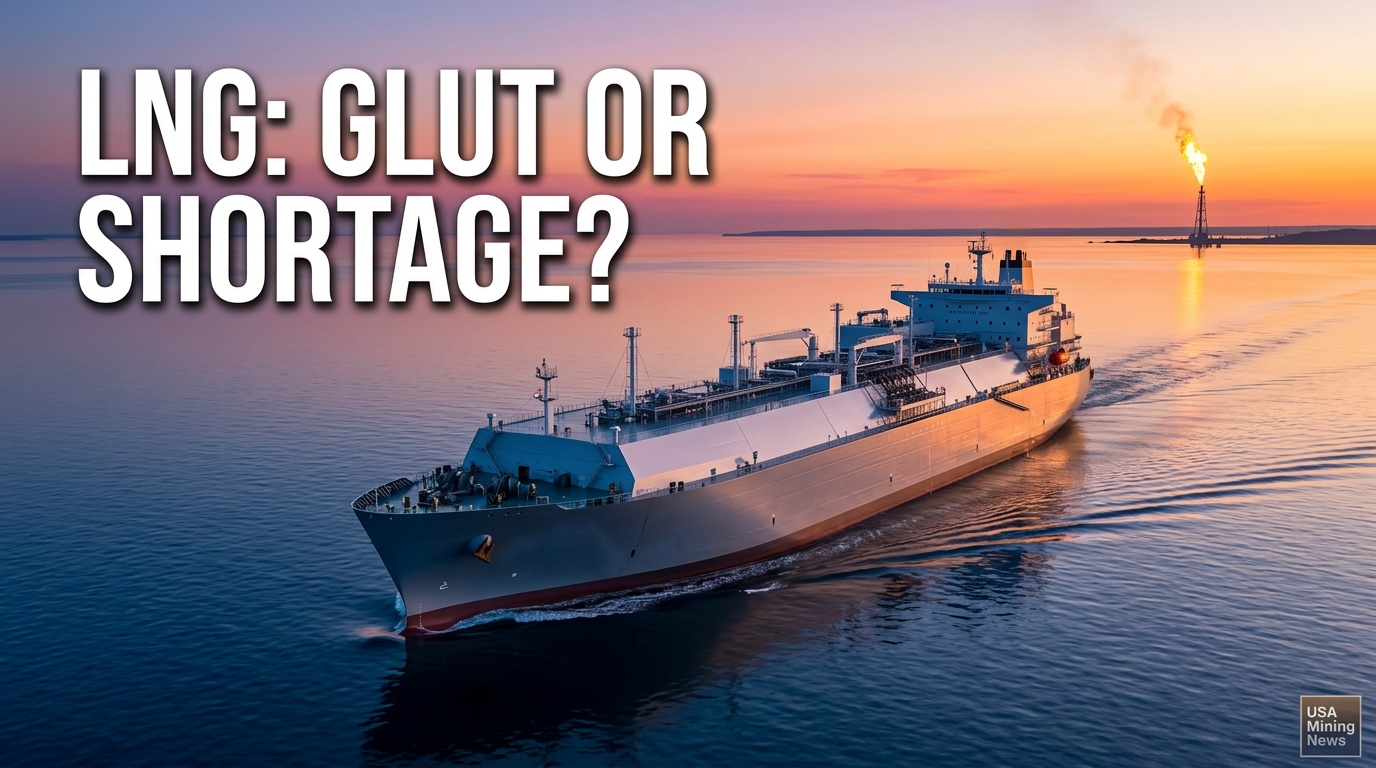
The Looming Question for LNG: Glut or Shortage?
The global energy landscape is in a constant state of flux, driven by geopolitical shifts, technological advancements, and the urgent imperative of decarbonization. Within this dynamic environment, Liquefied Natural Gas (LNG) has emerged as a particularly contentious commodity, championed by some as an essential bridge fuel and viewed by others as a fossil fuel nearing its twilight. This central debate regarding the future supply and demand dynamics of LNG—specifically, whether the sector is bracing for a glut or a critical shortage—was the focal point of a significant discussion on May 27, 2026. The Energy Technology podcast, produced by Offshore Technology and hosted by editor Eve Thomas, brought together leading experts to dissect these complex market forces, offering crucial insights for professionals across the power, oil and gas, and mining sectors.
The episode featured in-depth analysis from James Voyle, a commercial LNG analyst, and Michael Bradshaw, a professor of global energy. Their dialogue underscored the profound uncertainty facing the LNG market, an uncertainty with far-reaching implications for global energy security, investment decisions in large-scale infrastructure, and the underlying demand for raw materials extracted by the mining industry. For stakeholders monitoring the global commodity markets and strategic energy policy, understanding this dichotomy between potential glut and potential shortage is paramount.
LNG's Pivotal Role in Global Energy Transition
For more than a decade, Liquefied Natural Gas has been widely promoted as a cleaner-burning alternative to other fossil fuels like coal and oil. Its proponents often frame it as a crucial "stepping stone on the journey to decarbonisation," offering a lower-carbon option for electricity generation and industrial processes, particularly in regions transitioning away from coal-fired power. This narrative, coupled with robust economic growth in emerging markets and heightened energy security concerns, has fueled forecasts predicting "massive demand growth" for LNG in the coming decades.
The period between 2022 and 2023 served as a stark demonstration of this critical demand, as significant geopolitical events in Europe sent natural gas prices soaring to unprecedented levels. These "high prices from 2022-2023" provided a powerful economic incentive, prompting governments and energy companies worldwide to "rush to expand export capacity." Billions of dollars were committed to new liquefaction facilities, re-gasification terminals, and a vast fleet of LNG carriers. The rationale was clear: secure energy supplies, capitalize on high margins, and meet the perceived burgeoning demand, positioning LNG as a reliable and flexible energy source that could be shipped globally to meet regional deficits.
This expansion spree, however, relies on long-term capital commitments and assumes a sustained global appetite for LNG. The sheer scale of these investments means that once projects are online, they require consistent demand to be economically viable, setting the stage for the intense debate currently in play.
Navigating Supply Chain Volatility and Geopolitical Pressures
While the market has witnessed a surge in planned and under-construction LNG export capacity, the practicalities of delivering this energy to global consumers are fraught with complexities. One of the most significant recent challenges highlighted in the podcast discussion was the "closure of the Strait of Hormuz," an event that has demonstrably "put pressure on existing supply chains." The Strait of Hormuz, a narrow waterway bordering Iran and Oman, is a critical maritime chokepoint through which a substantial portion of the world's seaborne oil and gas, including a significant volume of LNG, passes daily.
The closure, or even severe disruption, of such a vital passage immediately raises questions about the security and reliability of energy deliveries. It forces a re-evaluation of shipping routes, increases transit times and costs, and introduces significant geopolitical risk premiums into commodity pricing. For LNG, specifically, reliable and open shipping lanes are non-negotiable, given its reliance on specialized carriers and just-in-time delivery for many markets. Such disruptions not only impact the immediate flow of gas but also inject uncertainty into long-term supply contracts and dampen investor confidence in future projects, particularly those located in regions that depend on these vulnerable shipping corridors.
This vulnerability underscores a broader industry concern: even with abundant production capacity, physical delivery constraints and geopolitical instabilities can quickly transform a perceived abundance into a severe shortage, demonstrating that supply is not merely a function of production, but also of secure and efficient logistics.
The Renewable Energy Factor: Long-Term Demand Destruction?
Adding another layer of complexity to the glut-or-shortage debate is the rapidly accelerating rise of renewable energy technologies. While LNG has been positioned as a transitional fuel, a powerful counter-narrative suggests that its window of opportunity might be closing faster than anticipated. Experts like Professor Michael Bradshaw often point to the "significant long-term demand destruction, particularly as renewables become ever cheaper."
The economics of renewable energy, specifically solar and wind power, have undergone a dramatic transformation over the past decade. Decreasing manufacturing costs, improved efficiency, and innovative financing models have made utility-scale renewable energy projects competitive, and often cheaper, than new fossil fuel power generation in many parts of the world. As these technologies mature and battery storage solutions improve, their ability to provide consistent, dispatchable power is growing, directly challenging the role of natural gas as a flexible generation source.
Governments and corporations, driven by both climate targets and increasingly compelling economics, are accelerating investments in renewable energy infrastructure. This shift implies that the long-term forecast for LNG demand, particularly in developed economies committed to aggressive decarbonization, may be significantly lower than initial projections suggested. The transition away from fossil fuels, once a distant aspiration, is now gaining substantial momentum, raising the prospect that much of the recently expanded LNG export capacity could eventually face underutilization if this "demand destruction" accelerates beyond current expectations.
Expert Perspectives on Future Dynamics
The central question posed by the Energy Technology podcast episode was precise: "whether and when supply will outstrip demand and how significant the interim shortages might be." Commercial LNG analyst James Voyle and professor of global energy Michael Bradshaw offered nuanced perspectives on this multifaceted issue. Their discussion likely delved into the various scenarios that could unfold in the coming years.
One perspective might emphasize the continuing strong demand from specific Asian markets, where energy needs are growing rapidly and infrastructure for renewables is still developing. Here, LNG could indeed fill a critical gap for years to come, potentially leading to "interim shortages" if supply chain disruptions or unexpected production outages occur. This view often highlights the capital-intensive nature and long lead times for new LNG projects, suggesting that even with aggressive expansion, supply might struggle to keep pace with demand through the late 2020s and early 2030s.
Conversely, the argument for a potential "glut" would likely pivot on the rapid deployment of renewables, combined with energy efficiency measures and potentially slower-than-expected economic growth in key consuming nations. Should new LNG projects come online simultaneously while demand growth decelerates due to these factors, excess supply could drive down prices and reduce profitability for producers. This scenario would be further exacerbated by any significant and sustained recovery of Russian pipeline gas flows to Europe, or other geopolitical shifts that alter regional energy balances.
The experts' dialogue underscored that there is no single, simple answer, but rather a spectrum of possibilities, each influenced by a complex interplay of economic growth, energy policy, technological timelines, and geopolitical stability. This makes the LNG market one of the most intriguing and challenging sectors for analysts and investors to navigate.
Implications for the Mining Sector
For the USA Mining News readership, the trajectory of the LNG market carries profound implications, even if mining operations do not directly produce or consume LNG on a grand scale. The discussion on supply and demand dynamics directly influences global energy prices, which in turn impact the operational costs of mining. Energy is a substantial input for mining, from powering heavy machinery and transportation to running sophisticated processing plants for ore beneficiation. Volatility in natural gas or electricity prices, which are often tied to gas markets, can significantly affect a mine's profitability and capital expenditure decisions.
Furthermore, the broader energy transition story, in which LNG plays a crucial but debated role, creates specific demand patterns for mined materials. If LNG infrastructure continues its expansion, it will drive demand for steel (for pipelines, liquefaction trains, and terminals), copper (for electrical systems), and other industrial minerals and aggregates for construction. Conversely, the acceleration of renewable energy deployment, which threatens long-term LNG demand, creates unprecedented demand for "green metals" such as lithium, nickel, cobalt, and graphite for batteries, as well as significant quantities of copper, silver, and rare earth elements for solar panels, wind turbines, and grid infrastructure. The mining sector is, therefore, at the heart of supplying the raw materials for whichever energy path the world ultimately takes.
Understanding whether the world is heading towards an LNG glut or shortage provides miners with crucial intelligence for strategic planning, informing decisions on which commodities to prioritize for extraction, where to invest in new projects, and how to manage their significant energy expenditures. The podcast’s exploration of "industry-defining topics and cutting-edge technologies transforming operations and productivity" thus extends directly to the evolving requirements and operational strategies of the global mining industry.
Looking Ahead: The Path to Equilibrium
The complexities outlined in the Energy Technology podcast episode reaffirm that the future of LNG is far from settled. The powerful forces driving demand growth—such as economic expansion, energy security concerns, and the need to phase out dirtier fuels—are directly confronting equally powerful forces pushing for demand destruction, primarily the relentless cost reduction and increasing efficacy of renewable energy solutions. Geopolitical events, exemplified by incidents like the closure of the Strait of Hormuz, add an unpredictable layer of volatility to an already intricate equation.
The insights offered by James Voyle and Michael Bradshaw serve as a critical reminder for industry professionals and investors to remain agile and well-informed. The question "Are we on track for LNG glut or shortage?" is not merely academic; it has tangible consequences for the profitability of energy companies, the stability of national economies, and the strategic direction of sectors linked to the energy supply chain, including mining. As market sentiment and technological progress continue to evolve, continuous monitoring and nuanced analysis—such as that provided by the Energy Technology podcast, powered by data and analysis from GlobalData—will be indispensable for navigating the uncertain waters ahead.
The path to equilibrium in the global LNG market remains elusive, characterized by a delicate balance between ambitious growth projections and transformative technological shifts. For the mining industry, in particular, these dynamics underscore the importance of diversified portfolios, a keen eye on energy commodities, and a proactive approach to supplying the materials essential for whatever energy future unfolds.