Mining's Nuclear Reality Check: SMRs Remain Off Miners' Immediate Shopping Lists
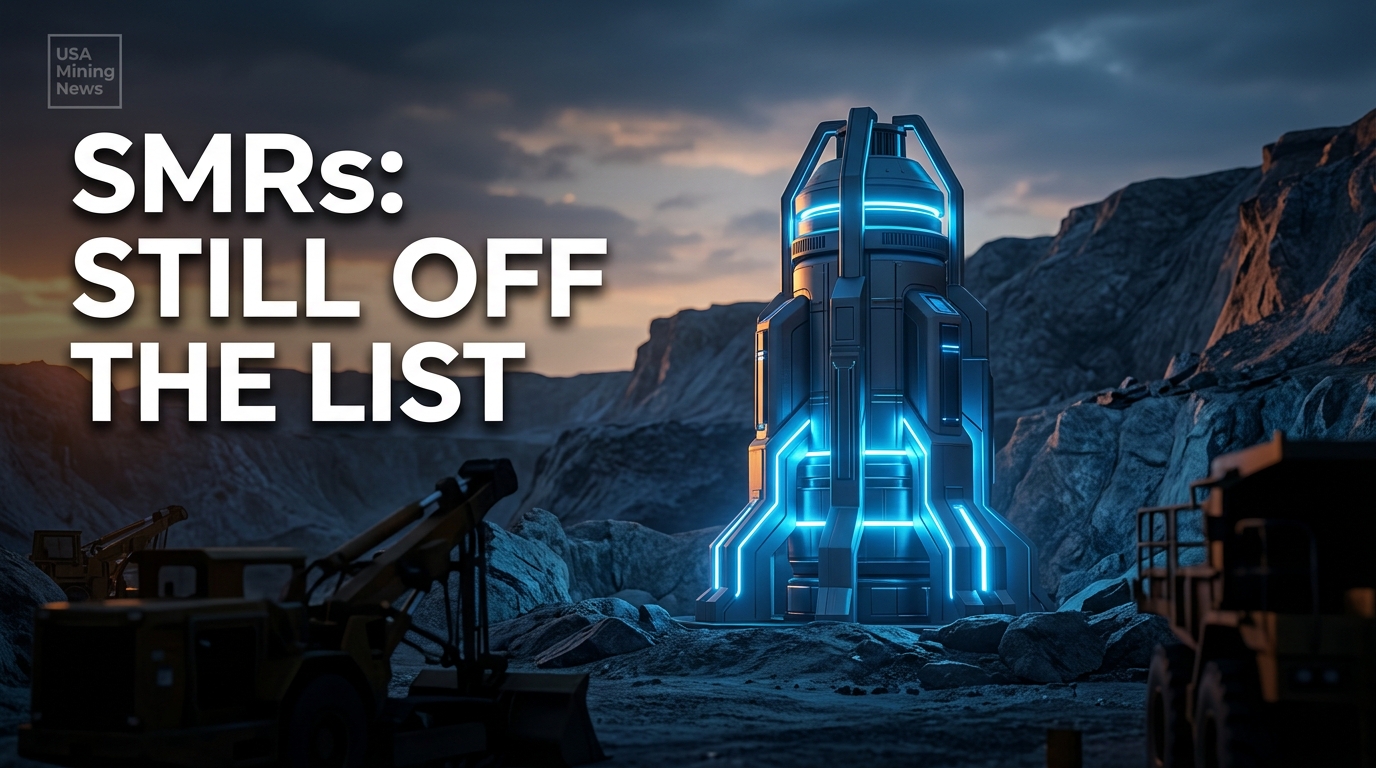
JUNE 18, 2026 – In a global mining landscape increasingly focused on decarbonization and reliable power supply for remote operations, small modular reactors (SMRs) would, in theory, appear purpose-built for the industry's complex needs. These advanced nuclear technologies promise firm, low-carbon electricity and heating, devoid of the intermittency associated with wind and solar, and with a significantly smaller physical footprint. Yet, a recent industry survey reveals a notable hesitation among mining companies to embrace nuclear power, including SMRs and advanced modular reactors (AMRs), for their direct operational requirements.
The Disconnect: Theory vs. Reality
The appeal of nuclear power for mining is compelling. Off-grid operations, prevalent in regions like Canada's backcountry, the Australian outback, and parts of Latin America, heavily depend on diesel generation. This reliance incurs high costs for fuel, transportation, and backup power, while exposing operations to strategic risks from weather and logistical disruptions. Furthermore, the global drive towards electrification in mining – from underground fleets to processing plants – is projected to significantly increase power loads. Downstream customers, particularly in the battery metals and critical minerals sectors, are also exerting pressure for cleaner, traceable supply chains, demanding demonstrable near-term emissions reductions.
Nuclear, particularly through SMRs, offers a robust solution to these challenges. It provides a constant, dispatchable power source, crucial for high-throughput concentrators, desalination plants, and other energy-intensive processes common in large-scale mining. The Canadian Nuclear Association has long advocated for SMRs as a means to produce clean electricity for heavy industries, including mining, especially for remote northern operations aiming to reduce diesel consumption. Beyond electricity, these reactors could also provide process heat for extraction industries and support hydrogen production, complementing intermittent renewable sources.
However, despite these clear theoretical advantages, a recent report titled Metals And Mining Megatrends To 2050: Navigating A New Era Of Technology, Geopolitics And Green Transformation by BMI, a leading research firm, suggests that mining companies are not rushing to incorporate nuclear solutions into their energy strategies. In a comprehensive survey of low-carbon energy technologies under consideration or investment by miners, nuclear technologies ranked last, with adoption and consideration rates falling below 10%.
Preferred Alternatives: Familiarity and Financeability
The BMI survey highlights a clear preference for more established and commercially mature low-carbon energy solutions. Traditional renewables, encompassing wind, solar, and geothermal power, are under consideration or investment by just over 70% of surveyed miners. Energy storage technologies, such as battery systems and other long-duration storage solutions, are being considered by nearly 65% of companies. Clean gas and synthetic fuels are on the radar for approximately half of the respondents, followed by power management and grid upgrades, hydropower, and carbon capture technologies.
The disparity underscores a significant practical barrier for mine operators: the commercial framework. While solar projects, wind contracts, battery systems, or grid upgrades operate within relatively familiar commercial and regulatory structures, even a modest nuclear reactor introduces a host of complexities. These include rigorous nuclear licensing procedures, prolonged approval timelines, stringent site security requirements, complex fuel supply logistics, meticulous waste handling protocols, comprehensive emergency planning, extensive community consultation, and significant long-term liability commitments.
For a mining company under intense pressure from end-users—such as automakers, battery manufacturers, and technology customers—to demonstrate tangible, near-term emissions reductions, the extended timelines and multifaceted challenges associated with SMR deployment are difficult to justify. Traditional renewables, while not perfect for every off-grid power scenario, offer a modular, financeable, and familiar path to decarbonization that can be implemented with greater speed and predictability.
Scale and Scope: A Mismatch for Many
Another practical consideration influencing miners' hesitance is the typical scale of advanced SMRs currently under development. Many of the most advanced SMR designs, such as the GE Vernova Hitachi BWRX-300, are in the 300 MW-class. While this capacity is considerably smaller than traditional gigawatt-scale nuclear plants, it remains significantly larger than the power needs of most standalone mines, particularly smaller off-grid operations with limited processing loads and, critically, shorter mine lives.
Investing in an oversized power source for an operation with a finite lifespan presents a substantial economic challenge. However, it is important to note that a 300 MW-class SMR is not inherently too large for the industry's biggest complexes. In northern Chile, for instance, large copper mines integrating high-throughput concentrators, energy-intensive desalination plants, high-altitude water pumping, extensive conveyor systems, port infrastructure, and future fleet electrification can require power in the hundreds of megawatts. Teck's Quebrada Blanca Phase 2, for example, has renewable contracts that imply total operating power needs reaching a few hundred megawatts. Similarly, BHP's Escondida and Spence operations collectively require approximately 6 TWh/year, which translates to an average load of about 685 MW across the two sites. For complexes of this magnitude, an SMR could theoretically align with power demand.
Closer to typical mine-site scale are microreactors, generally ranging from 1 to 20 MW. These units better match the needs of many individual mines but are currently in the very early stages of commercialization. The emergence of factory-built units, however, could accelerate their pace of deployment and eventual acceptance within the industry.
Broader Industry Engagement and the Future Outlook
While miners may not be directly acquiring SMRs yet, the broader energy sector and uranium producers are actively positioning themselves for the burgeoning SMR market. As far back as 2021, Cameco, a major uranium producer, signed agreements to evaluate uranium fuel supply chains for SMRs, including technologies like the GE Vernova Hitachi BWRX-300 and X-energy's Xe-100. Cameco's strategic aim is to become a primary fuel supplier for the emerging SMR and advanced reactor market, understanding that widespread SMR deployment will significantly boost uranium demand.
Beyond fuel suppliers, utility companies and provincial governments are spearheading large-scale SMR initiatives that could indirectly benefit mining operations. Ontario, Canada, serves as a prime example, with construction underway on what will be the first small modular reactor in the G7 at the Darlington site. Ontario Power Generation (OPG) is building the first of four planned 300 MW units there, marking a significant milestone for the SMR industry. Ontario's broader energy plan, which allocates C$20.9 billion for OPG's SMR commitments, anticipates a sharp rise in electricity demand by 2050, potentially including 10,000 MW of additional nuclear capacity and transmission expansion to support industrial growth and key mining districts such as the Ring of Fire. This nuclear expansion could undeniably boost uranium mining within the province and eventually supply mining regions through an enhanced grid, even if miners aren't directly purchasing reactors.
Saskatchewan is pursuing a similar trajectory. Cameco, SaskPower, and Westinghouse are jointly evaluating reactor technologies, including the AP1000 and AP300 SMR, for the province’s long-term electricity planning. SaskPower is slated to make a final investment decision in 2029 regarding its first SMR facility, with an intention to utilize Saskatchewan-produced uranium for any reactors built in the province. Again, this vital work around nuclear reactor technology for clean electricity is highly relevant to uranium miners, but the primary customer for the SMRs remains the provincial power system, not individual mining companies.
In the United States, this pattern is also becoming evident, with utility companies like Louisville Gas and Electric exploring similar avenues.
Conclusion: A Long-Term Vision
The current hesitation by mining companies to directly invest in SMRs reflects a pragmatic assessment of immediate commercial complexities and the availability of more readily deployable, albeit sometimes less comprehensive, low-carbon alternatives. While the theoretical 'fit' of SMRs for remote, high-power-demand mining operations remains strong, the practical challenges of nuclear licensing, finance, and long-term liability are formidable.
However, the unfolding narrative suggests a more nuanced integration of nuclear power into the mining ecosystem. As microreactors advance towards commercialization and factory-built units become more viable, direct mine-site deployment could become more attractive for smaller, specialized operations. More broadly, the significant investments and strategic plans by utility companies and governments in regions like Ontario and Saskatchewan are laying the groundwork for a future where mining districts benefit from a robust, decarbonized grid powered by SMRs. While SMRs may not be on miners' immediate shopping lists today, their long-term potential as a foundational component of clean energy infrastructure for the mining sector remains an unavoidable reality to consider for a sustainable future.