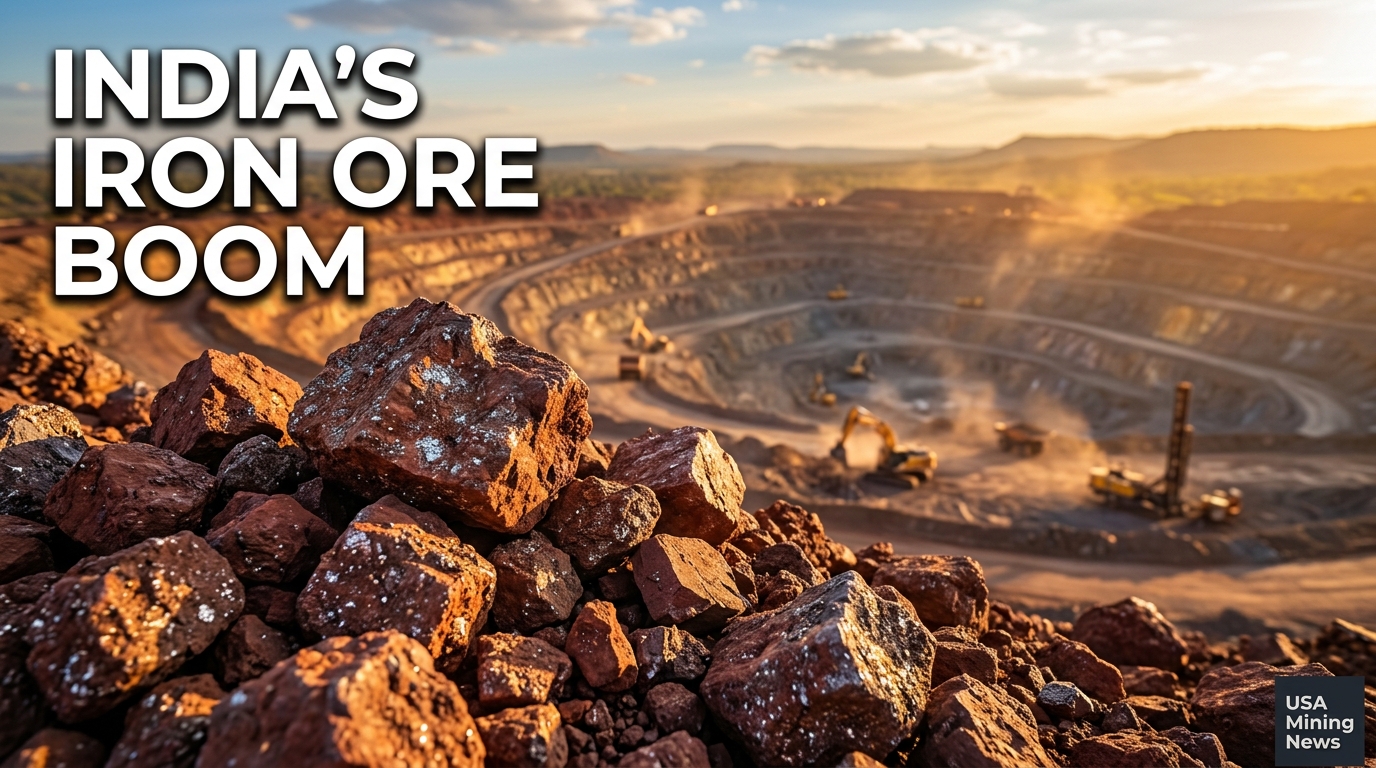
In a dynamic shift for the international metals market, India is set to reinforce its position as a global powerhouse in iron ore production. Projections indicate a substantial increase in output for 2026, anticipated to hit 318.8 million tonnes (mt), marking a robust 3.6% year-on-year (YoY) increase. This immediate growth trajectory, underpinned by strategic expansions and a supportive governmental framework, comes amidst a broader forecast that suggests a slight, negative compound annual growth rate (CAGR) of 0.1% over the 2026–2035 period, culminating in an output of 316.1mt by 2035.
The trajectory of India’s iron ore sector is of paramount importance to the global steel industry, given the nation’s critical role as a primary supplier. As the third-largest iron ore producer worldwide, India's output accounted for a significant 11.8% of the global total in 2025, surpassing China for the second consecutive year. This sustained performance underscores India's strategic relevance in the supply chain of a fundamental industrial commodity.
India's Ascending Role in Global Iron Ore Markets
The year 2025 served as a testament to India’s growing prowess in iron ore extraction, with estimated production reaching 307.7 million tonnes, reflecting a substantial 6.3% increase compared to the previous year. This impressive growth was not accidental but rather the culmination of consistent operational efficiency and strategic mining expansions undertaken by major players across key assets. Mines such as the Bailadila iron ore complex (comprising the Bacheli and Kirandul operations), Nuagaon, Noamundi, and Katamati have been central to this expansion a strategic endeavor by companies to capitalize on surging demand and solidify their market positions.
The Indian mining landscape is characterized by a diverse range of operational scales. While the majority of mines maintain an annual production capacity below 10mt, a notable segment operates within the 10mt to 30mt range. A more exclusive group consists of a limited number of "mega-mines" that consistently produce more than 30 million tonnes per annum, effectively anchoring the nation's overall output figures. This tiered structure reflects both the fragmented nature of some holdings and the strategic consolidation and expansion efforts by larger entities.
Official data for the first eleven months of 2025 further illustrates this growth, with India producing 266.6mt of iron ore, representing a 3.9% YoY increase. This incremental rise is largely attributed to the concerted efforts and heightened activities of domestic giants, notably the National Mineral Development Corporation (NMDC) and Steel Authority of India Ltd (SAIL), both of which play pivotal roles in meeting the nation’s considerable iron ore requirements.
Projected Growth in 2026: Underpinnings and Key Assets
Looking specifically at the immediate future, India’s iron ore production is confidently projected to climb to 318.8mt in 2026. This 3.6% YoY growth will be robustly supported by continued strong production volumes and ongoing capacity enhancements at several critical producing mines. These include the Guali Iron Ore Mine, Nuagaon, Naomundi, and the aforementioned Bailadila Iron Ore Mines (Bacheli and Kirandul Complex). The sustained investment in these foundational assets underscores a clear industry commitment to maintaining and increasing supply.
The strategic importance of these mines extends beyond their individual outputs; they represent the backbone of India's domestic steel industry. As the nation continues its rapid infrastructure development and industrialization, the demand for steel—and consequently, iron ore—is expected to remain consistently high. The focus on expanding proven, high-yield assets ensures a reliable supply chain for critical domestic industries, minimizing reliance on potentially volatile international markets.
Regulatory Environment and Corporate Investment Fueling Expansion
A significant catalyst in India’s iron ore sector's current expansion phase has been the proactive stance of the Indian Ministry of Mines. Recent amendments to the Mines and Minerals (Development and Regulation (MMDR) Act have been instrumental in crafting a more attractive and streamlined regulatory environment for mining operations across the country. These legislative reforms have effectively incentivized both domestic and international investment, accelerating project timelines and facilitating increased production capacities.
The enhanced regulatory framework has directly encouraged leading mining companies to commit substantial capital to expansion strategies. Industry stalwarts such as NMDC, SAIL, and Tata Steel are at the forefront of this investment drive, channeling resources into both capacity augmentation and the optimization of existing operations. Their strategic objectives are clear: to capitalize on the burgeoning demand for iron ore, ensure long-term operational viability, and enhance competitiveness in the global market.
Further bolstering this framework, the 2025 MMDR Amendment Act demonstrates a continued governmental commitment to the sector's growth. This amendment specifically strengthens the mining regulatory landscape by broadening the scope and financial capabilities of the National Mineral Exploration and Development Trust. This expansion is designed to enable greater financing for exploration and development initiatives, thereby fostering structured capacity expansion across the entire mineral sector. Such policy support is critical for long-term resource security and sustainable growth in a capital-intensive industry like mining.
Long-Term Outlook: Balancing Growth with Anticipated Declines
While the immediate forecast for India’s iron ore production is positive, a nuanced understanding of the long-term outlook reveals challenges that demand strategic foresight. Over the forecast period from 2026 to 2035, India’s iron ore output is anticipated to experience a marginal decline, indicated by a negative compound annual growth rate (CAGR) of 0.1%. This trend suggests a slight decrease in annual output, with production projected to reach 316.1mt by 2035.
The primary driver behind this anticipated decline is the planned closure of 32 mines over the forecast period. These mines collectively contributed a significant 67.4mt to India’s total iron ore production in 2024. However, by 2035, their collective output is expected to dwindle dramatically to only 0.3mt as they cease operations. This substantial reduction from existing assets highlights a critical juncture for the industry.
Among the key mines slated for closure are:
- Roida II (scheduled for closure in 2026)
- Mahamaya (scheduled for closure in 2030)
- Guali Iron Ore Mines (scheduled for closure in 2031)
- Meghahatuburu (scheduled for closure in 2032)
- Barsua and Balda Block (scheduled for closure in 2033)
The closure of these established mines presents a complex challenge. While some closures may be due to resource depletion, environmental considerations, or economic factors, their cumulative impact necessitates a proactive planning approach from both governmental bodies and corporate entities. The industry will need to expedite the development of new greenfield projects or significantly expand the capacities of existing, longer-life mines to offset this anticipated shortfall and maintain its growth trajectory. The Guali Iron Ore Mine's inclusion in both short-term growth drivers and long-term closure plans underscores the dynamic nature of mine life cycles and the continuous requirement for pipeline development.
Strategic Implications for the Global Iron Ore Market
India’s iron ore sector, characterized by immediate growth tempered by long-term structural shifts, carries significant implications for the global mining industry and commodity markets. As the third-largest producer, any notable change in India's output directly influences global supply-demand dynamics and iron ore prices. For international investors and mining companies, understanding this evolving landscape is crucial for strategic planning.
The short-term bullish outlook for 2026 reflects a robust domestic demand and effective policy support. This period offers opportunities for technology providers, equipment manufacturers, and service companies to engage with Indian miners focused on efficiency and capacity expansion. However, the anticipated closures over the next decade introduce an element of uncertainty. It signals a potential need for increased exploration activities and the development of new, economically viable iron ore deposits. Companies with expertise in advanced exploration techniques, sustainable mining practices, and cost-effective operational strategies may find fertile ground in India as the sector seeks to replace lost production capacity.
Moreover, the emphasis on strengthening the National Mineral Exploration and Development Trust through the 2025 MMDR Amendment Act signifies a strategic intent to address future resource security proactively. This move could pave the way for major exploration programs, potentially uncovering new reserves that could counterbalance the impact of mine closures. The ability of India to manage this transition—from relying on existing mature assets to bringing new ones online—will define its long-term stability as a major iron ore supplier.
Conclusion
India’s iron ore industry stands at a pivotal juncture. The strong production growth projected for 2026, fueled by ongoing mine expansions and a supportive regulatory environment, underscores its critical role in the global supply chain. This immediate surge is a testament to the strategic investments by key players like NMDC, SAIL, and Tata Steel, guided by recent progressive amendments to the MMDR Act. However, the long-term forecast, marked by a slight decline due to significant mine closures from 2026 to 2035, highlights the evolving challenges and opportunities within the sector. Navigating this complex future will require continued investment in exploration, adoption of advanced mining technologies, and robust policy frameworks to ensure that India remains a steadfast and growing contributor to the world’s iron ore supply for decades to come. For mining professionals and investors, India represents a market with clear short-term opportunities and intriguing long-term strategic considerations.