CARACAS, VENEZUELA – In a strategic move poised to reshape regional energy dynamics and geopolitical alliances, U.S. Secretary of Energy Chris Wright landed in Caracas earlier this morning, February 11, 2026. This visit signifies a critical advancement of an initiative dubbed "President Trump’s historic U.S.-Venezuela Energy Deal," an accord framed with the ambitious goal of "restoring prosperity, safety, and security for Venezuela, the United States, and the entire Western Hemisphere."
The arrival of a high-ranking U.S. official in Caracas for such direct engagement underscores a significant diplomatic and economic shift. The U.S. Department of Energy, through Press Secretary Ben Dietderich, emphasized the broad scope of Secretary Wright’s mission. His itinerary is packed with high-level engagements designed to solidify the foundations of this burgeoning energy partnership, promising to "unleash peace and prosperity" across the region.
A High-Stakes Diplomatic Mission in Caracas
Secretary Wright’s visit to the Venezuelan capital is more than a mere diplomatic courtesy; it is a working mission focused on tangible progress for the U.S.-Venezuela Energy Deal. The official statement from Press Secretary Ben Dietderich highlighted the specific nature of these engagements, indicating a concerted effort to connect with key stakeholders across the Venezuelan spectrum. These meetings are crucial for building consensus, understanding operational realities, and charting a path forward for the multi-faceted energy agreement.
Key planned interactions include:
- Interim Venezuelan Leadership: Secretary Wright is slated to engage directly with interim Venezuelan leadership, most notably interim President Delcy Rodriguez. Such high-level meetings are essential for securing governmental backing, addressing regulatory frameworks, and ensuring a cooperative environment for the energy deal's implementation. The involvement of the interim presidency signals a commitment from Venezuela's transitional government to actively participate in revitalizing its energy sector and broader economy.
- Business Leaders Across All Major Sectors: Beyond governmental figures, Secretary Wright will also meet with prominent business leaders from various Venezuelan sectors. This engagement is vital for gauging the local private sector's capacity, identifying potential partners, and understanding the practical challenges and opportunities for investment and collaboration. The success of any large-scale energy initiative relies heavily on robust private sector participation, both locally and internationally.
- The People of Venezuela: Acknowledging the broader societal impact of such a deal, the Secretary will also engage with the Venezuelan populace. This element of the visit underscores the humanitarian and social dimensions of the deal, reinforcing the message that the initiative aims to benefit the ordinary citizens of Venezuela by fostering economic stability and improving living conditions.
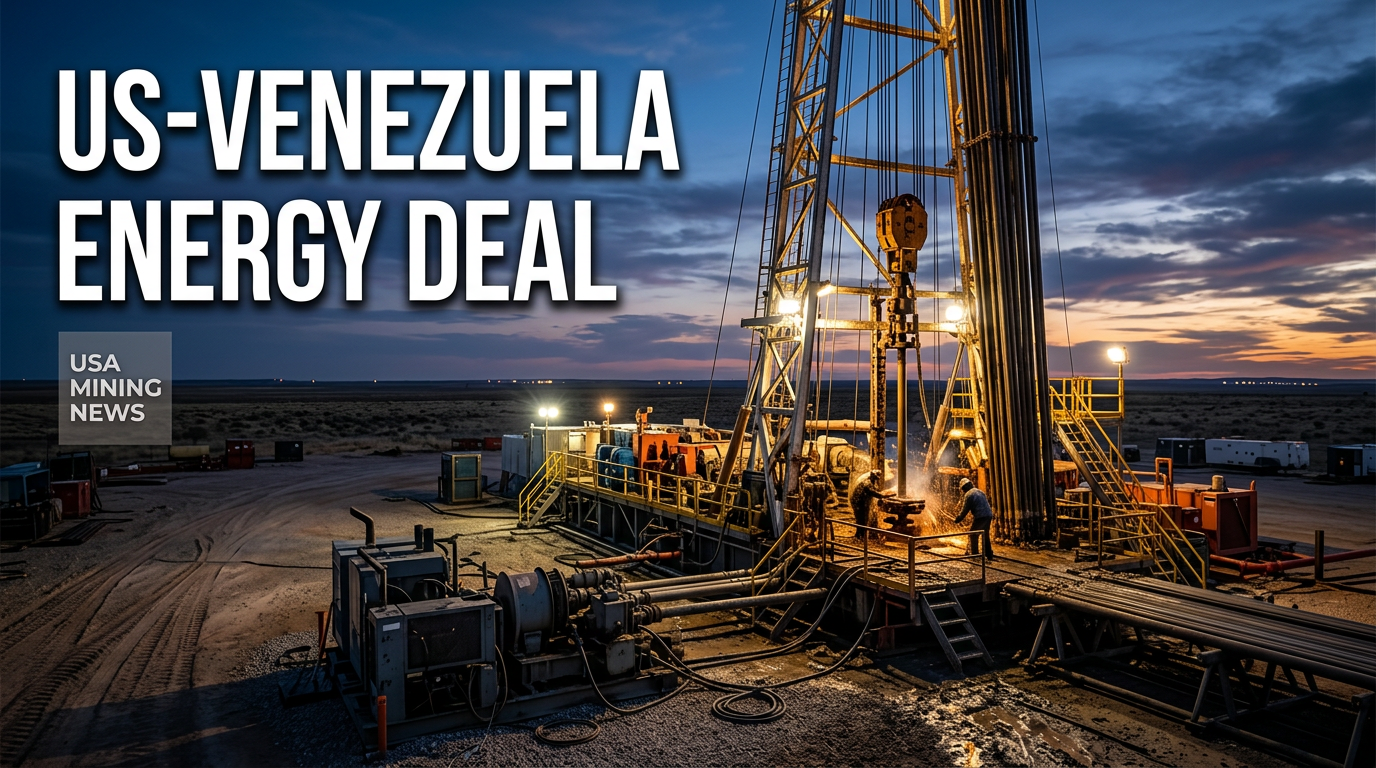
- On-site Visits to Oil Fields: A cornerstone of the trip involves Secretary Wright visiting "some of the nation's oil fields." This firsthand assessment is particularly significant for its operational implications. It will allow the U.S. Energy Secretary to evaluate the current state of Venezuela's critical oil infrastructure, assess production capabilities, and identify areas requiring investment, technological transfer, or operational support to optimize output.
These comprehensive engagements reflect a meticulous approach to the "historic U.S.-Venezuela Energy Deal," moving beyond high-level agreements to focus on practical implementation and stakeholder collaboration.
The Geopolitical & Economic Imperative: Why Venezuela Matters
The "historic U.S.-Venezuela Energy Deal" and Secretary Wright’s visit acquire immense significance when viewed against the backdrop of Venezuela's historical role in global energy markets and the broader geopolitical landscape of the Western Hemisphere. Venezuela possesses the world's largest proven crude oil reserves, with estimates placing them significantly higher than those of Saudi Arabia. For decades, it was a pillar of global oil supply, particularly to the United States. However, political instability, economic mismanagement, and international sanctions in prior periods have severely hampered its ability to extract and export this invaluable resource, leading to a dramatic decline in production from historical peaks of over 3 million barrels per day (bpd) to significantly lower levels.
The stated mission to "restore prosperity, safety, and security" directly addresses these past challenges. For Venezuela, a revitalized energy sector under a stable framework offers a pathway to economic recovery, generating much-needed revenue for public services, infrastructure, and job creation. For the United States, an accessible and stable source of crude oil from a Western Hemisphere ally could enhance energy security, diversify global supply chains away from more volatile regions, and potentially mitigate inflationary pressures on energy prices. Furthermore, a secure and prosperous Venezuela contributes to the overall stability of the Western Hemisphere, reducing migratory pressures and fostering regional economic integration.
This initiative therefore transcends a simple commercial transaction; it is a strategic reassessment of inter-American relations, aimed at leveraging Venezuela's immense natural wealth for mutual benefit and regional stability. The direct involvement of the U.S. Secretary of Energy signals a long-term commitment from the Trump administration to integrate Venezuela more fully into a robust and secure energy framework.
Venezuela's Energy Landscape: Focus on Oil Fields
Secretary Wright's planned visits to "some of the nation's oil fields" are arguably the most tangible operational aspect of his mission. Venezuela's oil reserves are predominantly heavy crude, which requires specialized infrastructure for extraction, upgrading, and refining. The Orinoco Belt, a vast area in eastern Venezuela, holds much of these ultra-heavy crude deposits, representing trillions of barrels of oil in place. Developing these resources requires substantial capital investment, advanced technology, and skilled labor.
Over recent years, underinvestment, maintenance issues, and the departure of skilled personnel have led to significant deterioration of infrastructure at several key oil fields and processing facilities. Refineries have operated below capacity, and pipelines have suffered from neglect. A visit by the U.S. Energy Secretary would logically involve an assessment of these conditions—the integrity of wellheads, the state of pumping stations, the functionality of processing plants, and logistical bottlenecks for transport. This on-the-ground evaluation is critical for understanding the baseline from which the "historic deal" must operate and for identifying the scale of investment and technical assistance required to bring production back to significant levels.
The potential for a resurgence in Venezuelan oil production capacity has significant implications for global energy markets. Even a gradual increase in output could add considerable supply to the international market, potentially influencing crude oil prices and the availability of heavy crude suitable for specialized refineries globally. For the U.S., proximity to Venezuela offers logistical advantages, reducing shipping costs and transit times compared to Middle Eastern or African sources, thereby enhancing the resilience of its energy supply chain.
Implications for the Mining Sector
While the immediate focus of Secretary Wright's visit is on oil and gas, the "historic U.S.-Venezuela Energy Deal" carries profound implications for the global mining industry, which USA Mining News readers recognize as intricately linked to the broader commodity and geopolitical landscape.
- **Energy as a Critical Input:** Mining operations are inherently energy-intensive. From powering massive haul trucks and excavators to operating processing plants, reliable and cost-effective energy is paramount. A stable and potentially increased supply of oil from Venezuela could help stabilize or even reduce global energy prices, thereby lowering operational expenditures for mining companies worldwide. This impact would be felt across the entire spectrum of minerals, from copper and iron ore to lithium and rare earths.
- **Regional Stability and Investment Climate:** The deal's declared objective of "unleashing peace and prosperity" and "restoring safety and security" in Venezuela and the Western Hemisphere is critical for attracting and sustaining long-term investment in resource-rich nations. Political and economic stability reduces perceived country risk, making it more attractive for mining companies to commit the significant capital required for exploration, development, and operation of complex mining projects. This could open doors for renewed mining interest not only in Venezuela (which also possesses significant gold, diamonds, and bauxite resources, though the current deal focuses on oil) but also in neighboring countries benefiting from a more stable regional environment.
- **Economic Growth and Demand for Minerals:** A prosperous Venezuela, driven by a revitalized oil sector, would embark on extensive infrastructure development, industrial growth, and urban renewal. This directly translates into increased demand for a wide array of industrial minerals and metals – steel for construction, copper for electrical grids, aluminum for transportation, and cement for various projects. Such a regional economic boom could stimulate demand for globally traded commodities, benefiting mining companies that produce these essential materials.
- **Supply Chain Resilience:** Geopolitical shifts can reconfigure global supply chains. A stable, productive Venezuela could contribute to enhanced energy supply chain resilience for the Americas, potentially easing logistical bottlenecks and offering more diversified procurement options for energy-related inputs crucial to mining operations.
The ramifications for the mining sector are therefore multifaceted, extending far beyond the direct commodity impacted. It speaks to the intricate interconnectedness of global resource markets and the profound influence of geopolitical stability on investment decisions and operational economics within the extractive industries.
Looking Ahead: Pathway to Peace and Prosperity
Secretary Wright’s visit to Caracas on February 11, 2026, is an undeniable milestone in the unfolding narrative of the "historic U.S.-Venezuela Energy Deal." It solidifies an intent from the Trump administration to actively engage in rebuilding Venezuela's core economic engine and, in doing so, to reconfigure significant geopolitical and energy market dynamics.
While the press release offers a high-level overview, the practical outcomes of such a deal would likely involve:
- Investment Frameworks: Development of clear, stable, and attractive legal and fiscal frameworks to encourage significant foreign direct investment into Venezuela's energy sector.
- Technical Assistance and Technology Transfer: U.S. expertise and technology would be essential for modernizing existing infrastructure, enhancing extraction efficiency, and meeting environmental standards in Venezuela's oil fields.
- Capacity Building: Programs for training and developing a skilled Venezuelan workforce capable of operating and maintaining advanced energy infrastructure.
- Security Guarantees: Assurances for the safety of personnel and assets, critical for international companies operating in what has been a volatile region.
The vision articulated by the U.S. Department of Energy – "to restore prosperity, safety, and security" – is ambitious but recognizes Venezuela's immense potential. Secretary Wright’s engagements in Caracas signal a concerted effort not just to extract resources, but to foster an environment conducive to long-term economic recovery and regional stability. For the global mining industry, a successful implementation of this deal could mean not only more stable energy markets but also a rekindling of investment interest in the wider Latin American resource sector, driven by revitalized economic activity and a more predictable geopolitical landscape.
As the "historic U.S.-Venezuela Energy Deal" progresses, the mining sector will be watching closely for developments that promise to reshape commodity markets and investment strategies for years to come.