Project Ramp-Ups and Expansions Set to Bolster Global Lead Output in 2026 Amidst Dynamic Market Shifts
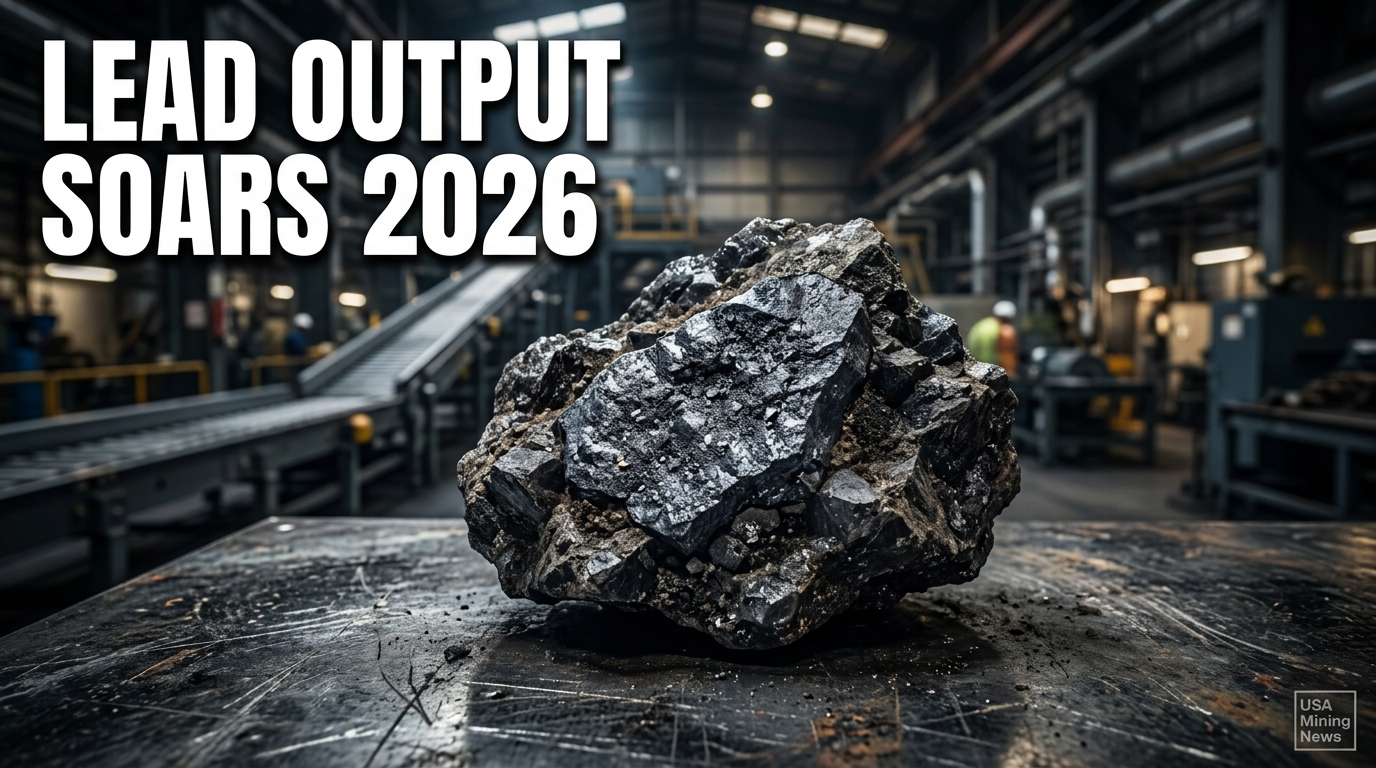
The global lead mining sector is poised for a significant uplift in 2026, with an anticipated production increase of 2.2% to approximately 4.68 million tonnes (mt). This projected growth, as detailed in a recent analysis by GlobalData on April 24, 2026, signals a more robust expansion following a period of modest gains and notable declines across key mining regions. However, this near-term optimism is tempered by a broader, long-term forecast indicating only marginal growth through 2035, underscoring the continuous challenges of resource depletion and the capital-intensive nature of new project development.
A Nuanced 2025: Modest Gains and Notable Declines
The year 2025 saw global lead production edge up by a marginal 0.7% to an estimated 4.575 mt. This modest increase was largely attributed to a concentrated effort from a handful of nations that collectively accounted for a significant 63.7% of the total output. These pivotal players included China, Russia, Peru, India, South Africa, Turkey, and Ireland.
- China emerged as a primary driver of this growth, propelled by the commencement of the Huoshaoyun lead-zinc mine in July 2025 and consistent, stable production from its long-standing Jiama mine. The addition of new capacity, particularly a significant lead-zinc operation, highlights China’s continued strategic importance in base metal supply chains.
- Russia’s output improved considerably, primarily due to the ongoing ramp-up phase of the Ozernoe mine, which initiated operations in September 2024. The successful scaling of new projects like Ozernoe is critical for national production targets and global supply.
- Peru, a historically significant mining jurisdiction, benefited from higher ore grades and enhanced operational efficiency at prominent mines such as Antamina and the Cerro de Pasco Sulphide Stockpiles. These improvements showcase the value of optimization and modernization efforts in mature mining assets.
- In India, growth was underpinned by strategic expansions at the Zawar and Sindesar Khurd mines. Incremental capacity additions through expansion projects remain a cost-effective way to boost commodity output compared to greenfield developments.
- South Africa also contributed positively, with improved output from the Black Mountain Mine, despite grappling with a fatal incident and a shaft breakdown in April 2024. This resilience in the face of operational adversity underscores the robust nature of the asset.
- Ireland saw its production rise following the critical restart of the Tara Mine in October 2024, after more than a year under care and maintenance. The re-commissioning of a major facility like Tara, one of Europe's largest lead-zinc mines, often signals renewed market confidence or improved economic viability.
Despite these collective uptrends, the overall global growth in 2025 was significantly counteracted by production declines in other key regions. Australia, the United States, and Kazakhstan experienced setbacks due to various factors:
- In Australia, lower ore grades at the Cannington, Peak, and Rosebery mines weighed heavily on output. Further constraints arose from the December 2025 closure of the Lady Loretta Mine, marking the end of production from a significant asset.
- Kazakhstan faced similar challenges with declining grades at its Zhairemsky Mine.
- The United States saw production constrained by diminishing grades at the Red Dog mine, a prominent zinc and lead producer, ahead of its anticipated closure.
These declines collectively underscore the inherent challenge in mining: the constant battle against ore body depletion and the necessity of finding and developing new resources to merely maintain, let alone increase, global supply.
2026: A More Robust Growth Trajectory
Looking ahead, 2026 is projected to witness a more substantial increase in global lead production, reaching 4.68 mt – a 2.2% rise from 2025 levels. This anticipated growth will be propelled by planned increases across a diverse set of countries, including Brazil, China, India, Kazakhstan, Mexico, Peru, and Russia. These gains are expected to comfortably offset anticipated declines in the US and Poland.
China is once again expected to play a vanguard role, with the continued ramp-up of its Huoshaoyun mine contributing significantly to this next phase of expansion. The sustained growth from a newly commissioned large-scale operation is elemental to boosting national and global production figures.
Mexico is set to emerge as another critical growth driver in 2026, benefiting from a confluence of new projects and existing mine performance:
- The scheduled 2026 commencement of the Oposura project.
- The ongoing ramp-up of the Tahuehueto mine.
- Higher ore grades reported at the Sautico mine.
These developments position Mexico as a dynamic and expanding source of lead. Meanwhile, Peru’s growth will be augmented by the start of the Huaron Expansion and Romina II projects, adding further capacity to its already robust mining sector. India and Russia are also expected to see continued increases, underpinned by crucial mine expansions and the ongoing ramp-up of their respective new projects identified in the previous year.
North American Resurgence: A Notable Long-Term Driver
While the immediate growth drivers are spread globally, North America – encompassing Canada, Mexico, and the United States – is projected to exhibit a particularly significant long-term surge in lead production. By 2035, the combined output from this region is forecast to increase by a remarkable 55.1%, from 544,300 tonnes in 2024 to 844,100 tonnes. This substantial regional growth is largely contingent upon the successful commissioning of several major new projects:
- Hermosa Taylor (USA): Expected to come online in 2027.
- Murray Brook (Canada): Scheduled for 2028.
- Scotia Expansion (Canada): Targeted for 2030.
- Pine Point (Canada): Also slated for 2030.
- Cordero (Mexico): Set for 2030.
- Macmillan Pass (Canada): Anticipated in 2031.
This pipeline of substantial projects highlights the renewed investment and development activity in North America, suggesting a future shift in the global supply landscape for lead and associated metals. The strategic importance of establishing and expanding domestic or near-shore supply chains, particularly in critical minerals, will likely drive further interest and investment in the region.
The Long View: Balancing Closures with New Developments
Despite the strong regional projections for North America and the positive short-term outlook for 2026, the overall global picture for lead production to 2035 remains one of modest expansion. Global output is expected to grow at a compound annual growth rate (CAGR) of only 0.5% over the forecast period, reaching 4.89 mt by 2035. This subdued long-term growth is primarily due to a continuous cycle of mine closures and grade depletion that partially counteracts new capacity. Several key mines are slated for planned closures:
- Rasp (2026)
- Cerro De Pasco Sulphide Stockpiles (2027)
- Animon (2027)
- Xitieshan (2030)
- Roseberry (2030)
These inevitable declines represent the natural lifecycle of mining assets. However, these losses will be partially compensated by the commissioning of several significant new projects beyond those in North America. These include the Sorby Hills Project (2027) and the Corani Project (2028), offering future supply from Australia and Peru respectively. Additionally, the Ambaji Project (2030) is expected to contribute to India’s production profile. This continuous ‘treadmill’ of developing new mines to replace depleting ones is a perennial challenge for the mining industry, requiring constant exploration, significant capital investment, and navigating increasingly complex regulatory and environmental landscapes.
Strategic Implications for the Global Lead Market
The nuanced trajectory of global lead production carries significant implications for various sectors. Lead, predominantly used in lead-acid batteries for automotive applications (starting, lighting, ignition), uninterruptible power supplies (UPS), and increasingly in renewable energy storage systems, retains its critical role in the global economy. As the world transitions towards cleaner energy, lead-acid batteries offer a proven, cost-effective, and recyclable solution for grid stabilization, off-grid storage, and backup power.
The marginal long-term growth in primary lead supply, coupled with steady demand, could lead to tighter market conditions and potentially influence prices. While advancements in battery technology, particularly lithium-ion, garner significant attention, lead-acid batteries continue to dominate mature and cost-sensitive markets due to their reliability, robustness, and high recyclability rate (often exceeding 99% in developed nations). Therefore, maintaining a stable and sufficient primary lead supply, complemented by efficient recycling streams, remains paramount.
For mining companies, the outlook demands a dual strategy: maximizing the efficiency and extending the life of existing assets while aggressively pursuing and de-risking new development projects. Investors will be closely watching the execution and commissioning timelines of these pipeline projects, particularly those in North America, which represent substantial future capacity. Geopolitical stability, evolving environmental regulations, and access to capital will continue to shape investment decisions and the feasibility of bringing these projects to fruition.
Conclusion: Navigating a Dynamic Landscape
The global lead market is navigating a dynamic period, anticipating a noteworthy surge in production in 2026 fueled by significant project ramp-ups and new commencements, particularly in China and Mexico. This short-term momentum provides a crucial boost to global supply. However, the long-term forecast through 2035 underscores the fundamental challenge of resource depletion, with overall growth constrained to a marginal 0.5% CAGR as new projects strive to offset the impact of unavoidable mine closures and declining ore grades. The emergence of North America as a substantial growth region in the coming decade, driven by a robust pipeline of new projects, offers a strategic development that could reshape future supply dynamics. Industry stakeholders must continue to prioritize responsible mining practices, technological innovation, and strategic investment to ensure a stable and sustainable supply of this essential industrial commodity well into the future.