In an industry continuously striving for operational efficiencies and sustainable practices, the comminution circuit—the process of crushing and grinding ore—has long been identified as a prime candidate for technological transformation. As the most energy-intensive stage in mineral processing, any improvements here yield significant dividends across the entire mining value chain. A forward-looking analysis by Eve Thomas, published in Mining Technology on October 9, 2026, sheds light on how digitalization is pushing the boundaries of comminution capabilities, offering miners unparalleled visibility and control.
The core message from Thomas's insightful feature is clear: while digitalization offers immense potential, the ultimate success hinges on how effectively operators integrate these advanced technologies. This perspective resonates deeply within the global mining community, which is increasingly adopting sophisticated digital tools to navigate complex challenges, from declining ore grades and rising energy costs to stringent environmental regulations.
The Energy-Intensive Core of Mining: Comminution Explained
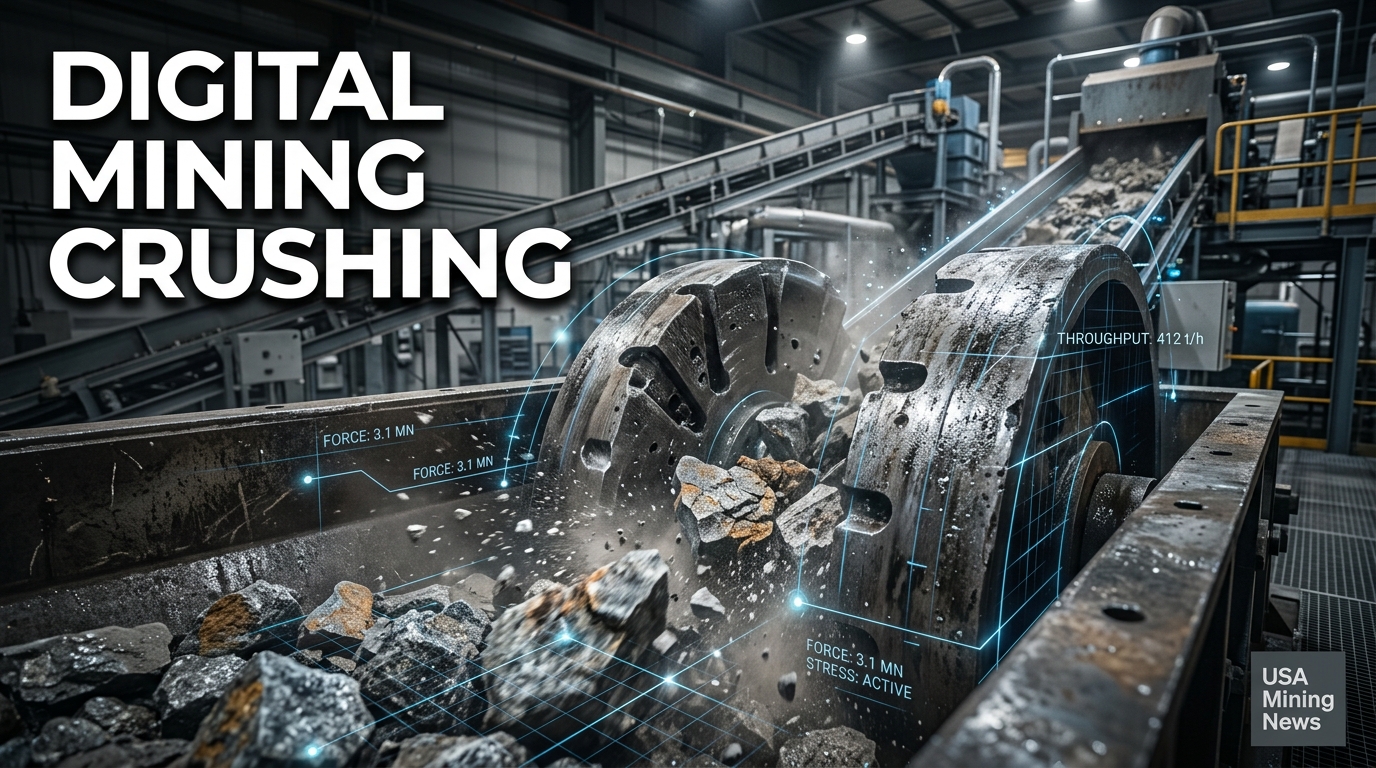
Comminution, encompassing the crushing and grinding of mined ore, is a foundational step in mineral processing, preparing raw material for subsequent separation and extraction processes. Its primary objective is to liberate valuable minerals from surrounding gangue material by progressively reducing particle size. This mechanical process typically consumes between 30% and 70% of a mine's total energy budget, making it the single largest energy consumer in most operations. Traditional comminution circuits, while robust, have historically operated with certain inefficiencies, often characterized by over-grinding, processing of barren rock, and suboptimal energy utilization. These factors contribute significantly to operating costs and carbon footprint, making any technological advancement that promises optimization highly attractive to industry stakeholders.
The economic and environmental pressures on mining companies necessitate a paradigm shift in how comminution circuits are managed. Enhancing the precision, efficiency, and intelligence of these operations directly translates into reduced energy consumption, lower operational expenditures, increased throughput, and improved mineral recovery rates. This context underscores why the advancements highlighted in the Mining Technology feature are not merely incremental improvements but represent a strategic imperative for the industry.
Digital Transformation: Gaining Visibility and Control
According to Eve Thomas's analysis, digitalization is fundamentally reshaping comminution by providing miners with "greater visibility and control across crushing and grinding." This enhanced visibility stems from the deployment of a comprehensive network of sensors, real-time data acquisition systems, and advanced analytics platforms. Traditionally, operators relied on periodic sampling and manual adjustments, often reacting to process deviations rather than proactively managing them. Digitalization introduces a continuous feedback loop, allowing for instantaneous monitoring of key performance indicators (KPIs) such as particle size distribution, mill power draw, feed rates, slurry density, and circulating loads.
The concept of "control" extends beyond simple automation. It involves the application of sophisticated algorithms and artificial intelligence (AI) to interpret vast datasets, identify subtle correlations, predict potential issues before they escalate, and recommend or automatically implement optimal operational parameters. This shift from reactive to proactive and predictive management is a hallmark of digital transformation, empowering operators to fine-tune their circuits for peak performance around the clock. The article rightly emphasizes that the true value is unlocked not just by deploying these technologies, but by the thoughtful and integrated approach to their implementation.
Pillars of Digital Comminution: Ore Sensing
One of the key areas of focus identified by Mining Technology in its October 9, 2026, publication is ore sensing. This technology represents a crucial upstream intervention that can dramatically improve the efficiency of downstream comminution. Ore sensing, often integrated into sensor-based sorting (SBS) systems, involves using various sensors to rapidly analyze the physical and chemical properties of individual rock particles or bulk ore streams. The objective is to differentiate valuable ore from waste rock before it enters the energy-intensive grinding circuit.
Sensors employed in these systems can include X-ray transmission (XRT) for density and atomic number differences, near-infrared (NIR) spectroscopy for mineral identification, electromagnetic sensors for conductivity, and color cameras for visual characteristics. By rejecting barren material earlier in the process, miners can significantly reduce the volume of material that needs to be crushed and ground. This directly translates into substantial energy savings, decreased wear and tear on equipment, lower water consumption, and reduced tailings generation. The image accompanying the article, credited to Anglo American, suggests that major mining houses are actively investing and developing capabilities in this vital area, recognizing its potential to optimize resource utilization and reduce environmental impact.
Advanced Process Control (APC) in Crushing and Grinding
Another pivotal element highlighted in the digital transformation of comminution is Advanced Process Control (APC). While basic process control systems manage individual control loops (e.g., maintaining a set feed rate or pump speed), APC systems operate at a higher level of intelligence. They utilize complex mathematical models, predictive algorithms, and multivariate analysis to understand the intricate interactions between various process variables within the comminution circuit.
For instance, an APC system might simultaneously adjust crusher settings, mill speed, feed slurry density, and water addition based on real-time measurements from particle size analyzers, power meters, and acoustic sensors. The goal is to maintain optimal operating conditions, maximize throughput, achieve target grind size, and minimize specific energy consumption, even in the face of varying ore hardness or feed fluctuations. APC systems move beyond simple feedback loops, incorporating feedforward control (anticipating disturbances) and optimizing against multiple, sometimes conflicting, objectives. This results in greater process stability, improved metallurgical performance, and a reduction in the need for constant manual intervention, allowing operators to focus on higher-level strategic decisions.
The Power of Integrated Cloud Technologies
The third critical component cited by Eve Thomas is integrated cloud technologies. For ore sensing and APC systems to deliver their full potential, the data they generate must be efficiently collected, stored, processed, and analyzed. Cloud platforms provide the scalable infrastructure necessary to handle the massive volumes of real-time data produced by modern comminution circuits.
Integrated cloud solutions offer several distinct advantages:
- Centralized Data Repository: Data from various sensors, APC systems, and other plant operations can be aggregated into a single, accessible platform, breaking down data silos.
- Scalability and Flexibility: Cloud infrastructure can easily scale up or down based on data processing needs, avoiding large upfront capital investments in on-premise hardware.
- Remote Access and Collaboration: Plant managers, metallurgists, and engineers can access critical operational data and analytics from anywhere in the world, facilitating remote monitoring, troubleshooting, and expert collaboration.
- Advanced Analytics and Machine Learning: Cloud-based environments provide the computational power and tools necessary for deploying sophisticated AI and machine learning algorithms. These can identify patterns, predict equipment failures, optimize maintenance schedules, and uncover hidden efficiencies within the comminution circuit that human operators might miss.
- Enhanced Cybersecurity: Reputable cloud providers typically offer robust security measures, which are paramount for protecting sensitive operational data from cyber threats.
By integrating these technologies, mining companies can create a holistic, intelligent processing environment, often referred to as a "digital twin" of their comminution plant. This virtual replica allows for simulation, scenario planning, and continuous optimization, driving sustained improvements in productivity and sustainability.
The Anglo American Example and Broader Industry Implications
The specific mention of Anglo American in the context of ore sensing and advanced comminution technologies, even in an image caption, is indicative of the significant investment major mining companies are making in these areas. Industry leaders like Anglo American are at the forefront, leveraging their substantial resources and expertise to research, pilot, and deploy cutting-edge digital solutions. Their efforts often set benchmarks for the wider industry, demonstrating the tangible benefits of digitalization in challenging operating environments.
For the broader mining sector, the implications are profound. As global demand for minerals continues to grow, coupled with declining ore grades and increasing operational complexities, the ability to process more efficiently and sustainably is no longer an option but a necessity. Digitalization in comminution offers a strategic pathway to:
- Cost Reduction: Significant savings in energy, reagents, water, and maintenance.
- Environmental Stewardship: Reduced carbon emissions, decreased water usage, and minimized waste generation contribute to a smaller environmental footprint.
- Enhanced Productivity: Higher throughput, better recovery rates, and more consistent product quality.
- Improved Safety: Automation and remote monitoring reduce human exposure to hazardous areas.
- Competitive Advantage: Companies that effectively integrate these technologies will gain a significant edge in a competitive market.
Eve Thomas's emphasis on the "critical" aspect of integration is particularly pertinent here. The challenge for many mining companies is not just acquiring the technology but ensuring seamless interoperability between disparate systems, managing cultural change within their workforce, and developing the necessary digital literacy and data science capabilities internally.
Challenges and Future Outlook
While the benefits of digitalization in comminution are clear, the path to full implementation is not without obstacles. Key challenges include the significant upfront capital investment required for new sensors, control systems, and IT infrastructure; the complexity of integrating legacy systems with modern digital platforms; data governance and cybersecurity concerns; and the imperative to upskill the existing workforce to manage and interact with these advanced technologies. Change management is crucial, as the shift from traditional operational practices to data-driven decision-making requires a new mindset.
Looking ahead, the trajectory of digitalization in comminution points towards even greater autonomy and intelligence. We can anticipate further advancements in hyper-spectral imaging for even more precise ore characterization, the widespread adoption of digital twin technology for real-time simulation and predictive optimization, and increasingly sophisticated AI/ML algorithms capable of self-learning and adapting to dynamic operating conditions. The future comminution circuit may well be a fully autonomous, self-optimizing entity, continuously adjusting itself to maximize efficiency and recovery while minimizing environmental impact.
The collaboration between technology providers, mining companies, and academic institutions will be vital in overcoming these challenges and unlocking the full potential of digital comminution. As highlighted in Mining Technology's October 9, 2026, feature, the push towards smarter crushing and grinding capabilities is not just a trend; it's a fundamental shift poised to redefine the economics and sustainability of mineral processing for decades to come.