Repurposing the Past: How Mine Tailings Are Evolving from Liability to Lucrative Opportunity
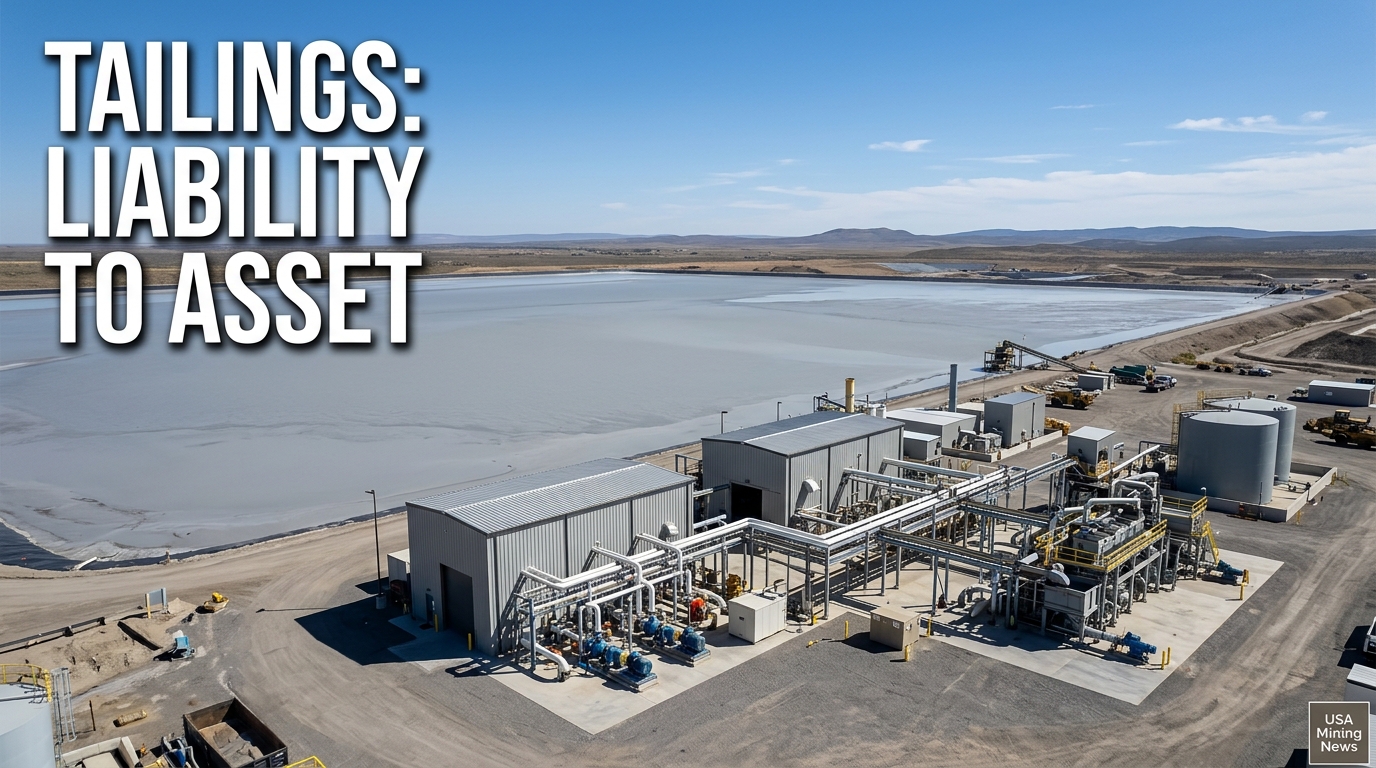
For decades, mine tailings—the pulverized rock and process effluents left over after the extraction of target minerals—have been an enduring symbol of the mining industry’s environmental footprint and a significant financial liability. Deposited in vast impoundments, these waste products present long-term challenges in terms of stability, water management, and potential contaminant release. However, a profound shift in mindset is now underway within the global mining sector. Fueled by an escalating demand for critical minerals, declining grades in primary ore deposits, and ambitious decarbonization targets, operators and governments are increasingly scrutinizing tailings not as mere waste, but as a partially processed, accessible, and potentially highly valuable source of strategic metals.
This re-evaluation is giving rise to a new wave of technological innovation aimed at economically extracting value from these historic accumulations. The ultimate goal is to transform what was once considered "junk" into a significant revenue stream, simultaneously reducing environmental burdens and enhancing resource security.
The Untapped Value in Industrial Byproducts
The theoretical value locked within global mine tailings is staggering. According to estimates by the Minerals Research Institute of Western Australia, the worth of precious, critical, and strategic metals embedded in these industrial byproducts exceeds an astonishing $3.4 trillion. This figure underscores the immense economic potential that has historically remained dormant, often due to technological limitations or unfavorable economics compared to primary ore extraction.
Focusing on specific regions, the scale of this opportunity becomes even clearer. In Canada, for instance, the country’s significant gold waste is estimated to hold metal value totaling $10 billion (C$13.85 billion). Furthermore, the decades-old tailings impoundments in the Sudbury region, a historic nickel mining hub, are believed to contain between $8 billion and $10 billion worth of nickel alone. These figures are not mere theoretical projections; they represent tangible economic assets awaiting viable extraction methodologies.
This shift is particularly pertinent in an era where declining ore grades are necessitating higher energy inputs and greater volumes of material to produce the same quantity of metal. Reprocessing tailings, which are already comminuted and partially processed, can offer a more energy-efficient pathway to resource recovery, aligning with broader industry goals for sustainability and operational efficiency.
Drivers for a Paradigm Shift: Resource Security Meets Environmental Stewardship
Several converging factors are accelerating the industry's focus on tailings reprocessing:
- Critical Mineral Security: Governments worldwide are prioritizing the establishment of robust, domestic supply chains for critical minerals essential to advanced technologies, renewable energy, and defense. Tailings represent an accessible, often pre-mined resource that can bolster national self-sufficiency and reduce reliance on import-dependent supply chains.
- Environmental Fiduciary Responsibility: Mining companies face mounting pressure, and often legal obligations, to reduce their long-term environmental liabilities associated with tailings storage facilities. Technologies that can economically remove valuable minerals not only generate revenue but also provide pathways for more stable and environmentally benign site remediation, offering a "win-win" scenario.
- Economic Necessity: As primary ore grades diminish, the financial incentive to extract residual value from tailings increases. This provides an additional revenue stream, helping to offset operational costs and enhance the overall profitability of mining operations.
The result is a redefinition of what constitutes a "resource." Rejected, often-unclassified waste is now being viewed through a strategic lens as a valuable and accessible source, attracting significant investment and innovation.
Canada at the Forefront: The MICA Network's Role
Leading this transformative trend in Canada is the Mining Innovation Commercialisation Accelerator (MICA) Network. Managed by the Centre for Excellence in Mining Innovation (CEMI), MICA is a $112.4 million pan-Canadian initiative dedicated to accelerating and deploying commercial innovative technologies across the mining sector. Its mission is to bridge the gap between groundbreaking research and practical, industry-wide implementation.
At the heart of MICA’s efforts is Chamirai Nyabeze, the network director and executive vice-president of CEMI. Nyabeze plays a crucial role in connecting technology providers with industry leaders, streamlining the path for future industry-defining innovations from pilot-stage trials to full commercial deployment. His perspective reflects a deep understanding of the challenges and opportunities, famously comparing tailings to "dirty dishes" that "just pile up, layer after layer, and then no one remembers what is at the bottom." This analogy highlights the historical neglect of tailings classification and the consequent loss of potential value, a trend he sees rapidly changing.
Innovations on the Cusp of Commercialization
MICA’s extensive network is supporting a diverse portfolio of technologies. Chamirai Nyabeze indicates that approximately 40 technologies currently supported by MICA demonstrate commercial traction, meaning they are either being trialed or utilized within operating environments, with some already securing purchase orders or achieving market entry. Several key innovations highlight the immediate potential:
- LOOPX (Collision Avoidance): While not directly tailings-related, this technology exemplifies MICA's broader impact on mining safety and efficiency. LOOPX offers a collision avoidance solution for utility vehicles, currently being implemented or evaluated for mines in Nevada and Quebec. Such advancements improve operational safety, a critical consideration across all aspects of mining.
- Litus (Direct Lithium Extraction): A pioneering company, Litus has developed a direct lithium extraction technology specifically designed for low-concentration brines. This innovation is currently undergoing pilot tests in oilfields in Texas, where it extracts lithium directly from wastewater streams. The application holds significant promise for unconventional lithium recovery, including from mine process waters and leachate from tailings.
- MIRARCO (Battery Mineral Extraction from Tailings): MICA supported MIRARCO in developing a comprehensive workflow for extracting battery-grade minerals from solutions derived from tailings. Notably, MIRARCO has established its own biowaste facility, integrating this extraction process into their testing regimes. This allows clients with similar ore types to bring their samples for specialized testing, demonstrating a clear pathway to commercial application and standardization.
- Rithmik (Predictive Maintenance): Described as an "equipment doctor," Rithmik’s technology focuses on predictive maintenance for heavy mining machinery. By accurately foreseeing equipment failure before it becomes catastrophic, Rithmik helps operators reduce downtime, improve safety, and optimize maintenance schedules – critical factors in the capital-intensive mining sector.
- Destiny Copper (Low-Energy Copper Extraction): Destiny Copper is advancing a low-energy technology designed to extract copper from solutions. One of its unique capabilities is the creation of "spherical copper," a specialized form used as an additive in various industrial applications. This innovative approach to copper recovery can provide an economically viable method for extracting residual copper from tailings, particularly those where conventional methods may be energy-intensive or ineffective.
These examples illustrate the breadth of innovation MICA supports, from fundamental extraction processes to operational efficiency tools, all contributing to a more sustainable and profitable mining industry.
The Challenge of Classification and Economic Viability
Despite the immense potential, the journey from liability to lucrative asset is not without hurdles. A primary challenge, as highlighted by Nyabeze, is the historically poor classification of tailings deposits. "Many of the tailing sites have never really been classified, so we don’t know what is in them," he explains. When the original rock was mined, explorers and engineers primarily focused on the target mineral, deeming everything else as useless. This is akin to "harvesting corn and just taking the kernels; everything else is considered junk," with no effort made to assess other potential values like liquid or fibers.
In Canada, mining companies bear a significant and perpetual financial obligation: they must provide funding collateral to demonstrate their ability to maintain tailings sites indefinitely. This "liability is not going anywhere," according to Nyabeze. Therefore, any technology that can reduce this enduring liability – while simultaneously extracting value – is inherently attractive. However, unlocking this value hinges on the ability to scientifically classify the tailings. Once a comprehensive understanding of their composition is established, operators can then make informed decisions about which technologies are most suitable and economically viable for resource recovery.
The economic case for reprocessing remains highly site and commodity specific, requiring detailed analysis of the mineralogy, volume, location, and market prices of target metals. But with better classification and continuously improving technologies, these specific economic cases are becoming increasingly compelling.
Future Outlook: Bridging Resource Security and Environmental Remediation
The transformation of mine tailings from an environmental burden to a valued resource represents a pivotal moment for the mining industry. This shift is not merely about finding new sources of revenue; it is about fundamentally redefining resource management within the extractive sector. By embracing innovative technologies and adopting a more holistic view of mining byproducts, the industry can achieve a dual benefit: securing vital supplies of critical minerals necessary for global decarbonization and technological advancement, while concurrently mitigating long-term environmental liabilities associated with historic mining operations.
As governments prioritize domestic mineral supply chains and operators face increasing environmental scrutiny, the strategic importance of thoroughly classified and reprocessed tailings will only grow. Initiatives like MICA, which foster collaboration between technology developers and industry, are essential catalysts in realizing this future. The era of viewing tailings as merely "junk" is drawing to a close, replaced by an understanding that these historical deposits represent an accessible frontier for sustainable, responsible, and profitable mineral resource development.