Rainbow Rare Earths Forges Strategic Alliance with Neo Performance Materials for Phalaborwa Rare Earth Project
Johannesburg, South Africa – September 25, 2026 – In a pivotal development poised to advance the global rare earth supply chain, Rainbow Rare Earths, a company focused on the sustainable extraction of critical minerals, has announced a definitive Memorandum of Understanding (MoU) with Neo Performance Materials. This comprehensive agreement centers on Rainbow’s Phalaborwa rare earth project in South Africa, encompassing technical collaboration, engineering design, and long-term product offtake, effectively solidifying the project's path towards commercial production. The partnership underscores a shared commitment to developing a secure and environmentally responsible source of vital rare earth elements (REEs), crucial for the burgeoning clean energy and high-tech sectors.
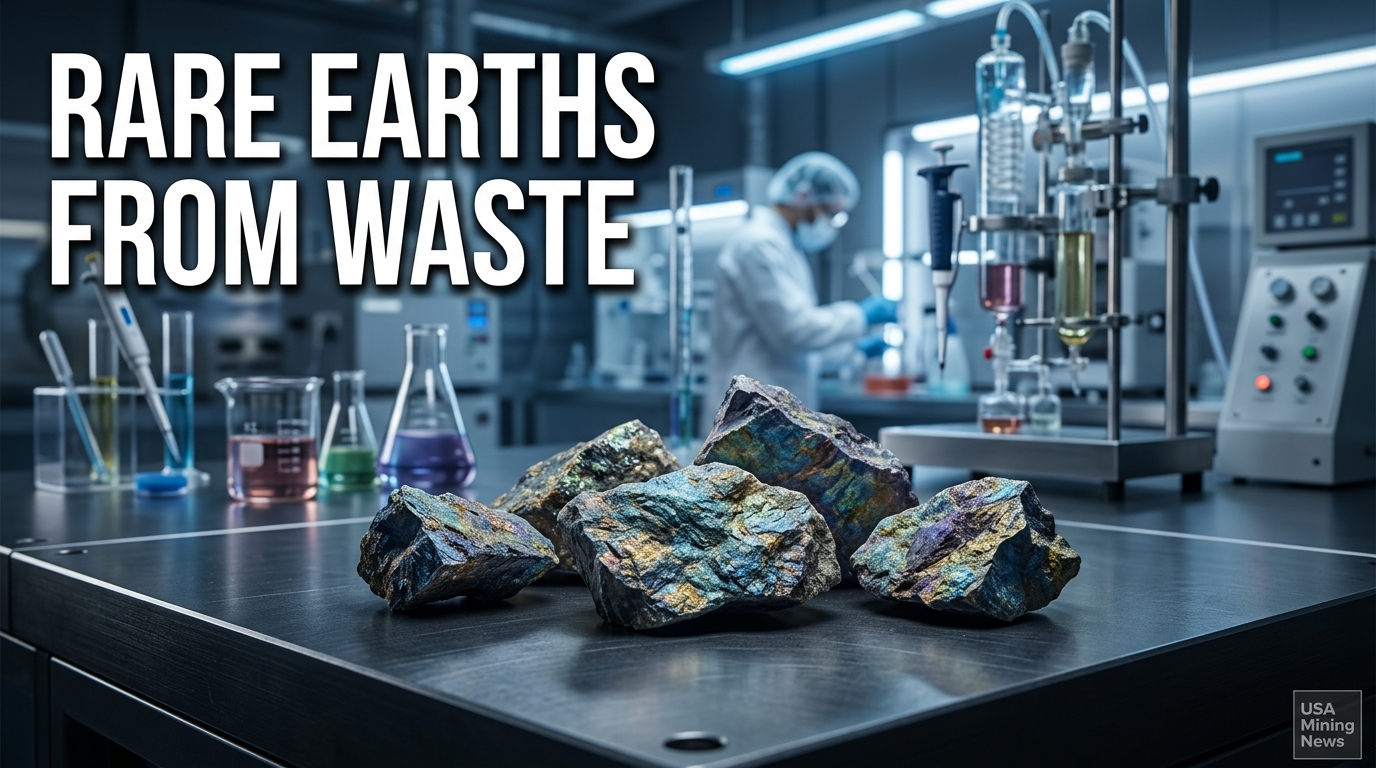
The Phalaborwa project, unique in its approach, targets the reprocessing of phosphogypsum waste stacks at the historical Phalaborwa Complex in Limpopo Province, South Africa. This innovative strategy aligns with growing global demands for sustainable mining practices and the circular economy, transforming an industrial byproduct into a strategic resource. The selection of Neo Performance Materials as a partner follows a rigorous competitive process and extensive technical due diligence conducted by Rainbow, highlighting Neo’s established expertise and operational track record in rare earth separation.
Strategic Partnership Unlocks Phalaborwa's Potential
The MoU with Neo Performance Materials represents a cornerstone achievement for Rainbow Rare Earths, providing the necessary technical and commercial framework to de-risk and accelerate the Phalaborwa project. Neo, recognized as a rare earth separation technology specialist with considerable operating and technical experience across multiple commercial facilities globally, brings invaluable expertise to the table. This collaboration is particularly significant given the complexity and specialized nature of rare earth separation processes, which often form the bottleneck in the downstream value chain.
Under the terms of the agreement, Neo will extend comprehensive technical support and design input for Phalaborwa’s final solvent extraction (SX) separation circuit. This specialized circuit, which employs Neo’s proprietary SX technology, is critical for achieving the high purity levels required for rare earth products used in advanced applications. The integration of Neo’s technology and know-how is expected to optimize the separation process, ensuring efficiency and product quality from the outset. George Bennett, CEO of Rainbow Rare Earths, emphasized the strategic importance of this collaboration, stating, “Finalising our technology partner for the SX separation process was the remaining step required to complete the definition of our process to extract REEs from phosphogypsum waste. We are delighted that Neo has agreed to partner with us – their deep understanding and experience in rare earth separation and magnet materials is invaluable.” This statement highlights the critical role Neo will play in bringing the Phalaborwa project to fruition.
Technical Blueprint: Refining Rare Earths from Waste
The core of the Phalaborwa project’s processing strategy revolves around an advanced solvent extraction circuit designed to produce high-purity separated rare earth oxides. Specifically, the planned circuit is engineered to yield separated neodymium-praseodymium (NdPr) oxide at greater than 99% purity. Neodymium and praseodymium are collectively vital components in the production of high-strength permanent magnets, which are indispensable for electric vehicles (EVs), wind turbines, and a wide array of consumer electronics and defense applications. The attainment of such high purity levels is paramount for market acceptance and commanding premium prices for these critical materials.
In addition to NdPr oxide, the Phalaborwa project will also produce a mixed SEG+ heavy rare earth carbonate. This concentrate is rich in dysprosium (Dy), terbium (Tb), and other heavy rare earth elements (HREEs). Dysprosium and terbium are crucial additives for NdFeB magnets, enhancing their heat resistance and performance, especially in high-temperature environments prevalent in EV motors and wind generators. This mixed heavy rare earth carbonate will be destined for further separation at Neo’s existing facilities, showcasing the integrated nature of this partnership and leveraging Neo’s specialized infrastructure. The ability to extract both light and heavy rare earths from a single waste stream significantly enhances the project’s economic viability and strategic importance, addressing the diverse needs of the rare earth market.
Offtake Agreements and Market Positioning
A key component of the MoU is the long-term offtake agreement, which provides commercial certainty for Rainbow Rare Earths while securing critical raw material supply for Neo Performance Materials. Under the terms, Neo will acquire rights to:
- 40% of the annual separated neodymium-praseodymium oxide output.
- 65% of the annual mixed SEG+ carbonate production.
The pricing for these crucial rare earth products will be determined on arms-length commercial terms, benchmarked against relevant rare earth price indices. This mechanism ensures transparency and fair market value for the output, reflecting global supply and demand dynamics. Furthermore, the parties are considering toll treatment options for the remaining SEG+ concentrate, which would enable Rainbow to independently market the balance of its separated dysprosium, terbium, and yttrium products. This flexibility provides Rainbow with direct access to a broader market and potential for increased revenue streams from these valuable heavy rare earth elements, further solidifying its position within the rare earth supply chain.
Such offtake agreements are increasingly vital in the mining industry, particularly for critical minerals like REEs. They provide project developers with guaranteed sales, crucial for securing project financing, while providing downstream processors and manufacturers with a stable, diversified supply. This structure reduces market volatility risks for both parties and fosters long-term relationships essential for building resilient supply chains.
Milestones on the Road to Production
The technical partnership is already demonstrating tangible progress. Extensive technical test work utilizing Rainbow’s high-grade rare earth solution is currently underway at Neo’s state-of-the-art facilities in Estonia. This initial phase of testing is crucial for validating the proposed SX flow sheet and optimizing parameters for commercial scale. Following the successful completion of the Estonian work, Neo is slated to assist in running a confirmatory integrated pilot-scale SX plant in Johannesburg, South Africa. This pilot plant will be instrumental in supporting the Definitive Feasibility Study (DFS), providing robust engineering data and de-risking the scale-up to a full-scale operation. The completion of the DFS is currently targeted for the first half of 2027.
Prior to the DFS, Rainbow Rare Earths plans to publish a Pre-Feasibility Study (PFS) in the fourth quarter of 2026. This PFS will incorporate initial SX test work results and offer an interim update on Phalaborwa’s economics, building upon the insights from a December 2024 Interim Study. The PFS is designed to define the final product slate, process flow, and waste streams with sufficient certainty to advance project financing and permitting workstreams within the wider development timeline. These sequential studies are standard industry practice, progressively refining project scope, costs, and economic viability, thereby providing increasing confidence to investors and regulatory bodies.
Broader Implications for the Global Rare Earths Market
This collaboration carries significant implications for the global rare earth market. Firstly, it represents a crucial step towards diversifying the supply of critical rare earth elements, which are currently dominated by a single geopolitical region. South Africa, with its established mining infrastructure and resources, has the potential to emerge as a key player in the rare earth sector, offering a stable and responsible source of these vital materials. Diversification is a strategic imperative for many nations seeking to secure their industrial supply chains and reduce reliance on potentially volatile sources.
Secondly, the Phalaborwa project’s focus on reprocessing phosphogypsum waste is a leading example of sustainable resource recovery. Phosphogypsum is a voluminous byproduct of phosphoric acid production, often stored in large stacks that can pose environmental challenges. By extracting rare earths from this waste, Rainbow Rare Earths is not only creating economic value but also contributing to environmental remediation and circular economy principles. This approach resonates strongly with growing environmental, social, and governance (ESG) investment criteria, making the project particularly attractive to investors and end-users committed to responsible sourcing.
Finally, the partnership between a developer like Rainbow and a specialist processor like Neo highlights an evolving trend in the rare earth industry – the need for specialized expertise across the entire value chain, from mining to advanced separation. Such collaborations are essential for bringing complex rare earth projects to fruition and establishing robust, end-to-end supply chains capable of meeting the escalating demand for high-performance rare earth products.
As Rainbow Rare Earths and Neo Performance Materials progress towards binding long-form agreements and continue their intensive test work, the Phalaborwa project stands as a testament to innovative mining solutions and strategic partnerships that are shaping the future of critical mineral supply. The successful development of this project promises to deliver a significant, sustainable source of rare earths, strengthening global supply chains and supporting the transition to a greener, technologically advanced future.