Rare Earths Americas Secures Funding, Ignites US Rare Earth Ambitions with NYSE American Debut
New York, NY – May 8, 2026 – In a significant move set to bolster Western critical mineral supply chains, Rare Earths Americas (NYSE: REA) made a strong debut on the NYSE American exchange this week, successfully raising $63.3 million in an oversubscribed Initial Public Offering (IPO). The company, focused on heavy rare earth elements essential for permanent magnets and defense applications, achieved its target valuation of $368 million and saw its stock climb sharply in initial trading, underscoring investor confidence in its strategic approach to developing rare earth resources in both Brazil and the United States.
Trading at just over $24 a share in Friday afternoon dealings, REA stock climbed more than 26% above its IPO price of $19, pushing the company’s market capitalization to $463 million. This successful listing on the NYSE American, an exchange known for emerging growth companies, marks a notable deviation from the historical trend of rare earth juniors typically listing on the Australian Securities Exchange (ASX) or Toronto Stock Exchange (TSX).
Rare Earths Americas Debuts Strong on NYSE American
Rare Earths Americas’ IPO, which officially launched on Wednesday, May 7, 2026, represents a crucial financing milestone for the company's ambitious exploration and development strategy. The $63.3 million raised will be primarily directed towards advancing its four exploration-stage projects, strategically located to supply the growing demand for heavy rare earth elements outside of established supply chains.
The decision to pursue a traditional IPO on a US exchange like the NYSE American for a rare earth development company is a departure from recent norms. As CEO Don Swartz noted in an interview with MINING.COM, "This is the first regular-way IPO for something like what we’re doing," highlighting the scarcity of such traditional public listings in the US market for this sector. Many higher-profile North American rare earth entities, such as MP Materials and USA Rare Earth, have historically accessed public markets through Special Purpose Acquisition Company (SPAC) transactions. Swartz emphasized that the NYSE American listing was specifically engineered to attract a broader base of institutional investors keenly focused on establishing secure Western supply chains for critical minerals, stating, "Securing Western supply of magnet materials is something everyone is hyper-focused on."
Strategic Asset Portfolio: Brazil and the United States
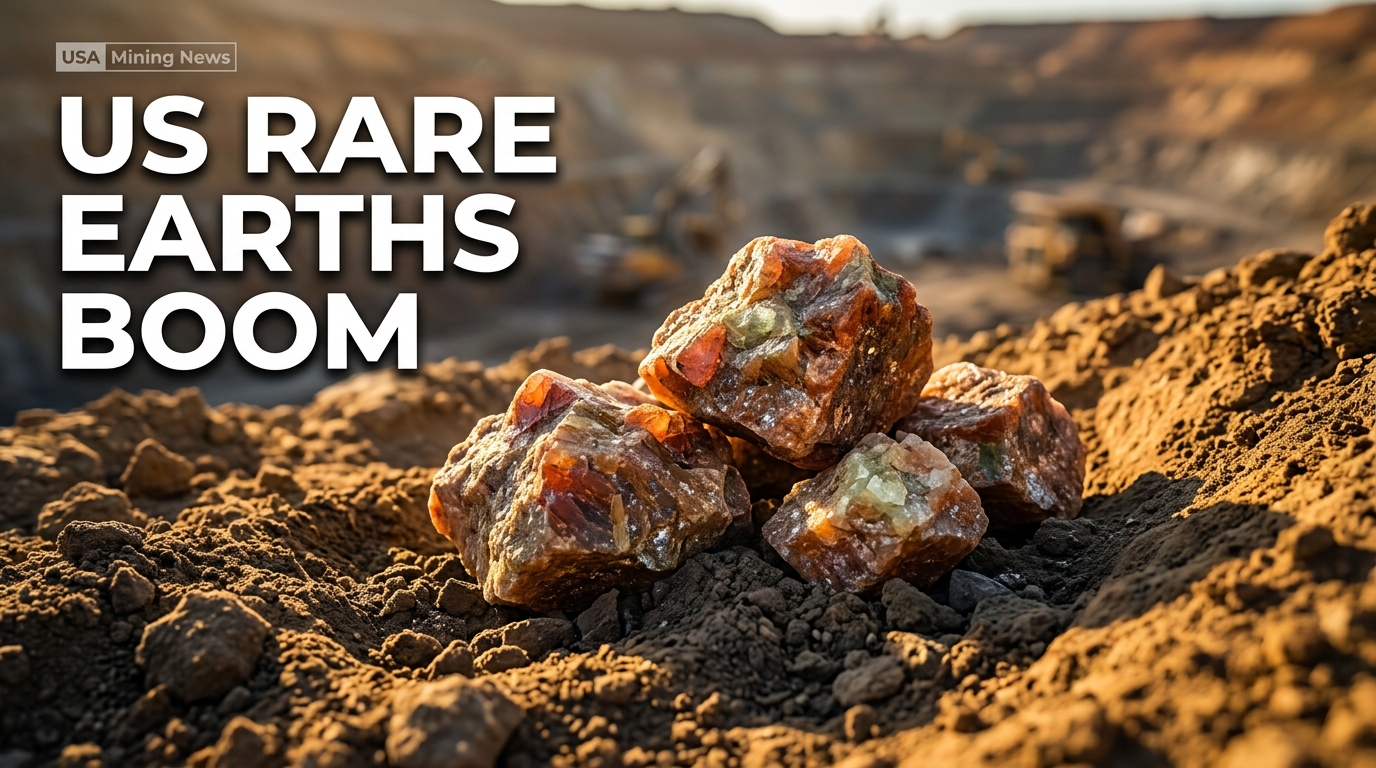
Rare Earths Americas controls a portfolio of four promising exploration projects, carefully selected for their potential to yield heavy rare earth elements. This portfolio includes critical ionic clay deposits in Brazil and a distinctive monazite-rich sands project situated in Georgia, USA.
The company's most technically advanced asset is the Alpha project, located in Bahia, Brazil. This project comprises ionic clay deposits, a type of rare earth mineralization known for its potential for lower-cost extraction compared to hard-rock deposits. Engineering work is presently underway at Alpha as the company targets an SK-1300 initial assessment, a standard broadly comparable to a preliminary economic assessment (PEA). Swartz highlighted that the Alpha project shares significant similarities in terms of both grades and scale with other prominent Brazilian ionic clay developers such as Aclara Resources and Serra Verde, suggesting a solid foundation for future development.
Despite the relative advancement of its Brazilian operations, Rare Earths Americas plans to allocate a significant portion of its exploration capital towards its US prospects, particularly the Shiloh exploration district in Georgia. This prioritization is driven by the potential for a transformative discovery. Swartz commented, "There hasn’t been a novel rare earth discovery in the US in probably 40 years," underscoring the potential magnitude of success in Georgia.
The Georgia project is described as a monazite-rich sands deposit, which management believes could represent the crucial source rock for rare earth-bearing mineral sands that have already been historically mined along the US coastal plain. This distinction as a potential primary source could hold immense geological and economic significance.
A New Approach to US Rare Earth Supply: Focus on Concentrate
Rare Earths Americas' strategy for its US assets, particularly in Georgia, centers around a pragmatic and de-risked approach to production. Unlike many conventional hard-rock rare earth deposits, the Georgia project boasts several distinct advantages: it is shallow, free-digging, and potentially amenable to gravity separation methods. These characteristics are particularly favorable, as gravity separation is a commonly employed and well-understood technique within existing mineral sands operations, potentially reducing both capital and operational expenditures.
A cornerstone of REA's strategy is to produce a rare earth concentrate rather than pursuing the technically more complex and capital-intensive separated oxide production. This concentrate, which involves significantly less processing, is designed to be readily handled by existing Western processors. Energy Fuels' White Mesa mill in Utah (TSX: EFR, NYSE-A: UUUU) is an example of an existing facility capable of processing such concentrates. CEO Swartz, a mining engineer by training, explained the rationale behind this approach: "The further you go down toward separated oxide, the more technical risk you introduce." By focusing on concentrate, Rare Earths Americas aims to streamline its development pathway, accelerate timelines, and minimize the inherent technical complexities and associated financial risks often encountered in downstream rare earth processing.
The company’s funding allocation reflects this strategic emphasis on the US. While all four projects will receive capital, a "significant portion of exploration spending" is slated for Georgia. "The funding is slanted towards Georgia because of the asymmetry," Swartz confirmed, referring to the potentially dramatic positive impact a major discovery there could have on the company's valuation and the broader US critical minerals landscape.
Catalyzing Western Critical Mineral Supply Chains
The emergence of Rare Earths Americas, particularly its focus on US-based heavy rare earth discoveries, carries profound implications for critical mineral supply chain security. The United States and its Western allies have long identified the dependence on non-allied nations for rare earth elements as a significant economic and national security vulnerability. Heavy rare earths, in particular, are vital for high-performance permanent magnets used in electric vehicles, wind turbines, and advanced defense systems.
A "novel rare earth discovery" in the US, as potentially represented by the Shiloh district in Georgia, would be a transformative event, capable of fundamentally altering the domestic rare earth supply picture. Such a discovery aligns perfectly with governmental initiatives and industry mandates aimed at onshore or nearshore sourcing of these strategic materials. Furthermore, REA’s strategy to produce a readily processable concentrate leverages existing Western processing infrastructure, fostering a more integrated and resilient supply chain immediately.
Experienced Leadership and Forward Momentum
Rare Earths Americas has positioned itself for success by assembling a board and management team with extensive experience across various well-known mining and critical minerals ventures. The team comprises professionals with ties to companies such as Piedmont Lithium, Hyperion Metals, and Brazilian Rare Earths, bringing a wealth of technical, operational, and financial expertise to the company. This experienced leadership is a crucial asset, providing the credibility and know-how required to navigate the complexities of rare earth exploration and development.
The company, which was established just last year, began quietly accumulating exploration rights in Georgia in early 2025 before securing private capital in advance of its successful IPO. This deliberate and understated approach was intentional. "We’ve been intentionally quiet," Swartz said, emphasizing that, "This isn’t a PowerPoint company. It’s people that have built things over the years." This philosophy suggests a steadfast commitment to tangible project development rather than speculative market maneuvering.
With its successful IPO and a clear strategic vision, Rare Earths Americas is well-positioned to advance its exploration portfolio across Brazil and the United States. The company's immediate focus on the Alpha project in Brazil and aggressive exploration in Georgia, bolstered by a concentrate-first production strategy, could significantly contribute to the diversification and securing of Western supply chains for these indispensable heavy rare earth elements. The coming years will be critical in determining if REA's bet on a novel US discovery can indeed reshape the domestic rare earth landscape.