Automation Paves New Path for Historic Canadian Nickel Mine in Transition to Surface Operations
By USA Mining News Staff
June 25, 2026
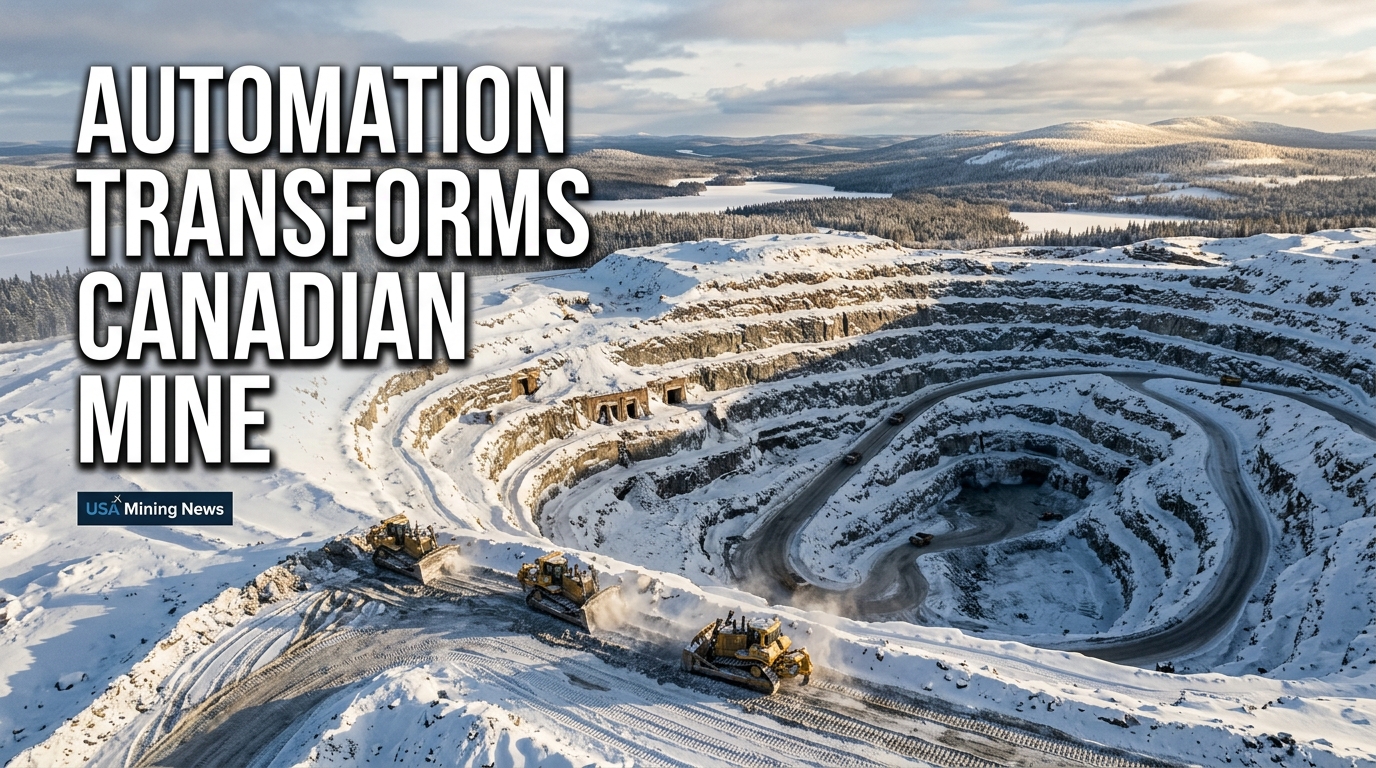
The global mining industry watches keenly as established operations reinvent themselves, leveraging technological advancements to overcome inherent challenges. A prime example of this innovative spirit unfolded last year at a prominent and historic Canadian nickel mine, which successfully transitioned its operations from a long-standing underground model to modern open pit extraction. This complex shift was made possible, in part, by the integral involvement of RCT, powered by Epiroc, a leader in mining technology, whose agnostic automation solutions were deployed to ensure both safety and efficiency.
The project represents a crucial evolution for a site that has been a bedrock of Canadian nickel production for decades. Transitioning such a mature operation to a new mining method is fraught with unique challenges, particularly concerning subsurface integrity. RCT’s Canadian branch was brought in specifically to implement automation as a preventative measure, mitigating risks associated with surface work above years of historic underground excavation. This strategic implementation underscores a growing trend within the industry to embrace advanced technologies not just for new projects, but to revitalize and extend the life of existing assets.
Navigating a Complex Transition: From Subsurface to Surface
The decision to transition the Canadian nickel mine to open pit operations was a carefully considered strategic move, reflecting evolving geology, economics, and operational efficiencies. For years, the mine had utilized traditional underground methods, extracting valuable nickel resources from deep within the earth. Such extensive underground work, while productive, leaves behind a complex network of voids, tunnels, and backfilled areas that demand meticulous consideration when new surface operations commence.
Kole Paulin, RCT’s Account Manager, articulated this critical concern, stating in a recent news release, “Because the earth underground has been mined for some years, it’s important that any work done on the surface is done with care due to the voids.” This statement highlights a fundamental challenge in brownfield mining environments: the need to navigate the legacy of past operations. Surface mining in such conditions could pose significant stability risks, including ground subsidence or unexpected collapses, which can endanger personnel and damage equipment. The mining services company leading operations at the site recognized this, teaming with RCT to develop a robust technological framework geared towards comprehensive risk mitigation and operational excellence.
RCT's Agnostic Automation: The Core Solution
At the heart of the mine’s successful transition was RCT’s agnostic automation technology, specifically its AutoNav Tele system. The term “agnostic” is critical here, signifying the system’s ability to integrate seamlessly with various makes and models of heavy mining equipment, a significant advantage for mines possessing diverse fleets. For this Canadian nickel operation, RCT implemented AutoNav Tele on a crucial set of heavy machinery:
- Two CAT D10 dozers
- One CAT 992 wheel loader
The deployment on the CAT 992 wheel loader marked a notable achievement for RCT, as Paulin confirmed, “RCT can remote any make and model of machine, but this was the first opportunity we had to remote this specific model of wheel loader.” This successful integration demonstrates RCT’s engineering prowess and commitment to expanding its automation capabilities across an ever-broader spectrum of mining equipment. By offering solutions that are not tied to a single OEM, RCT provides miners with greater flexibility and cost-effectiveness in their automation endeavors, allowing them to leverage existing capital investments in machinery.
The fundamental principle behind AutoNav Tele is to relocate equipment operators from the immediate vicinity of hazardous operations to a more secure, remote location. In this case, operators were moved to a specially designed AutoNav Cabin. These cabins are not merely control rooms; they are engineered environments focused on operator well-being. Each cabin is complete with an ergonomic chair and advanced temperature control, directly addressing two key industry concerns: safety and operator comfort. This transition away from in-cab operation significantly de-risks potential ground stability issues and removes personnel from direct exposure to dust, noise, and vibration inherent in heavy equipment operation.
Enhancing Safety and Operator Welfare in Extreme Environments
The Canadian mining landscape is often characterized by its extreme weather conditions, a factor that profoundly impacts both operational efficiency and human comfort. The region where this particular nickel mine operates is no exception, with temperatures frequently plummeting to as low as -20 degrees Celsius. Operating heavy machinery in such conditions presents numerous challenges, not least for the operators who endure prolonged exposure to the cold, potentially leading to fatigue, reduced focus, and health risks.
RCT's remote operation solution directly tackles this issue. “This mining region experiences extreme cold, reaching -20 degrees. Removing operators from the machine is beneficial for overall health and job enjoyment,” Paulin emphasized. By allowing operators to manage equipment from an environmentally controlled, ergonomic cabin, the technology drastically improves their working conditions. This enhanced comfort translates into tangible benefits:
- Reduced Fatigue: Operators in a climate-controlled, ergonomically designed space are less susceptible to the physical strain of extreme cold or heat, leading to sustained alertness.
- Improved Morale and Job Enjoyment: Better working conditions contribute to higher job satisfaction and potentially better retention rates in an industry often struggling with labor shortages.
- Enhanced Safety: A comfortable, less fatigued operator is a more alert operator, reducing the likelihood of human error in critical tasks. Beyond comfort, the primary safety benefit is the removal of personnel from direct proximity to potential hazards such as falling material, unstable ground, or vehicle collisions.
Beyond machine automation, RCT implemented another critical safety layer: a Geofence Zone integrated with crest detection. This sophisticated system was designed to prevent vehicles from inadvertently falling over the edge of sensitive areas, such as dam walls or highwalls. Geofencing uses GPS technology to create virtual boundaries, which, when combined with crest detection algorithms, can automatically slow or stop machinery approaching a perilous edge. This proactive safety measure is particularly vital in open pit operations, where large vehicles frequently maneuver near drop-offs, and visibility can be compromised by weather conditions or dust.
Beyond Automation: Comprehensive Site Integration and Training
The scope of RCT’s involvement extended beyond just automating heavy machinery. Recognizing that robust communication infrastructure is fundamental to any advanced mining operation, especially one relying on remote control, RCT was also responsible for implementing the site’s communications network. This was a complex task, again requiring careful consideration of the extreme environmental conditions to ensure an effective and reliable solution.
Establishing dependable communication in remote, harsh Canadian mining regions is no small feat. Factors like vast distances, rugged terrain, and ice/snow can disrupt conventional signal transmissions. RCT’s team had to design a resilient network capable of maintaining consistent connectivity, which is imperative for real-time data flow, remote machine control, and emergency response. This comprehensive approach – addressing both the direct automation and the underlying communication backbone – highlights RCT’s capability as an integrated solutions provider.
Furthermore, an essential component of the partnership involved extensive training for the mine’s staff. RCT provided hands-on instruction and theoretical knowledge, empowering the on-site team to become proficient in operating and maintaining the new automation systems. This commitment to local capacity building is crucial for long-term operational self-sufficiency and ensures that the mine can confidently manage its advanced technological infrastructure without perpetual reliance on external support. Such training programs are vital for successful technology adoption and for fostering a culture of continuous improvement within the mining workforce.
Strategic Implications for the Mining Industry
The successful technological overhaul at this prominent Canadian nickel mine carries significant implications for the broader mining industry:
- Template for Brownfield Redevelopment: This project serves as a powerful case study for how mature, historically relevant mines can be modernized and granted extended operational lives through smart technology. As many global mining assets age, the ability to transition operating methods safely and efficiently, often above existing subsurface infrastructure, becomes increasingly valuable.
- De-risking Complex Operations: The direct mitigation of risks associated with mining above voids, coupled with comprehensive safety features like geofencing and crest detection, demonstrates a clear path toward safer mining practices in challenging geological contexts. This is crucial for an industry perpetually striving to improve its safety record.
- Addressing Labor Challenges: Automation and remote operation also offer partial solutions to ongoing labor shortages in the mining sector. By improving working conditions, particularly in harsh environments, and creating new, technology-focused roles, the industry can enhance its appeal to a younger, digitally native workforce.
- Boosting Efficiency and Sustainability: Enhanced precision from remote operation, reduced downtime due to human factors in extreme weather, and optimized machine utilization contribute to greater operational efficiency and potentially a smaller environmental footprint. Optimized resource extraction and reduced waste are key pillars of sustainable mining.
- Validation of Agnostic Solutions: RCT’s success in integrating its solution with existing CAT equipment underscores the value proposition of agnostic technologies. Miners can invest in automation without being locked into a single OEM ecosystem, allowing for greater flexibility and better utilization of existing fleet assets.
The Future of Mining: A Path Paved by Innovation
The ambitious transition undertaken by this Canadian nickel mine, bolstered by RCT's advanced automation, stands as a testament to the mining industry's ongoing evolution. It highlights a critical trend: the strategic deployment of innovative technologies is no longer just a competitive advantage, but a necessity for overcoming operational complexities, ensuring worker welfare, and securing the long-term viability of mineral resource extraction.
As the global demand for critical minerals like nickel continues to rise, the ability to unlock new value from historic sites, safely and efficiently, becomes paramount. This project demonstrates that with the right technological partners and a forward-thinking approach, even the most challenging transitions can yield significant dividends, paving a path for continued growth and innovation within the Canadian – and global – mining sector.