Rio Tinto Commits $1.9 Billion to Kangwinan Bauxite Project, Solidifying Queensland Operations
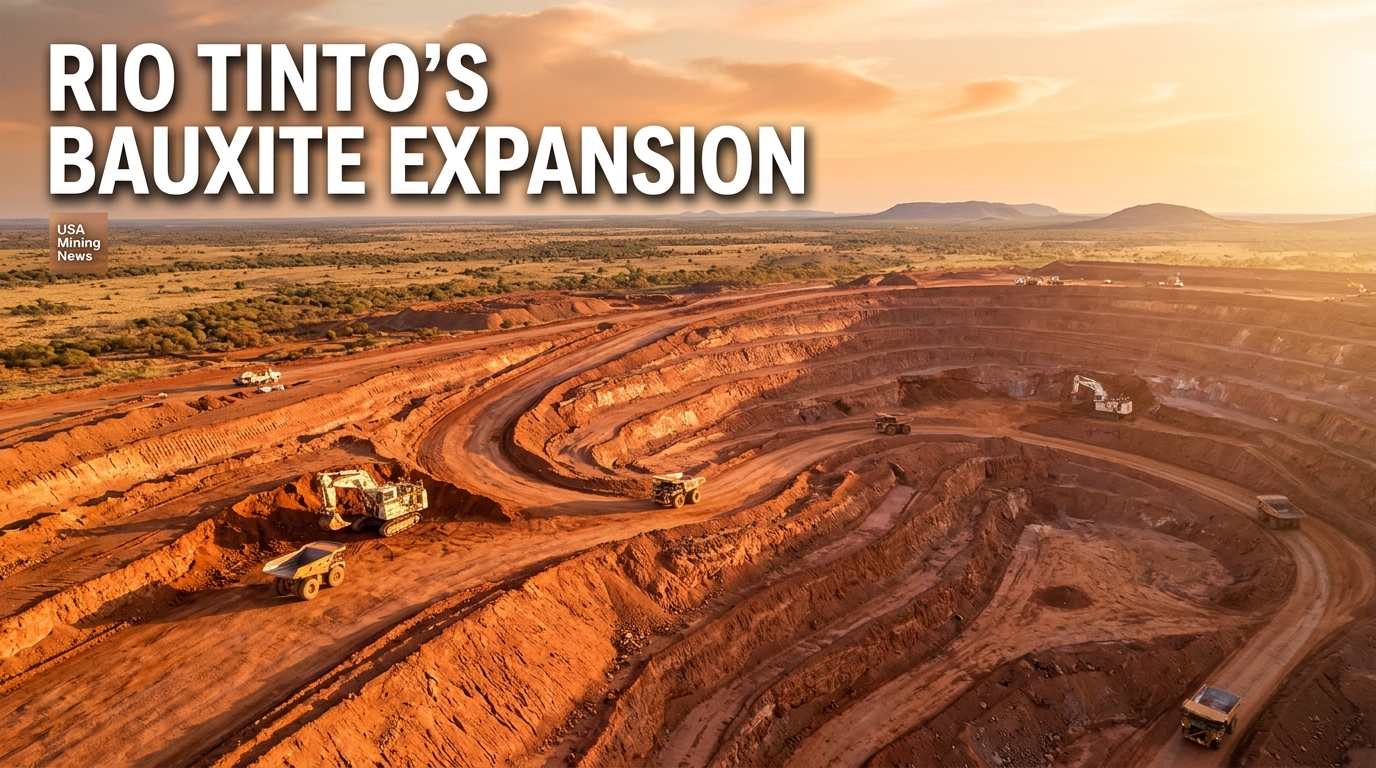
In a major strategic move to bolster its global bauxite supply and secure the future of its integrated aluminium value chain, mining giant Rio Tinto has announced a substantial $1.9 billion (£1.42 billion) investment in the Kangwinan bauxite project. Located on the Western Cape York Peninsula in Queensland, Australia, this brownfield development is designed to add 20 million tonnes per annum (mtpa) of bauxite production capacity, leveraging existing infrastructure at the company’s extensive Weipa Operations. This commitment represents a strong vote of confidence in the region’s mineral endowment and Rio Tinto’s long-term operational footprint in Australia.
The Kangwinan project is poised to become a cornerstone of Rio Tinto’s bauxite portfolio, with early works having commenced in 2025. The development schedule anticipates an intensification of construction activities from 2027, leading to first bauxite output in 2029, and subsequently reaching full production capacity by 2032. This phased approach allows for careful project execution and integration into the existing operational framework of Weipa, which currently stands as one of the world's premier bauxite hubs.
Strategic Imperatives: Securing Long-Term Bauxite Supply
The core objective behind the Kangwinan project is multifaceted, addressing both current operational challenges and long-term market demand. Critically, Kangwinan is intended to secure the future of Rio Tinto’s Weipa Operations, ensuring a sustained supply of high-quality bauxite to both international customers and local alumina refineries. Bauxite, as the primary ore for aluminium, is fundamental to a vast array of industries, from automotive and aerospace to construction and consumer goods. Maintaining a reliable and cost-effective supply is paramount for global aluminium producers, including Rio Tinto's own downstream facilities.
The project holds particular significance in the context of Rio Tinto’s aging assets. Kangwinan’s new production capacity is expected to gradually replace output from the Andoom mine, another component of the Weipa Operations, which is nearing the end of its operational life this decade. Furthermore, the increased capacity from Kangwinan will help offset the planned conclusion of production at the Gove mine in the Northern Territory in 2029. These strategic replacements are vital for maintaining Rio Tinto’s overall bauxite output levels and market position in an industry where resource depletion is a constant consideration.
Once Kangwinan is fully operational, Weipa Operations’ total capacity is projected to increase to approximately 44 mtpa. This represents a significant uplift from the current levels of around 38 mtpa, solidifying Weipa’s role as a leading global bauxite supplier. The expansion ensures that Rio Tinto can continue to meet the demand of its integrated mine-to-metal aluminium value chain, which extends from bauxite mining through alumina refining to aluminium smelting.
Operational Details and Infrastructure Enhancements
The Kangwinan project, situated approximately 15 kilometers south-east of Rio Tinto’s existing Amrun mine – itself located 40 kilometers south of Weipa – benefits from its proximity to established infrastructure. As a brownfield development, it capitalizes on the extensive existing facilities at Weipa, which can lead to cost efficiencies and a potentially faster development timeline compared to a greenfield project.
Key infrastructure plans for the Kangwinan facility include the construction of a 15-kilometer conveyor system. This conveyor will transport ore to expanded stockyard facilities, which are crucial for stockpiling and blending bauxite before shipment. From there, the ore will be moved to the existing Amrun wharf. The Amrun wharf itself will undergo significant upgrades to accommodate larger vessels, a critical enhancement aimed at improving supply chain efficiency and reducing freight costs – a perennial focus for bulk commodity producers like Rio Tinto.
The commitment to upgrading logistics infrastructure underscores a broader industry trend towards optimizing the entire value chain, from mine gate to end-user. Larger vessels and efficient loading systems can significantly lower the per-tonne cost of transportation, directly impacting the competitiveness of the bauxite produced. This focus on efficiency is a hallmark of major mining operations seeking to maintain profitability in fluctuating commodity markets.
Economic Impact and Workforce Commitment
The Kangwinan project is not only a strategic investment in mineral resources but also a substantial economic injection into the Queensland regional economy. The construction phase, which will increase in intensity from 2027, is expected to generate more than 1,300 construction-related jobs. This influx of employment opportunities will provide a significant boost to local communities in Western Cape York.
Beyond the construction phase, Rio Tinto has emphasized its commitment to the long-term sustainability of its regional workforce. The company expects the project to help maintain its residential workforce of approximately 1,500 people in Western Cape York over the longer term. This focus on a residential workforce, as opposed to fly-in, fly-out (FIFO) arrangements, is often preferred by local communities and governments, fostering greater community stability and local economic integration.
Jérôme Pécresse, CEO of Rio Tinto Aluminium and Lithium, articulated the broader significance of the investment: “Kangwinan is a strong vote of confidence in Weipa, in the quality of its bauxite, the capability of its workforce, and the future of the communities and businesses closely connected to our operations. The project represents the most significant new mining investment in Queensland in recent years and is a sign of Rio Tinto’s long-term commitment to its bauxite business, the state and our integrated mine-to-metal aluminium value chain.” His statement underscores the intertwining of business strategy with regional economic development and community engagement.
Long-Term Vision and Regional Consolidation
Rio Tinto’s strategic planning for its Queensland bauxite operations extends beyond the Kangwinan development. The company recently entered into an agreement last month to acquire the adjacent Aurukun Bauxite Project from Glencore and Mitsubishi, a transaction that is currently pending government approvals. This acquisition, combined with the new Kangwinan capacity and the existing Amrun operations, paints a clear picture of Rio Tinto’s comprehensive regional strategy.
The consolidation of these operations – Amrun, Kangwinan, and Aurukun – is projected to support Weipa’s activities beyond the middle of the century. This long-term outlook is characteristic of major mining companies that operate on decades-long horizons, requiring substantial upfront capital investment and meticulous resource planning. The acquisition of Aurukun adds further resource depth and flexibility, allowing Rio Tinto to optimize its mining sequence and extract maximum value from the Western Cape York bauxite province for many decades to come.
For investors and industry professionals, Rio Tinto’s $1.9 billion commitment to Kangwinan signals not just an expansion of capacity, but a strategic fortification of its position as a leading global supplier of bauxite. It demonstrates a proactive approach to managing resource depletion, enhancing operational efficiencies, and securing critical raw material supply for the global aluminium industry. This investment solidifies Queensland’s role as a vital hub for bauxite production and reaffirms Rio Tinto’s enduring commitment to its Australian operations and integrated value chain.