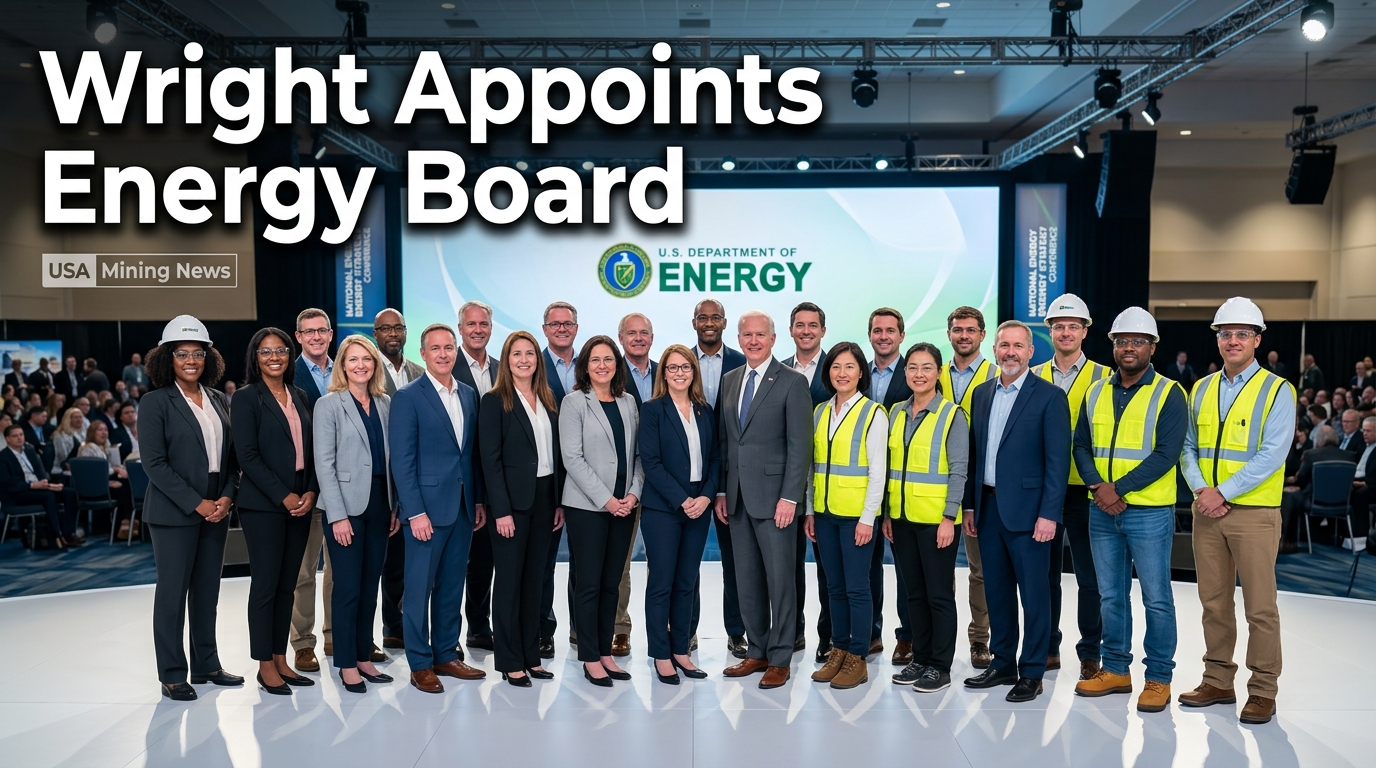
WASHINGTON – On July 9, 2026, the U.S. Department of Energy (DOE) unveiled the newly appointed members of its Secretary of Energy Advisory Board (SEAB). This strategic move underscores the department's heightened focus on strengthening American energy independence and maintaining the nation's vanguard position in scientific and technological innovation. The board, composed of 20 distinguished leaders spanning a wide array of expertise, is poised to advise Secretary of Energy Chris Wright on critical policy decisions and operational improvements over the next two years, with significant ramifications for the mining sector globally.
The Mandate of the Secretary of Energy Advisory Board
The SEAB serves as a pivotal consultative body, tasked with providing the Secretary of Energy with informed counsel on emergent issues pertinent to the DOE's expansive activities. Its mandate includes offering recommendations to enhance the department's operational effectiveness and strategic direction. Each of the newly appointed members will serve for a two-year term, expiring in May 2028, with the board slated to convene quarterly to deliberate on pressing energy matters.
U.S. Secretary of Energy Chris Wright emphasized the significance of these appointments, stating, “It's an honor to welcome these exceptional leaders to the Secretary of Energy Advisory Board. Their diverse backgrounds and expertise will be invaluable as we work together to expand access to affordable, reliable, and secure American energy.” This statement highlights the administration's commitment to a holistic energy strategy, one that directly intersects with the vast resource demands placed upon the global mining industry.
Mining Industry Nexus: Raw Materials for Energy Dominance
For the mining industry, the composition and mission of the SEAB are of paramount importance. The pursuit of "American energy dominance" and the goal of "affordable, reliable, and secure American energy" are inextricably linked to a stable and robust supply chain of raw materials. Every aspect of modern energy production, transmission, and consumption—from fossil fuels to cutting-edge renewable technologies—relies heavily on various mined commodities.
Consider the foundational elements: the continued operation of existing energy infrastructure requires a steady supply of steel, copper, and other industrial metals. The expansion of renewable energy capacity, a key component of future energy security, drives demand for critical minerals such as lithium, cobalt, nickel, rare earth elements, and graphite for batteries; copper and silicon for solar panels and wind turbines; and various other specialty metals for advanced components. Even traditional energy sources, like natural gas, rely on an intricate mining supply chain for drilling equipment, infrastructure development, and transportation. Furthermore, the push for advanced nuclear power, exemplified by companies like X-energy represented on the board, necessitates a secure domestic supply of uranium and specialized materials for reactor construction. The strategic importance of these minerals has led to increased governmental focus on domestic extraction, processing, and recycling capabilities, making the DOE's advisory functions directly relevant to mining sector outlooks.
A Board of Diverse Expertise: Leaders Shaping the Energy Landscape
The selection of SEAB members reflects a deliberate effort to encompass a broad spectrum of expertise across the energy ecosystem. This diversity is crucial for tackling the multifaceted challenges and opportunities facing the U.S. energy sector, and by extension, the industries that support it, including mining. The appointed members, in alphabetical order, bring a wealth of experience:
- Traditional Energy Leaders: Several appointees represent the backbone of traditional energy supply. Eimear P. Bonner, CFO of Chevron, brings a deep understanding of global oil and gas markets and large-scale capital allocation. Cody Campbell, Co-CEO of Double Eagle Holdings, and Alex Cranberg, Chairman of Aspect Energy, offer invaluable perspectives from oil and gas exploration and production. Joseph W. Craft III, CEO of Alliance Resource Partners, represents the vital coal mining and energy generation sector, highlighting the continued importance of this resource. John Addison, Former Executive at Vitol, contributes expertise in global energy trading and commodity markets. George Solich, President and CEO of FourPoint Energy, further reinforces the board's grasp of natural gas operations. Maryann Mannen, Chairman, President and CEO of Marathon, offers insights from the refining and petrochemical industry, which are crucial consumers of minerals in their operations.
- Power Generation and Grid Infrastructure: The strength and resilience of the American power grid are represented by key figures. Bill Fehrman, Chairman of the Board of Directors, President and CEO of American Electric Power, leads one of the nation's largest utilities and offers critical insights into grid modernization and stability. Michael Polsky, Founder and Executive Chairman of Invenergy, represents a leading force in renewable energy development and large-scale power generation. Scott Strazik, President and CEO of GE Vernova, brings expertise in diverse power technologies, including renewables, nuclear steam power, and grid solutions, all of which are significant consumers of various metals and minerals. Jack Fusco, Chairman, President and CEO of Cheniere, underscores the growing role of liquefied natural gas (LNG) in global energy supply and its associated infrastructure demands.
- New Energy and Advanced Technologies: The board also includes visionaries for the next generation of energy. J. Clay Sell, CEO of X-energy, is at the forefront of advanced nuclear reactor development, a sector with unique mineral demands and safety considerations. The inclusion of figures from the technology sphere, such as Tag Greason, Co-CEO of QTS Data Centers, and Vladimir Troy, VP of AI Infrastructure at NVIDIA, signifies a recognition of the increasing convergence of energy and digital technologies. Their insights will be critical in discussing energy efficiency, AI applications in grid management, and the energy footprint of rapidly expanding digital infrastructure.
- Finance and Investment: The financial bedrock of the energy transition is represented by Doug Kimmelman, Founder and Executive Chairman of Energy Capital Partners, and Wil VanLoh, Founder and CEO of Quantum Capital Group. Their expertise in energy-focused private equity and investment strategies will be crucial in guiding DOE initiatives related to project financing, infrastructure investment, and the capital required for both traditional and emerging energy technologies, including large-scale mining projects.
- Research, Policy, and Workforce Development: Broader strategic and societal perspectives are also deeply integrated. Steve Koonin, Edward Teller Senior Fellow at Stanford University's Hoover Institution, brings a strong scientific and policy research background. Fisk Johnson, Chairman and CEO of SC Johnson, offers a perspective from a multi-national manufacturer with a vested interest in sustainable supply chains and energy costs. Finally, Mike Rowe, CEO of mikeroweWORKS Foundation, represents a strong voice for workforce development and skilled trades, a critical area for addressing the labor needs of the mining and energy sectors.
Implications for Mining Investments and Development
The strategic directions advised by the SEAB could significantly influence future DOE policies, directly impacting the mining industry. Recommendations on investments in energy infrastructure, federal loan programs for critical mineral projects, or research and development initiatives for new energy technologies will cascade down to demand for specific commodities and incentives for domestic production. For instance, an emphasis on grid modernization could spur demand for vast quantities of copper, aluminum, and rare earth magnets for advanced transformers and transmission lines. A focus on electric vehicle charging infrastructure would underscore the need for lithium, nickel, and cobalt. Furthermore, any policy discussions regarding responsible sourcing, environmental permitting, and community engagement in energy projects will inevitably touch upon best practices in mining operations.
Investors in the mining sector will be keenly observing SEAB's recommendations for signals on future commodity demand, potential regulatory shifts, and opportunities for public-private partnerships. The board's focus on "secure American energy" suggests a continued prioritization of strengthening domestic supply chains for essential minerals, potentially leading to streamlined permitting processes, financial incentives for U.S.-based mining operations, and investments in mineral processing capabilities.
Looking Ahead: Navigating a Complex Energy Future
As the U.S. and global energy landscapes continue to evolve, marked by geopolitical complexities, technological advancements, and the imperative for sustainable practices, the role of the Secretary of Energy Advisory Board will be critical. The diverse expertise assembled by Secretary Wright signals a comprehensive approach to energy strategy, one that acknowledges the interdependencies across various energy sources, technologies, and underlying raw material requirements.
For the mining industry, staying attuned to the DOE's direction, informed by its expert advisory board, is not merely prudent but essential for strategic planning. The calls for "affordable, reliable, and secure American energy" translate directly into a demand for resilient and ethically sourced mineral supply chains. The SEAB's tenure, extending through May 2028, will undoubtedly shape policies that determine the future trajectory of energy development in the U.S., placing the mining sector at the very core of delivering the foundational resources for this ambitious vision.