U.S. Secretary of Energy Chris Wright announced on February 11, 2026, a significant shift in U.S. policy towards Venezuela, signaling a renewed focus on commerce, peace, and prosperity through economic engagement. Following meetings with Interim President Delcy Rodriguez in Caracas, Secretary Wright detailed President Trump's agenda to dramatically increase Venezuelan oil, natural gas, and electricity production through an expedited licensing process. Crucially for the mining industry, Wright also highlighted Venezuela's "immense" natural resources in "mining, minerals," indicating a broader strategic intent to unlock the country's full resource potential and create substantial investment opportunities for U.S. and international firms.
A New Dawn for Venezuelan Resources: U.S. Signals Major Policy Shift Towards Economic Engagement
**Caracas, Venezuela – February 11, 2026** – In a development poised to reshape the geopolitical and economic landscape of the Americas, U.S. Secretary of Energy Chris Wright today delivered remarks alongside Interim President Delcy Rodriguez at the Miraflores Palace in Caracas, signaling a profound shift in U.S. foreign policy toward Venezuela. The visit, announced via Energy.gov, underscores President Trump's "passionately committed" agenda to transform the relationship between the two nations, emphasizing a future built on commerce, peace, and prosperity, rather than conflict. For the global mining industry, this announcement carries significant weight, potentially unlocking access to Venezuela’s "immense" mineral wealth, previously largely inaccessible due to a complex web of sanctions and political instability.
The strategic pivot, framed by Secretary Wright as part of a broader initiative to "make the Americas great again," explicitly targets economic revitalization within Venezuela, with direct benefits envisioned for the United States and the wider Western Hemisphere. Central to this new approach is a proactive effort by the U.S. government to dismantle previous barriers to trade and investment, creating an environment conducive to business growth and resource development.
Dismantling Barriers: A Path for Business Re-Engagement
Secretary Wright articulated a clear, actionable strategy for economic re-engagement, highlighting Washington D.C.'s intensive efforts to facilitate business operations. "Our government in Washington, DC, has been working 7 days a week to issue licenses," Wright stated, detailing how these expedited authorizations are designed to empower a broad spectrum of entities:
* **Existing businesses in Venezuela:** Permitting their continued operation and expansion.
* **New businesses that want to enter Venezuela:** Opening avenues for fresh foreign direct investment.
* **Venezuelan national companies:** Enabling their participation in an invigorated economy.
The scope of these licenses is comprehensive, covering critical activities essential for economic recovery and growth: the ability to "buy products, invest money, raise oil production, create new jobs, [and] grow export revenue." This concerted effort, according to Secretary Wright, aims to "set the Venezuelan people and the economy free" from the constrictive economic pressures that have long hampered the nation. This systematic approach to facilitating business operations directly addresses one of the primary hurdles for international mining companies: the regulatory and legal uncertainty that has plagued investment in Venezuela for years.
Venezuela’s Immense Wealth: The Mining and Minerals Opportunity
While the immediate focus of Secretary Wright's remarks touched heavily on the revitalization of Venezuela's energy sector—specifically mentioning a "dramatic increase in Venezuelan oil production, in Venezuelan natural gas production, in Venezuelan electricity production" targeted for "this year" (2026)—the broader implications for the mining and minerals sector are profound. Secretary Wright explicitly noted, "there's much talk, and we discussed it today, of the enormous natural resources in Venezuela. Oil, natural gas, **mining, minerals, they are indeed immense**."
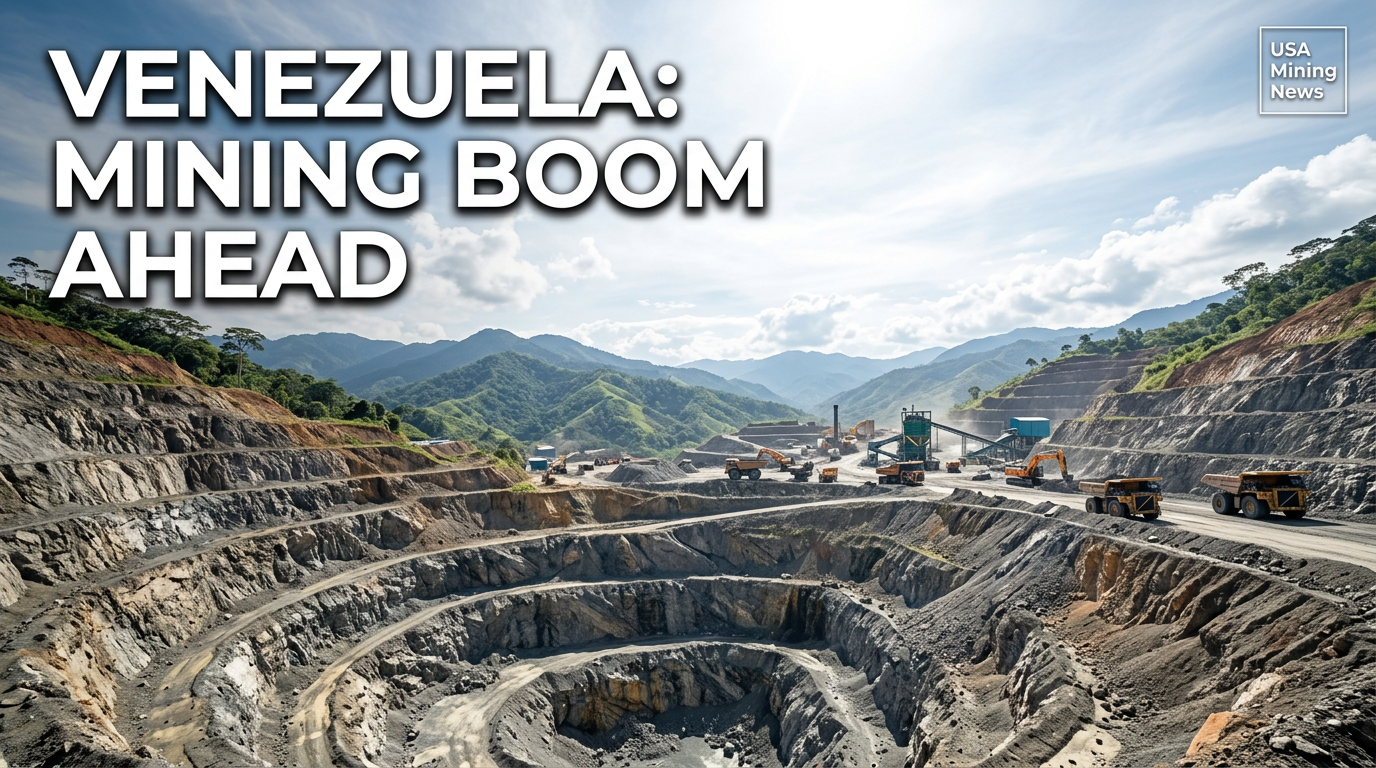
This direct acknowledgement of Venezuela's immense mineral wealth serves as a crucial signal to the global mining industry. Geologically, Venezuela is recognized for vast untapped or underdeveloped mineral deposits. Historically, the country has been known for significant reserves of gold, iron ore, bauxite, diamonds, and a range of strategic minerals including coltan. The Orinoco Mining Arc, established in 2016, though controversial in its early implementation, underscored the government's recognition of this vast potential. However, development has been severely constrained by political instability, lack of investment, and the impact of international sanctions.
The U.S. policy shift, with its emphasis on "issuing licenses" and fostering an environment for "investment money" and "grow export revenue," directly targets the precise mechanisms needed to unlock this dormant mining potential. For companies specializing in exploration, extraction, processing, and related services, the prospect of a more stable, legally supported operational environment represents a paradigm shift. The ability to conduct due diligence, secure permits, import necessary equipment, and export finished products under a sanctioned and collaborative framework could transform Venezuela into a significant player in several commodity markets. This would be a stark contrast to the previous environment where legitimate operations were hampered, and informal or illicit mining activities sometimes proliferated.
Operational Upswing and Broader Economic Benefits
The overarching goal articulated by Secretary Wright transcends mere resource extraction; it is fundamentally about human development and regional stability. "All of these are to increase the job opportunities, the wages, and the quality of life for all of the Venezuelans across the country," he stated. This focus on improving human capital, described as "more important than those natural resources is the incredible humans, what Venezuelans are, their pride, their education, their passion to drive forward," resonates deeply with modern mining’s emphasis on sustainable development and local engagement.
For the mining sector, this means that future projects will likely operate under increased scrutiny regarding environmental, social, and governance (ESG) standards. Companies seeking to capitalize on this opening will need to demonstrate clear benefits for local communities, robust environmental protection plans, and alignment with international best practices. While the "dramatic increase" in production for "this year" (2026) is explicitly tied to oil, gas, and electricity, the groundwork laid by the expedited licensing and commitment to economic prosperity creates a fertile environment for mining investments to follow in the medium to long term, contributing to job creation and improved infrastructure. Such developments would also "enormously benefit the United States and the Western Hemisphere," fostering greater energy security and a more stable economic ecosystem.
Challenges and the Road Ahead for Foreign Investment
Despite the optimistic tone, Secretary Wright acknowledged that the path forward is not without its hurdles. "We both spoke very candidly about the tremendous opportunities in front of us, and some of the problems and challenges, and we committed to work together to solve those problems and challenges." These "problems and challenges" in Venezuela are well-documented and range from infrastructure deficiencies, legal and regulatory complexities, security concerns, to public health issues.
For mining investors, particular considerations will include:
* **Regulatory Framework Stability:** Ensuring that the licensing process leads to durable, predictable legal frameworks for land tenure, environmental compliance, and taxation.
* **Infrastructure Investment:** Significant investment will be required in power, transportation, and port facilities to support large-scale mining operations and export logistics.
* **Security:** Addressing security concerns in remote mining regions to protect personnel and assets.
* **Skilled Labor and Education:** While Secretary Wright praised the Venezuelan people, re-skilling and training programs will be essential to meet the technical demands of modern mining operations.
* **International Confidence:** Rebuilding trust among international financial institutions and private investors will be a gradual process, dependent on consistent policy implementation and demonstrable progress.
The commitment to "work together to solve those problems and challenges" suggests that the U.S. and Venezuelan authorities are prepared for a collaborative approach to mitigate these risks, which is crucial for attracting the significant capital required for new mining projects.
Market Implications for the Mining Sector
The announcement fundamentally alters the risk-reward calculus for mining companies considering Venezuela. Previously, the country represented an ultra-high-risk, largely inaccessible jurisdiction. This policy shift introduces a mechanism for sanctioned, legitimate engagement. Companies with experience operating in challenging jurisdictions, particularly those with a focus on precious metals, iron ore, or bauxite, may be the first to revisit their strategies.
The potential re-entry of Western companies could also spur competition and raise operating standards, pushing the Venezuelan mining sector towards greater efficiency and environmental responsibility. Equipment suppliers, engineering firms, and mining technology companies will also watch closely for tenders and partnership opportunities as new projects potentially come online. While the immediate impact on global commodity prices might be limited given the lead time for mining project development, the long-term prospect of a significant new source of diverse minerals entering the global supply chain could influence market dynamics.
Conclusion: A Transformative Vision for Resource Development
Secretary Chris Wright's remarks alongside Interim President Delcy Rodriguez mark a pivotal moment, ushering in a new chapter of U.S.-Venezuelan relations founded on economic diplomacy. President Trump's broader agenda to "make the Americas great again" – focusing on "commerce, peace, prosperity, security" – is now taking concrete shape through the commitment to expedited licensing and investment. While oil and gas are positioned for rapid growth in 2026, the explicit mention of Venezuela's "immense" natural resources in "mining, minerals" firmly places this sector on the agenda for future revitalization.
For the mining industry, this represents a cautious yet significant opening. The promise of an environment where businesses can invest, operate, create jobs, and grow export revenue, backed by a collaborative U.S.-Venezuelan framework, presents a transformative opportunity. Success will hinge on the sustained commitment of both governments to address existing challenges and build a transparent, stable, and secure investment landscape, ultimately benefiting the Venezuelan people, the United States, and the broader Western Hemisphere. "Viva Venezuela, y viva los Estados Unidos!" concluded Secretary Wright, encapsulating the aspirational vision for this renewed partnership.