WASHINGTON – In a significant move reverberating through the U.S. energy sector, U.S. Secretary of Energy Chris Wright issued a pivotal directive on March 13, 2026, ordering Sable Offshore Corp. to resume operations of its Santa Ynez Unit and the integrated Santa Ynez Pipeline System. This federal intervention, rooted in authorities granted by the Defense Production Act and an Executive Order on National Defense Resources Preparedness, underscores a determined effort to fortify domestic energy supply chains and mitigate national security vulnerabilities exacerbated by California's long-standing energy policies. The immediate objective is to address growing supply disruption risks that have left the West Coast, including vital U.S. military installations, increasingly dependent on foreign oil sources.
Secretary Wright emphasized the Trump Administration’s unwavering commitment to prioritizing American energy security. He stated, “The Trump Administration remains committed to putting all Americans and their energy security first. Unfortunately, some state leaders have not adhered to those same principles, with potentially disastrous consequences not just for their residents, but also our national security.” This strong statement highlights a growing federal concern over state-level policies perceived to undermine broader national interests in energy independence and strategic readiness. The directive is specifically designed to “strengthen America’s oil supply and restore a pipeline system vital to our national security and defense, ensuring that West Coast military installations have the reliable energy critical to military readiness.”
The Strategic Imperative: National Security and Energy Independence
The Secretary’s directive brings into sharp focus the intricate relationship between state energy policy, national security, and the reliability of critical infrastructure. The Defense Production Act (DPA), a Cold War-era statute, grants the President broad authority to compel industries to prioritize and accept contracts for materials and services deemed necessary for national defense. Its invocation in this context signals a federal determination that domestic oil production is a matter of paramount national security, capable of overriding local or state regulatory impediments. This authority, delegated through Executive Order "National Defense Resources Preparedness," as amended by President Trump's Executive Order "Adjusting Certain Delegations Under the Defense Production Act," provides the legal foundation for the Department of Energy's direct mandate to Sable Offshore.
California's energy landscape has undergone a dramatic transformation over recent decades. While the state once supplied nearly 40 percent of U.S. oil production, "decades of radical state policies targeting reliable energy sources have driven a decline in domestic output." Concurrently, fuel demand within California remains among the highest in the nation. This incongruity has created a significant reliance on imported crude oil, with "more than 60 percent of the oil refined in California" now originating from overseas. A substantial portion of these imports transits through the Strait of Hormuz, a narrow maritime choke point in the Middle East that is highly vulnerable to geopolitical instability and disruption. This reliance not only introduces volatility into regional fuel prices but also poses an undeniable “serious national security threat” by exposing a critical segment of the U.S. energy supply to distant geopolitical risks.
Sable Offshore and the Santa Ynez Unit: Operational Capacity and Impact
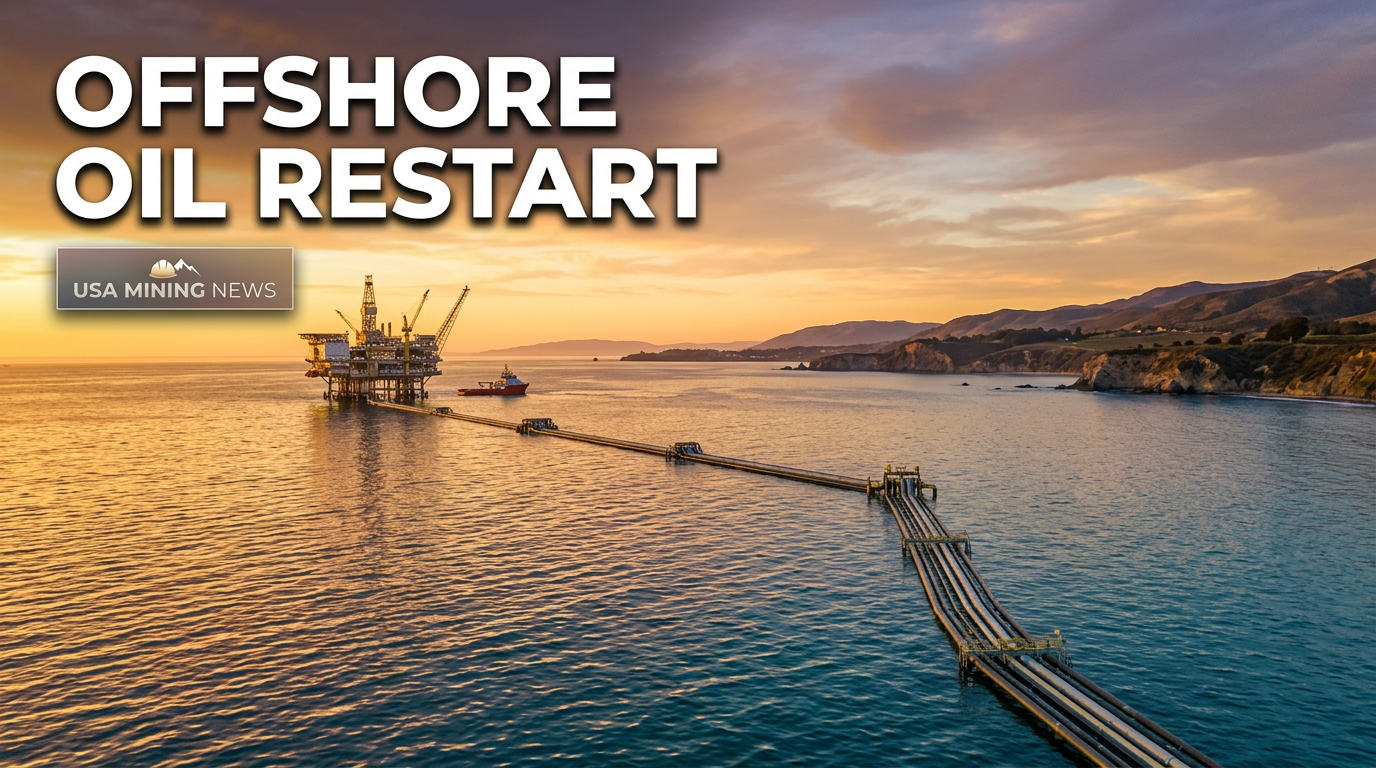
Sable Offshore Corp.'s Santa Ynez Unit (SYU) is a critical asset within California's offshore oil and gas infrastructure, located in federal waters off the coast of Santa Barbara County. The SYU typically comprises offshore platforms, subsea pipelines, and an onshore processing facility. When fully operational, Sable's facility boasts a substantial production capacity of approximately 50,000 barrels of oil per day. The restoration of this capacity is projected to deliver a significant 15 percent increase to California’s in-state oil production. From an import displacement perspective, this domestic output can replace nearly 1.5 million barrels of foreign crude each month, directly mitigating reliance on geopolitically sensitive foreign sources.
The directive to restore operations implies a comprehensive recommissioning process that Sable Offshore will now undertake. This often involves intricate technical procedures, including thorough inspections of subsea infrastructure, maintenance of topside facilities on offshore platforms, integrity checks of the Santa Ynez Pipeline System, and the re-establishment of necessary permits and operational protocols. The company currently employs more than 100 workers and approximately 400 contractors in Santa Barbara County. The recommissioning and sustained operation of the Santa Ynez Unit and pipeline system are expected to necessitate the creation of “hundreds of additional American energy jobs,” providing a substantial economic boost to the local economy through “millions in local economic activity.” This includes specialized roles for engineers, geoscientists, technicians, vessel operators, and support staff, along with a ripple effect across various service industries in the region.
Pipeline Logistics and Domestic Supply Chain Optimization
A key aspect of Secretary Wright's directive is the strategic emphasis on improving the efficiency of domestic oil transportation. Unlike other regions of the country, California "remains largely disconnected from interstate crude pipelines that move American oil to refineries across the United States." This isolation forces California to rely heavily on coastal shipping or local pipelines, limiting its ability to leverage national crude oil supplies.
The action explicitly "prioritizes pipeline transportation capacity to ensure crude produced offshore California moves through the Las Flores Pipeline System to Pentland Station and into interstate pipelines." This logistical optimization is critical. The Las Flores Pipeline System is part of the broader infrastructure that transports crude from offshore platforms to onshore processing facilities, eventually connecting to terminal points like Pentland Station. From Pentland Station, ensuring this crude can integrate into the broader interstate pipeline network allows "American energy to reach domestic refineries more efficiently." This strategic routing is designed not only to enhance the security of supply for California but also to support the overall domestic refining capacity of the United States, thereby reducing the state's and, by extension, the nation's "reliance on foreign oil vulnerable to geopolitical disruption."
Broader Implications for the Mining and Energy Industry
For professionals and investors tracking the mining and energy sectors, Secretary Wright's directive sends a clear signal about the federal government's perspective on domestic resource production. This action highlights several critical industry considerations:
- Federal Preemption and State Policy: The use of the Defense Production Act demonstrates a willingness by the federal government to intervene directly in energy production matters that it deems vital for national security, potentially overriding state-level regulatory hurdles or policy preferences. This sets a precedent for how future federal administrations might navigate conflicts between state environmental policies and national strategic interests.
- Resilience of Supply Chains: The directive underscores the ongoing importance of diverse and resilient energy supply chains. Reducing dependence on volatile international oil markets and critical chokepoints like the Strait of Hormuz is a core tenet of national energy security that benefits the entire domestic energy industry.
- Investment Climate and Regulatory Certainty: For companies operating or looking to invest in U.S. energy resources, such federal interventions could offer a degree of regulatory certainty, especially in regions traditionally resistant to fossil fuel development. It signals that certain domestic projects may receive federal backing if deemed critical for national defense.
- Economic Impact and Job Creation: The creation of hundreds of new jobs and millions in local economic activity associated with restoring operations reinforces the significant socio-economic benefits derived from established energy projects, a powerful argument often put forth by the mining and extractives industries.
- Balance of Energy Transition: While the global energy landscape is shifting towards renewables, this directive illustrates that traditional fossil fuels, particularly oil, remain indispensable for national security, industrial operations, and military readiness in the near to medium term. It highlights the complex balance between transitioning to new energy sources and maintaining a robust, secure supply of conventional fuels.
Future Outlook
The directive from Secretary Wright marks a pivotal moment in the ongoing debate over U.S. energy policy and federal-state jurisdiction. Sable Offshore Corp. is now tasked with expeditiously restoring the Santa Ynez Unit and pipeline systems, a process that will involve intricate planning, significant capital allocation for necessary maintenance and upgrades, and close coordination with federal agencies. While the immediate focus is on operational resumption, this action is likely to spark further discussions and possibly legal challenges regarding the scope of federal authority under the Defense Production Act in relation to state sovereignty over environmental and energy policies.
Ultimately, the order is designed to achieve multiple strategic objectives: to significantly bolster America’s domestic oil supply, reduce the nation’s susceptibility to international energy market fluctuations and geopolitical risks, and ensure the uninterrupted, reliable energy supply essential for the operational readiness of U.S. military forces, especially those stationed on the West Coast. As Sable Offshore moves to comply with this federal mandate, the industry will keenly observe its impact on U.S. energy independence, national security, and the evolving dynamic between federal oversight and regional energy governance.