Solvay and Viridis Forge Strategic Alliance to Diversify Rare Earth Supply Chain
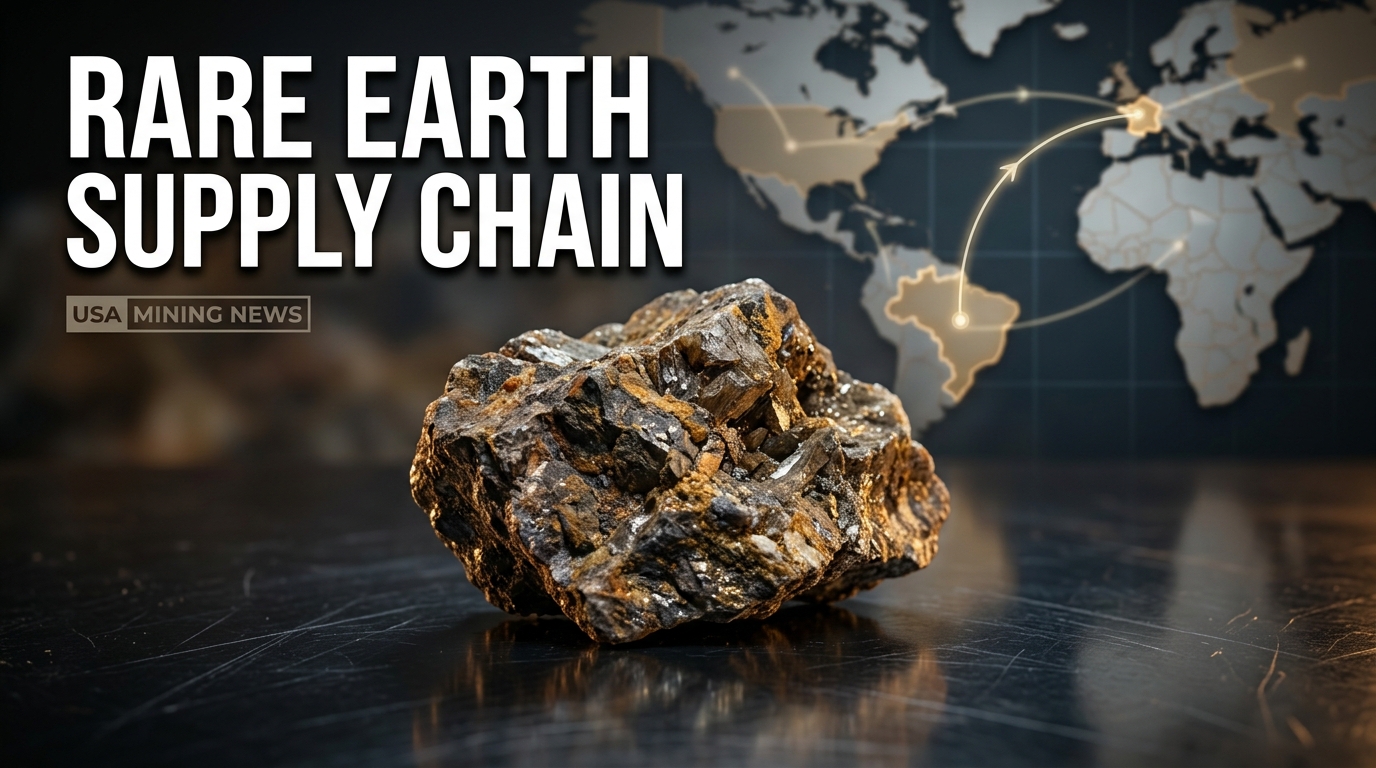
In a significant move aimed at bolstering the resilience and diversification of the global rare earth materials supply chain, specialty chemicals giant Solvay and Viridis Mining and Minerals have formally entered into a non-binding Letter of Intent (LoI). Announced on June 2, 2026, this preliminary agreement outlines a collaborative framework for the supply of mixed rare earth carbonate (MREC) from Brazil, destined for Solvay's advanced processing facility in France. The partnership signals a proactive industry response to persistent supply vulnerabilities and the escalating demand for critical rare earth elements essential for modern technological applications.
The global rare earth market has long been characterized by concentrated supply chains, presenting inherent geopolitical and economic risks for industries reliant on these vital materials. This LoI represents a strategic attempt by key players to establish alternative, secure, and sustainable sourcing channels, moving beyond traditional dependencies. By leveraging Brazil's emerging rare earth potential and France's established processing capabilities, the collaboration between Solvay and Viridis could set a precedent for future Western-led initiatives in the critical minerals sector.
The Core Agreement: Brazil to France Pipeline
The crux of the LoI revolves around Viridis Mining and Minerals, an emerging player in the rare earth sector, providing mixed rare earth feedstocks from its Colossus Rare Earth Project located in Brazil. These raw materials, specifically in MREC form, would then be shipped to Solvay’s state-of-the-art rare earth separation facility in La Rochelle, France, for further processing. Solvay, known for its extensive expertise in specialty chemicals, has committed to contributing its advanced rare earth separation processing technology and unparalleled know-how. This technological transfer and collaborative development are expected to significantly accelerate the development and the subsequent supply of high-purity feedstock from Viridis's Brazilian operations.
The La Rochelle plant is a cornerstone of Solvay's rare earth strategy, recognized as one of the largest rare earth separation facilities outside of China. Its capacity and technological sophistication are crucial for transforming MREC into individual, high-purity rare earth oxides and metals, which are the fundamental building blocks for a myriad of advanced industrial applications. The proposed transaction would therefore integrate Viridis's primary mineral resource with Solvay's advanced metallurgical processing capabilities, creating a more vertically aligned and geographically diversified supply pathway.
Strategic Imperative: Diversifying Critical Feedstocks
The primary driver behind this agreement is the urgent need to secure critical feedstocks and enhance diversification within the global rare earth materials supply chain. Rare earth elements (REEs) are a group of 17 chemically similar metallic elements that possess unique magnetic, catalytic, and optical properties. These properties make them indispensable in numerous high-growth and strategically important sectors, including:
- Renewable Energy Systems: Particularly in the permanent magnets used in wind turbine generators.
- Electric Vehicle (EV) Motors: High-performance permanent magnets, enabling compact and efficient electric drivetrains.
- Advanced Electronics: Components for smartphones, computers, optical fibers, and display technologies.
- Defense Systems: Guidance systems, stealth technology, communication equipment, and specialized alloys for military aircraft.
The feedstocks identified in the LoI are particularly significant, including the light rare earth elements (LREEs) neodymium (Nd) and praseodymium (Pr), and the heavy rare earth elements (HREEs) dysprosium (Dy) and terbium (Tb). These four elements are paramount for the production of high-strength permanent magnets, often referred to as NdFeB magnets, which are critical for electric motors and generators. Global demand for these magnets is projected to surge over the next decade, driven largely by the electrification of transportation and the expansion of renewable energy infrastructure. Furthermore, the materials from Colossus are also reported to contain additional heavy rare earths such as samarium (Sm), gadolinium (Gd), and yttrium (Y), which find applications across various technology sectors, including automotive, electronics, medical imaging, and aerospace components.
For years, the global production and processing of rare earths have been heavily concentrated in a single geographical region, leading to concerns about supply security and price volatility. Initiatives like the Solvay-Viridis partnership are vital for mitigating these risks, fostering a more balanced global distribution of rare earth processing capabilities, and ensuring a stable supply for industries outside of China. This strategic realignment is not merely a commercial endeavor but a geopolitical imperative for many nations seeking to secure their technological and economic futures.
Key Players and Industry Vision
Solvay SA is a multinational chemical company with headquarters in Brussels, Belgium. With a history spanning over 150 years, Solvay has developed extensive expertise across a broad range of specialty polymers, composites, and essential chemicals. Its Special Chem business segment, under which the rare earth operations fall, is focused on advanced materials and high-performance solutions. The company's commitment to rare earth separation technologies positions it as a critical enabler for a diversified global supply. An Nuyttens, President of Solvay’s Special Chem business, articulated the significance of this potential collaboration, stating, “This proposed transaction would mark a significant milestone in strengthening and diversifying our upstream supply chain. By partnering with Viridis, we would ensure another reliable source of raw materials that would allow us to maximise our processing capacity and meet the growing global demand for high-purity, sustainably processed rare earth elements.” Her statement underscores Solvay’s strategic objective to leverage its processing capacity fully by securing diverse feedstock inputs, thereby catering to the accelerating global demand.
Viridis Mining and Minerals Ltd., an Australian-listed company, is actively exploring and developing its suite of mineral projects, with the Colossus Rare Earth Project in Brazil being a flagship asset. The project is situated in a region with geological potential for ion-adsorption clay deposits, which are highly sought after for their enrichment in heavy rare earth elements and their often lower extraction costs compared to hard rock deposits. The Colossus project's rapid progression towards potential commercial production highlights the growing interest and investment in Brazilian rare earth resources as a viable alternative supply.
Operational Timelines and Development Milestones
The LoI sets forth a series of commercial and technical principles intended to govern the partnership, including detailed arrangements pertaining to offtake volumes and a comprehensive technical package. These principles are designed to support critical development milestones essential for bringing the Colossus project to fruition. The companies have established an ambitious but achievable timeline, targeting commercial production of MREC from Brazil by 2028. To meet this objective, both parties will collaboratively work towards progressing through necessary development phases, with a crucial final investment decision (FID) anticipated in the second half of 2026. An FID typically marks the definitive commitment of capital expenditure and resources needed for project construction and operation, making it a pivotal moment in any large-scale mining venture.
The development of a new rare earth project, particularly one intended to feed an international processing facility, involves navigating a complex web of technical, environmental, regulatory, and financial challenges. Technical aspects include optimizing mining methods, refining the MREC extraction process, and ensuring the quality and consistency of the feedstock. Environmental and social governance (ESG) considerations are also paramount, given increased scrutiny on mining practices and the imperative for sustainable resource development. The LoI's focus on a technical package suggests a detailed, integrated approach to surmount these potential hurdles.
Future Outlook and Industry Implications
While the signing of a non-binding LoI is a positive indicator, it is important for industry observers and investors to recognize that it is a preliminary step. The completion of the proposed transaction remains contingent upon several factors, including the successful negotiation of definitive documents, compliance with all applicable regulatory requirements, and other standard closing conditions typical of such large-scale industrial agreements. As the source material explicitly states, there is no assurance at this stage that a definitive agreement will be finalized, or that the eventual terms will precisely mirror those set out in the LoI. This inherent uncertainty is a standard aspect of protracted negotiations involving complex projects and multiple jurisdictions.
Nevertheless, the intent described in this LoI holds significant implications for the broader mining industry and the critical minerals sector. Firstly, it spotlights Brazil's emerging role as a potential future hub for rare earth production, attracting global attention and investment. Secondly, it reinforces the trend of integrated partnerships between upstream resource developers and downstream processors as a mechanism to de-risk and shorten supply chains. Such collaborative models are likely to become more common as companies seek to build robust and transparent supply chains that can withstand geopolitical pressures and market fluctuations.
Should this partnership materialize into a definitive agreement and successful commercial operation, it would contribute substantially to reducing global reliance on a single source of rare earth materials. It would foster greater stability in the supply of critical elements essential for the green energy transition, advanced technological innovation, and national security objectives. For USA Mining News readers, this development underscores the dynamic nature of the global mining landscape and the strategic imperative for continuous innovation and diversification in securing the raw materials that power the modern world.