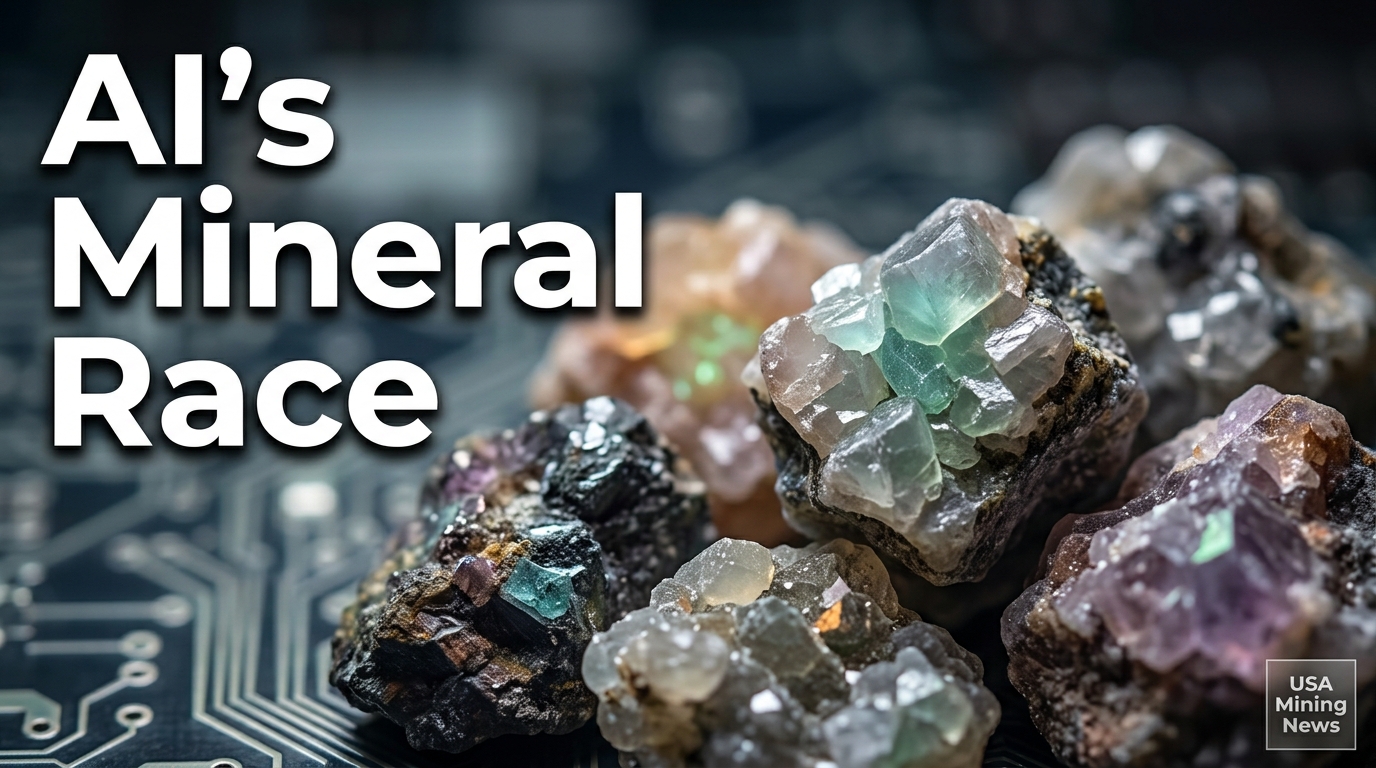
The global acceleration in the development and deployment of Artificial Intelligence (AI) technologies is fundamentally reshaping strategic priorities across industries and nations. What began as a technological race among software giants and data innovators has rapidly transmuted into a critical competition for the foundational elements of AI infrastructure: an assured supply of critical minerals and the advanced processing capabilities to transform them. This pivotal shift is succinctly captured by Ryan Cunningham, CEO of American Mineral Resources, who underscores that the demand for AI infrastructure is elevating access to rare earths and their processing capacity into a paramount strategic issue, necessitating intensified efforts in supply chain diversification and international partnerships.
The New Geopolitical Front: AI's Insatiable Demand for Critical Minerals
The burgeoning AI revolution, characterized by the expansion of data centers, the proliferation of AI-driven applications, and the development of advanced robotics and computing, is creating an unprecedented demand for a specific suite of raw materials. Foremost among these are the rare earth elements (REEs), a group of seventeen chemically similar metallic elements critical for their unique magnetic, phosphorescent, and electrochemical properties. These properties are indispensable in a wide array of high-tech applications, directly impacting the efficiency and performance of AI technologies.
As noted by industry experts such as Ryan Cunningham, CEO of American Mineral Resources, the intensifying race to develop AI is amplifying competition for these critical minerals. Nations and corporations are no longer merely seeking technological breakthroughs in algorithms or computing power; they are actively pursuing secure, diversified access to the raw materials that underpin these advancements. This paradigm shift positions the mining sector, and specifically those segments focused on critical minerals, at the very heart of geopolitical and economic strategy.
Understanding the Critical Role of Rare Earths in AI Infrastructure
Rare earth elements are not merely components; they are the enabling materials for many advanced technologies crucial to AI. For instance, powerful neodymium-iron-boron (NdFeB) permanent magnets, which contain neodymium, praseodymium, dysprosium, and terbium, are essential for high-efficiency motors and generators. These magnets are vital in the cooling systems of massive data centers that power AI, as well as in robotics, drone technology, and specialized hard drives. Beyond magnets, other rare earths find application in:
- Advanced optics: Lanthanum is used in camera lenses and optical fibers, critical for high-speed data transmission within AI networks.
- Catalysts: Cerium-based catalysts are employed in various industrial processes, including those related to manufacturing components for AI hardware.
- Phosphors: Europium and yttrium are used in phosphors for displays and sensors, vital for human-machine interfaces and data acquisition.
China's Dominance and the Drive for Supply Chain Diversification
A significant challenge in securing critical mineral supply chains, particularly for rare earths, stems from China's longstanding and dominant position in the global market. For decades, China has controlled a substantial share of both rare earth mining and, more critically, the subsequent processing and refining stages necessary to produce usable materials. This extensive control has created a strategic vulnerability for other nations and industries that rely heavily on these minerals.
The source material highlights that countries are now "seeking secure access to rare earths and investing in supply chains that reduce reliance on China for processing." This objective is driven by a recognition that a single point of failure or geopolitical leverage in the supply chain can disrupt critical technological advancements. The processing of rare earths, which involves complex chemical separation and refining techniques, is particularly energy-intensive and environmentally challenging. China's early investments in these capabilities, coupled with fewer regulatory hurdles historically, allowed it to establish a near-monopoly in the midstream and downstream segments of the rare earth value chain.
The push for diversification is therefore not just about finding new mines but, more importantly, about building or revitalizing domestic and allied processing infrastructure. This involves substantial investment, technological innovation, and often, a willingness to accept higher operational costs in pursuit of supply chain resilience and strategic independence.
The Strategic Imperative: International Partnerships and Domestic Investment
To mitigate the risks associated with concentrated supply chains, governments and private sector entities are increasingly focusing on two parallel strategies: fostering robust international partnerships and stimulating domestic investment in the critical minerals sector. International collaboration aims to create resilient networks of suppliers and processors spanning multiple countries, thereby distributing risk and ensuring a broader base of resource availability.
These partnerships can take various forms:
- Joint ventures: Mining companies from different nations collaborating on exploration, extraction, and processing projects.
- Offtake agreements: Agreements where buyers commit to purchasing future production from new or expanding mines, providing crucial upfront capital and market certainty.
- Government-to-government agreements: Bilateral or multilateral accords aimed at facilitating trade, sharing expertise, and coordinating investment in critical minerals.
Operational and Economic Challenges in Developing New Supply Chains
Building new critical mineral supply chains, especially for rare earths, is an undertaking fraught with significant operational, technical, and economic challenges. The extraction and processing of rare earths are complex. Many rare earth deposits, while present globally, often contain lower concentrations or have more challenging mineralogy than historical deposits in China, impacting extraction economics. The environmental footprint of mining and processing, particularly concerning waste management and potential radioactive byproducts, also presents substantial hurdles that require stringent regulatory compliance and advanced engineering solutions.
Furthermore, the capital expenditure required to establish a new rare earth mine and, crucially, a fully integrated processing facility, can be enormous, often stretching into hundreds of millions or even billions of dollars. The timeline from discovery to commercial production can span a decade or more, demanding patient capital and sustained political will. The technical expertise required for rare earth separation, which involves highly specialized chemical solvent extraction processes, is also concentrated, making the establishment of new, competitive facilities outside of existing centers a considerable challenge. This necessitates significant investment in research and development, workforce training, and technological transfer.
Implications for the Global Mining Industry
For the global mining industry, the intensified "race for AI" and its implications for critical minerals represent both a profound challenge and an unparalleled opportunity. The demand surge is expected to drive increased exploration efforts for rare earth deposits worldwide, particularly in regions deemed geopolitically stable and supportive of mining investment. Companies with proven reserves or advanced exploration projects in rare earths will likely see heightened investor interest and strategic partnerships.
The focus will also shift beyond mere extraction to encompass the entire value chain. Investment in midstream processing and refining technologies will become paramount. This could spur innovation in more environmentally friendly and cost-effective separation techniques, potentially reducing the barriers to entry for new players. Moreover, the emphasis on secure, diversified supply chains will likely lead to a premium on minerals sourced and processed under high environmental, social, and governance (ESG) standards, further integrating sustainability into the core business models of mining companies.
This dynamic environment also implies a greater role for governments in de-risking investments through policy support, infrastructure development, and international trade agreements, creating a more symbiotic relationship between state strategy and private sector mining operations.
Looking Ahead: The Future Landscape of AI and Critical Minerals
The symbiotic relationship between the advancement of Artificial Intelligence and the availability of critical minerals, particularly rare earths, is set to define a significant portion of the strategic economic and geopolitical landscape for decades to come. As AI continues its exponential growth trajectory, the demand for its foundational mineral inputs will only escalate, maintaining intense pressure on existing supply chains and accelerating the drive for diversification.
The necessity for secure, resilient, and ethically sourced critical mineral supply chains will remain a top priority for nations aiming to maintain technological leadership and economic competitiveness. This will require sustained commitment from governments in developing cohesive industrial policies, substantial long-term investment from the private sector in exploration and processing, and ongoing international collaboration to build a truly global and diversified resource ecosystem. The mining industry stands at the precipice of a transformative era, where its output is no longer just a commodity but a strategic imperative for the future of technological innovation.